The Legend of Mingyue - Reviews

The Legend of Mingyue
+Add to Custom List
Sort
Add review
... Read More
The red muslin Lingrou is clearly symbolic - it's not just a spiritual weapon, it represents connection, fate, and the bonds that form between people. The fact that it chose Feng Mingyue despite her not understanding why suggests there's a deeper destiny at play, possibly linked to the blue dragon sword owner mentioned earlier. The theme of hidden identities runs throughout this passage. Limu's true nature concealed even from loyal followers, Concubine Xu's peaceful death hiding suspicious circumstances, the erased memories creating ignorance for protection - all these elements explore how secrets shape relationships and power dynamics. Feng Mingyue's decision to restore the demonic clan's former glory speaks to themes of reclaiming lost honor and refusing to hide from persecution. Her statement that her people "have never written the word fear in their mind" suggests resilience and defiance against oppression. The contrast between the bullied young Feng Baiming and the transmigrator's confidence highlights themes of overcoming adversity. Both have suffered through no fault of their own, but they respond differently - one becomes cold and mute, the other takes action and builds alliances. The spiritual contract itself symbolizes more than obligation - it represents a bond that transcends normal master-servant relationships. When Lingrou glows and chooses Feng Mingyue, it's suggesting that true loyalty and power come from mutual recognition rather than force.
... Read More
Let's talk about the relationships in this chapter, because they're where the real story lives. First — Murong Nuying and Feng Mingyue. These two are cousins, but the text makes it clear they share something deeper than blood. When Murong Nuying admits defeat and says, "You are quick-witted and powerful," there's no bitterness in her voice. When she calls Feng Mingyue a "little monster" afterward, it's affectionate. She's genuinely impressed. This isn't a rivalry built on resentment — it's a rivalry built on mutual respect. And that dynamic is so much more interesting than the typical "jealous eldest sibling vs. underestimated youngest" trope we see everywhere. But here's what got me: the moment Murong Nuying uses the Soul Summoning Swords technique. The text says everyone was "immersed in this battle" and some widened their eyes in surprise. Why? Because this is the Murong Clan's most powerful technique — the one where you transfer half your soul to the sword. Using it means she took this fight seriously. She didn't hold back against her cousin. That's a character moment that tells us everything we need to know about Murong Nuying: she's competitive, she's skilled, and she respects her opponent enough to give it everything she's got. Now let's talk about Feng Mingyue, because she's the centerpiece here. The text describes her as having "scarlet eyes" and a "stunning face" — physical descriptions that matter less than what they reveal about her interiority. She's calm under pressure. She's observant. While fighting for her life, she's glancing around, calculating, waiting. And when she smiles? It's described as "sly" — not cruel, not arrogant, but clever. She's playing a longer game. The grandfather, Murong Lingtian, is fascinating in a different way. The text gives us access to his thoughts: he was planning to pass the clan to his Eldest Granddaughter. Now he's reconsidering. But here's the key — he doesn't act on this impulse immediately. He sees his granddaughters having a good relationship, and he decides to "toss this thought to the back of the head." This is a man who understands political dynamics. He knows that publicly declaring a preference could destabilize everything. So he watches. He waits. He observes. That's not indecision — that's strategy. And then there's the servant scene at the end, which introduces an entirely new relationship dynamic. Feng Mingyue asks her servants, "Do you want to walk this path with me?" And they kneel. They swear loyalty. She responds not with empty promises but with a concrete vision: "I will only make everyone succeed and become a powerful person." This is the birth of a faction. The Phoenix Shadow Guard and the Black Panther Shadow Guard aren't just titles — they're the foundation of a power structure that exists outside the clan hierarchy. What strikes me most is how the text handles gender without making it a speech. The grandfather doesn't care about male or female descendants — he cares about talent. Feng Mingyue proves herself not by being "like a man" but by being exceptionally herself. The servants follow her not despite her gender but because of her capability. This isn't performative progressivism — it's baked into the world's logic. The relationships here feel earned. Nobody's loyalty is assumed; it's won. And that's what makes them satisfying.
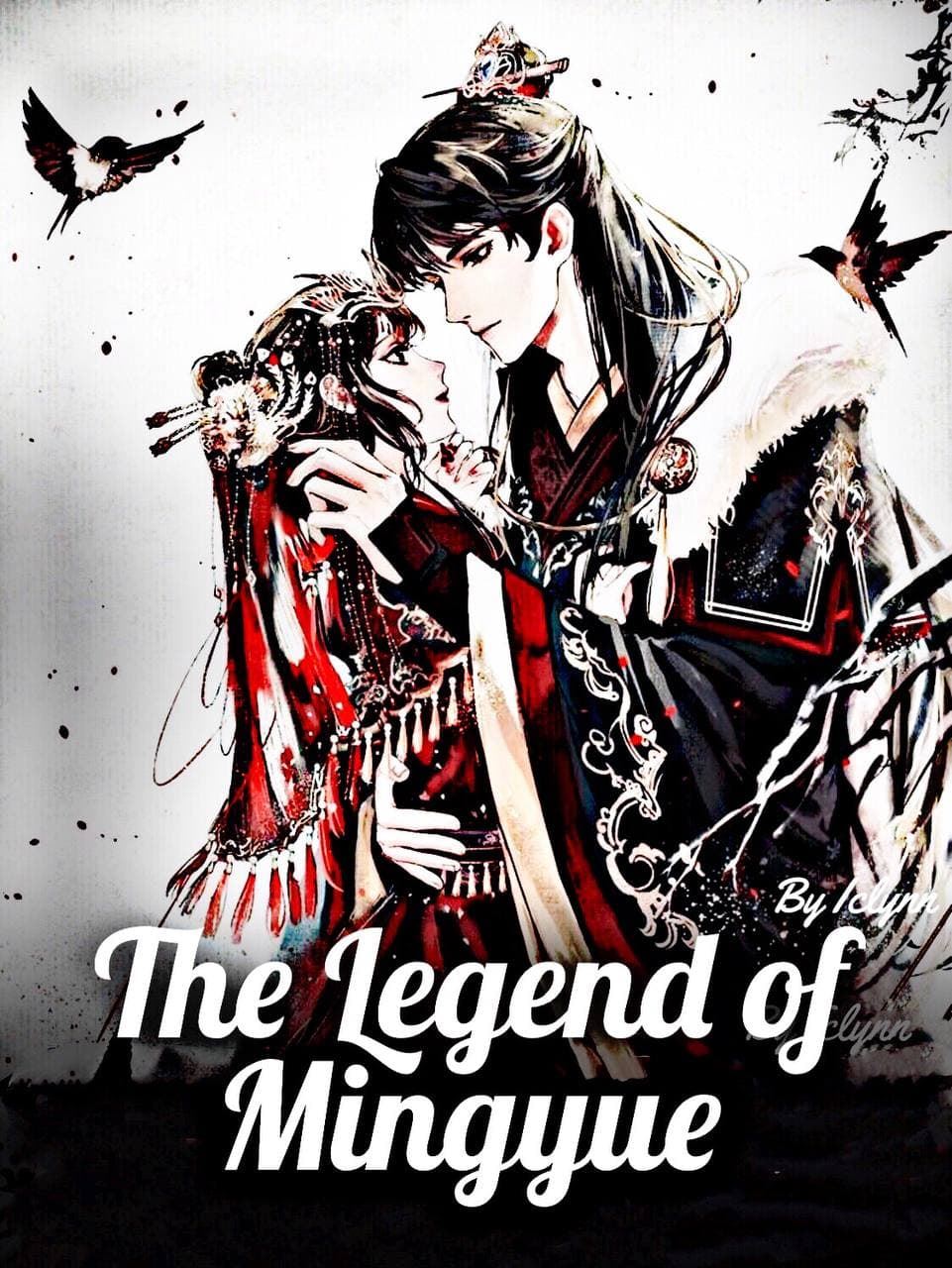
... Read More
The opening scene in this dangerous forest is brilliantly described. Feng Mingyue recovering in this hidden demonic clan territory - you can practically feel the tension of being surrounded by spiritual weapons and dangerous environments. The author creates this sense of isolation and secrecy that makes the location feel important. The visual of Lingrou wrapping around her arm in red light is such a striking image. It's elegant and slightly unsettling at the same time, which fits the tone perfectly. And then Fen Xiu appearing in red robes with that gentle but tempting smile - the author uses color symbolism really effectively here. Red everywhere, representing both danger and power. The contrast between the forest hideout and the Marquis mansion when they return is well-handled. Nighttime arrival, the Ehuang Courtyard, the hurried greetings from maids - it shifts the atmosphere from mystical and isolated to political and tense. The setting reinforces the plot progression. I also appreciate how the author describes the spiritual ring with dozens of pills, the jade bottle, the golden sparrow messenger - these objects make the world feel tangible and lived-in. You can picture Feng Mingyue twisting the ring, taking out the bottle, reading the note. Small details that ground the fantasy elements. The description of the four subordinates' dazed expressions when they hear about Limu's hidden identity tells us about their loyalty and confusion. It's showing rather than telling, which is good worldbuilding technique.
... Read More
The description of Celestial Mountain in these chapters is deceptively simple but it works because it's doing three things at once. First, it gives us a visually striking setting—three elegant ladies walking up a beautiful mountain, humming a tune, glancing around. It feels almost idyllic, like a painting. Then immediately subverts that peace: 'suddenly sensed the demon's aura from a distance.' The contrast between the serene environment and the lurking danger makes the scene pop. And there's this line that stays with me: 'The Celestial Mountain was actually living up to its name.' That tells me the world has real names, real history behind them, not just placeholder locations. Earlier, Mei Li's explanation of the Dark Palace on Jiangshi Mountain also builds the world organically—demons and demonic beasts once ruled that mountain, then the Dark Palace appeared and brought them under control. This isn't just background flavor; it tells us about power dynamics in this world, how organizations reshape environments, how territory works. The demon battle scene itself has a clear spatial logic—we know where everyone is standing, who's fighting whom, who's observing from the sidelines. The author isn't afraid to let a scene breathe before dropping action.
... Read More
The opening scene of this chapter is deceptively calm. Feng Mingyue announces she made food, everyone gets a share, and she yawns and goes to nap like it's the most ordinary thing in the world. But the narration immediately builds the atmosphere around her: 'Every servant in the Ehuang Courtyard had already taken a note in their heart. Every time when the Second Miss was taking a nap, they knew that she didn't like anyone to bother her or interrupt her rest, therefore, everyone tried to work quietly as much as they could.' That single paragraph does incredible worldbuilding. You instantly understand the power dynamics of this household — the servants know Feng Mingyue's rhythms, they self-regulate, they walk on eggshells. The Ehuang Courtyard has its own ecosystem, and she's at the center of it. Three hours pass in silence. No one disturbs her. That kind of disciplined quiet tells you everything about the status and fear that surrounds this character. Then the bandit backstory drops almost casually — 'On the way back, we met a group of the bandit, they wanted to rob us, however, they were defeated by us in the end, the bandit leader seemed to be really unwilling when he lost to me and Xiao Hui, thus he threw a white powder toward us when we let down our guard.' This is such a smart way to deliver exposition. It's not an info-dump; it's a character (Mei Li) nervously confiding because she sensed the Second Miss's expression was 'too severe.' The bandit attack happened off-page, and we only get it through a shaken maid's trembling account. That's how you make a world feel lived-in. And the poison itself — 'Qitian' or '7-Days Living' — immediately expands the scope of this world. This isn't just a household drama. Someone out there is creating rare, sophisticated poisons. There's an entire underground of medical and poisonous knowledge that exists beyond the courtyards, and the fact that a bandit leader could access it suggests a much larger, more dangerous world waiting to be explored.
... Read More
The author does something really interesting with atmosphere in this chapter. You have the opening scene with Sheng Yi carrying Shi Anling's body, the young girl helping place her on white silk—that's already visually striking. White silk, the dead sect leader, the concern on everyone's faces. Then you move to Elder Hao's courtyard, the main hall where the three of them sit, and suddenly there's this gust of wind that makes the hems of their robes sway. That detail—wind, flowing fabric, the sudden appearance of the lady in white—feels almost cinematic. It's not just description for description's sake; the wind acts as a dramatic entrance device. And then the Deadly Poisonous Forest gets mentioned, which immediately expands the world beyond the sect. You know this is a place so dangerous that even Li Qin and Mei Li are saying ‘that won't do' and ‘it's too dangerous.' The fact that Feng Mingyue is planning to go there anyway tells me everything I need to know about her character. The setting details—dark blue robes, green robes, black veils, white silk, the jade pendant—are all rendered with a consistency that makes the world feel lived-in. I can picture every frame. The author isn't over-describing; they're giving you just enough visual information to build the scene without slowing down the pacing.
... Read More
I'll be honest—I almost didn't keep reading. Transmigration stories are a dime a dozen and I've seen the formula a thousand times. But this? This actually pulled me in fast. Here's why: the author wastes exactly zero time. Chapter one starts mid-suffering. Feng Mingyue is already in pain, already disoriented, already figuring out she's in someone else's body. No long prologue, no gentle warm-up, just straight into the crisis. Then the memory sequence unfolds at just the right speed—enough detail to understand the tragedy but not so much that it feels like a textbook. The transition from physical awakening to memory absorption to emotional resolve happens in one continuous flow, and by the time we get to Li Qiu entering the scene, we're already invested. What really controlled the pacing though was the author's instinct for when to cut away. We don't get a full explanation of the political situation, the martial arts system, or the family tree. We get exactly what the new Feng Mingyue needs to know right now, and the rest is implied. That's how you open a story. You hook people with urgency and mystery, not encyclopedias. The only question now is whether the author can maintain this momentum or if everything slows down once the revenge plot kicks into gear. Fingers crossed.
... Read More
Can we just talk about how the original host's mother shaped everything here? I wasn't prepared for that. I thought this was going to be your typical face-slapping revenge story, but the emotional undercurrent is way more complicated than that. The fact that the former madam specifically chose the four loyal servants—including Li Qiu—because she knew what would happen after she was gone? That's devastating. It's also the only thing keeping the original Feng Mingyue from total isolation. And then there's the father. Feng Zhongshan. He didn't bat an eyelid when his second daughter was sick and dying. Not even a little. I literally wanted to scream at the page. The original host reached out to him in her final moments—really reached out, after being rejected so many times—and he turned deaf. That moment of realization, 'Before her death, the original Feng Mingyue realized how naive she was'—that's not just plot detail, that's a full emotional collapse captured in one line. What makes it worse is that the new Feng Mingyue immediately recognizes this and decides to take revenge, but not just for herself. She's doing it as repayment. That's such a specific, human motivation. It's not greed or power-hungry ambition. It's gratitude mixed with righteous anger. That's the kind of emotional foundation that makes a protagonist feel real instead of like a plot device.
... Read More
Okay so let me just say this — the spiritual ring reveal was one of those moments where you slam your phone on the bed and go 'OF COURSE.' Everything clicks. Feng Mingyue has been walking around pretending to be some useless noble girl, but her mom literally gave her a treasure-level item that masks her aura. It explains why absolutely no one could sense her strength throughout the entire story. The secret underground training area is a brilliant plot device too — it's not just a cool visual reveal (the stone lion moving, the wall splitting open? cinematic!), it's where the real power of the Murong family lives. And the Jian Lei Army setup? That's a massive subplot that's going to matter SO much later. The emperor trying to take them down in the dark while openly respecting the Old General? That's classic political intrigue foreshadowing. The whole 'good for nothing' Second Miss actually being a middle-level spiritual martial artist who advanced two levels in five days — this is the kind of twist that recontextualizes every scene we've read so far. Every time someone looked down on her, readers probably ate it up. But now we know they had no idea what they were dealing with. I'm genuinely invested in seeing how she navigates this new reality.
... Read More
I have to talk about how this chapter plays with information control. Feng Mingyue drops the bomb that she became a martial artist in five days and you can practically see the entire family's worldview cracking. The narrative brilliantly withholds the fact that the grandfather is absolutely fuming throughout most of the scene — only Murong Nuying notices it, and even she is too scared to mention it openly. That slow build of dramatic irony, where the reader knows something the other characters don't, is masterful. Then the payoff when she drags her cousin to face the old man? Chef's kiss. The tension peaks and then instantly deflates when his face transforms from fury to pride. I literally gasped out loud. 'My good Yue'er! Grandfather is really proud of you!' What a pivot. The plot doesn't just move forward here, it rockets. And that ending with the old man's face breaking into a heart-warming smile after being shaken with rage the entire time — I need to sit down.
... Read More
I need to talk about how this passage moves because the pacing choices here are genuinely masterful. It opens with what seems like a lighthearted domestic scene — a girl biting her tongue and her maids losing their minds. It's almost comedic. I was smiling, reading along, feeling cozy. And then Sheng Yi asks about the Duke of Xing and the tone SHIFTs. Just slightly, but noticeably. The maids start bringing up the past, the crown prince's birthday, the fear. The scene gets heavier, more charged. Feng Mingyue's confidence wavers just enough to make you wonder. Then — and this is the part that got me — the entire perspective switches. We leave Feng Mingyue mid-thought ('You will know when I meet him') and drop into the Dark Palace. No transition. No 'meanwhile.' Just... there. We're suddenly watching a different set of characters in a different emotional register. The warmth of the maid scene is replaced by cold political calculation. What I love about this structure is that it mirrors the narrative itself. Feng Mingyue is about to enter a world she doesn't fully understand, and the author throws us in headfirst alongside her. We don't get a safety net of exposition. We just get Long Changlei asking questions we ALSO want to ask. And the chapter ends on the most haunting beat imaginable. After all that political maneuvering and family drama, Long Huayan murmurs 'Xiao Yue...' and the text tells us nobody noticed. Not his brother, not his advisor, nobody. The camera pulls back, the scene fades, and we're left with this single whispered name hanging in the air. The pacing from comedy to political intrigue to intimate mystery in under 8500 characters is no accident. Every beat serves the next. And that ending? I need to know who Xiao Yue is RIGHT NOW.
... Read More
I need to talk about this one passing moment that genuinely caught me off guard. So everyone's focused on the duel setup, right? The cousin rivalry, the hype, the "she has a trick" energy—and then it just slips in: Feng Mingyue pulls out her sword, and there's this entire flashback about how the original host's mother kept trying to teach her sword movements even after she gave up, tossed it aside, got annoyed, couldn't be bothered. But the mother never gave up. She stored it in the spiritual ring anyway. Patient. Waiting. Like she knew someday the sword would be picked up again by someone else wearing the same face. And Feng Mingyue—our girl—just holds it and *knows*. "Her mother was really a patient lady." I felt that in my chest. It's not romantic, sure, but it's this aching, quiet family bond that just... lands. The original host didn't appreciate it then, and now her descendant does, and there's this whole layer of regret and tenderness folded into three sentences. Meanwhile the entire clan is watching the duel like it's the most exciting thing ever, and only she seems to feel the weight of that memory. That contrast between the loud spectacle and the quiet grief—chef's kiss. Also the way she says "Behind you" to her cousin during the fight? So casual, so almost playful, but underneath there's this whole history of being underestimated, of people dismissing her because she was the weak one, the one who couldn't cultivate. And now she's dancing around the strongest fighter in the room like it's nothing. I don't know if that counts as emotional or what, but it made me want to reread that section immediately.

Leave a comment

You must be logged in to leave comments. or
