The Legend of Mingyue - Reviews

The Legend of Mingyue
+Add to Custom List
Sort
Add review
... Read More
I've been turning something over in my head since I finished these chapters, and I think the Yunru Restaurant and Mingzhu Residence aren't just worldbuilding flavor—they're actually thematic anchors. Think about it. Feng Mingyue is building an empire from complete obscurity. She hasn't left her manor in six months, yet she controls two of the most talked-about establishments in the entire capital. The restaurant feeds the elite and even the emperor himself. The residence dresses the nobility and outmaneuvers the empress. These aren't just moneymakers—they're her hands in the world while her body stays hidden. There's something deeply symbolic about food and clothing as vehicles of power. Food is intimacy—you share meals with allies, you break bread with enemies. The fact that the emperor personally visited the restaurant rather than punishing the chef suggests that control through generosity and quality beats control through fear every time. Mingzhu Residence, meanwhile, operates on desire and exclusivity. The empress couldn't get what she wanted, and the entire political structure bent to apologize for it. One business seduces the masses; the other commands the elite. Together, they form a pincer movement of influence. Then there's the demons. Their sudden appearance after all this setup isn't random. Demons represent the chaos that exists outside human control—the raw, monstrous reality that no amount of fancy jewelry or Michelin-starred cuisine can mask. "People who lived near the city gate" are targeted. The gate is literally the boundary between civilization and the unknown. The demons are testing whether the structures Feng Mingyue has built are strong enough to withstand something that can't be negotiated with. And Feng Mingyue's response? "Let's wait until I'm stronger. We will be set out of the capital and have a look." She's not running. She's preparing. The shadow guard, the businesses, the alliances—everything is building toward something. The demons might be the inciting incident that forces her to stop planning from behind walls and step into the world she's been constructing. What is this story really about, underneath all the intrigue? I think it's about the tension between hidden power and visible influence—and whether someone who builds empires from the shadows can eventually stand in the light and face what comes.
... Read More
Okay so this whole scene is structured like a little miniature thriller wrapped inside what looks like a casual walk, and I love it. Feng Mingyue notices something first — not her maids, not anyone else, HER. That immediately tells me she operates on a different frequency than everyone around her. Then BAM, a man in black leaning against a wall, seemingly dying, and suddenly the whole dynamic shifts. Her maids try to protect her, she pushes past them, treats him, leaves a golden bell as some kind of callback mechanism, and bolts. Then — and this is the genius part — right after she leaves, his two subordinates arrive. We don't get to see what happens between them, but we KNOW something is going to happen. That golden bell on his thumb? His subordinate notices it. Of course he notices it. This is basically a plot device dressed up as a throwaway detail, and I am HERE for it. The narrative also cleverly uses the author's note about the word 'brother' as a meta-layer — it's not just worldbuilding, it's basically planting a flag for a relationship that's going to matter later. And then we cut to the medicine bath scene for Mei Li and Mei Hui, which feels almost domestic after all that tension, like the story is breathing. But I guarantee you that bath scene is setting up something too. The author isn't wasting a single beat.
... Read More
The stakes in this chapter escalated in layers and I was completely invested. On the surface, there's the immediate conflict: Mingyue was told she was sick and kept away from her own family by someone she apparently trusted. But the deeper conflict is about power and recognition. Every time Mingyue has tried to prove herself in this story, she's been dismissed because of her reputation as the "good for nothing Second Miss." The duel isn't just about showing she knows martial arts—it's about forcing everyone to see her as someone worthy of respect. And the author makes the stakes feel real by having EVERYONE doubt her. Not just the antagonists, but her own family. When she says she knows martial arts and they're speechless, that hurts more than any villain's insult would. The tension of the upcoming duel is masterfully built too—we know Mingyue is a middle-level martial artist now, but we don't know how she'll perform against someone like Nuying who has actual experience. And there's this underlying threat from Feng Zhongshan that hangs over everything. He played them, and now that he's been exposed, what's his next move? The chapter ends on a cliffhanger with the garden appearing, which is the perfect spot to leave us hanging. I need to know what happens next.
... Read More
The pacing in these chapters is weirdly perfect and I didn't expect to say that about a web novel. It starts with quiet observation — Feng Mingyue noticing something off while walking. Then it escalates fast: the man in black appears, her maids block her path, she goes icy-cold on them, treats the stranger, drops the bomb about his lifespan, and exits. That entire sequence reads like a action movie scene compressed into maybe two pages. Then — and this is what really impressed me — it CUTS to the subordinate's POV right after she leaves, which is a smart structural choice because it gives us the aftertaste of the scene without explaining everything. We see the golden bell, we feel the subordinate's confusion, and then they leave. No cliffhanger yelling, no dramatic reveal. Just... implication. And then it transitions to the manor, where the tone completely shifts to domestic caretaking. Mei Li and Mei Hui soaking in painful medicinal baths. Li Qin boiling herbs. It's almost calming after the tension. But here's the thing — that calm doesn't feel unearned. The author let us breathe instead of suffocating us with constant drama, and that's a sign of someone who understands reader psychology. The transitions between scenes are clean too. No jarring jumps, no 'meanwhile' overload. Each scene earns its place. I just want to know what happens when that man rings the bell.
... Read More
Can we just sit with this for a moment? The man in black is lying there, poisoned, barely conscious, and Feng Mingyue tells him he has SIX MONTHS to live unless he gets thousand-year-old ginseng. That is a devastating line to drop in a conversation where the other person can't even respond. She basically handed him a death sentence with a maybe attached to it, and then she LEFT. No dramatic farewell, no 'I'll find a cure for you,' just the bell and the diagnosis and then she's gone. And he can't even thank her. He's too weak to open his mouth. The tragedy of that scene is almost unbearable in how quietly it's written. She smelled like flowers and medicine — such a soft, human detail in the middle of all this danger — and then she vanished before he could even properly see her face. Meanwhile, the subordinate catches sight of the golden bell and his 'feelings became complicated.' What does that mean? Is he jealous? Concerned? Does he know something about his master's past that we don't? And then Feng Mingyue back at the manor, immediately going into caretaker mode for her maids, making them soak in medicinal baths that are apparently incredibly painful for eight hours. She takes care of everyone. Everyone takes care of her in their own way, but she never lets them see her waver. That moment when her heart trembled — did anyone else notice? I think that's the most vulnerable we've seen her, and she'd probably kill someone if they brought it up.
... Read More
Can we talk about Murong Nuying for a second though? She's been this warm, protective big-cousin energy the whole time, and the moment she sees through Feng Mingyue's strength... her face just DROPS. "Middle-level spiritual martial artist?!" She's genuinely stunned, maybe even a little terrified. There's something really interesting about their dynamic here — Nuying was the one who grabbed Feng Mingyue's hand enthusiastically, worried she might back out of the duel, and instead Feng Mingyue drags HER into the fight. The role reversal is chef's kiss. And then the revelation that this little cousin nobody respected has been hiding power this intense? Nuying's entire understanding of her family shifts in one scene. What also got me was the Feng Mingyue's thoughts about her mother. She's genuinely confused and hurt that someone so extraordinary would marry Feng Zhongshan — the man who literally tried to kill her. There's this quiet grief underneath all the scheming and fighting. Her mom was a divine doctor and a spiritual martial artist, and she still ended up with that monster. It makes Feng Mingyue's whole existence feel even more tragic and fascinating. She has her mother's talent but none of the protection. I keep wondering what else her mother's ring might be capable of.
... Read More
Honestly? The relationship between Feng Mingyue and her three maids is what made me actually feel something in this batch. Not the face-slapping moments — those are fun but predictable. It's the maids kneeling and saying they'd follow her anywhere because "Madam also been good to us, we have to repay her by taking care of you." That line wrecked me a little. The previous madam was kind to them, and now they're transferring that loyalty to her. It's not just master-servant dynamics; there's genuine warmth underneath. And the way Feng Mingyue responds — softening, helping them up, eyes "gentle as a spring breeze" — shows she's not purely cold and calculating. She can be ruthless when wronged, but she also recognizes and values genuine loyalty. Li Qiu being the excitable youngest one who can't stop herself from blurting about their Miss being a spiritual martial artist AND a doctor is such a realistic character detail. And Mei Li being the voice of caution? Classic dynamic. The author gives each maid a distinct personality without needing heavy exposition. I genuinely want to see how these relationships evolve — especially if the First Miss and Third Miss find out.
... Read More
This chapter does something really clever with pacing — it starts almost sleepy and then tightens the screw until you're gripping the phone. We open with Feng Mingyue yawning, taking a nap, wandering in thought. Total stillness. Then two figures leap through the window and suddenly she's in combat readiness mode. That shift from 'leisurely on bed' to 'ready to attack anytime' happens in two sentences and my heart rate went up with it. The chef confrontation is where the pacing really shines though. It's deliberately slow — she asks him why, he hesitates, she smiles that dangerous smile, he kowtows until his forehead bleeds. Each beat gives you just enough time to relax before the next one hits. And then the double pivot: first she sentences him to 30 sticks (climax), then reduces it to 20 (release), then stops the servants and takes over personally (second climax). Three peaks in one scene. What I love is that the author doesn't rush the emotional payoff. We get the servants' reactions between each action, which means we're not just watching violence — we're watching people WATCH the violence and process it. That layered perspective slows things down just enough to make it breathe. The chapter ends mid-scene with her about to demonstrate, which is a perfect hook. Not a cliffhanger that screams, more of a quiet "oh, this is about to get interesting."
... Read More
Okay so this chapter is where everything clicks into place and honestly? I was not ready for how satisfying this was. The whole setup with Feng Zhongshan lying about Mingyue being sick was brilliant misdirection throughout the earlier chapters—we keep wondering why she's isolated, why no one visits, and then BAM, it's all the fault of that snake of an uncle. But what really sold it for me was the dual revelation. First Murong Nuying figures it out on her own, just by looking at Mingyue alive and well, and they share this almost telepathic moment of understanding before the old general even arrives. That's tight plotting right there. The pacing of the whole scene was perfect too—Mingyue walks in, everyone's worried, there's this warm family moment, and then she drops the duel request like it's totally normal. I love how the author uses the contrast between the emotional warmth and the sudden plot pivot. The whole thing builds from "is she actually okay?" to "she's been tricked" to "she's actually a martial artist now" in one continuous scene. No filler, just momentum. And honestly, the way she proposed the duel felt so in-character for someone who's finally found people who care about her. Like, she's not doing it to show off—she's doing it because she wants them to know she can protect herself. That's a character-driven plot move, not a random action beat.
... Read More
Can we just take a moment to appreciate how emotionally satisfying some of these scenes are? Because the author clearly understands that power fantasy doesn't have to be boring to be effective. Let me start with the Yunru Restaurant chef rejecting the emperor's invitation. I don't care what genre this book is—I found myself genuinely invested in this chef's audacity. The commoners were shocked, the palace was stunned, and then the emperor just... showed up himself? Like, instead of executing someone or sending soldiers, he decided to eat at the restaurant personally. That's not weakness, that's a man who genuinely wanted the food and refused to let pride get in the way. There's something oddly humanizing about that. Or maybe it's just smart political theater. Either way, I was screaming at the page. Then there's the empress situation, which is where the emotions go from amused to straight-up vindicated. She wanted a custom jewelry set—ONE IN THE WHOLE CONTINENT—and Lady Mingzhu's response was basically, 'I'm too lazy today, goodbye.' The empress lost her mind, sent people to make a scene, and got thrown out by four women in veils who went from polite to ruthless in a single sentence: "Throw these problematic people out of here." I have no words. That line is iconic. The complete emotional shift in those four women's demeanor tells you everything about Lady Mingzhu's operation—she cultivates loyalty in people who won't tolerate nonsense. And the empress ending up apologizing? On ORDER from the emperor? That's the kind of emotional payoff that makes your chest ache in the best way. But then the mood SNAPPED. The demon scene—"the man began to shiver uncontrollably. He felt chill all over his body"—that chill you feel isn't from the wind. It's the reader's empathy for a regular person who had no idea the world had just gotten infinitely more dangerous. The emotional whiplash from the comedy of the empress getting yeeted out of a shop to a random citizen barely escaping a creature he can only describe as 'extremely ugly' is... something else. The author knows how to make you feel everything at once.
... Read More
'Oh, my opinion? Why do I have to waste my words? After all, even if you persuade her until your mouth turns dry, she will never change her mind. So no need to waste your words.' I laughed out loud at this. Sheng Yi's voice is so distinct here. He's the relaxed one, the slacker of the group perhaps, but he's also the most perceptive. While the others are panicking about the forest's dangers ('No, even the demons don't dare to go'), Sheng Yi cuts through the noise with brutal efficiency. His dialogue is sparse but loaded. He doesn't just say 'she won't listen'; he frames it as an economic decision—why waste words? It tells us he knows Feng Mingyue's stubbornness intimately and has accepted it as a fundamental law of the universe. Contrast this with Feng Mingyue's own voice. Her dialogue is almost entirely functional and instructional. 'Ah Xue, you can also summon poisonous snakes...' 'Mei Li, you will be attacking the Lily of the Valley...' 'Sheng Yi, you have the most important role...' She doesn't emote in speech; she commands. Even when she's surprised or alarmed internally, her spoken words are calm ('Go in, why are you looking at me like this?'). This dichotomy creates a fantastic rhythm. The banter between Wei Xue and Li Qin establishes the group's dynamic quickly—they're worried, chatty, subservient but caring. Sheng Yi is the foil who anchors them. And then there's the narrator's interjection: 'Feng Minyue who was watching from afar instantly felt her heart tightened again.' Wait, is that a typo for Mingyue? Probably, but it breaks the fourth wall slightly. The dialogue here serves two purposes: advancing the plot and characterizing via speech patterns. We know who Sheng Yi is within three lines. We know Feng Mingyue is a strategic leader who delegates based on ability. We know Wei Xue and Li Qin are supportive but anxious. It's tight, efficient writing. My only critique is that the instruction section gets a bit list-like ('You will be doing X, you will be doing Y'), but given the high-stakes combat context, it feels appropriate. She doesn't have time for flair; she needs results.
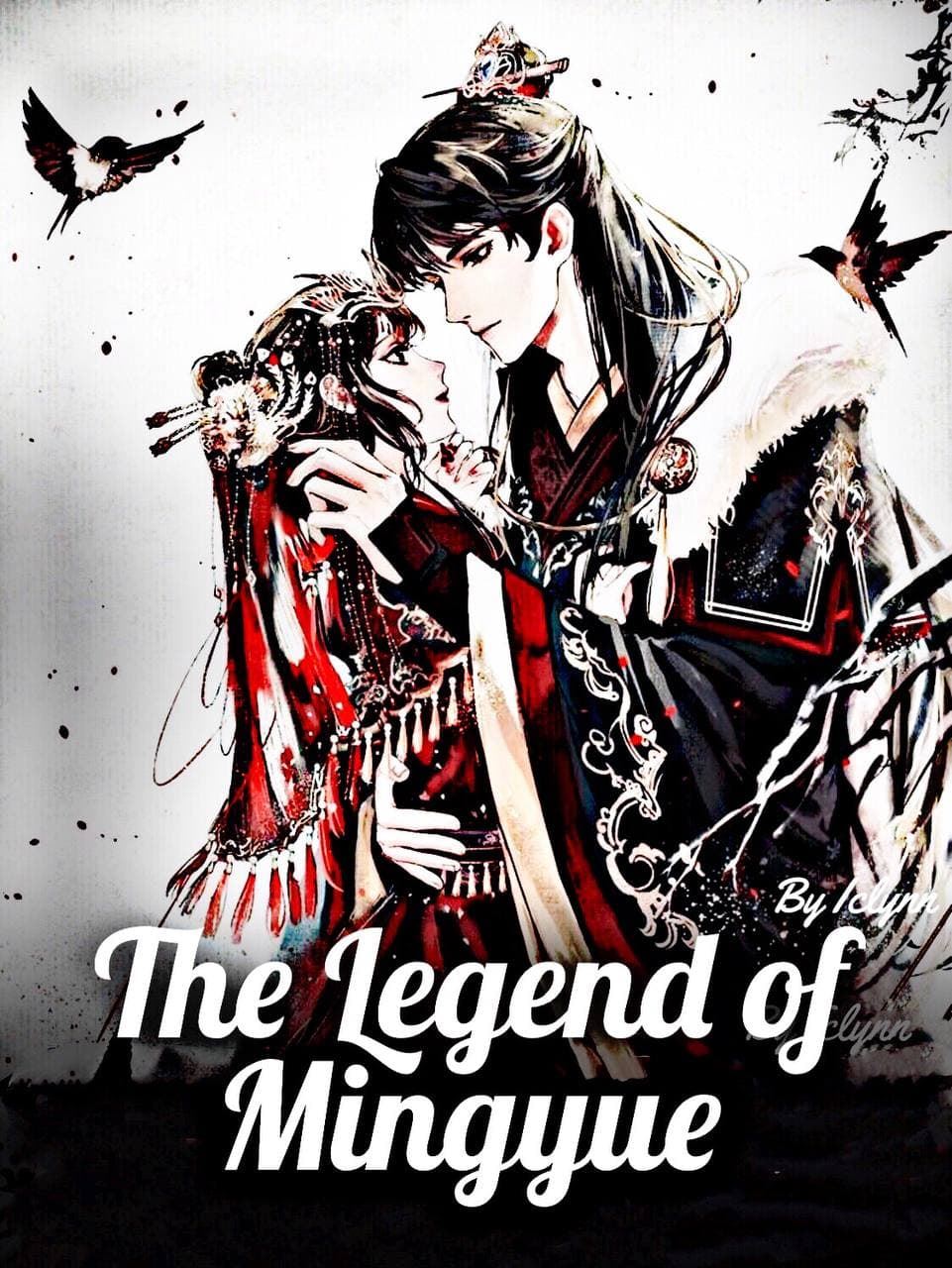
... Read More
Let's talk about Wen Yan, because this woman is doing the most emotional labor in the entire novel and nobody gives her enough credit. She watched Feng Mingyue from a distance for years, protected her secretly, and still couldn't break through because the original host was a ungrateful little brat. And then — get this — Feng Mingyue actually remembers this. She digs into the original host's memories and realizes what a fool she was being. That moment when she asks First Uncle to leave so she can speak privately to Wen Yan? That took courage. And the apology itself — bowing her head, admitting stupidity, acknowledging the good intentions she overlooked — it felt incredibly genuine. Not performative, not manipulative. Just real. And Wen Yan's reaction, wiping tears and saying 'I already forgot about it' — please, we both know she hadn't forgotten. But she didn't hold a grudge either. That's the kind of woman Wen Yan is. Then the hug! Mother and daughter energy! I actually teared up. This relationship arc deserved so much more screen time in earlier chapters.

Leave a comment

You must be logged in to leave comments. or
