The Legend of Mingyue - Reviews

The Legend of Mingyue
+Add to Custom List
Sort
Add review
... Read More
I'm not going to lie, this is the scene that got me. When Feng Mingyue finally removes her veil and reveals her face, the text describes it as ‘stunning beauty' and mentions that ‘when she smiled, her eyes also curved up, which looked really attractive.' But it's not just physical beauty—I think the emotional weight comes from the fact that she's been hiding behind that veil the entire time, both literally and metaphorically. She's carrying the burden of her grandmother's death, the responsibility of the Heavenly Sect, and the danger of revealing herself, and then she just… takes off the veil and smiles at Elder Hao like she's finally allowed herself to breathe. And Elder Hao's reaction—the way his eyes show ‘so much emotion that even Feng Mingyue was stunned'—that's the moment that wrecked me. This old man watched her mother grow up, he's been waiting for this exact second, and now she's standing in front of him. There's grief, there's relief, there's hope. And then the subordinates Sheng Yi and Wei Xue are also stunned by their master's beauty, which adds this funny little beat of ‘oh wait, we didn't know what she looked like either.' It's a really human moment amidst all the political intrigue. The emotional core of this chapter isn't the plot reveals—it's the connection between Elder Hao and Feng Mingyue, rooted in love for someone who's gone.
... Read More
The veil. Feng Mingyue walks in with a white veil covering her face, pretending to be weak and fragile, while everyone—including the reader initially—believes it. But that veil is symbolic on multiple levels. It represents her false identity, her performance of weakness, the mask she wears to survive in this political minefield. And then the kneeling—that's the most loaded symbol in this entire chapter. Kneeling means submission, yes, but also means strategy. It means she's willing to play the fool's role to get closer to the truth about Brother Yan. Every bow she makes is a calculated move, not an act of defeat. And the name 'Long Huayan'—same name as 'Brother Yan.' Names carry identity, power, destiny in these kinds of stories. The fact that the Duke of Xing, the Emperor's own half-brother, shares this name with the man from her past life is not accidental symbolism. It's the author telling us directly: this is the thread that connects everything. The imperial decree calling her a 'gentle, graceful, elegant, and virtuous lady' while Eunuch Wu internally mocks her as a foolish wife—that's ironic labeling, another form of veiling. Everyone sees what they want to see, and that's exactly what allows her to move unseen.
... Read More
The color palette in this section is honestly so intentional I can't unsee it. Feng Mingyue in white with a veil — purity, mystery, hidden identity. Limu in black — the Dark Lord, cold and unreadable. And then THAT red whip, the one she pulls out like it's a grand reveal, dripping with poison, talking to it like it's alive. Red against white and black. Fire against ice. The whip even seems to have its own personality — she says "this is the first time you show yourself, so don't let me down" and it responds. Is the whip symbolic of her reborn power? Something new she's wielding that didn't exist in her past life? Or something linked to Li Qin (whose name appeared in the text oddly — maybe a spirit weapon consciousness?) The white veil covering half her face is such a loaded image. In the past life, he knew her face. Now she hides it. The veil becomes a metaphor for everything between them — visible but separated, close but untouchable. And the medicine and flower scent that makes him remember the "lady in red" from before? Scent as a bridge across lifetimes. The author keeps returning to sensory details — the sound of the tambourine, the smell of herbs, the coldness of his voice — as anchors for memories that transcend death.
... Read More
I just finished reading these five chapters and I want to talk about how the pacing hits differently here compared to earlier sections. This batch moves through three distinct rhythms: the leisurely conversation about the red muslin, the quiet mountain walk, and then the sudden demon confrontation. Each transition feels earned, not rushed. The author doesn't slam you from dialogue into action—there's a bridge. Feng Mingyue decides to go to Celestial Mountain, they walk up, they hear battle sounds, they investigate. Cause and effect, natural progression. What I really appreciate is how the chapter endings work. The previous chapters probably ended on a hook, and this one opens with exposition that feels light because it's embedded in character interaction rather than narration. Mei Li and Li Qin aren't just receiving information—they're reacting to it, asking questions, showing their own curiosity. This makes the exposition feel like natural dialogue instead of an info dump. And that final beat with the two injured warriors and Feng Mingyue handing them pills, revealing she can sense their spiritual level despite emitting no energy herself—that's a deliberate cliffhanger. It makes you want to flip to the next chapter immediately.
... Read More
Let me just say this — the narrative voice in these chapters has such a distinct personality. It's not the stiff, formal narration you'd expect from a transmigration story set in ancient China. There's warmth, humor, and a narrator who clearly enjoys watching Feng Mingyue be herself. Take the dialogue, for instance. Feng Mingyue barely speaks — just an "En" when asked about books, and "I need all of these herbs" when buying supplies. But when she does talk, it's direct and efficient. No flowery language, no courtly pretense. She's a modern person who doesn't care for ceremony, and the narration celebrates that. The lady boss of the bookshop is another highlight. "Miss, you want to buy books?" — simple, functional, and then she's just gone, reduced to frantically scanning prices while her eyes pop out. The narrator doesn't mock her; it just lets her反应 speak for itself. That's confident writing. And the internal narration? Oh man. The description of Feng Mingyue spotting the novel shelf — "her beautiful scarlet eyes staring fixedly at the bookshelf that was filled with various types of novels" — followed by the four maids' perspective: "They even doubt if they had any illusion upon seeing how exhilarated their Second Miss was." The narrator switches between external observation and the maids' confused interiority seamlessly. My favorite line though has to be: "Ahem, they didn't know this lady at all..." It's such a casual, almost conversational aside from the narrator, like they're leaning over to tell us a secret. It breaks the fourth wall just enough to create intimacy without actually breaking it. The ending dialogue is sparse but perfect: "What's the matter, Miss?" from Li Qin, and then silence from Feng Mingyue. No explanation, no dramatic monologue. Just a sudden shift from humming to silence that tells us everything we need to know. The narrator trusts the reader to fill in the blanks, and that trust makes the voice feel genuine rather than performative.
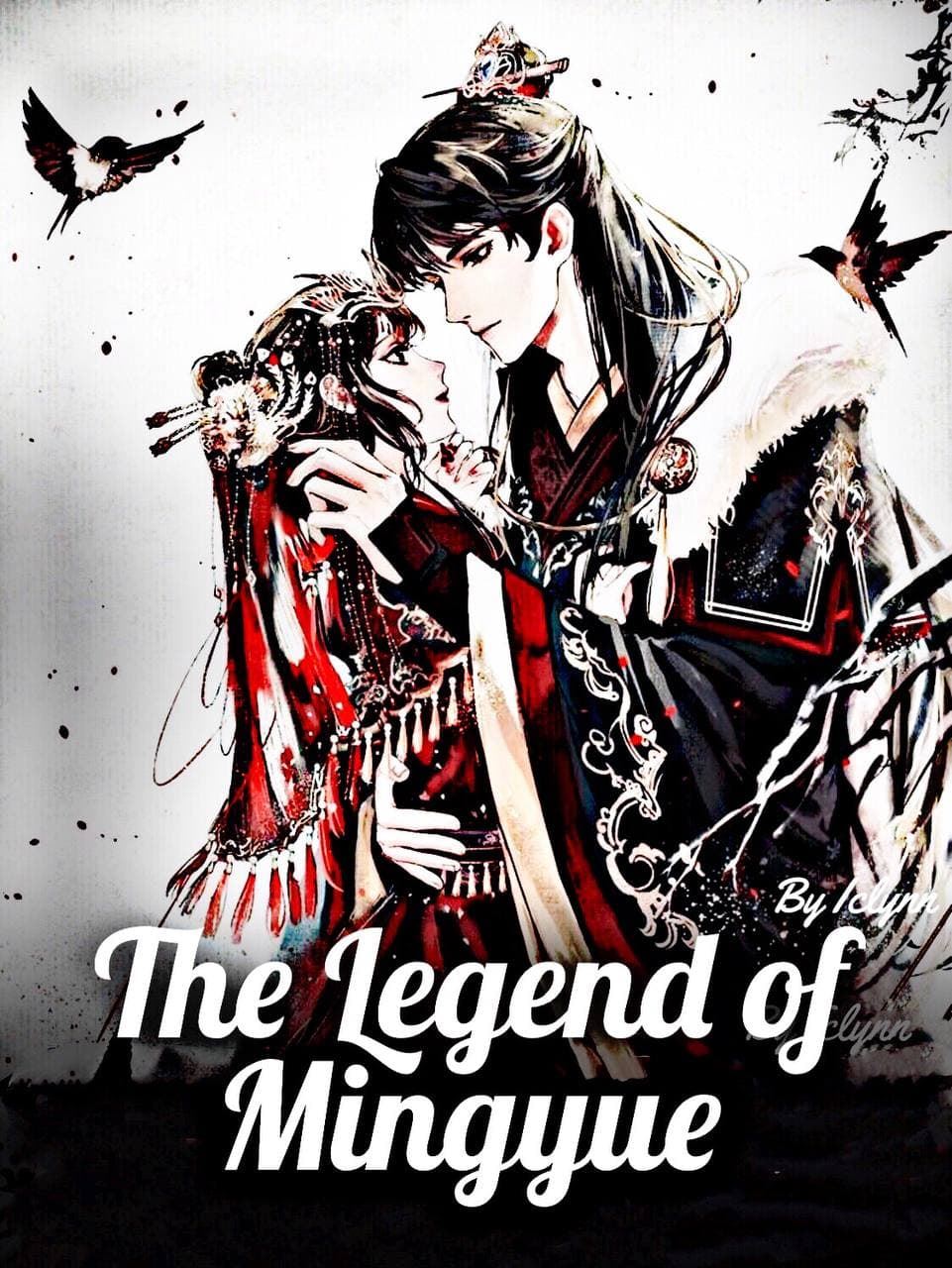
... Read More
I need to talk about this one exchange because it's actually the most interesting piece of dialogue in the entire opening. When Li Qiu says 'Second Miss! You're awake!' and then later 'Miss, how are you right now?'—these are simple lines but they do heavy lifting. The first one establishes her role as a loyal maid who genuinely cares, and the second one comes with that worried expression that the author described. But here's where it gets good: Li Qiu notices something is different. 'Looking at the Second Miss staring at her with such a calm gaze made Li Qiu nervous. There wasn't any hint of panic, fear nor anxiety in her eyes, which was different from what she used to be.' That's it. That's the whole scene. No exposition about how the new Feng Mingyue is calmer or sharper or more calculating—Li Qiu just feels it immediately, and that creates instant dramatic irony. We know something has changed before anyone else does. And then the actual spoken dialogue from Feng Mingyue is barely anything. 'W-water.' That's it. One word, slightly hoarse. But it works perfectly because it shows she's not in a position to perform or pretend right now. She's in survival mode. The author trusts the subtext instead of having characters announce their emotions. That's the kind of restraint I appreciate. Too many writers have their characters explain everything they're feeling out loud, and it's exhausting. This? This trusts you to read between the lines.
... Read More
"I just want them to have enough fun, and it will be my turn." Okay, I need to talk about this line because it reframes literally everything that came before it. Every time Feng Mingyue was called a useless fool, every time she got bullied — it wasn't weakness, it was strategy. That single sentence makes you want to go back and re-read the whole thing with brand new eyes. The plot twist here isn't some big external event; it's the recontextualization of her entire past behavior. The author played us like a fiddle by making us believe she was a helpless transmigrator who got unlucky, and then in one line reveals she was the puppeteer the whole time. I also love how the chef punishment scene sets up her ruthlessness early on. "This isn't a show!!" — she's not just angry, she's establishing boundaries with zero tolerance. The narrative arc from someone everyone looked down on to someone the maids are literally terrified of respecting is incredibly satisfying. My only concern: the text hints at future conflict with the First Miss and Third Miss but doesn't commit to showing it yet. Still, this setup gives me hope.
... Read More
I want to talk about how this chapter handles stakes because on the surface it's just a group camping scene with some flirting, but there's a lot underneath. They're in a forest at night. They can't leave. Someone is hunting them — or at least, danger is implied. Limu mentions earlier that he used something special to protect himself and injure an opponent, and now he produces a golden bell. Feng Mingyue reveals she put protective barriers in these bells, but they only work three times per owner. Three uses. That's a limiting factor the author built in. It means protection isn't infinite. The stakes are: survive until they find the red muslin. They need it for some purpose that isn't fully explained yet. The forest is dangerous. People have already been threatened. But the quieter conflict is Limu's amnesia. He doesn't remember who he is. He doesn't remember how he ended up in this world. He knows his soul changed bodies, but the memories are gone. And Feng Mingyue seems to know him — knows his food preferences, knows his personality, knows enough to tease him about marriage. Who is she to him? What happened before? That mystery creates its own tension. We know there's backstory. We know these two have history. We just don't know what it is yet. Every time Limu feels that familiar tug when looking at her, the stakes rise — not life-or-death stakes, but emotional stakes. What will he remember? Will he remember her? The four subordinates add another layer. They're loyal to Limu. They see him acting completely unlike his normal self and they're worried. Wei Xue is sweating. The others are preparing to intervene if things escalate. But Limu isn't angry. He's joking. They don't understand this version of their master. And then there's Sheng Yi. He walks in and asks if they're serious. Are they? The question hangs there. Because part of us — part of the readers — wants them to be serious. But the author keeps pulling back, keeping it as banter, keeping the tension unresolved. The external danger is the forest. The internal danger is memory loss and unrecognized connection. The emotional danger is falling for someone you might already know. All of it is simmering while they roast meat over a fire.
... Read More
I keep coming back to the dynamic between Feng Mingyue and her four maids, especially Li Qin. These women served the former Madam — Feng Mingyue's mother — and they explicitly remember her as someone who smiled gently and could make your wrath die down just by talking to her. That's not just worldbuilding, that's setting up what Feng Mingyue is up against. Here's the thing: Feng Mingyue isn't used to this ancient etiquette. When the maids kneel and thank her, she quickly waves her hand and says "this should be what my mother said." She's performing the role of a kind noblewoman, but it's transparently an act. The text confirms it — "Feng Mingyue wasn't truly used to this ancient etiquette." She's improvising. And the maids? They laugh in amusement but they clearly sense something is off, even if they can't place it. Fast forward to the bookshop and they're completely floored. The narration literally states: "The four maids were stunned speechless on the spot. Ahem, they didn't know this lady at all..." They've been serving this woman for days and they still don't know her. She's a puzzle they can't solve. Then there's Mei Li, who asks the mundane questions like "Miss, you want to buy books?" — the straight man to Feng Mingyue's chaos. And later, when Feng Mingyue goes mute on the walk home, it's Li Qin who notices and asks what's wrong. These maids aren't just decorative servants; they're our surrogate audience, reacting to her behavior with a mixture of confusion, concern, and reluctant admiration. The text also gives us a glimpse of how the maids perceive her romantic preferences. On the way back, they're feeling "really complicated" about her homosexuality. They don't feel hate or disgust — in this world it's normalized — but they're processing that their Second Miss not only accepts homosexuality but seems to actively support it, based entirely on her book purchasing habits. That's some sharp observational writing.
... Read More
Okay so I need to talk about the whole Concubine Xu death mystery because honestly this chapter just layered so many plot threads at once it's almost messy but also kind of brilliant? Let me break it down. First, the reveal that Concubine Xu died from a poison called Anjing — which literally translates to 'quiet peace' — this is such a clever name for a murder weapon. The poison makes you die silently like you're falling asleep, no pain, no visible signs. Who uses that? Assassins, basically. And Feng Mingyue drops this line: 'every assassin regards Anjing as a silent killer' and I almost chocked on my tea because of how ominous that sounded. Like, ok so now we know it's not just some random poisoning — someone with serious connections and possibly a dark background was behind this. But here's where it gets interesting. Feng Ling, our supposedly gentle and kind Eldest Miss, knew about this poison. She volunteered to check on Concubine Xu's condition. She even told everyone what the poison was called. Mei Hui and Li Qiu already suspect her, and honestly? So did I the moment I read that. This girl is a two-faced snake and the story is peeling her layers back nicely. The conspiracy angle is expanding too — Li Guo, the head of imperial physicians, is Feng Ling's master. Only takes one disciple every three years. Arrogant genius type. And his third disciple is this poison-knowledgeable villainess. The connections are forming and I am HERE FOR IT. Also Sheng Yi being all serious and analytical in a crisis while pretending to be lazy? "Don't get me wrong. I've no other thoughts about this Eldest Miss. I just want to know this person's character." BRO. You're clearly suspicious AF and trying not to show it. Love the double-agent energy.
... Read More
The stakes in this section are so tightly wound I can barely breathe. Feng Baiming standing under that moonlight saying he wants to "sever ties with the Feng Family" — this kid has been grinding in secret training areas while his family probably thinks he's useless. The conflict here is visceral because we see his face. "I hate them but I couldn't do anything to them." That line hits different when you realize he's been swallowing his rage silently. And then his sister offers him a path to strength that's actually brilliant — not just protection, but legitimate power through ownership. The brother-sister dynamic where she pats his head like he's a child and he's too composed to show it? Chef's kiss. But the real stakes escalation is the Jue Ching situation. We've got Feng Zhongshan deciding live which life matters — his celebrated eldest daughter or a maid named Jue Ching — and his answer is so brutally utilitarian it chills me. He knows Feng Ling is involved. He KNOWS it. But a genius daughter versus a nugatory maid? The math is always the same in these manors. What makes this conflict genuinely tense though is that Feng Mingyue isn't just manipulating the outcome — she's watching the manipulation happen and choosing not to stop it. Is she protecting herself? Is she testing something? The reader doesn't know yet and that uncertainty is addictive. Long Huayan's conflict is subtler but just as sharp. Forced to marry a woman designed to humiliate him, he has no public recourse. His power means nothing against an imperial decree. The question hanging over everything is: what happens when this Duke of Xing wedded to a laughingstock tries to navigate a marriage that was never meant to be real? The tension between what the emperor intends and what Long Huayan might actually do is a powder keg waiting to spark. And underneath it all — the Concubine Xu death investigation that everyone is supposedly busy with. That ghost conversation keeps echoing. Every character is circling it, using it, hiding behind it.
... Read More
Okay so the opening scene with all the family members gathered is already doing a lot of worldbuilding without even trying. You've got the Old General (Murong Lingtian) acting all dignified and pretending to stroke his nonexistent beard—which is hilarious, by the way, I cannot get over that image—while simultaneously being deeply emotionally invested in his granddaughter's life choices. "You know how worried I was when I found out you couldn't become a martial artist." Brother, you were SHAKING with excitement and you're acting surprised? The man is a force of nature. But the actual duel scene—this is where the author really flexes. You've got two figures, white and purple, moving so fast that the onlookers can barely track them. "All they could see was a figure in white and purple moving to the left and right endlessly." I could literally see this like a cinematic slow-motion chase. The training area must be huge because apparently even the fastest fighter in the Hu Kingdom can't keep up. And then the reveal—Feng Mingyue was BEHIND her the whole time, and Nuying couldn't even detect her breathing. That's not just speed, that's some next-level cultivation technique that makes the whole power system feel real and layered. What I love is how the setting keeps reinforcing the stakes. Every time someone tries to gauge the fight, they fail. The elders can barely follow it. The crowd is speechless. The environment itself becomes a measuring stick for how incredible this display is, and I never once felt like I was just reading combat stats on a page. I was *there*.

Leave a comment

You must be logged in to leave comments. or
