The Legend of Mingyue - Reviews

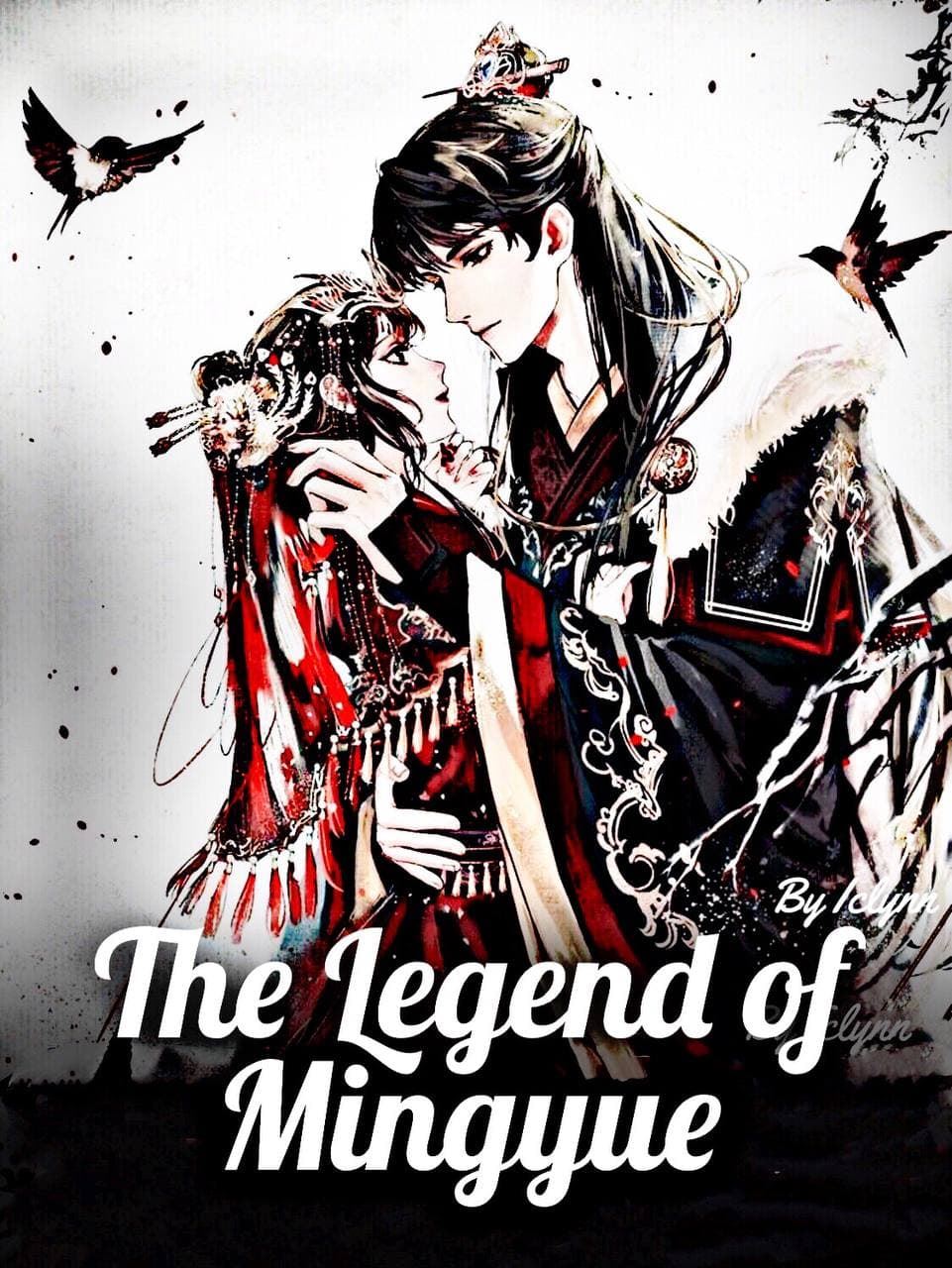
The Legend of Mingyue
+Add to Custom List
Sort
Add review
... Read More
"She is usually gentle and kind in front of everyone... But this woman was extremely violent when she bullied me in secret." That line hit me harder than I expected. It's not just describing a villain — it's describing a pattern that runs through this whole story. The idea that people's true nature hides behind a mask of kindness, that appearances are deliberately crafted to manipulate, that gentleness can be a weapon. Feng Ling represents this theme perfectly. Her name even sounds soft and pure. Her reputation is built on being gentle and kind. But behind closed doors, she's poisoning people and bullying her own sisters. The contrast between her public persona and private cruelty is the author's way of saying: don't trust what you see. The poison itself — Anjing, meaning quiet peace — is also symbolic. It kills without a struggle, without drama, without leaving evidence. It's the perfect tool for someone who wants to eliminate obstacles while maintaining their spotless reputation. You can't accuse someone of murder when the victim just... peacefully fell asleep. There's also the imagery of veils and uncovering. Feng Mingyue removes her black veil when revealing herself to Feng Baiming. This feels intentional — the literal act of showing her face as a metaphor for revealing truth. Throughout the story, things have been hidden behind layers: hidden identities, hidden motives, hidden crimes. The narrative keeps peeling them back. And Li Guo, the arrogant physician who only takes one disciple every three years — his exclusivity mirrors the exclusive, elitist nature of the world this story takes place in. Power and knowledge are hoarded. Access is controlled. Only the chosen few get in. Feng Ling being his disciple isn't accidental — it's another way the story shows how the powerful protect their own while destroying everyone else. The whole atmosphere of this chapter feels like a slowly tightening noose. We're watching the mask slip, and it's both terrifying and beautiful.
... Read More
The central metaphor of this entire passage is the spiritual ring Feng Mingyue strokes almost absentmindedly. It's both a literal item and a symbol of the power she's been hiding — small, unassuming, easily overlooked, just like herself in the eyes of everyone else. The old man's trembling body mirrors this theme of hidden intensity. On the surface he's just sitting there, but inside he's warring between anger at being deceived and pride at his granddaughter's achievement. That contradiction IS the Murong family. They are built on appearances, on reputation, on projecting strength while hiding vulnerability. And Feng Mingyue's entire journey is about stripping away the false labels — 'good for nothing,' 'trash,' 'fool' — and forcing the family to see the real person underneath. The apology to Wen Yan adds another layer: the theme that memory can be both a prison and a path to redemption. The original host's carelessness became a wound that festered, but the current Feng Mingyue uses those same memories to heal. What's fascinating is how the story treats the past not as fixed, but as something that can be rewritten through conscious choice.
... Read More
I cannot stop thinking about the painting scene. Feng Mingyue drawing her eldest sister — someone she misses deeply but who is clearly NOT a real sister to her. The text says it outright: 'Even if she had an eldest sister, they both were not blood related.' And yet she paints her, and the maids notice the resemblance, and Feng Mingyue says 'It would be great if I have an eldest sister here.' That line hit me like a truck. She's not mourning a real relationship. She's mourning the IDEA of one. The comfort of having someone who should love you but doesn't. The maids' reaction is what broke me though. They 'felt heartache on behalf of their Second Miss' because they understood the reality: 'the other party was clearly bullying their Second Miss every time.' So she's painting a fantasy version of her sister — similar features but an idealized dress, an idealized relationship — while the actual person is the opposite of what she's creating. Art as escape. Art as healing. Art as the thing you do when you can't go back. And then there's this other layer about her father — or someone, I think — who 'never treated her as his own daughter.' The whole theme of belonging, of being seen but not truly loved, it's woven through EVERY scene. The child being beaten in the street? Another powerless person suffering because someone with authority decided they could. Feng Mingyue, the girl who isn't truly wanted in her own family, intervening because she KNOWS what it feels like to be small and hurt. 'I'm already used to it.' That's the most devastating line in the entire passage. Not dramatic, not wailing — just stated as a fact. She's accepted her place in this world where love is conditional and belonging is earned through performance rather than given freely.
... Read More
Okay so Feng Baiming, this teenage boy, is genuinely one of the most fascinating characters I've encountered in ages. I mean think about it—he's cold, distant, has zero feelings for his father, and basically wishes he had no father at all. That line about not needing a filial son kind of father when you can just be a person without a father? Iconic. But what really sold me on him was the moment he reveals his mother secretly bought him a cultivation book when she went out. This kid is teaching himself martial arts because his mother gave him that gift in secret, and now Feng Mingyue takes one look at his skill level and says "I'll teach you personally." That's not just mentorship, that's someone seeing potential in a kid nobody else is investing in. And Feng Mingyue herself—she conceals her own power, yeah, but she's also the first person to genuinely see Feng Baiming. The fact that she warns him not to get involved, calls him Xiao Ming tenderly, and then immediately offers to train him? She's strategic, protective, and somehow still young enough to be his peer. Their relationship feels like the kind of alliance that's about to become something way more complicated. Who trained him really? What was in that book his mother found? The layers here are delicious.
... Read More
Okay so let's talk about Feng Mingyue because this woman is quietly becoming one of my favorite leads ever and I need to unpack it. She's sitting in her main hall like she owns the place—which she basically does—and her maids Mei Li and Mei Hui are just... there. Observing. The fact that they can have this casual conversation about building a shadow guard army tells me everything about their dynamic. They're not fearful servants; they're confidantes who've been with her through transformations. She doesn't even look up when she says "Speak." That level of comfort isn't something you fake. But the REAL character moment here is her plan to recruit from OUTSIDE the capital. She's not hoarding power, she's expanding strategically. "Let's wait until I'm stronger"—this line hit me hard. She's self-aware enough to know her current limits. And Celestial Mountain? That's where the Heavenly Sect is. She's not randomly picking a destination, she's going after what she needs. Then there's this whole subplot about Lady Mingzhu. The text makes it clear—Lady Mingzhu IS Feng Mingyue, right? Because who else would run both a restaurant and a fashion house while secretly being a powerhouse? The empress tried to bully her and ended up apologizing on orders from the emperor himself. That's not just power—that's strategic invisibility. She built two front businesses, one serving the elite and one catering to nobles, while nobody connected them to the same mysterious woman. The four women in white at Mingzhu Residence? Those are her people. Mei Li and Mei Hui probably. The way she controls her image—from recluse mistress to feared business magnate—is masterful character writing. She's someone who lets others underestimate her until the moment they realize they can't afford to. And honestly, the fact that the emperor wouldn't touch Yunru Restaurant's chef and went personally instead? That's the kind of power play that makes you want to stand up and cheer. This woman is playing 4D chess while everyone else is still learning the rules.
... Read More
Okay so the red muslin plot thread is genuinely exciting and I think I know why. Feng Mingyue literally stumbled upon this ancient scroll by accident—had been sitting in her spiritual ring since day one and she only noticed it a week ago. That is such a satisfying moment because it rewards readers who've been paying attention. You remember that ring? The one she's always toying with? And now it pays off. The fact that this legendary weapon has been sought after by experts across the entire continent for hundreds of years creates this massive backdrop of hidden danger. Whoever else is hunting it becomes a ticking clock. And the way the author reveals information about it through Mei Li and Li Qin's conversation rather than just dumping exposition is clean. 'The red muslin itself also had consciousness, and it could hide its own aura'—this detail alone sets up so many possibilities. What if it refuses to be found? What if it tricks people? The plot is layering anticipation right now, and I'm genuinely curious about what happens when she actually encounters it.
... Read More
Okay so let me just say this plot device where the whole world spreads romantic rumors about two people who are NOT dating is honestly my favorite trope and I am HERE for it. The way the saved man immediately starts spreading details about the lady in red — red tambourine, mysterious veil, vanished into darkness — and within literally one day everyone in the capital has already written their shipping fanfic in their heads? The efficiency of rumor propagation in this world is terrifying and I love it. But what really got me was the嵌套结构 (nested structure, sorry slipped into Chinese for a second). You have the actual plot — the demon attack and rescue — happening as a framing device for the gossip scene. The saved man tells his story, which becomes fuel for the tea house conversations, which then directly circles back to affect Feng Mingyue herself. It's a beautiful loop. The author uses diegetic storytelling — people telling stories about stories — to build the world outward from a single incident. The Dark Lord Limu backstory is also doing heavy lifting here. Three years ago, demons slaughtered people in Hu Kingdom, emperor helpless, then BOOM — one night half the demon population gets wiped out by a masked figure in black. That's not just worldbuilding trivia, that's a complete origin myth being constructed in real time through gossip. And the fact that people who mocked him got silenced in one day? That adds this layer of danger to the legend. Every rumor about Limu carries the weight of violence underneath it. Also the tea house setting as a information hub is classic. Two guys sitting in the corner, casually dropping lore, while behind a silk curtain the actual subject of their gossip is choking on her tea. The dramatic irony is SO good here. Feng Mingyue spent two hours listening and apparently learned nothing except 'who IS this guy?' Meanwhile her maids are beside themselves laughing. I need the author to keep feeding me this kind of layered storytelling. The plot is moving at a pace that feels deliberate but never drags. Chapter after chapter of character reactions, whispers, and reveals — and somehow it's more thrilling than any action scene.
... Read More
I just finished this batch and my first thought was: where did the time go? Like I sat down to read one thing and suddenly I'm three chapters deep and my brain is full of new character info and plot twists. The pacing here is actually really well-controlled. We start with a debrief scene — Feng Mingyue getting the report on Concubine Xu's death. It's exposition-heavy but the author makes it work by weaving in character reactions. Li Qiu explaining everything while Mei Hui hesitates before dropping the bomb about the poison being rare and unknown to the doctor — that hesitation creates tension right there. Then we shift to the group discussion, and honestly this could have dragged if it went on too long. But the author keeps it moving by cutting in different perspectives. Sheng Yi asks the question about Feng Ling's background. Wei Xue admits he's never heard of Li Guo and gets laughed at — comic relief that breaks the tension just enough before it ramps back up. The transition to the night scene where they go to investigate the body was smooth. Running across rooftops under moonlight, leaping from place to place — this gives the reader a visual break from all the talking and suddenly we're in action territory. And then BAM. Feng Baiming attacks them. Sword drawn, cold gaze, no warning. That cliffhanger energy is exactly what pulls you into the next chapter. The scene cuts at the perfect moment — he's questioning whether she's even the right person, and the chapter ends with us desperate to know what happens next. Overall, this batch goes from investigation to conspiracy theory to midnight rendezvous to near-combat in what feels like a natural flow. No dragging, no rushed feelings. Solid structure.
... Read More
Let's talk about what's actually at stake here because it's more complicated than it looks. On the surface: poisonous plants and beasts trying to kill them. Fine. But the REAL conflict is layered underneath. Feng Mingyue knows about the poison in Limu's body from six months ago. She chose NOT to intervene in her past life, and now she's watching him suffer the consequences again — except this time she HAS the power to help. The guilt must be eating her alive. Then there's Limu's self-isolation. "You don't want to bother someone that you don't know. You don't want to owe other people." That's not just pride, that's trauma. Whatever happened in their past life shaped him into someone who'd rather knee in the dirt than ask for help. And Feng Mingyue sees it, names it, and still can't tell him the truth. The stakes aren't just survival — they're whether these two can ever be honest with each other. The fight itself raises the temperature perfectly. That poisonous beast is so powerful it needs a FULL five-minute mind control window, and Limu still ends up spitting blood afterward. They're not untouchable. They're vulnerable. And that vulnerability is what makes the reader desperate for them to succeed. Plus, whatever poison he's carrying internally — is that going to come back to bite them later? I have a bad feeling about that.
... Read More
Let me just lay this out because the stakes are actually more layered than they first appear. On the surface, Feng Mingyue's problems are straightforward: two stepsisters who bully her, a stepmother who enables them, a father who ignores her, and a weak body that can't fight back. But the real tension comes from the fact that nobody knows she's been replaced. The stepsisters think they're dealing with the same pushover they always bullied. Li Qiu notices something is off but can't articulate what. The father hasn't even bothered to check on her health. This is a ticking bomb situation because every interaction Feng Mingyue has now is loaded with dramatic irony—we know she's capable and vengeful while everyone around her assumes she's weak. And that creates genuine risk. If she acts too differently too quickly, people will notice. If she moves too slowly, she'll die like the original host did. The illness itself—just a cold that became severe because no doctor was called—is both a immediate physical threat and a symbol of the neglect she's walking into. What's interesting is that the author makes it clear this isn't just about personal revenge. It's about surviving in a world where the power structure is completely rigged against you. She has no allies except four loyal servants chosen by a dead mother. Her father won't help. The stepsisters will keep coming. And she's starting from a body that's already compromised. How does she build power from absolutely nothing? That's the question keeping me turning pages.
... Read More
Let me just say — the shift in how these four maids view Feng Mingyue is honestly one of the most satisfying dynamics in this whole book, and it all happens in a single chapter. Think about it: Mei Li and Mei Hui have served Second Miss since childhood. They know the old her — the original host who was weak, probably naive, definitely couldn't have predicted a poison attack or diagnosed it immediately. But the new Feng Mingyue? She diagnoses them within seconds of seeing their eyes. Flat voice, stony expression, no panic. And when she tells them they have seven days to live, do they break down and blame her? No. They immediately believe she can save them. The passage says it all: 'If they could be saved, then it was the Second Miss' extraordinary medical skill, and if they couldn't be saved, then it must be because the poison was too powerful. Thus, either they died or were alive in Feng Mingyue hand, the two would never harbor any resentment nor grudge toward their master.' That right there? That is the definition of earned loyalty. Not through titles or wealth, but through demonstrated competence at a moment of crisis. And then the detail about her personality changes — 'calm and collected, sometimes lazy, and some day, she was idle' — is so interesting because it shows she isn't uniformly intense. She has layers. She can nap for three hours after cooking, then suddenly be razor-sharp. The maids are still processing that inconsistency, and honestly, it makes them feel more real as characters. They're confused but devoted, which is a far more honest dynamic than blind obedience. Also, can we talk about Feng Mingyue's decision to give them disguises? She pulls red veils and red-and-white clothes from her spiritual ring — outfits her deceased mother prepared for the original host. She doesn't just save their lives medically; she protects their identity when they go out to buy herbs. That's the kind of layered care that makes a character feel genuinely warm, not just competent on paper.
... Read More
Okay so let me just say this - Feng Mingyue waking up from a seven-day coma and immediately getting a spiritual contract绑定 with Lingrou? That is such a smooth plot move by the author. You think she's just some random transmigrator dealing with family drama, and suddenly BOOM - you have this ancient red muslin attached to your arm and you're now master of the demonic fox clan. The plot pacing here is actually really well controlled. First we get the reunion with Limu (who by the way disappears immediately after waking up - classic setup), then the Lingrou awakening, then the political tension with the demonic clan wanting to reappear, and THEN the shocker about Concubine Xu's death. It's like the author is loading plot devices one after another and I am HERE for it. What really stood out to me was the revelation about Limu's identity being hidden. Fen Xiu mentioning that those four loyal guards had their memories erased? That's not just worldbuilding - that's a plot hook that's going to pay off later. The author is basically telling us "stay tuned, this matters" without being too obvious about it. And the Concubine Xu situation - her death being linked to Madam Wu Zhisu's scheming, plus this strange boy Feng Baiming who's been bullied since birth? That's a subplot that's definitely going to branch out into something bigger. The author sets up these parallel stories (Feng Mingyue restoring the demonic clan's power + investigating the concubine's death) and they're going to converge eventually. I also love how the golden sparrow messenger works as a plot device. It's efficient - delivers news, changes the scene, moves the story forward without needing a whole chapter transition. Smart writing.

Leave a comment

You must be logged in to leave comments. or
