The Crown Prince’s Courtesan - Reviews

The Crown Prince’s Courtesan
+Add to Custom List
Sort
Add review
... Read More
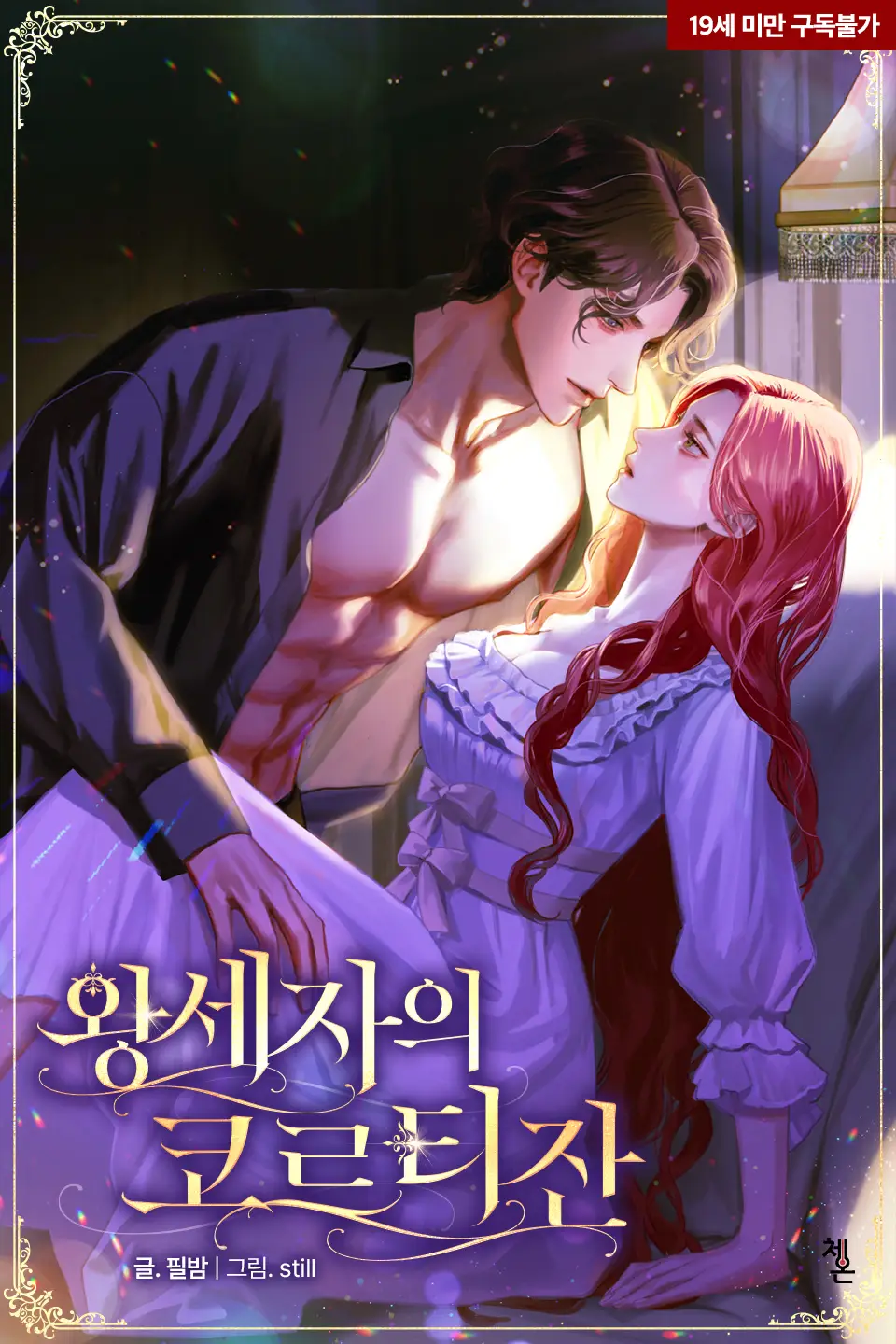
I need to talk about this moment where Russell first actually *sees* her. Not the Academy gossip version, not the whispered-about-enemy-daughter version—the real thing. She bumps into him, looks him right in the eyes, and doesn't flinch. Just... clear gold eyes. Unbroken. And Russell loses his damn mind over it. Let me be honest: I read that scene three times. Three. Because the emotional whiplash is *devastating*. He spent ten years planning revenge—ten years of waking up every day with the phantom smell of his mother's perfume and the memory of his fiancée's laugh—and here she is, staring at him like he's just some person on the street, like she hasn't even noticed the crown prince. And instead of hating her for existing, he hates her for *not broken*. The line that wrecked me was: "He wanted to drag her down into the same pit he had fallen into." That's not hatred. That's desperate, aching envy. He's drowning and she's standing on solid ground with her head held high, and it physically pains him. I felt that in my chest. Like my ribs were too tight. And then the club scene? Where he expects to see ruin in her face and instead finds—*nothing*? No shame. No fear. Just those same gold eyes, pristine. The narrator says "a sensation iced over his chest like frost" and I immediately understood: he's terrified. Not of her. Of himself. Because whatever is happening between them isn't vengeance anymore. His body betrayed him first—the starved hound metaphor, the instinct screaming at him to close the distance—and his mind followed. "That woman, the daughter of his enemy, was, revoltingly enough, perfectly matched to him." Matched. Not cursed. Matched. Like puzzle pieces that were always meant to fit, except one of them called the other a murderer years ago. And the chamberlain dropping that line about her eyes reminding him of the queen? Russell snapping at him like it was a physical blow? That's not just anger. That's grief weaponized. He loved someone whose eyes looked like that, and now this stranger has them, and it's making everything hurt all over again. I don't know where this is going but my heart is not ready. What happens when he finally admits what this is?
... Read More
The pacing here is absolutely ruthless and I'm here for it. Let me trace the spine of this section: it opens with a Prologue-level tragedy (two deaths, one culprit family), drops us ten years into Russell's wreckage, then narrows the lens until we're following one specific moment—his decision to watch her fall. But the actual structure is a series of accelerations. First acceleration: the reveal that the enemy's daughter is in the *capital*. Not some far-off land. Not hidden. Right there. This is the inciting incident compressed into a single devastating paragraph. "'Huh. What? The capital?'"—that line alone does the work of an entire chapter of discovery. Second acceleration: his obsession crystallizes. We go from 'I will make her suffer' to 'why haven't I acted yet?' in the span of a few paragraphs. The author uses repetition as a rhythmic device here—'Why?' appearing like a drumbeat, each one heavier than the last. Third acceleration: the debt collectors arrive, and suddenly Marie is in immediate danger. Russell's choice—to channel that danger through a professor rather than let it play out naturally—is the pivot point of the whole section. Then the final acceleration: the club scene. We've been waiting for this moment since paragraph one. The prose slows down, becomes almost hypnotic, as if the author knows we need to breathe before the final reveal about her being a dominant Omega. And then—boom. Bond. Compatibility. Danger. The chapter breaks are interesting too. The middle section where the maids are talking amongst themselves? That's the breath between two explosions. It gives us the social context, the foreshadowing of Russell's pheromones 'thickening,' the prediction that she'll break. But then it cuts back to Marie literally having the time of her life, blissfully unaware. The dramatic irony is suffocating. My only note: the opening backstory paragraph is dense. Maybe too dense for a first read. But it works as a foundation. You feel the weight of ten years in that first block of text, and then everything else grows out of that soil.
... Read More
The dialogue in this section is razor-sharp, and not just because it's cruel. It's because every character speaks in a completely distinct register. Marie's internal voice is all fragmented thoughts—‘What… what am I supposed to do?' ‘I miss you both so much.' She stammers, trails off, repeats herself. It's the voice of someone whose mind is racing but whose mouth won't cooperate. Then you've got the maids, who speak in complete, polished sentences dripping with mock politeness. ‘Miss Marie, His Highness is calling for you. It's time you fulfilled your duty as a courtesan.' That's not just dialogue; that's performance. They're playing roles too, just like Marie. And Russell—oh god, Russell. His lines are sparse but each one lands like a hammer. ‘Do you understand why I bought you?' ‘You're the one who opens your legs.' ‘Earn your worth, courtesan.' He doesn't waste words. He doesn't explain. He commands, and the narration treats his silence as equally heavy. What's interesting is how the author uses dialogue to strip Marie of agency. Every time she tries to speak for herself, she's interrupted, corrected, or talked over. Even her plea—‘please, stop'—gets answered with more pressure. The voice here isn't just about what's said; it's about who gets to speak and who gets silenced. And there's this one moment, maybe my favorite, where she says ‘Your Highness… you smell like the forest.' And he replies ‘……' Just ellipses. No response. That silence is louder than any line. It's the sound of a man who doesn't need to answer because his presence is the answer. The dialogue isn't about conversation; it's about power distribution. And every punctuation mark is placed with surgical intent. I'm obsessed.
... Read More
I have to address the dialogue in this section because it's doing something really clever—and not all of it is spoken. Let me start with what *isn't* said. The bump-in-the-hallway scene is possibly the most important interaction in the entire passage, and it consists of: "I'm sorry." "..." That ellipsis. That silence from Marie. That is a character moment bigger than any paragraph the author could write. She doesn't grovel. She doesn't try to curry favor. She doesn't even seem to realize who she's talking to. The narration says "she might not have even realized the person she'd bumped into was the crown prince" and I immediately fell in love with her. That silence is her power. Now let's talk about the maids' dialogue. It's almost comedic in its petty cruelty, and that's intentional: "These dresses aren't tailored to your size. We'll have them altered." "Please don't take us lightly just because we're maids. We'll be overseeing everything from your etiquette to your manner of speech." The repetition of the head maid's haughty tone—"as if it were a game of mimicry they took very seriously"—is brilliant characterization. These aren't evil people. They're small people in a system that rewards small cruelty. Their dialogue is performative, rehearsed, empty. And Marie's silence breaks the performance. She just... nods. Like their cruelty is weather. Like she's heard worse from people who actually mattered. Russell's dialogue, meanwhile, is clipped and controlled until it isn't: "Steward. How long must I indulge your insolence?" One line. That's all it takes to show the fracture. He was composed five seconds ago. Now he's snarling at a loyal servant who was just trying to help. The chamberlain's panic—"Why is he so angry? he seemed to wonder, silently"—is the narrator winking at us, letting us in on the secret: he's angry at himself. And Marie's internal voice? Absolutely distinct from everyone else's. While the maids speak in borrowed arrogance and Russell speaks in commands, Marie's thoughts are direct, practical, slightly self-deprecating. "Oh, crap. I'm supposed to have a debut, aren't I?" This is a person who has survived by keeping her feet on the ground, and her dialogue reflects that. No drama. Just assessment and adaptation.
... Read More
Okay so let's talk plot because honestly the way this section unfolds is kind of masterful in a ‘oh you're building this dread so quietly' kind of way. You've got Marie going through this whole education arc—learning manners, poise, how to present herself as the crown prince's mask—and it's framed almost like a makeover montage except it's not fun, it's suffocating. The author skips over days and weeks in a few paragraphs, which makes the passage of time feel relentless, like there's no escape from the transformation. Then—bam—knock knock. The scene pivots from ‘she's getting ready' to ‘he's here' with zero warning, and suddenly we're in the bedroom. That structural whiplash is intentional. The plot isn't just about her becoming a noblewoman; it's about the moment the performance becomes permanent, the moment she steps into the role she's been drilled for. And what's interesting is the subplot thread: Freya, the aunt, the debt collectors. They keep popping into her head like ghosts. Are they parallel plots? Is the author setting up a rescue narrative? A rebellion? The text doesn't say, but the fact that Marie is thinking about them while she's being forced into intimacy tells you everything—the story's stakes aren't just physical, they're emotional and historical. She's carrying other people's fates on her back while her own body is being colonized. That's a plot engine. I want to know if those threads ever converge, or if they stay separate like parallel tracks that never meet. Also, the prince's dialogue—‘Do you understand why I bought you?'—that's a plot reveal in itself. He's not just a cold alpha; he's explicitly framing their relationship as ownership. So the central conflict isn't ‘will they fall in love,' it's ‘will she survive this.' And that changes everything about how you read the romance beats. The sex scene isn't a romantic milestone; it's a power demonstration. Which makes the plot's question even sharper: how do you retain agency when every surface of your life is scripted? That's the hook. I'm locked in.
... Read More
The pacing in these chapters is what got me. It starts slowly—almost lazily. The maids scene, the lunch with Russell, the table manners training. You could skim through this part and miss it. But it's all setup. Every interaction builds a false sense of normalcy, of progress, like these two are actually moving toward something functional. Then Russell starts asking personal questions. 'Is it lonely in the palace?' That's when the pace quickens slightly—we feel like something important is happening. And Marie's internal monologue shifts too. She starts recognizing her own feelings, questioning why she cares, feeling that 'strangely. shamefully' attraction. The prose gets more urgent, more intimate. The pheromone conversation is a turning point in rhythm. Up until now, Russell has been mostly hostile or coldly instructional. Here, he's genuinely distressed—for HER, not himself. 'You curse it. You resent it. You scream until your throat tears.' He's angry on her behalf. The reader is allowed to hope here. Things are getting better. They're connecting. This is the moment before the fall, and the author lingers on it, lets us savor it. And then—BAM. Eyes. Fiancée. 'How dare you.' The speed of that shift is violent. One beat they're sharing vulnerability, the next he's invoking her station like a weapon. The chapter essentially ends on a cliffhanger, but not the cheap kind—it's emotional whiplash. We've been given everything and then ripped it away in one sentence. What's brilliant is how the author controls this through tone rather than plot mechanics. There's no dramatic event, no third-party interruption, no physical danger. It's purely relational. The stakes are internal, and that's somehow more devastating.
... Read More
Okay, so this whole sequence with Marie and Russell… man. The chapter starts in media res and just doesn't let go. What's interesting is how the author handles the aftermath — instead of dropping us into some neat resolution, Marie wakes up in this weird liminal space where her body hurts but her mind feels… lighter? That's such a sharp narrative choice. She sold her body, but the experience didn't leave her feeling degraded the way she expected. Instead, she feels something dangerously close to peace. That's the kind of twist that recontextualizes everything. And then there's the detail about Russell — he wasn't just some cold predator, he was suffering too. His pheromones had been tormenting him since childhood, and somehow Marie, of all people, brought him calm. But here's what really got me: the ending with the maids telling her she's just a 'stand-in' for some dead fiancée. That's a grenade waiting to go off. The plot is setting up this whole replacement trope, and honestly I'm already hooked on whether Marie will find out the truth or if she'll stay in the dark longer.
... Read More
The pacing in this batch is genuinely masterful and I want to break down why. It opens with Arwena's POV and her reaction to the rumor — which is essentially exposition disguised as emotion. We learn about her years of investment in Russell, her crafted image, her pride. But it doesn't feel like info-dumping because it's filtered through her actual anger. The porcelain shattering against marble? Immediate sensory anchor. We're IN the scene before we even know what we're watching. Then the chapter shifts to the ballroom and the pacing accelerates noticeably. The author moves from broad shots (the nobles murmuring, the collective attention on Russell and Marie) to increasingly tighter focuses: the Count's fake compliment → Arwena's direct confrontation → the whispered threat → the slap → the bite → the hand-taking. Each beat is shorter, sharper, more urgent. By the time Russell bites Marie's wrist, the chapter has basically become a series of escalating micro-conflicts with zero breathing room. What's clever is how the author controls the rhythm through POV shifts. We spend most of the chapter in Marie's head, which creates dramatic irony — we know things the other characters don't. We know she's a dominant Omega. We know she's developing feelings. We know she COULD fight back but chooses not to. This internal knowledge makes every external interaction feel charged with unspoken meaning. The ending is where the pacing really earns its keep. After the climactic bite scene, the chapter doesn't resolve — it pivots. Russell marks Marie, claiming her in the only way he can without breaking his public facade, and then immediately turns away to perform normalcy with Arwena. The final lines show Marie watching them, touching her wound, asking herself the question that will drive the entire next arc: 'Since when had it been like this?' No cliffhanger action. No dramatic revelation. Just an emotional cliffhanger that's somehow MORE powerful because it's internal. The author understands that the most compelling tension isn't always 'what happens next' — sometimes it's 'when will these two people stop lying to each other?'
... Read More
Okay so this whole chapter arc is genuinely brilliant from a structural standpoint. You've got three major players converged in one room and every single interaction is layered with double meanings. Let me unpack this. The setup starts with Arwena — which immediately establishes the existing power dynamic. She's spent years grooming herself as the Crown Prince's inevitable bride, building her status on political maneuvering and carefully curated rumors. Then BOOM: the rumor hits her that Russell brought home a courtesan. This isn't just shock value — it's the inciting incident for the entire chapter. The author makes it clear that Arwena's entire identity is built on being the obvious choice, and that foundation cracks the moment she hears about Marie. Then the ballroom scene hits and it's pure narrative gold. Every line of dialogue between the nobles, Arwena, and Marie is doing double or triple duty. The nobles are performing cruelty as sport — 'Shall we place bets on who'll be the first to sink their teeth into her pretty little throat?' But here's the thing that made me put the book down and just stare at the ceiling: the author never lets us forget that EVERYONE in this room is performing. Arwena performs righteous indignation. Marie performs submissive acceptance. Russell performs cold detachment. And we, the readers, are supposed to be smart enough to notice who's actually feeling something genuine versus who's playing a role. The pivot point — and I'm not gonna spoil beyond this chapter, but trust me — is when Russell bites Marie's wrist. On the surface it reads as territorial dominance, yes, but the text literally says his intention 'didn't seem to be to arouse her.' He's marking her. Erasing other Alphas' pheromones. Claiming something he refuses to publicly acknowledge. That's a plot mechanic AND a character revelation happening in one gesture. Chef's kiss. And then he walks away to take Arwena's hand. WAIT FOR IT. The reversal is brutal and I was NOT prepared for it emotionally. The author is setting up some massive misunderstanding or internal conflict here, and I am HERE for it.
... Read More
This is the part where I scream into a pillow because the emotional whiplash is NOT fair. One minute Marie is smiling in the mirror, feeling this bizarre pride in her transformation, and the next she's trembling because ‘what if it's tonight?' The author does something really clever here—they don't just make her scared, they make her excited and then ashamed of the excitement. That's the real tragedy. Her body betrays her. The pheromones, the heat, the way her hands move on their own—it's all physiological, but it feels like personal failure. And then Russell, this absolutely devastating figure, shuts it down with three words: ‘No, Marie.' Not ‘don't touch me.' Not ‘I'm not interested.' He says ‘No, Marie' like he's correcting a servant who stepped out of line. And the emotional violence of that—taking something she didn't even realize she wanted and crushing it—what the hell. I am furious for her. But also, and this is the complicated part, I feel the pull. The text describes her moaning, her nails digging into his shoulders, the way her hips move instinctively. It's written so viscerally that you can't ignore the physical connection, even when the emotional context is abuse. That tension is where the story lives. It's not a romance. It's a collision. And the moment that broke me was when she whispers ‘Your Highnesss… give me your pheromones.' She's begging for more of whatever this is, even though she knows it's going to hurt him. That's trauma bonding in real time. I hate it. I love it. I want to shake her and also wrap her in a blanket. The author isn't giving us a sweet love story; they're giving us a psychological hostage situation dressed in silk sheets. And I'm emotionally ruined in the best way.
... Read More
I need to talk about the scene where Marie finally sees his face. You know those moments in books where the entire relationship dynamic shifts in three seconds? This is exactly that. She pulls off her blindfold expecting some anonymous rich buyer, and BOOM—it's him. The crown prince. The same person whose presence made her freeze at the club. And his reaction? A flicker of interest. Just that tiny movement. That's it. That's all it takes to make my brain short-circuit. But what really got me was the power dynamic in that room. He's sitting there like a king on a throne, casually dismantling her dignity, calling her 'goods.' And Marie? She could have crumbled. Any other character in her position would have folded. But she does something insane—she FLINGS OPEN her pheromone reservoir. She fights back with everything she has, even though it physically destroys her in the process. Her face turning pale blue, biting her lip until it bleeds… she's choosing humiliation over submission. And his response? Not satisfaction, not triumph—just… approval? "Not bad." He's genuinely surprised by her. That tiny shift in his expression tells me everything about how this relationship is going to evolve. He's not just going to buy her—now he's INTERESTED. And I'm equal parts terrified and obsessed.
... Read More
I have to talk about how cinematic this opening is because WOW. The very first image — Marie's body all white and red, marks everywhere, tears streaming — it's almost too vivid. You can SEE it. And then Russell's violet eyes cutting through her blurred vision? Chef's kiss. The contrast between her pain and his predatory calm is painted in such sharp strokes. But what really stuck with me is how the author uses physical sensations to build the world. The pheromones aren't just mentioned — they're described as a "thick, cutting scent" that tears through reason. The sounds are grotesque and specific: creaking, gasping, wet slick noises. It's uncomfortable to read, which I think is the point. This world is built on bodies, on biological determinism, and the prologue makes you feel that viscerally. Then you jump to the morning after and the shift is brutal. The bed sheets have been replaced. The room is cool and quiet. Everything pristine. It's such a chilling contrast — the violence of the night reduced to laundry service. That single detail tells you everything about Marie's existence. She wakes up alone, reaches for someone who isn't there, and feels nothing. Not even sadness anymore. Just hollow. The flashback scenes are equally powerful. The debt collectors coming in like a typhoon, the father dead and missing, the mother's breakdown. And that image of Marie having to cover her little sister's eyes while their mother hangs — I actually had to pause and process that one. The domestic horror of it, the way the beautiful and fragile mother crumbles, the violent invasion of what should be sanctuary. This world feels real because the violence against women and Omegas is treated matter-of-factly. It's just... how things are.

Leave a comment

You must be logged in to leave comments. or
