Summary

... Read More

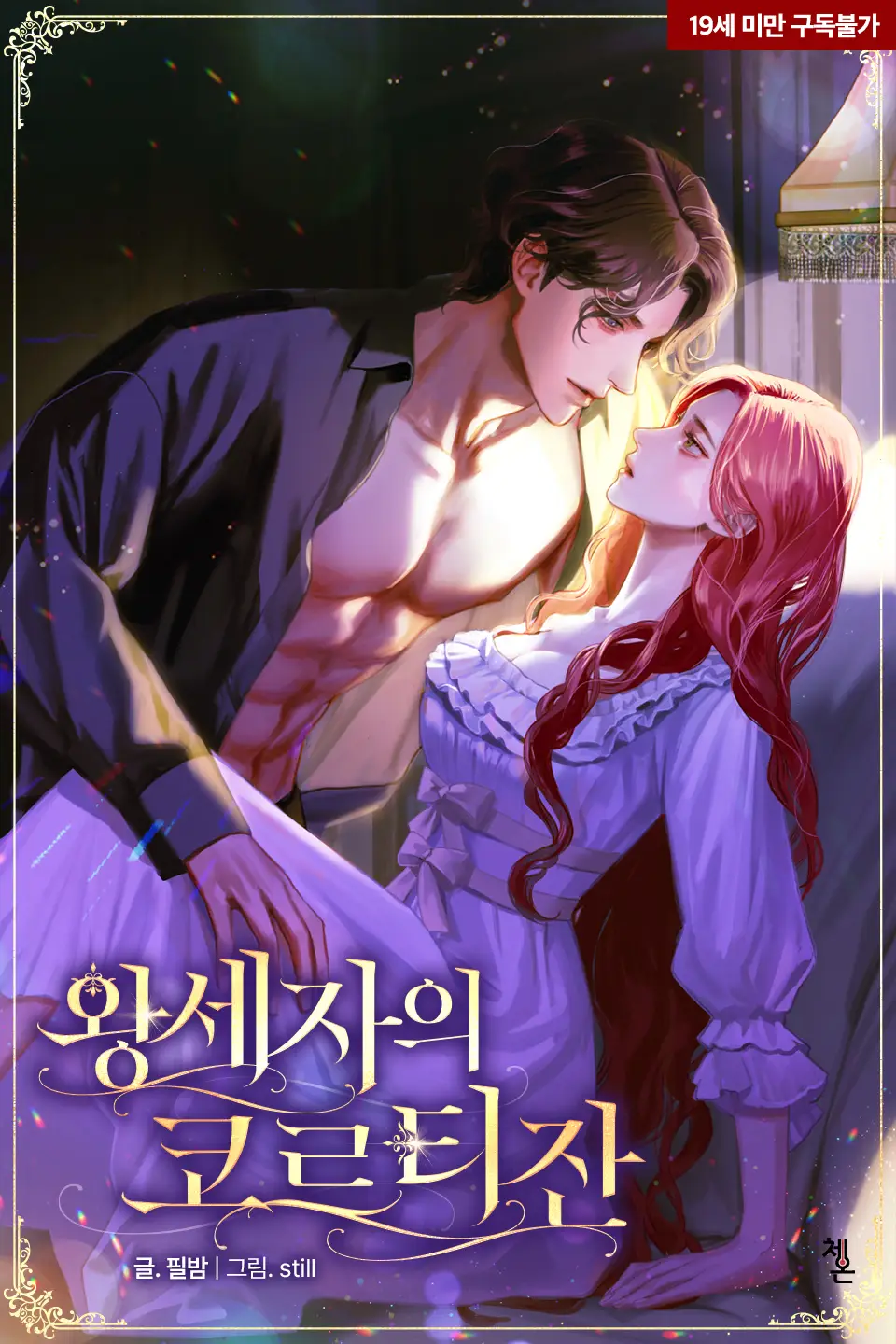
Mary Alphrose, a twenty-year-old dominant Omega from a fallen noble family, endures a life of poverty and bullying after her father’s gambling debts destroy their estate and her mother commits suicide to protect Marie from being sold into slavery. Having lost all assets, Mary is rescued by her aunt Helen and moves to the capital with her younger sister Freya, where she studies relentlessly to secure a stable future. Despite her academic excellence at the prestigious Academy, Mary faces social ostracization due to her lowborn status and recessive Omega nature. As graduation approaches, her former professor offers her a position at the Garden of Courtesans, an exclusive club where wealthy Alpha nobles select Omegas for sexual companionship. Mary initially refuses, valuing her dignity, but is forced back when debt collectors reappear, revealing a forged contract that puts her and Freya in immediate danger of enslavement.

Desperate to save her family, Mary accepts the offer with a condition: she demands one million gold pieces in advance to pay off her debts. Upon entering the Garden of Courtesans, Mary is overwhelmed by the oppressive presence of Alpha pheromones. She senses a terrifying, ultra-dominant Alpha hiding in the shadows, whose scent causes her broken Omega glands to react violently despite her damaged heat cycles. Later that night, she suffers a feverish, suppressed heat attack, realizing only one person in the kingdom possesses such overwhelming power. Days later, an invitation arrives from this mysterious Alpha. Mary is blindfolded and transported to a private chamber, where she discovers the inviter is Russell Ed Crocus, the Crown Prince of the Kingdom of Crocus and the only known ultra-dominant Alpha.

Russell confronts Mary with knowledge of her true nature as a dominant Omega and her physical infertility caused by the drugs her mother forced her to take as a child. He reveals he does not want a wife or an heir; he requires a courtesan who can withstand his pheromones without being consumed by them, and whose inability to bear children prevents political complications. In exchange for her body and servitude, Russell agrees to erase all debts, protect her aunt and sister, and ensure Freya is adopted into a respectable family under a new identity. Mary accepts the terms, viewing it as a transactional survival strategy rather than a romance, and moves into the royal palace.

Inside the palace, Mary faces hostility from the crown prince’s maids and staff, who view her as a stain on Russell’s honor. Unbeknownst to Mary, Russell’s motivation is rooted in deep-seated trauma. Ten years prior, a palace tragedy saw the Queen and Russell’s fiancée poisoned to death by a conspiratorial family. Russell identified Mary’s late father as an accomplice and has sought vengeance against the bloodline ever since. He brought Mary into his palace not out of desire, but to watch her break, believing that suffering would bring him peace. However, his hatred is complicated by an involuntary, intense pheromone compatibility with Mary that he refuses to acknowledge. As Mary navigates court politics and begins to excel in her role, Russell struggles with his obsession, oscillating between cruelty and a protectiveness he cannot explain. The story follows Mary’s survival in a hostile environment and Russell’s internal conflict as his quest for revenge becomes entangled with an undeniable, dangerous bond.

Latest Release
DateGroupRelease
2026-09-27citrus aurora c112
2026-09-27citrus aurora c111
2026-09-27citrus aurora c110
2026-09-27citrus aurora c109
2026-09-27citrus aurora c108
2026-09-27citrus aurora c107
2026-09-27citrus aurora c106
2026-09-27citrus aurora c105
2026-09-27citrus aurora c104
2026-09-27citrus aurora c103
2026-09-27citrus aurora c102
2026-09-27citrus aurora c101

Community Reviews

Rating(0 / 5.0, 37votes)
5 stars
0(0%)
4 stars
0(0%)
3 stars
0(0%)
2 stars
0(0%)
1 stars
0(0%)

Popular reviews

... Read More
I need to talk about this moment where Russell first actually *sees* her. Not the Academy gossip version, not the whispered-about-enemy-daughter version—the real thing. She bumps into him, looks him right in the eyes, and doesn't flinch. Just... clear gold eyes. Unbroken. And Russell loses his damn mind over it. Let me be honest: I read that scene three times. Three. Because the emotional whiplash is *devastating*. He spent ten years planning revenge—ten years of waking up every day with the phantom smell of his mother's perfume and the memory of his fiancée's laugh—and here she is, staring at him like he's just some person on the street, like she hasn't even noticed the crown prince. And instead of hating her for existing, he hates her for *not broken*. The line that wrecked me was: "He wanted to drag her down into the same pit he had fallen into." That's not hatred. That's desperate, aching envy. He's drowning and she's standing on solid ground with her head held high, and it physically pains him. I felt that in my chest. Like my ribs were too tight. And then the club scene? Where he expects to see ruin in her face and instead finds—*nothing*? No shame. No fear. Just those same gold eyes, pristine. The narrator says "a sensation iced over his chest like frost" and I immediately understood: he's terrified. Not of her. Of himself. Because whatever is happening between them isn't vengeance anymore. His body betrayed him first—the starved hound metaphor, the instinct screaming at him to close the distance—and his mind followed. "That woman, the daughter of his enemy, was, revoltingly enough, perfectly matched to him." Matched. Not cursed. Matched. Like puzzle pieces that were always meant to fit, except one of them called the other a murderer years ago. And the chamberlain dropping that line about her eyes reminding him of the queen? Russell snapping at him like it was a physical blow? That's not just anger. That's grief weaponized. He loved someone whose eyes looked like that, and now this stranger has them, and it's making everything hurt all over again. I don't know where this is going but my heart is not ready. What happens when he finally admits what this is?
... Read More
The pacing here is absolutely ruthless and I'm here for it. Let me trace the spine of this section: it opens with a Prologue-level tragedy (two deaths, one culprit family), drops us ten years into Russell's wreckage, then narrows the lens until we're following one specific moment—his decision to watch her fall. But the actual structure is a series of accelerations. First acceleration: the reveal that the enemy's daughter is in the *capital*. Not some far-off land. Not hidden. Right there. This is the inciting incident compressed into a single devastating paragraph. "'Huh. What? The capital?'"—that line alone does the work of an entire chapter of discovery. Second acceleration: his obsession crystallizes. We go from 'I will make her suffer' to 'why haven't I acted yet?' in the span of a few paragraphs. The author uses repetition as a rhythmic device here—'Why?' appearing like a drumbeat, each one heavier than the last. Third acceleration: the debt collectors arrive, and suddenly Marie is in immediate danger. Russell's choice—to channel that danger through a professor rather than let it play out naturally—is the pivot point of the whole section. Then the final acceleration: the club scene. We've been waiting for this moment since paragraph one. The prose slows down, becomes almost hypnotic, as if the author knows we need to breathe before the final reveal about her being a dominant Omega. And then—boom. Bond. Compatibility. Danger. The chapter breaks are interesting too. The middle section where the maids are talking amongst themselves? That's the breath between two explosions. It gives us the social context, the foreshadowing of Russell's pheromones 'thickening,' the prediction that she'll break. But then it cuts back to Marie literally having the time of her life, blissfully unaware. The dramatic irony is suffocating. My only note: the opening backstory paragraph is dense. Maybe too dense for a first read. But it works as a foundation. You feel the weight of ten years in that first block of text, and then everything else grows out of that soil.
... Read More
The dialogue in this section is razor-sharp, and not just because it's cruel. It's because every character speaks in a completely distinct register. Marie's internal voice is all fragmented thoughts—‘What… what am I supposed to do?' ‘I miss you both so much.' She stammers, trails off, repeats herself. It's the voice of someone whose mind is racing but whose mouth won't cooperate. Then you've got the maids, who speak in complete, polished sentences dripping with mock politeness. ‘Miss Marie, His Highness is calling for you. It's time you fulfilled your duty as a courtesan.' That's not just dialogue; that's performance. They're playing roles too, just like Marie. And Russell—oh god, Russell. His lines are sparse but each one lands like a hammer. ‘Do you understand why I bought you?' ‘You're the one who opens your legs.' ‘Earn your worth, courtesan.' He doesn't waste words. He doesn't explain. He commands, and the narration treats his silence as equally heavy. What's interesting is how the author uses dialogue to strip Marie of agency. Every time she tries to speak for herself, she's interrupted, corrected, or talked over. Even her plea—‘please, stop'—gets answered with more pressure. The voice here isn't just about what's said; it's about who gets to speak and who gets silenced. And there's this one moment, maybe my favorite, where she says ‘Your Highness… you smell like the forest.' And he replies ‘……' Just ellipses. No response. That silence is louder than any line. It's the sound of a man who doesn't need to answer because his presence is the answer. The dialogue isn't about conversation; it's about power distribution. And every punctuation mark is placed with surgical intent. I'm obsessed.
... Read More
I have to address the dialogue in this section because it's doing something really clever—and not all of it is spoken. Let me start with what *isn't* said. The bump-in-the-hallway scene is possibly the most important interaction in the entire passage, and it consists of: "I'm sorry." "..." That ellipsis. That silence from Marie. That is a character moment bigger than any paragraph the author could write. She doesn't grovel. She doesn't try to curry favor. She doesn't even seem to realize who she's talking to. The narration says "she might not have even realized the person she'd bumped into was the crown prince" and I immediately fell in love with her. That silence is her power. Now let's talk about the maids' dialogue. It's almost comedic in its petty cruelty, and that's intentional: "These dresses aren't tailored to your size. We'll have them altered." "Please don't take us lightly just because we're maids. We'll be overseeing everything from your etiquette to your manner of speech." The repetition of the head maid's haughty tone—"as if it were a game of mimicry they took very seriously"—is brilliant characterization. These aren't evil people. They're small people in a system that rewards small cruelty. Their dialogue is performative, rehearsed, empty. And Marie's silence breaks the performance. She just... nods. Like their cruelty is weather. Like she's heard worse from people who actually mattered. Russell's dialogue, meanwhile, is clipped and controlled until it isn't: "Steward. How long must I indulge your insolence?" One line. That's all it takes to show the fracture. He was composed five seconds ago. Now he's snarling at a loyal servant who was just trying to help. The chamberlain's panic—"Why is he so angry? he seemed to wonder, silently"—is the narrator winking at us, letting us in on the secret: he's angry at himself. And Marie's internal voice? Absolutely distinct from everyone else's. While the maids speak in borrowed arrogance and Russell speaks in commands, Marie's thoughts are direct, practical, slightly self-deprecating. "Oh, crap. I'm supposed to have a debut, aren't I?" This is a person who has survived by keeping her feet on the ground, and her dialogue reflects that. No drama. Just assessment and adaptation.
... Read More
Okay so let's talk plot because honestly the way this section unfolds is kind of masterful in a ‘oh you're building this dread so quietly' kind of way. You've got Marie going through this whole education arc—learning manners, poise, how to present herself as the crown prince's mask—and it's framed almost like a makeover montage except it's not fun, it's suffocating. The author skips over days and weeks in a few paragraphs, which makes the passage of time feel relentless, like there's no escape from the transformation. Then—bam—knock knock. The scene pivots from ‘she's getting ready' to ‘he's here' with zero warning, and suddenly we're in the bedroom. That structural whiplash is intentional. The plot isn't just about her becoming a noblewoman; it's about the moment the performance becomes permanent, the moment she steps into the role she's been drilled for. And what's interesting is the subplot thread: Freya, the aunt, the debt collectors. They keep popping into her head like ghosts. Are they parallel plots? Is the author setting up a rescue narrative? A rebellion? The text doesn't say, but the fact that Marie is thinking about them while she's being forced into intimacy tells you everything—the story's stakes aren't just physical, they're emotional and historical. She's carrying other people's fates on her back while her own body is being colonized. That's a plot engine. I want to know if those threads ever converge, or if they stay separate like parallel tracks that never meet. Also, the prince's dialogue—‘Do you understand why I bought you?'—that's a plot reveal in itself. He's not just a cold alpha; he's explicitly framing their relationship as ownership. So the central conflict isn't ‘will they fall in love,' it's ‘will she survive this.' And that changes everything about how you read the romance beats. The sex scene isn't a romantic milestone; it's a power demonstration. Which makes the plot's question even sharper: how do you retain agency when every surface of your life is scripted? That's the hook. I'm locked in.
... Read More
The pacing in these chapters is what got me. It starts slowly—almost lazily. The maids scene, the lunch with Russell, the table manners training. You could skim through this part and miss it. But it's all setup. Every interaction builds a false sense of normalcy, of progress, like these two are actually moving toward something functional. Then Russell starts asking personal questions. 'Is it lonely in the palace?' That's when the pace quickens slightly—we feel like something important is happening. And Marie's internal monologue shifts too. She starts recognizing her own feelings, questioning why she cares, feeling that 'strangely. shamefully' attraction. The prose gets more urgent, more intimate. The pheromone conversation is a turning point in rhythm. Up until now, Russell has been mostly hostile or coldly instructional. Here, he's genuinely distressed—for HER, not himself. 'You curse it. You resent it. You scream until your throat tears.' He's angry on her behalf. The reader is allowed to hope here. Things are getting better. They're connecting. This is the moment before the fall, and the author lingers on it, lets us savor it. And then—BAM. Eyes. Fiancée. 'How dare you.' The speed of that shift is violent. One beat they're sharing vulnerability, the next he's invoking her station like a weapon. The chapter essentially ends on a cliffhanger, but not the cheap kind—it's emotional whiplash. We've been given everything and then ripped it away in one sentence. What's brilliant is how the author controls this through tone rather than plot mechanics. There's no dramatic event, no third-party interruption, no physical danger. It's purely relational. The stakes are internal, and that's somehow more devastating.
See all reviews

Custom lists

See all custom Lists