The Crown Prince’s Courtesan - Reviews

The Crown Prince’s Courtesan
+Add to Custom List
Sort
Add review
... Read More
The worldbuilding here is so immersive I actually felt physically affected by the descriptions. The Alpha-Omega dynamics aren't just stated — they're rendered through sensory overload. Marie's scent, that grapefruit note the author gives us, becomes a recurring image that ties everything together. And the scene itself — waking up in the Crown Prince's bedroom, sunlight hitting bare skin, the raw marks on her body — it's cinematic. You can see it. The bedchamber isn't just a backdrop; it's a character in its own right. The empty space beside her where Russell was, the maids tidying up while she sleeps, her own naked reflection in the mirror — all of these images compound. But what really sold me was the palace environment around them. The knights and attendants aren't just set dressing; their whispers and reactions tell us about the social hierarchy without any exposition dumps. The gold-eyed remark from the maids also ties into the physical worldbuilding — this kingdom clearly has standards and prejudices encoded in appearance itself. Every detail serves the atmosphere.
... Read More
I need to address the dialogue in these chapters because it's genuinely excellent work. Russell's voice is one of the best-written characters I've encountered recently. He never says what he means. Not once. Everything is indirect, deflected, disguised as cruelty. 'I don't want you looking so pathetic' = stay alive, stay with me. 'You've always been like this around the palace, haven't you?' = I care about how you're treated. 'Is it lonely in the palace?' = I see you suffering and I can't fix it so I'll pretend I'm just being nosy. The genius is that Marie understands this. She's not fooled. She reads between his lines and responds accordingly. When he insults her for liking the palace amenities, she fires back: 'If I may, I'd rather be judged as the former [stupid].' She calls his bluff. She matches him. Their dialogue is essentially sparring, and it's electric. But then there's the moment that wrecked me: 'Your Highness. There's something I'd like to ask. My eyes… They say I look like her, don't they?' This is Marie being honest. Not deflecting, not sparring, not performing. Just… asking. And Russell's response isn't dialogue at all—it's physical description. 'the color drain from the crown prince's face,' 'knuckles went white,' 'looked almost afraid.' The narrative voice takes over because words have failed him. That's when you know the author has built something real. The maids' dialogue serves a different purpose entirely—their speech is performative, gossipy, designed to manipulate. 'We expected you to be a little more hurt.' They want Marie to cry, to break, to confirm their narrative. But she refuses. 'Thank you for telling me. I heard you quite clearly.' That line—so flat, so final—shows how much she's grown. She doesn't play their game anymore. And that ending—'How dare you. Courtesan, do you not know your place?'—it's Russell reverting to script. When honesty becomes too dangerous, he retreats into hierarchy. He puts her back in her box because the alternative is admitting she's inside his head.
... Read More
There's something deeply symbolic about the eyes that I can't shake. Throughout the passage, we keep returning to gaze and sight — Russell forcing Marie to look at him, her own confused reflection in the mirror, the maids obsessed with her golden eyes being identical to some dead girl's. Eyes are literally the bridge between Marie and this unnamed former fiancée, but they're also the barrier. Her eyes get her into the Prince's bed, but they might also be the reason she never truly belongs there. Then there's the whole theme of 'breaking' and 'fixing' — Marie thinks she's broken because she's a so-called broken Omega, but Russell himself is the one who's been suffering, unable to sleep, tormented by his own pheromones. Their coupling isn't just physical; it's mutually restorative in a way neither of them understands yet. The image of him whispering 'No, what's inside of you is… Done' and then immediately contradicting himself tells me everything I need to know about how deeply tangled their fates are. He thinks he's using her, but the narrative is screaming that they've found something neither expected.
... Read More
I AM SHAKING. I AM ACTUALLY PHYSICALLY SHAKING after reading the ending of this batch. Let me just start from the beginning because the emotional arc across these chapters is brutal. Marie's relationship with her aunt Helen — that's the emotional anchor of everything. Helen is the one who saved them, who took them in despite being poor herself, who runs a tiny general store and still manages to give these two girls a home. And the text keeps reminding us: they don't share a drop of blood. That detail matters so much because it makes Marie's desperation even more acute. She's not just fighting for herself, she's fighting for the person who chose to love her when no one else would. Then there's Freya. Oh god, Freya. Just this one scene where Freya is sobbing and Marie pulls her behind her to shield her — it's such a small moment but it completely breaks me. Marie has spent her entire life being the strong one, the one who never collapses, and now she's standing in her own home with debt collectors who are literally discussing her body like merchandise, and she still thinks about protecting her sister first. The text says: "There was no one left to catch her if she fell. She had to stay sharp." THAT LINE. I had to put the book down and just stare at the ceiling for ten minutes. And then the next day she goes back to the professor. She doesn't cry. She doesn't scream. She just says "I'll do it" with conditions. She's already calculating, already negotiating, already trying to reclaim some sliver of agency in a situation designed to strip it from her completely. The fact that she demands a million gold upfront instead of just passively accepting fate — that's Marie. She will sell herself but she won't do it cheaply.
... Read More
The dialogue in these chapters is so sharp it cuts. Let me start with his lines, because god, they're crafted to wound. "I assume your coming here means you're for sale." One line. So cold. So clinical. And then the follow-up that absolutely wrecked me: "Isn't it essential to check before buying any sort of goods?" He's not even angry—he's just stating facts like a merchant inspecting livestock. That indifference is SO much worse than hatred would have been. But what I love is that Marie's voice comes through even when she's barely speaking. Watch how she responds: "Your Highness, please, your pheromones…" She trails off. She can't finish the sentence because she literally can't breathe. And yet when she does speak, she's defiant: "Were you testing me?" Even terrified, she still finds the words to push back. That's a character who won't go quietly. Then there's the aunt scene at the very beginning—so understated and heartbreaking: "Because we're family." Two women having a conversation where neither can say what they're actually feeling. The aunt says "We're family" like it should comfort her, but Marie's reply turns it into a reason to suffer alone. The dialogue here does triple duty—it's sweet, it's devastating, and it tells us everything about Marie's tragic flaw: she carries burdens alone because she loves people too much to drag them down. And that opening narration? "She had no choice now but to go forward without hesitation. She clenched her fists to keep herself from looking back." The narrative voice itself has this weary, resigned quality that perfectly matches Marie's internal state. The author's voice and the character's voice are operating in perfect sync.
... Read More
Okay so let's talk about Russell because HOLY. The man is absolutely vile and I cannot stop thinking about him. From the very first scene, he's calling Marie his courtesan while she's literally in tears, and then he has the audacity to kiss her on the bridge of her nose like that's some tender moment? Like bro, you just verbally abused her into climax and now you're being affectionate? That's not romance, that's psychological warfare and I am HERE for it. The whole dynamic is messed up in the best way. Marie KNOWS he's cruel. She knows he only calls her name when he wants something. She even says so herself: "He only called her name like that when he wanted something. So she kept mistaking it — for care, for need. Again and again." And yet. And YET she would still take his hand if she could go back in time. That line wrecked me because it shows how trapped she is, not just physically but emotionally. She chose this, sort of, but the choice was between certain death and this slow erosion of her soul. What's interesting is that Russell isn't just a cartoon villain. He's cold, yes, but there's something almost... meticulous about his cruelty. He makes her look at him. He won't let her hide. He says "This was your choice" like he's reminding her of something she needs to hold onto. I keep wondering what the hell is going on in that head of his. Is he punishing her? Protecting her? Both? Neither? The text doesn't say, and that ambiguity is what makes him so fascinating. Then there's Marie's mother, who I am absolutely FURIOUS at. Taking that drug, ruining Marie's pheromone receptors, leaving her sister behind, hanging herself — what kind of love is that? It's twisted, desperate love, sure, but Marie can't forgive her for it. And honestly? I don't blame her. "My mother left my sister behind." That's the line that hit me hardest. The mother sacrificed Marie's future and then abandoned them entirely. She's a ghost that haunts the entire story.
... Read More
Okay so let's talk about how the plot basically just backfires on Marie at every single turn, and honestly? That's what makes it gripping. First, she thinks paying off the debt will solve everything — but the collector literally warns her that another contract is already waiting. The author is playing 4D chess here. Every door Marie opens just reveals another wall. But then—plot twist of the century—the crown prince himself shows up in that club? Whoa. I literally gasped when I realized it was Russell Ed Crocus. This isn't just some noble collecting debts, this is the HEIR TO THE THRONE. The whole structure of these chapters is brilliant because it's built on escalating desperation. Debt collectors threaten her family → her aunt gets assaulted → their home gets destroyed → and THEN the crown prince walks in like fate decided to punch her in the face one more time. The story doesn't let her catch her breath between crises. And the ending? "Isn't it essential to check before buying any sort of goods?" — chills. Absolute chills. Marie has been reduced to merchandise in someone else's game, and the most powerful man in the kingdom is treating her like a product inspection. The tension is absolutely relentless and I could not look away.
... Read More
Okay so the worldbuilding in this passage is *chef's kiss* in the most subtle way possible. The author never stops to explain the magic system or the political structure. Instead, you learn everything through how characters experience spaces. The club scene is what I want to focus on. The description is almost surgical: "A pitiful, expensive mistress." That single line does so much work. You know immediately that this place exists at the intersection of wealth and degradation. It's not a brothel—it's something more refined, more insidious. The word 'mistress' implies status, and 'pitiful' implies the reality beneath that status. The contrast tells you everything about the world's relationship with Omegas. Then Marie's room. The mirror that costs more than a year's wages. The ceiling that soars. The bed canopy 'shimmered like a fairy's wings.' The maids' condescending courtesy. Every detail of luxury becomes a cage she's learning to live inside. The author writes: "Her body felt languid from the sheer luxury — so indulgent it almost stirred a twinge of guilt." That guilt is the whole world right there. Marie grew up scraping by, protecting her sibling, surviving on sheer willpower. And now luxury is being pressed into her hands like a weapon. The absurdity of it—the dresses that aren't even her size, the etiquette lessons that feel like training, the maids who are simultaneously serving and subtly torturing her—is rendered through objects, not exposition. The ball she'll attend, the debut, the public display of their relationship—it's all built through her internal monologue rather than grand descriptions. That's masterful. We understand the social hierarchy, the power dynamics, the suffocating expectations of nobility, all through one girl's widened eyes walking into a room she's never seen before. The Academy scenes, meanwhile, carry a different texture entirely—harsh sunlight, whispering crowds, her standing alone with wind-blown fire-colored hair. The visual contrast between those two worlds—the cold, gilded cage of the palace versus the brutal honesty of public humiliation at the Academy—says everything about how this society treats its women.
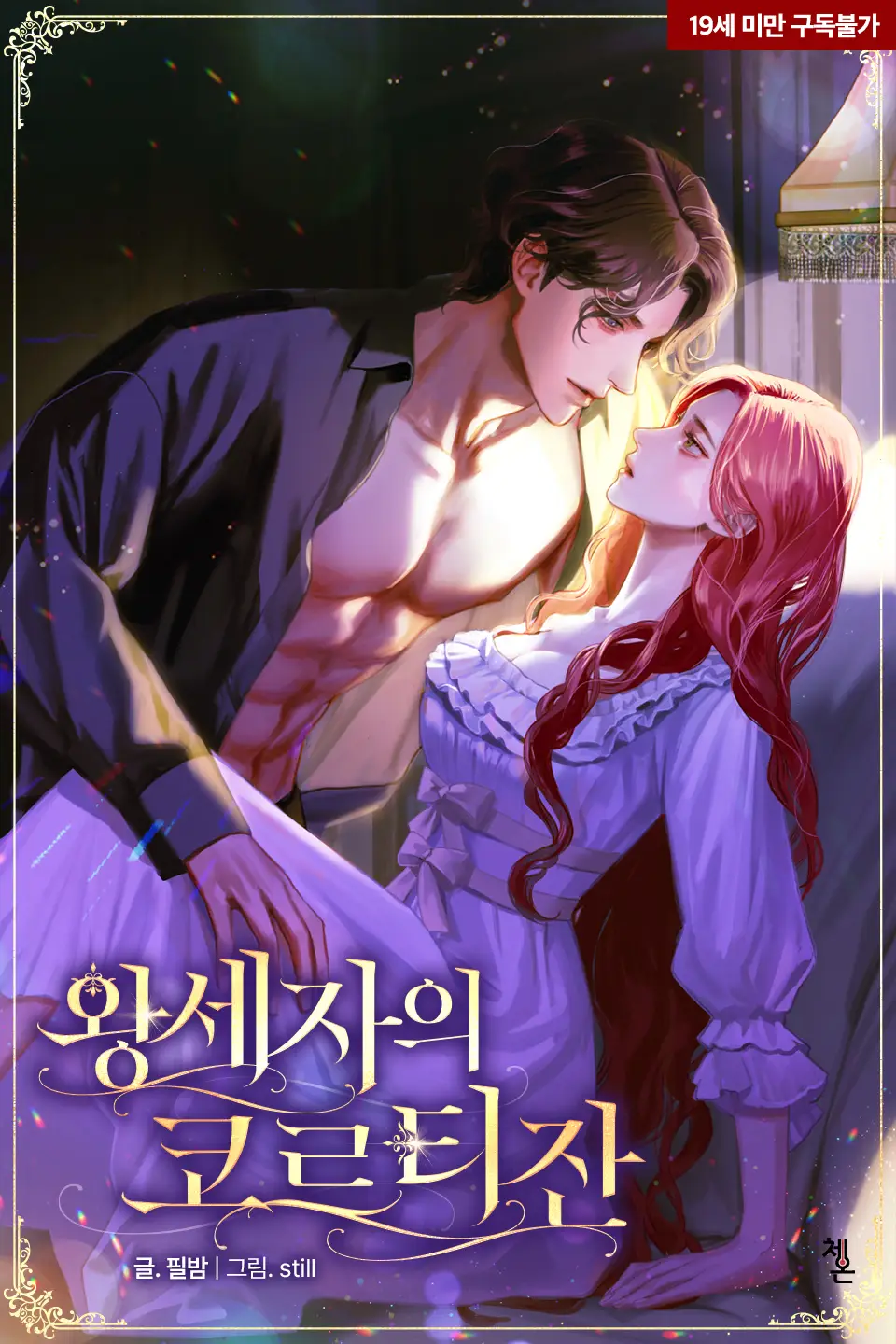
... Read More
I picked this up thinking it was just another abridged romance and now I can't sleep because the pacing is INSANE. Let me break it down. Chapter starts with an EXTREMELY explicit prologue that's basically pure shock value, right? You're not sure if you're reading erotica or trauma fiction. Then it cuts to the next morning and we get Marie's internal monologue — calm, resigned, almost detached. That whiplash from hot intensity to cold numbness? That's the author telling you everything you need to know about this relationship in three paragraphs. Brilliant. Then we drop into Chapter 1 and the backstory hits like a freight train. We go from Marie's present-day resignation to her childhood, the gambling father, the violent collapse, the mother's decision, the drug, the suicide. It's a LOT of exposition, but it flows because every detail raises the stakes. By the time we learn she's a dominant Omega — the rarest of the rare, the kind of Omega every noble family would kill for — you understand why her mother did what she did. The pacing here is almost too efficient. There's no breathing room between trauma and revelation. The structure also does something clever with time. The prologue shows us the RESULT — Marie broken, familiar with abuse, numb to it. Then the chapters rewind to show us HOW she got here. But it's not a simple linear flashback. It weaves past and present, and by the time we reach the end of what we've read, we're desperate to understand what happens next. How does a girl like Marie survive this world? Will Russell ever... what? Change? The cliffhanger energy is real even in just seven chapters. My only complaint: the middle section where we learn about the Alpha/Omega society gets a little info-droppy. But honestly, the worldbuilding questions it raises kept me turning pages faster than the exposition slowed me down.
... Read More
The pacing in this passage is brutal in the best way. It opens at full throttle — no warm-up, just immediate immersion into the most intense scene possible. The author doesn't slow down for breath; Marie's pain, then pleasure, then the climax — it all comes in one relentless wave. And then… stop. Cut to her waking up. That transition is genius because it mirrors exactly how Marie would experience it: black screen, then lights, then confusion. The middle section where she processes what happened is slower, almost dreamlike, and that contrast makes the whole thing feel more real. But the pacing really peaks at the end with the maids' dialogue. One moment she's alone in her room, composing herself, and the next — *boom* — information bomb about the deceased fiancée, the eyes, the word 'stand-in.' The author uses the maids as a delivery mechanism for exposition that still feels organic because we hear it from the same people who've been mocking her. No info-dump, just natural venom dripping from their tongues. And it ends on a question rather than a resolution, which means I absolutely have to keep reading.
... Read More
I need to process what I just read and I'm not okay. Let's talk about THE SCENE. You know the one. The ballroom, the confrontation, Arwena's slap ringing through the air — and then Russell's hand on Marie's shoulder. Warm. Familiar. She thinks 'Somehow, the Crown Prince's body supporting her from behind felt more tense than usual, but that must have been her imagination.' NOT HER IMAGINATION, SARAH. NOT HER IMAGINATION. He leans in. Lips to the inside of her wrist. Whispers: 'As my courtesan, you must behave yourself.' And then — AND THEN — he bites her. Hard enough to leave a mark. The text describes it perfectly: 'His neat teeth bit gently into the soft skin of Marie's wrist. The strong pressure left a bite mark, accompanied by an unmistakable and overwhelming Alpha pheromone.' Every Alpha in the room sees it. It's a territorial claim. It's a mark. It's basically a public declaration that screams 'this one is mine' even though he just introduced her as a courtesan twenty seconds ago. The dissonance is KILLING me. But the emotional gut punch comes AFTER. After he marks her, after he essentially claims her in front of the entire nobility, he turns around and takes Arwena's hand. Marie watches them walk away together — the 'well-matched couple' — and strokes her own arm where his teeth are still pressing into her skin. And her internal monologue: 'A series of mocking laughter brushed past her ears. It was so strange. Why is my heart aching? Since when had it been like this?' SINCE WHEN HAD IT BEEN LIKE THIS. Exactly. That's the question, isn't it? When did the contract become something more? When did 'I only need you for this arrangement' become 'I can't stand the thought of another Alpha touching what's mine'? The CP chemistry here is absolutely volatile because it's built on miscommunication, concealed identities, and Russell's own inability to process his feelings. He wants to protect her but won't acknowledge her publicly. He's jealous of every other Alpha but frames it as ownership. He's clearly developing real feelings but his position as Crown Prince forces him to play a different game. And Marie? She's falling for a man who treats her as a secret while simultaneously being the only one who seems to truly SEE her. The push-pull is so well-calibrated that every scene with them together leaves me equal parts swooning and screaming into a pillow.
... Read More
Let's get one thing straight: this isn't a romance novel. It's a survival narrative dressed in lace and pheromones. The external conflict is obvious—Marie is trapped in a system that views her as property, and every interaction with Russell reinforces that. But the internal conflict is where the real stakes live. She's fighting two wars at once: one against the man who owns her, and one against her own body's responses. The text makes it brutally clear that her arousal isn't consent. It's biology. And that distinction is everything. Because if her body can betray her, then what's left of her autonomy? The stakes aren't just ‘will she escape' or ‘will she fall in love.' They're ‘can she remain herself when every surface of her existence is being rewritten?' And what's haunting is how small the victories are. She bites her cheek to stay angry. She whispers the names of her loved ones like prayers. She clings to the memory of Freya and her aunt as anchors. Those are the moments of resistance. Not grand rebellions, but tiny acts of interior defiance. The suspense comes from wondering how long those acts can sustain her. Can she keep that core of herself intact while being dismantled night after night? The author raises the stakes further by reminding us of the outside world—the debt collectors, the aunt's worn features, Freya's absent face. Her suffering isn't isolated; it's tied to other people's fates. If she breaks, they break too. That's the real trap. It's not just her body at stake; it's everyone she loves. And that's what makes this section so unbearable to read and impossible to put down. You want her to fight back. You want her to win. But the story keeps asking: what does winning even look like here?

Leave a comment

You must be logged in to leave comments. or
