The Beasts Copulate This Way - Reviews

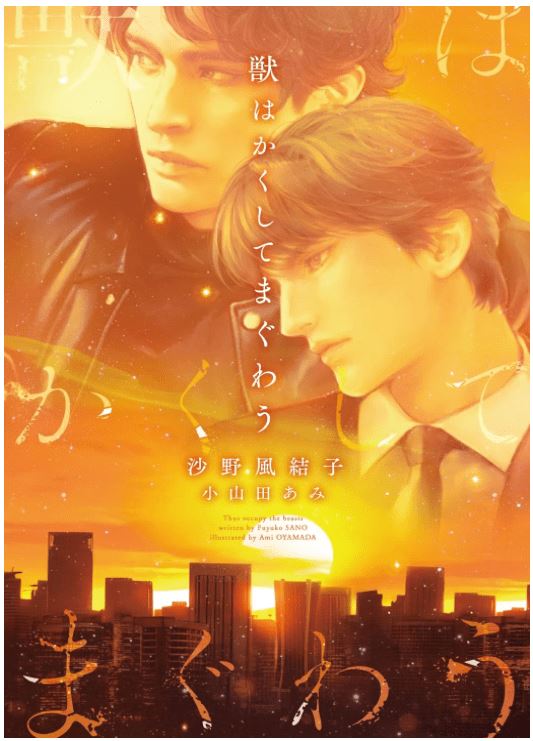
The Beasts Copulate This Way
+Add to Custom List
Sort
Add review
... Read More
'This isnt a luxury our relationship requires.' And yet everything they do is essentially wasting time together - the bath, the meal, the way Kagura deliberately sits on his lap like he owns the space, like Zero owes him something. But then comes the train ride back and suddenly theyre strangers again. That shift is brutal. One moment you are pressed against each other in moonlight and the next you are two men who happen to be sharing a train car. I need to talk about the fist touch though. Because that is the entire relationship in microcosm. They are not holding hands. They are not even fully touching. Just the side of one fist against the other. Neither lets go first. Zero stands up and leaves. Kagura stays seated until he cannot help himself anymore. It is so painfully careful - like they are both terrified that if they acknowledge what just happened, the spell breaks and they have to figure out what comes next. Zero wearing boku during the interview made me ache. He switches pronouns effortlessly, becomes whoever the person needs him to be. But with Kagura, he never does that. With Kagura he is just Zero. And Kagura finding it endearing despite himself? Yes. Of course he does. The night before they were physically intertwined and now they cannot even look at each other on public transport. I keep waiting for one of them to break. Kagura clenches his hand because he feels his fingers wandering on their own. That is not composure. That is barely holding it together. And Zero matching his breath, inhaling at the same exact moment? Yeah. They are desperately attached. They are just too exhausted from surviving whatever they survived to admit it out loud.
... Read More
The atmosphere in this book is thick enough to cut with a knife. Let me paint you a picture — and honestly, the imagery is so vivid I can still see it. Jinya waking in a bed that isn't his. The cool sheets against his skin, the lingering ache between his legs, the quiet morning light filtering into an apartment in Nakameguro that has become something between a sanctuary and a trap. Five nights in two months. That's not casual. That's addiction to something — to the person, to the purpose, to the escape. Then there's the birthday scene. A cheap cake on a low table, whipped cream and strawberries arranged with mechanical precision, the chocolate letters spelling out a celebration nobody asked for. The sparkling wine poured into glasses. The flickering ceiling light later, when they descend those stairs, buzzing like an insect trapped in the fixture. That detail — the light flickering erratically — it's not just atmosphere. It's foreshadowing. Something is about to break. And then the entrance. The dirty glass door left open. An ominous presence wafting in. And HIM — this figure in a purple high-necked top and leather pants, pale skin, light-colored eyes, a smile that comes from aggression rather than joy. The description is almost cinematic. You can picture the camera panning up from those hybrid boots to that delicate face to those threatening eyes. What makes this world feel alive is how the author blends the mundane with the menacing. A birthday cake. A sports drink. An interview with a bartender. Then — a gang leader's planned return to Japan. The ordinary and the dangerous coexist in these pages, and the transition between them is seamless, almost imperceptible, until suddenly you're holding your breath. The setting of Tokyo's underworld — the organized crime department, the Eastern Alliance, the underground connections — it all feels researched, textured, real. Not a glossy criminal romance fantasy but something grounded in the grit of actual organized crime. The author doesn't romanticize the world; they expose it. Every location in this book carries weight. The apartment isn't just a place to meet — it's where Jinya temporarily escapes his own life. The stairwell isn't just a transition — it's where danger announces itself through a flickering light. Even the birthday cake isn't just food — it's a monument to loss disguised as celebration.
... Read More
Okay so this plot twist hit me like a truck and I need to talk about it. Renjou isn't who he says he is - or rather, he's STOLEN someone else's identity. Have you seen how the author sets this up? First you get Zero's line 'something just doesn't add up' about Renjou, and then BOOM, they're off to Niigata to investigate. The whole fake journalist interview scene with the former principal was SO well done. They created this entire backstory about the Japan Venture Award nomination to get close to the principal and dig for info. And when they find the graduation photo of Toshimi Hasumi - that gentle long-faced boy who wanted to be a veterinarian - Kagura literally notices he has NO resemblance to Renjou. The reveal that Renjou stole this kid's identity to cover whatever crime he's hiding... chef's kiss. But here's what's eating me - if Renjou stole Hasumi's identity, that means the real Hasumi is either dead or in serious danger. And Zero's calm reaction of 'it was within expectations' is making me suspicious. Is he ALWAYS this collected? What secrets is he really keeping? Also loving how the author plants clues throughout - the former principal speaking quickly when asked about Renjou's family, the sweat on his face, the fact that both parents are supposedly deceased. Something is OFF and I can't wait for the next reveal.
... Read More
I need to talk about Zero because THIS MAN is something else. Let me just say: the scene in that happening bar? He cornered Kagura against the sofa, pinned him down, whispered threats while being absolutely PHYSICAL — and then actually got the information they needed. The man is a predator in every sense of the word. But here's the thing that keeps me up at night — when Kagura finally UNDERSTOOD what Zero meant about 'fighting outside the rules,' that was such a devastating character moment. Kagura spent his whole life being proud of his kendo skills, his police rankings, his PLACE within the system. And Zero essentially told him: all of that doesn't matter in MY world. And now Kagura gets it. He WITNESSED Renjou fighting like that and finally understands. And Zero? Zero has been operating outside every rule his whole life and he's somehow STILL the one protecting Kagura. 'I'll be the one to protect you' — that line hits differently now. It's not condescending anymore, it's almost... protective in a twisted way. Also can we talk about how Zero is OBVIOUSLY jealous? He got mad when Kagura said he enjoyed being in a happening bar before, like BRO. You're the one who turned it into a sex session. But then again, maybe that's just how their dynamic works. Push and pull, threat and compliance, actual care buried under layers of menace. It's toxic but also genuinely compelling.
... Read More
Okay, let me just say this outright — the relationship between Jinya and Zero is not your typical romance setup, and honestly, that's what makes it so compelling. These two didn't fall in love the normal way. They formed a pact. A bond forged around shared hatred and a single target: Toono Ryouji. What struck me most is how the text handles their intimacy. It's not soft or gentle. Jinya wakes up unable to move, bruised and aching, and Zero's first words are "Clingy, aren't we?" with this bitter edge. But then you realize — this banter IS their love language. This is how they show care. Not through sweet words, but through shared purpose and physical closeness that carries weight far beyond sex. The birthday scene broke me though. Zero brings out a cake — a whole cake — and Jinya realizes it's his birthday. FourThirty-one years old, and he hadn't even noticed. His cousin Haruka used to make him homemade cakes every year, and now she's dead. And here's Zero, this man connected to the underworld, sitting across from him eating cake like they're sharing something heavier than dessert. "Both swallowing down their own shared burdens." That line destroyed me. They call each other out, challenge each other, push back physically and verbally — but underneath it all, there's this terrifying trust. Zero knows Jinya's pain. Jinya knows Zero's world. And they've chosen to run toward the same darkness together. Is this healthy? Probably not. Is it captivating? Absolutely.
... Read More
Let's talk about the TITLE for a second — The Beasts Copulate This Way. BEASTS. Not people. Not humans. BEASTS. And then Zero literally compares Renjou to a giant river otter, a top predator that hunts crocodiles and jaguars. This whole story is wrapped in animal imagery and I think that's the point. The 'world governed by rules' versus 'the world outside those rules' — that's not just a fight philosophy, it's a thematic statement. Kagura belongs to the ruled world. He follows procedure, respects hierarchy, plays by the code. Zero? Zero operates in the wild. He's the predator. And the story seems to be asking: what happens when these two worlds collide? The happening bar itself is symbolic — a place where ALL rules are suspended. No laws, no consequences, just base instincts. And that's exactly where Zero operates best. The tropical plants, the sweet fruit scent mixed with cannabis, the dim lighting — it's designed to strip away civilization and let the beasts out. Even the fountain in the center of the bar feels intentional. Water as a boundary, water as a barrier between the observers and the observed. Kagura watches the entangled bodies across the fountain like a specimen. He's both participant and observer, trapped between two worlds. And Kiriyama — the vampire, the yakuza, the power-monger — he's another kind of predator entirely. One who hides behind rules instead of destroying them.
... Read More
The pacing in these chapters is masterful. We start with Aizawa and Kagura discussing a very tactical, external plot—the media campaign to spot Toono. It's dry, strategic, almost procedural. This serves as a breather, a chance to let the reader catch up with the police side of the conflict. Then, transition to Zero's apartment. The tone shifts immediately from public duty to private tension. The dialogue becomes sharper, more personal. The author slides us into the emotional core without warning. And just when we think we're settling into a character-driven argument, BAM—Renjou's backstory. The family register, the double suicide, the blacked-out past. This is the narrative hook that pulls you forward. The structure here is like a spiral: we start wide with the gang war, narrow down to the romance, then widen again to the tragic history that explains the present. It prevents the story from feeling static. If they stayed only on the political maneuvering, it would be boring. If they stayed only on the angst, it would be melodramatic. Instead, we get a blend: the macro (Eastern Alliance) and the micro (Kagura's kiss attempt). The cliffhanger with Renjou's parents' death is a perfect chapter ender. It raises questions, adds mystery, and recontextualizes Renjou not just as a brute, but as a product of trauma. The pacing is relentless but controlled. I couldn't put it down.
... Read More
'Looks like I can only show you up to B-rank with that pure-hearted streak of yours.' Zero. My God. Every line he speaks is a performance. He's explaining an entire criminal underworld's infrastructure to Kagura — the deduction system, the fighter payouts, the VIP attractions — and he does it with this effortless, almost playful cadence that makes it feel like he's giving a museum tour rather than revealing illegal operations. The contrast between his casual delivery and the horrifying content is what makes his dialogue so distinctive. Notice how Zero never explains things outright to the reader. Everything comes through Kagura's questions: 'Rank is tracked by sensors?' 'Are weapons allowed?' 'Has anyone ever died?' Zero answers like a patient teacher who finds his student's innocence mildly amusing. 'Pretty much anything goes, though guns, acid, and poison gas are banned since they'd harm the audience.' That parenthetical aside about audience safety during a brutal fight to the finish is the kind of dark humor that only this character could deliver naturally. And Kagura's voice is such a perfect foil. He's terse, observant, asking practical questions. His internal monologue is where the emotion lives — that twinge at the back of his neck when he sees the top-ranked fighter, the dawning recognition of Riki. Zero talks; Kagura feels. Their dialogue dance creates this electric push-pull where Zero is always half a step ahead, performing for an audience of one, and Kagura is always catching up, always seeing one layer deeper than he expected to. The narrator's own voice deserves mention too — that dry, almost deadpan observation style ('It's really tax evasion, but since even the highest-ranking officials consider this place untouchable, it's as good as tax-exempt') gives the whole passage this wink-to-the-reader quality that makes it feel conspiratorial. We're not just being told a story; we're being let in on a secret.
... Read More
In the centre of the black floor, a massive blue mandala glowed under black light. I need to just sit with that image for a second. A glowing blue mandala in a pitch-black lounge. That is the kind of visual that gets stamped into your brain and won't let go. It's simultaneously sacred and profane — a spiritual symbol in a den of vice, which is honestly the most perfect tonal description of this entire underground world I could imagine. The author's attention to sensory detail is unmatched throughout this passage. Black marble walls and ceiling. Oriental patterns etched into the black floor. The variety of attire — suits, leather jackets, kimonos, sweatpants with a hundred-million-yen watch. Each detail is a brushstroke painting this world where old-money aesthetics collide with criminal luxury. There's a man in sweatpants and sandals whose wrist could buy a small country. That juxtaposition is doing so much worldbuilding work in a single sentence. And the elevators. Five of them, each a different color — purple, red, blue, green, grey — representing ranks from SS down to C. That's not just functional worldbuilding, that's social hierarchy made physical. You literally cannot ascend beyond your station. When black-suited enforcers drag someone out of the red elevator for breaking rules, the power structure becomes viscerally real. It's not a metaphor; it's architecture. Then they descend to B2 and the roar of the crowd hits you. The octagonal cage with wire mesh, drones hovering above, hundreds of screaming spectators — the transition from the quiet elegance of the lounge to the primal energy of the fighting arena is cinematic. I could see the cut from marble silence to bloodsport chaos. The world feels lived-in because every surface, every rule, every color code has weight behind it.
... Read More
The stakes in this arc are RISING and I am SO HERE FOR IT. Renjou isn't just some criminal - he's LITERALLY STOLEN ANOTHER PERSON'S IDENTITY. Toshimi Hasumi was a kind-hearted kid who volunteered to care for school animals, dreamed of becoming a veterinarian, worked hard for scholarships. And Renjou... replaced him? The former principal's discomfort when asked about Renjou's family is a massive red flag - 'His father worked in a factory, and his mother was a homemaker—a typical family.' Speaking quickly, sweating, avoiding the question about deceased parents. Something happened to the real Hasumi, and Renjou is living as him while hiding whatever crime brought him here. The tension between Kagura and Zero is also spiking - Kagura is learning that Zero is the leader of Enwu, a mysterious group even law enforcement can't fully understand. And despite all these revelations, Kagura is still choosing to travel with him, still letting Zero direct his movements, still trusting him enough to play the role of assistant. But that moment when Kagura sees Zero's profile and feels his heart race, thinking about childhood shadows and survival... Kagura is starting to understand that Zero might be running from something too. The Sea of Japan winter comment about fear and survival feels like foreshadowing - what happens when the people who feel no fear appear? That's Renjou, isn't it? And what happens when Kagura realizes Zero isn't just a mysterious ally but someone trapped in his own survival story?
... Read More
"The sweetness of the cake seeped into his mind." I need to talk about this scene because it haunts me. On the surface, it's a birthday celebration between two lovers. But underneath, it's an elegy. Jinya hasn't celebrated a birthday in years — not since Haruka died. She was the one who made him cakes every year, clumsy decorations and all, and now she's gone. And Zero, who knew exactly what day it was, brought him a store-bought cake with whipped cream and strawberries. Perfect. Symmetrical. Empty. When Jinya eats it, he's not just eating cake. He's swallowing fourteen years of grief, forced down between bites, while Zero watches and does the same. The translator captured something beautiful here: "it felt as if they were both swallowing down their own shared burdens." And then the text shifts — the cake becomes appetizer, the champagne flows, and the real event moves to the bedroom. The intimacy between them is charged with something raw and urgent. It's not just desire. It's confirmation. After everything they've lost, after fourteen years of single-minded vengeance, these two people found something to hold onto in each other. Physical closeness becomes the language through which they express what they can't say aloud. "You're heading in the same direction." That whisper from Zero — it's the closest thing to a love confession in the entire text. Not romantic flowers or poetry, but the acknowledgment that their paths have aligned. That they won't face their demons alone anymore. Jinya's exhaustion when he wakes up — physical, emotional, spiritual — speaks volumes about what this relationship costs him and what it gives him. How much of his body is worn down by this mission? How much of his heart has he let Zero touch? This book doesn't do soft romance. It does broken people finding broken comfort in each other, and somehow that's more moving than any love confession ever could be.
... Read More
I need to talk about the emotional core of this chapter because it's hitting me harder than I expected. Renjou's introduction — the way he emphasizes his name, the childish lisp, the pouting — it's performative. But underneath that performance? There's something heartbreaking. The translator's note essentially tells us: he never grew up. Whatever happened to him froze him at a certain point. He thinks he was saved, but he wasn't. He's trapped in a loop. Reading his dialogue now, I don't just see menace — I see a wounded person wearing a mask, just like everyone else in this story. Kagura's fascination with Renjou isn't just professional curiosity. The text says he's been "intensely interested" for some time. Why? I think Kagura recognizes something. Maybe it's the mask-wearing. Maybe it's the sense of being outside normal society. Or maybe — and this is what gets me — Kagura understands what it's like to want to understand someone who exists in darkness. Then there's Zero. His relationship with Kagura is built on this give-and-take dynamic, but there's protectiveness underneath. "I won't show you things you don't need to see." Is that cruel? Or is it kind? Zero is controlling what Kagura experiences, yes, but he's also shielding him. And Kagura accepts it. He trusts Zero enough to wear the fox mask, to follow the rules, to enter the Invincible Castle blindfolded in more ways than one. The emotional contrast between Renjou and Kagura is devastating. Renjou — trapped in his loop, unable to grow, unable to be saved. Kagura — reaching across the boundary, trying to understand, trying to connect. Both are wearing masks. Both are searching for something. But Renjou's search has no endpoint. Kagura's might. And Sanae? His terror is genuine. He's young, inexperienced, and he just faced something terrifying. But he's also part of this world now. He's learning. Just like we are. The emotional landscape of this chapter is vast — fear, fascination, protectiveness, loneliness, longing. And it's all expressed through what the characters wear, how they speak, and what they refuse to say out loud.

Leave a comment

You must be logged in to leave comments. or