The Beasts Copulate This Way - Reviews

The Beasts Copulate This Way
+Add to Custom List
Sort
Add review
... Read More
I have not stopped thinking about this bar scene. Not one bit. The way Zero pressed against Kagura, the whisper in his ear, the fact that Kagura was getting aroused DESPITE himself and HAD to admit it out loud — 'You got excited during Renjou's match too didn't you?' That line is everything. They're both turned on by violence, by danger, by the whole illegal underground world they've slipped into. And Kagura's response — 'I'll act the part' — when he actually meant it? Chilling. He's so good at compartmentalizing that it's almost tragic. He goes along with Zero's game because he has to, because the mission matters, because he's learned that resisting Zero only makes things harder. But then there's the small moments that destroy me. Like when they're walking out of the bar and Zero's cologne is stronger than usual, provoking Kagura's senses even after everything. Or the way Zero toasts with his Kamikaze right before attacking him. It's like the man doesn't know how to be close without making it about power. And yet. They got Toono's location because of that scene. So it WORKED. But at what cost to their already complicated relationship? Kagura called it 'being addicted to a powerful and dangerous drug' and honestly? Same energy.
... Read More
Everyone wears masks in this world. Zero's Zorro mask. The featureless white full-face masks of the enforcers. The wrestling masks on the fighters. Renjou's rubber mask leaving only eyes and mouth exposed. The invitation cards that authenticate identity while simultaneously erasing it. This is not accidental symbolism — the entire narrative is built around the idea that power and desire thrive beneath concealment. The mandala is the central symbol and it's doing extraordinarily heavy lifting. A mandala is traditionally a spiritual diagram — a representation of the universe, a tool for meditation, a path to enlightenment. Here it glows under black light in an underground fighting arena where wealthy criminals bet millions on brutal violence. The sacred has been inverted, ritualized into spectacle. These people come here not for transcendence but for submission — both the fighters submitting their bodies to pain and the audience submitting to the thrill. Then there's the color-coded elevator system, which is essentially a caste system made operational. SS at the top, C at the bottom, and you can only ride down, never up. It's a physical manifestation of the story's deeper question: what happens when the social order becomes visible, mechanical, inescapable? The system claims to filter 'problematic guests' but really it filters anything that resembles equality or mobility. And Renjou — the unnamed, masked, undefeated fighter — is perhaps the ultimate symbol. He fights without revealing his face, wins without receiving credit, and exists in the deepest level of this hierarchy while controlling it entirely. 'No one's ever won a tournament he's entered.' He is the beast beneath the rules, the title promises. His very body becomes a symbol of everything this underground world produces: power concealed, violence aestheticized, and desire redirected into something that looks like sport but functions like religion.
... Read More
The dialogue in this novel is absolutely brilliant. Let me give you examples, because you NEED to hear this. Renjou introduces himself: "Reeen-jou." That elongated, strange emphasis on the "Re" followed by a sweet, drawn-out trailing off. It's childish yet calculating. It's the verbal equivalent of someone smiling while holding a knife. Then: "Renjou really hates you." Said with a childlike lisp. The contrast between the content (hatred, threat) and the delivery (cute, lisping) is deeply unsettling. And Kagura's response? Pure deadpan: "What a coincidence. I don't like you either." No fear. Just flat acknowledgment. Their dynamic is already established in three lines of dialogue. Renjou's mood swings are captured perfectly through speech patterns. One moment: "Let's go, let's go. Tonight, we're going to have a wild time." Bright, eager, almost manic. Next moment: "Renjou is going to crush you." Dark, low, menacing. The transition happens so fast you barely have time to adjust. Zero's dialogue is sparse but weighted. "Once we're inside, don't take this off under any circumstances." "I won't show you things you don't need to see." Commands, not suggestions. Protectiveness disguised as control. Sanae's voice is pure panic: "I-I was seriously scared." "Of course I am! With a guy like that coming at me out of nowhere!" The stammering, the exclamation points, the defensiveness — you can HEAR his voice. The narration has this stark, almost clinical quality that contrasts beautifully with the chaotic dialogue. Short sentences. Fragments. "Out of nowhere, huh?" Kagura's internal thoughts cut through the scene like a knife. The author's voice — through the translator, obviously — maintains this balance between cold observation and visceral emotion. Every line feels deliberate. Every pause meaningful. I'm obsessed with how the dialogue reveals character without ever stating it outright.
... Read More
I need to revisit this chapter three more times before I can properly discuss how extraordinary the dialogue work is here. Going backwards now because the opening exchange keeps looping in my head. Kiriyama says "It's about time I marked my pet again" and Kagura thinks about how leaving a bite mark was the pet's mark, and within four lines we've established an entire history of manipulation, consent, violence, and survival. That's not exposition - that's dialogue doing the work of three chapters of backstory. The author trusts the reader to understand that "pet" doesn't mean cute companion animal, it means owned, controlled, marked property, and that understanding changes how you read every subsequent line Kiriyama speaks. What's remarkable is how Kiriyama's voice stays consistent even as the scene escalates. He's always this calm, almost amused predator. "Last night's play was thrilling, wasn't it?" said like he's commenting on the weather. "From the VIP seats, the view of the spectators is quite clear" delivered with the casual arrogance of a man who owns every room he enters. And then the ear scene - he says absolutely nothing during the actual violation. The silence is louder than any line could be. When he finally speaks again, it's "Let's watch the match the week after next. I'll contact you again" and the banality of that closing is devastating. He just rearranged Kagura's entire evening and then treated it like scheduling a coffee date. Kagura's internal voice contrasts beautifully. It's sharp, defensive, constantly calculating. "Calm down. That was nothing at all. It was only his tongue in his ear. No marks were left, and it wasn't as though their mucous membranes touched." The fact that he's trying to convince himself of this tells you everything about what actually happened. And Sanae's lines at the end - "What was the summons from Prosecutor Kiriyama about?" and "You're bleeding from your ear" and "The last time you went to see Prosecutor Kiriyama, you were bleeding too" - she's the only character who acts as a moral compass, and her concern lands with genuine weight because the narrative has spent two hundred pages making us feel exactly what Kagura is feeling. The author's voice in the translator's note - "I really don't know what Kiriyama wants. It's a puzzle. But he sure is perverted" - is also a form of meta-dialogue that somehow fits perfectly. "Ah, so it was really you, then. I guessed from your build and the way you walked." The way Kiriyama phrases this as a guess when clearly he knew all along - that's the kind of dialogue detail that makes you respect the writer's craft. He's not just writing mean lines; he's writing LIES that reveal character. Every word Kiriyama speaks is calculated, and that's what makes him so terrifying.
... Read More
"You're bleeding from your ear." I keep coming back to that line because it encapsulates everything this story is really about. The blood from Kagura's ear isn't just a physical detail - it's the visible proof of invisible violation, the way Kiriyama's power leaves marks that don't show on the outside but bleed from within. And this story is FULL of these layered symbols working beneath the surface. The chameleon tongue is the most elaborate one. It appears three times: first comparing Kiriyama's neck biting to a chameleon's tongue "slathering across his face," then during the face-close moment "a chameleon's tongue was now licking his entire face," and finally during the ear violation "it felt as though a chameleon's long tongue was exploring every corner of his mind." A chameleon's tongue is sticky, fast, reaches places its body cannot, and returns to the mouth coated in saliva. It's a perfect metaphor for Kiriyama's approach to Kagura - intimate invasion disguised as casual contact, psychological penetration that leaves nothing untouched. The chameleon also changes colors, blends into its environment, waits perfectly still before striking. Kiriyama does exactly this in the institutional world - he's a prosecutor, a man of authority, someone who fits perfectly into the system while using that system as cover for his predation. Then there's the mark itself. Kiriyama's original "pet mark" was a bite on the neck - visible, physical, a brand of ownership. But when Kagura demands "No marks," Kiriyama pivots instantly: "As long as I don't leave a mark, right?" And then he proves that physical marks aren't necessary. The ear violation leaves no external sign except a small amount of bleeding from Kagura scratching it. The contamination is internal, hidden, permanent in its effects even if invisible. This is the story's central argument about power: the most effective control doesn't need to be seen. Zero's protective instinct operates as a thematic counterpoint. "Zero always had a way of trying to shield Kagura." Shielding versus consuming - these are the two opposing forces in Kagura's life. Zero wants to protect him from dirty knowledge; Kiriyama wants to force-feed him everything. The underground fighting arena becomes the physical manifestation of this conflict: a place where violence is spectator sport, where watching is participation, where knowledge itself is the prize. And the newspaper article about the Eastern Alliance's young members - students dragged into fraud, prostitution, bloody power struggles. These kids are being marked and consumed by the same system Kagura is navigating. The macro and micro reflect each other. The organization eats its young just like Kiriyama eats Kagura's autonomy. "The organisation had swelled so much that it was unclear where the Eastern Alliance officially began or ended" - that line about blurred boundaries applies to the whole story. Where does investigation end and entanglement begin? Where does alliance end and exploitation begin? Where does care end and control begin? I'm still sitting with the image of Kagura's blood-stained fingers after washing his ear. That's the symbol that won't leave me alone.
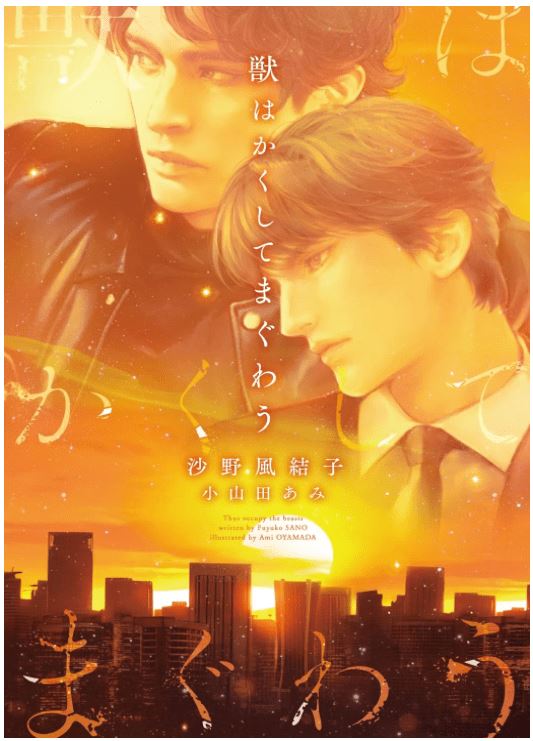
... Read More
Okay so let me just say this: the tension between Kagura and Kiriyama in this chapter is absolutely suffocating in the best way possible. I kept reading and just had to pause because my heart was racing. The whole dynamic here is messed up—it's like Kiriyama is constantly trying to assert dominance while Kagura is silently plotting his escape. And honestly? That's what makes it so compelling. When Kiriyama whispers "Today, you're my pet" and starts getting physically intimate in that private viewing room, I literally felt discomfort creeping up my spine. Kagura doesn't push him away immediately—he endures it because he needs the information, because he has that three-billion-yen card strapped to his wrist that he hasn't even used yet. That's not weakness, that's survival instinct. But then here's the thing that really got me: when Renjou walks in and starts servicing Kiriyama right in front of Kagura, Kagura's reaction isn't disgust at the act itself—it's confusion. He's trying to process why Renjou, Toono's fanatic, is suddenly here. His mind is elsewhere because his brain can't handle the betrayal of yet another connection being severed. And Kiriyama, cruel as ever, makes him sit down and WATCH. "Sit down and watch." Those three words hit harder than any physical violence could. It's possessive, degrading, and utterly controlling. I don't know if I should feel sorry for Kagura or respect him for staying composed. Maybe both.
... Read More
I have to address Kiriyama's dialogue because every line he speaks here feels like a deliberate provocation designed to unravel someone. Let me just quote this one exchange because it perfectly captures how he operates: Kiriyama says "Back off" when Kagura tells him to stay away, then follows up with "Today, you're my pet" like it's the most casual thing in the world. The power inversion in three words! He goes from subordinate-adjacent to dominant in a single sentence. And notice how Kagura's dialogue is almost entirely reactive throughout this chapter—he's asking questions, deflecting, muttering complaints. He says things like "I'll pass" when offered Renjou's services, which is short, clipped, and tells us everything about his resistance. Meanwhile Kiriyama's lines carry this dark satisfaction, like he's enjoying every moment of watching Kagura squirm. Even the informational dump about card pricing—which could've been dry exposition—feels like Kiriyama deliberately overwhelming Kagura with numbers to watch him react. One billion. Three billion. He's watching Kagura's wrist grow heavier with that realization, and the text literally says Kagura could sense him licking his lips beneath the mask. The dialogue here isn't just communication; it's a weapon. And when Renjou asks "Who should Renjou take care of?" in that flat, almost clinical tone while already unbuckling Kiriyama's belt in front of Kagura—that's voice acting gold right there. Every character sounds exactly who they are.
... Read More
The way this chapter is structured is BRILLIANT. It starts with Zero suddenly deciding they need to go to Niigata immediately - 'We'll finish it in two days, one night. Let's go.' No hesitation, no planning meeting, just action. The author wastes no time getting us on the Shinkansen and then transitions smoothly into their disguise routine. The travel sequence is efficient but never rushed - we get the detail about them boarding separately to avoid recognition, the two-hour journey, meeting up at the station where Zero has already transformed into this perfect freelance writer. Then the interview scene with the former principal takes up a good chunk, and it's paced like a real investigation - the playful banter, the ego-stroking, the gradual reveal of information. When they find the graduation album and essay, the pacing slows down just enough for us to process the identity swap revelation. Kagura's internal realization hits us through his observations: 'Under his glasses, Kagura's eyes widened instinctively.' Then they leave as it's getting dark, and the inn scene provides this beautiful decompression moment. The chapter ends on a question - 'why keep investigating him?' - which perfectly sets up the next investigation phase. And that translator note about Renjou's background being more complicated? THE SUSPENSE. The author knows exactly when to accelerate and when to let moments breathe.
... Read More
Zero's thick lips curved into a smirk. 'You don't have much self-control, always ready to bite at anything.' That one line hit me like a small bomb right at the start of this batch. It's not just banter — it's a character thesis statement dressed up as a jab. Zero knows exactly who Kagura is and what makes him tick, and he's weaponizing that knowledge casually. Which is honestly both hot and terrifying. But here's what got me truly hooked: the gradual reveal of this entire underworld system. It doesn't dump everything on you at once. They arrive at a parking lot, walk into a lounge with a glowing mandala, then step into elevators color-coded by rank. Each layer peels back another piece of the puzzle. The deduction system for invitation cards, the sensors tracking every guest, the tax-free underground fight arena — all of it builds this incredibly detailed ecosystem that feels like it was constructed brick by brick. It's not just a setting; it's a plot mechanism. And then Riki shows up in the ring, and Kagura recognizes him. My stomach dropped. He's the bodyguard, the one assigned to watch over Kagura, and there he is fighting for fifty million yen in an illegal underground tournament. The story is doing something really clever here — it's threading multiple subplots together (Zero's agenda, Kagura's search for Renjou information, the Enwu organization, the fight rankings) and letting them overlap naturally rather than forcing collisions. The championship match looming in the background while Kagura is still trying to recall who the top-ranked fighter is? That's not coincidence. The author is laying tracks and I am fully on board the train.
... Read More
Let me just say this: the fight scenes in this passage are absolutely brutal and I was gripping the page the entire time. Not because of gore — though there's a sickening bone snap and a broken arm and a knife pressed into a calf — but because of the sheer physical stakes. These men are risking their bodies in a cage where the only rule is that there are no rules. Brass knuckles allowed. Weapons allowed except guns and poison gas. Two hundred people screaming around you, betting fortunes, watching you try to survive. But the real conflict here isn't in the ring — it's in Kagura's chest. That twinge at the back of his neck when he sees the top-ranked fighter. He's felt it before. The recognition is coming, slow and painful, and we're trapped in his subjective experience, watching him try to put together who that person is while Zero casually provides clues he might not want. 'You were looking for information on Renjou, weren't you?' Zero knows. Of course Zero knows. He's been orchestrating this whole visit, and Kagura is only now beginning to understand that he was never the one choosing where to walk. The stakes compound beautifully. Riki is fighting — his bodyguard, his friend, putting his body on the line in this death match. Kagura is searching for Renjou and closing in on answers he may not be ready for. Zero is playing a longer game that involves all of them. And Renjou himself? He's coiled around Riki like an octopus, tightening his grip, and the text deliberately withholds his identity even as the narrative screams that it matters. The gong has sounded. The embrace has become a stranglehold. And we are left hanging on the edge of something huge, wondering not just who wins the match but what happens when Kagura finally sees the face beneath that rubber mask.
... Read More
I have to applaud the dialogue in this book. It's sharp, it's loaded, and every line does double duty — advancing the plot AND revealing character. Take this exchange: "Clingy, aren't we?" "Whose fault do you think that is?" That's it. That's three lines, and in them you get the entire history of their relationship. Zero is mocking but affectionate. Jinya is defensive but pleased. There's friction, yes, but it's the kind of friction that comes from familiarity, from sleepless nights and shared meals and bodies tangled together. These two don't need to say "I care about you" — they say it through sarcasm and shoulder-checking and throwing empty bottles on the floor. Sanae's dialogue is a completely different flavor. The otter bit is genuinely funny — "I keep telling you, calling me an otter is harassment" — and it gives us a much-needed breather from the heavy stuff. But even his comic relief has depth. He's a detective who looks like he doesn't belong, who calls himself a "small-clawed otter" while secretly wanting to be a "giant otter" that attacks crocodiles. It's a metaphor for his professional identity crisis wrapped in a cute animal comparison. But the dialogue that shifted everything for me was Zero's whisper: "I heard Toono's planning a brief return to Japan." Three seconds of screen time. Three lines of dialogue. And suddenly the entire story pivots. The playful banter, the birthday cake, the physical exhaustion — it all funnels toward this one sentence. Zero drops this intel like he's handing over a grenade with the pin already pulled. The narrative voice itself deserves mention too. It's clinical when it needs to be — describing Jinya's physical state, the layout of the apartment, the appearance of the new character — but it slips into something more lyrical at key moments. "His pitch-black eyes, like primordial darkness, contained a concentrated, fierce energy. It was the man's very soul." That's not just description; that's philosophy wrapped in prose. The author knows when to let characters speak and when to let silence do the work. And those silences — the pauses between sentences, the moments where Jinya chooses not to respond, the spaces between "Happy Birthday" and the real conversation — they're where the real emotional drama lives.

Leave a comment

You must be logged in to leave comments. or
