The Beasts Copulate This Way - Reviews

The Beasts Copulate This Way
+Add to Custom List
Sort
Add review
... Read More
Can we talk about how ZERO SPEAKS? Every line from him is perfectly calibrated. When he suggests theNiigata trip, it's all business: 'Then let's go to Niigata and confirm it ourselves... We'll finish it in two days, one night. Let's go.' But then there's this amused glance at Kagura like 'you knew this was coming, didn't you?' And later when he's directing Kagura's acting: 'Try acting like that small animal-like guy who's always with you.' The casual authority, the precision of his instructions. But my favorite is when he's performing as the freelance writer - he 'loosened up the target with lighthearted banter' and 'expressed exaggerated admiration.' The man can switch personas instantly and never break character. Kagura's voice is more reactive - he's the one asking questions, noticing details, having internal reactions. His dialogue is sparse but meaningful: 'This is extravagant,' about the principal's house, then '…So he wasn't Renjou' at the end. The contrast between Zero's commanding presence and Kagura's observant silence creates such a satisfying rhythm. Even the minor characters have distinct voices - the former principal speaks with that pompous teacher energy, 'I've always treated every single one of my graduates like my own children… no, even more attentively than that.' The ego is palpable. And Zero's response 'It's impressive that he was thinking about scholarships in sixth grade. At that age, I wasn't thinking about anything' - that's Zero being subtly vulnerable while maintaining the interview facade. PERFECTION.
... Read More
This book is called The Beasts Copulate This Way, and I need to talk about what that means because it's doing heavy lifting. Nietzsche wrote, "Man is a rope, tied between beast and Overman — a rope over an abyss." The title is clearly referencing this — humanity caught between animal instinct and transcendent purpose. Jinya and Zero are both beasts in this sense. They've been wounded, corrupted, shaped by violence and loss. But they're also reaching for something beyond themselves — justice, revenge, connection. The beast imagery runs throughout. Jinya is associated with deer (Kagura), an animal that's prey. Zero... well, Zero is named after nothingness, zero, void. But the chapter title in Part 2 is "A Giant Otter" — an apex predator. Sanae, the small-clawed otter, dreams of becoming the giant version. These animal metaphors map directly onto power dynamics and identity struggles. Then there's the birthday cake. This recurring motif of celebration turning into mourning. Jinya's birthdays are haunted — each year closer to the present, each one further from Haruka's last handmade cake. The store-bought cake Zero provides is perfect in appearance but hollow in meaning. It represents everything that's been lost: family tradition, homemade love, the simple joy of being remembered. Eating and swallowing appear again and again. The cake must be eaten. The sports drink must be consumed. Their burdens must be swallowed. Even their intimacy has this gluttonous quality — consuming each other, being consumed. There's something almost cannibalistic about how they exist together, feeding on each other's pain and strength. The number five keeps appearing too — five nights, five years of something unspoken. Five is the number of human hands, of senses, of touch. It's the number of physical connection in a story that's obsessed with what the body knows. And the final symbol that haunts me: the promise. "We're heading in the same direction." This isn't just a plot device. It's a vow between two damaged people that their shared purpose will become their shared survival. The abyss beneath the rope isn't empty — it's where they choose to stand together.
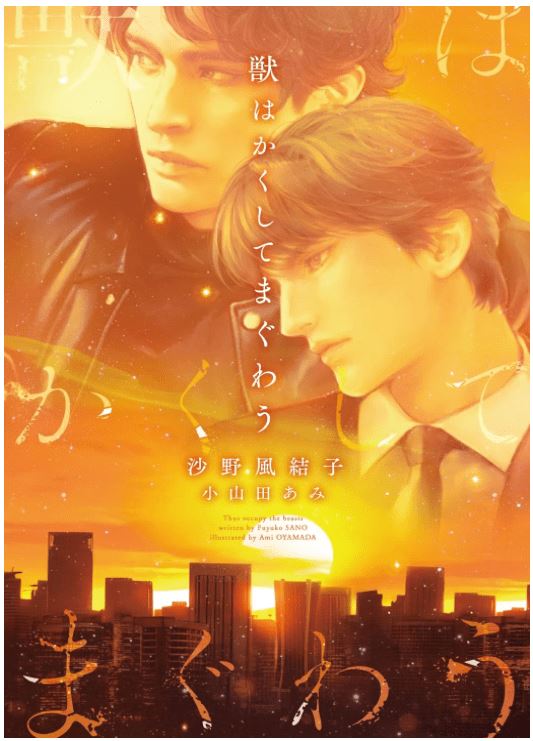
... Read More
This chapter is a masterclass in pacing. Let me walk you through why it works so well. It opens with immediate tension — Kagura confronts Renjou face-to-face for the first time. No preamble, no warm-up. Just two men locking eyes, the air crackling with animosity. The confrontation escalates quickly: Renjou threatens, Kagura remains calm, Sanae is visibly shaken. Within minutes, you're invested. Then — boom — Renjou's companions intervene. "Not now." He clicks his tongue, turns away, loops his arm around his friend's, and suddenly the threat dissipates like smoke. The contrast between that intensity and his casual departure is jarring. It keeps you off-balance. After they leave, Sanae breaks. "I-I was seriously scared." "You're tearing up." "Of course I am!" This moment of relief — of releasing tension — is perfectly timed. We need to catch our breath before the next shift. Then the narrative pivots. We're suddenly in a van, heading somewhere unknown. Kagura calls Zero. We get exposition about Enwu, about Kataware, about the ten thousand undocumented people. This information drop comes naturally — it's Kagura learning about the world he's entering. The pacing doesn't drag because the curiosity propels us forward. The chapter ends with the Invincible Castle description — a new setting, new stakes, new rules. "More or less" Kagura knows what kind of place this is. But today is his first time entering. The transition from street-level confrontation to underground criminal paradise feels seamless. What I love most is how the author controls information. We learn about Renjou through the translator's note at the end — a meta-commentary that reframes everything we just read. "He was never saved and can't be saved." Suddenly Renjou's pouting, his lisp, his threats all carry different weight. The pacing isn't just about scene transitions — it's about when and how we understand what we're reading.
... Read More
What are these two actually running from? Because that chill described as 'a hole opening in his stomach' is not about the case. It is about the terrifying realization that after last night, this morning, this trip - none of it changes what they are. Kagura is a criminal investigations officer. Zero leads an unregistered group. Their connection is inherently unsustainable. The author lays this out with surgical precision in the train scene: 'It was unnatural for a police officer and a man who led an unregistered group to be deeply connected.' Exactly. Unnatural. Like trying to keep two things that are fundamentally incompatible pressed together. And the stakes feel impossibly high because neither character can afford to lose. Kagura just found something warm - idle time, physical closeness, the luxury of normalcy - and the return journey begins the countdown to losing it all again. Zero whispers 'this is too much' and bites his ear to stop himself. That is not just passion. That is panic. He knows exactly how much he wants this and it terrifies him more than any enemy ever could. The murder investigation provides parallel tension - Toshimi parents might have been killed, debt collectors knew before anyone else, secrets buried in small town silence. But the real suspense is watching two people stand on the edge of something and refuse to jump. The fist touch on the train is the highest stakes moment in these chapters. Not because anything dramatic happens, but because everything is on the line and nothing can be said. When the shinkansen reaches Tokyo Station, what happens next?
... Read More
The description of the Invincible Castle had me absolutely transfixed. Let me paint this for you — it's a multi-purpose building in Roppongi, accessible only by invitation card, ranked from B to SS. You've got underground casinos, celebrity escorts, illicit businesses happening behind closed doors. The police can't intervene because senior officers are regular patrons. Information about activities inside is strictly prohibited — leak it and you'll be erased by both state powers and criminal organizations. The atmosphere the author builds here is suffocating in the best way. When Kagura puts on that fox mask — black and blue paint covering the upper half of his face — and Zero gives him a smartwatch device containing his invitation info, you feel the weight of entering a completely separate world. A world with its own rules, its own hierarchy, its own invincibility. And the visual contrast! The Eastern Alliance members — dressed sharp, operating with gang-like structure. Then Enwu, the undocumented children, the Non-citizens. Zero wears a black Zorro mask. Kataware looks like an ordinary salaryman. They move through shadows, literally and figuratively. The translator's note about Enwu's name — "Smoke-like Rain" — gave me chills. Individual rain droplets so fine they're barely visible, gathering in the night and silently covering the world. Over ten thousand unregistered people in Japan, some say, though even the government doesn't know the actual number. These people have survived Japan's underworld since childhood, now forming identities under Zero's lead. They help foreign technical trainees and undocumented immigrants who were tricked into coming to Japan. Compare that to the Invincible Castle — a massive VIP room where crime happens behind smiling faces and masked guests. Two completely different worlds colliding. One exists in darkness by necessity. The other exists in darkness by choice. And Kagura? He's standing right at the boundary between them, trying to understand both.
... Read More
The dialogue in this section is deceptively simple. People say three sentences and it feels like three pages of subtext. Zero opening with 'Renjou seems to have lost the ability to be afraid' while casually sipping green tea - that is such a Zero moment. He says unsettling things without any performance. Just flat statement. And Kagura responding with 'well either way something is broken' like he is commenting on the weather. They are dissecting each other without moving. But then Zero shifts into interview mode and the whole voice changes. 'Oh my, little Toshimi.' That deliberate softening, using boku, widening his eyes like he genuinely didnt know. He becomes a different person entirely and Kagura notices every shift. 'Were you really a freelance writer at some point?' Kagura asking in disbelief - that small crack in his professional mask. He is seeing someone operating in a skin he does not recognize. The most brilliant dialogue moment is what is not said. Not a single word spoken between them on the train ride back. None. And yet the author makes it louder than any conversation. Zero pressing their lips together, Kagura biting his ear to escape sensation, that whispered 'inside it is plenty warm' - every line during intimacy carries the weight of everything else they cannot say out loud. Then the silence on the train. The author trusts the reader to feel the absence. That is confident writing. I respect it deeply.
... Read More
The stakes in this chapter are so high I forgot to breathe halfway through. Let me break this down — Kagura is a detective in the Organized Crime Division, Section 2. He's been relentlessly digging around the Eastern Alliance. Renjou himself admits: "Renjou really hates you." Not because Kagura did anything personal, but because Kagura is a threat. Kagura is investigating, asking questions, getting too close. Then there's the Renjou confrontation. One moment this guy is all pouty and childish, the next his eyes go cold, whites gleaming, voice dropping to a dark tone. "Renjou is going to crush you." The sweetness vanishes instantly. And Sanae — Kagura's junior — is literally tearing up, saying he was scared. Not just nervous. Scared. Because Renjou's presence is overwhelming, unpredictable, dangerous. But the bigger conflict? Kagura vs. the entire system. The police can't touch the Invincible Castle because corrupt officers are patrons. Information leaks are punished by death. Even entering requires a rank-based invitation card. Kagura is stepping into a world where the rules are written by criminals and enforced by both yakuza and state power. And Zero's warning hits differently when you realize what's at stake: "Don't get into any trouble. Just close your eyes if you have to." What does that mean? What crimes is Kagura about to witness? What lines might he cross? The text doesn't tell us, but the tension is palpable. Kagura furrows his brow beneath that fox mask. He's questioning everything — whether Renjou showed up by coincidence (he wasn't), whether the bar they questioned has ties with the Eastern Alliance, whether he's being tracked. The paranoia is real. And the reader? We're right there with him, heart pounding, wondering what happens next.
... Read More
Let's talk about the elephant in the room—or rather, the invisible wall. Kagura and Zero are supposed to be partners, right? Same goal, taking down Toono. But every time they get close, Zero puts up this emotional blast door. I noticed it when Kagura grabbed Zero's sweater and tried to bite his lips—it wasn't even a kiss, it was a fight. "That wasn't a kiss. I was picking a fight." God, the subtext is screaming here. Kagura is literally using physical contact to break through Zero's detachment because he's so frustrated by the lack of transparency. And Zero's response? "At thirty-one, you still can't give a better kiss than that?" He turns it into a joke, deflects again. The power imbalance is exhausting. Zero holds all the cards—he knows everything about the underworld, he has Kataware and Riki, he controls what Kagura sees. Kagura is stuck watching Zero like a specimen in a glass case. When Zero says, "We're not restricted like the 'citizens'," it's not just about being a criminal; it's about how Zero views Kagura. Kagura is a cop, part of the system, but Zero keeps him at arm's length. It's manipulative. It's toxic. It's also the most compelling relationship I've read in forever. I want to know why Zero is so terrified of letting Kagura in. Is it protection? Or is it control? Either way, I'm obsessed with watching this crack open.
... Read More
This chapter is giving me SO much visual atmosphere and I need to talk about it. Let me start with the private dining room first—deep crimson walls, a chandelier hanging from the ceiling, and that warped monochrome checkerboard floor that literally distorts perspective. The translator even noted it gives the impression of stepping into another dimension, and I swear I could FEEL that while reading. It's not just decorative; it's thematic. This entire castle is designed to make you lose your sense of reality. And then there's the meal itself—a full French course served in what should be a nightmare setting but Kagura actually finds himself reluctantly impressed by the food. The fact that he's distracted by genuine culinary appreciation while sitting across from a masked maniac is peak tonal whiplash. But the real standout scene has to be the VIP viewing room overlooking the fighting arena. The one-way mirror window, the opera glasses, the electrocution happening two floors below—it's like being perched in a luxury box at a bloodsport show, and the contrast is deliberately uncomfortable. Kiriyama controls the electricity with a simple remote while Kagura watches fighters get torn apart, and somewhere in all that brutality, the most intimate violation happens right behind him. The author doesn't shy away from sensory details either—the sweet enclosed scent wafting from Kiriyama, the crackling buzz of electricity near Kagura's ear, the mask crushed against glass making breathing difficult. Every sense is engaged. This world feels lived-in and dangerously opulent.
... Read More
So I need to think out loud about the stakes here because they keep escalating and I can't stop connecting dots. Let me start with what's immediately at stake: Kagura's body and autonomy. Every scene with Kiriyama is a negotiation where Kagura is losing ground. First it was the neck bite - a physical mark of ownership. Then the ear violation - internal, invisible, but equally violating. And now Kiriyama is offering him access to the underground arena's VIP section in exchange for... what exactly? Companionship? Submission? Just the satisfaction of knowing he can make Kagura say yes? The stakes feel personal and immediate, and the author makes you feel Kagura's trapped quality through his internal monologue - "Calm down. That was nothing at all." Nothing at all. Right. Because apparently having someone's tongue in your ear canal is totally normal Tuesday activity. But then the author pulls the camera back and the stakes get enormous. The Eastern Alliance faction war isn't just background plot - seventeen young people attacked, two in critical condition, violence erupting in PUBLIC spaces. These are real human costs. And Kagura is supposed to investigate this while simultaneously being manipulated by someone who has connections to the very organization he's trying to take down. The conflict is structural, baked into his job. He CAN'T win without getting his hands dirty, and Kiriyama knows it. The Zero factor adds another dimension. Zero founded Enwu, runs the underground fighting arena, and wants to keep Kagura protected from its darker elements. But now Kiriyama knows Kagura was there. What happens when these two worlds collide? What does Zero think about Kiriyama having this leverage over Kagura? The romantic stakes and the investigative stakes are becoming indistinguishable, and that's where the real tension lives. Sanae's role as the emotional stakes keeper is crucial here. She notices the blood. She remembers the last time. She's keeping a running tally of how much Kiriyama is taking from Kagura, and the fact that she's the only one doing so makes her presence feel both tender and devastating. Someone should be keeping score, and it breaks my heart that it's her instead of Kagura himself. The club invitation card requirement - "S-rank or higher" - is a tiny detail that opens up huge questions. What does S-rank mean in this world? How does one achieve it? What does Kiriyama have that grants him this access? And what does Kagura gain by accompanying him? The stakes are multiplying in directions I can barely track, and that's exactly what makes this story so compelling. Every answer creates three new questions. What happens when Zero finds out about the VIP invitation? What if Kiriyama brings Kagura to the arena and Zero recognizes him? What if the faction war forces Kagura to choose between his investigation and his safety? The author is building toward something massive and I am HERE FOR IT.
... Read More
There's something really masterful about how this passage controls its descent — literally and narratively. They arrive at a parking lot, take an escalator up to a lounge, then later take an elevator down to a fighting arena. The physical movement mirrors the narrative movement: we're going deeper into a world that operates outside normal rules. And the pacing matches that depth. It starts slow, almost bureaucratic — wrist scanners, authentication voices, elevator instructions. Then once they hit B2, the tempo shifts dramatically. The roar of cheers, the stomping feet, the immediate immersion into violence. That transition from procedural to primal is exactly when my pulse jumped. What I love most is how the author uses the tour structure as a pacing device. Zero takes Kagura through different floors — first basement is the arena, first floor is the lounge, third is a club, fourth is a bar, fifth is karaoke, ninth is a restaurant. Each stop is a brief vignette that reveals another facet of this world without stopping the forward momentum. It's expository but it never feels like exposition because it's wrapped in motion. They're walking, riding elevators, observing. The reader learns by following, not by being lectured. And then the championship match announcement drops like a drumbeat — 'With an hour until the championship match' — and suddenly the entire previous section recontextualizes itself. Every detail about this place was building toward that ring. The mandala, the masks, the rank system, the tax-free earnings — none of it was decorative. It was all setup. The author trusts the reader to hold all these threads and then yanks them taut at once when Renjou enters the cage. That's structural confidence. Most writers would have explained more; this one just lets the pieces click into place and trusts us to feel the impact.
... Read More
Let's talk about stakes, because this book understands tension the way most thrillers only dream of understanding it. Jinya has spent FOURTEEN YEARS chasing one man. Fourteen. Since he was a boy, his entire identity has been built around taking down Toono Ryouji, the man who destroyed his family. That's not just a goal — that's an obsession that has consumed his entire existence. He became a police officer not to serve justice broadly but to hunt one specific criminal. His career, his relationships, his birthday celebrations — everything orbits this one point of rage. And now Toono is coming back to Japan. The scene where Zero delivers this news is masterfully paced. We're in bed. Jinya is physically spent, emotionally raw, barely able to stand. Zero kneels over him, faces close, and drops this intelligence like a hammer. The stakes just tripled. Fourteen years of preparation — and the target is finally within reach. But here's what makes the conflict so layered: Jinya isn't alone anymore. He has Zero. And that's both a blessing and a complication. Zero commands the Enwu organization, connected to Japan's underworld. Their alliance gives Jinya resources he never had before — but it also ties him to a criminal world he swore to fight against. Is he becoming what he hates in order to destroy his enemy? The external conflict is clear — man vs. criminal boss, cop vs. outlaw, vengeance vs. justice. But the internal conflict is where this book truly excels. Jinya wakes up unable to move, not just from physical exertion but from the weight of everything he's carrying. He hasn't celebrated a birthday in years. He eats cake without tasting it. He lets himself be vulnerable with someone who could betray him at any moment. What happens if Jinya gets what he wants? What if Toono falls, and Jinya has nothing left? The book seems to be asking this question even as it builds toward the confrontation. The stakes aren't just about catching a criminal — they're about what happens to a man when his entire reason for living disappears. And that new character in Chapter 2 — the menacing figure in purple with the smile that comes from aggression rather than joy — he enters through a flickering light and an open door. Danger doesn't knock. It just appears. The reader is left wondering: is he ally or enemy? Friend orToono's pawn? Every chapter raises the temperature. Every dialogue shift signals a change in power. The suspense isn't just "will he catch Toono" — it's "what will Jinya become in the process, and can he survive the victory?"

Leave a comment

You must be logged in to leave comments. or
