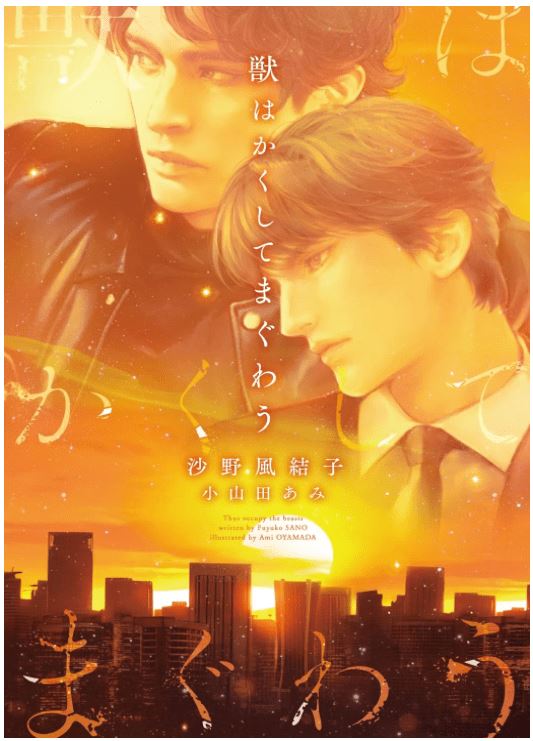
"The vivid sensation of Kiriyama licking and sucking on his neck resurfaced."
This single line opens the door to a scene that is somehow both claustrophobic and expansive at the same time, and I need to talk about how the author builds atmosphere in these chapters because it's genuinely exceptional work. The conference room at the Kudan building - we've been here before, we know this is Kiriyama's territory, his meeting room, his space. And that's exactly why it works so well when he corners Kagura against the window. The prose describes his "sharply defined, deeply shadowed face" and the way his suit "clung beautifully to his impressive physique" and honestly the visual composition here is so precise it reads like a film director's shot list. Low angle looking up at Kiriyama, the window light creating hard shadows, Kagura trapped between the glass and this man who treats violation like a casual greeting.
But what really elevates the worldbuilding isn't just the conference room - it's how the author contrasts spaces. The sterile, institutional prosecutor's office where Kiriyama can do whatever he wants with impunity, versus the underground fighting arena that exists in some liminal space beneath Tokyo's surface. We never get a full tour of the arena, and that's deliberate. The author gives us just enough through Kiriyama's dialogue - "From the VIP seats, the view of the spectators is quite clear" - and through Kagura's memory of being there masked. The arena feels real precisely because it's partially obscured, like something you can sense pressing up against the walls of the narrative.
Then there's the subway station restroom where Kagura washes his ear, and that domestic, almost pathetic image of a detective cleaning himself up after an encounter with a prosecutor is so humanizing. The blood on his fingers, the sticky wetness from his ear, the way he presses his palm against it like he's trying to physically contain whatever Kiriyama put inside him. These small, visceral details make the world feel lived-in and dangerous in a way that grand descriptions never could. And the newspaper article at the end - formatted almost like a real news piece with its clinical detachment about seventeen injured youths - grounds the entire criminal underworld in something that feels disturbingly plausible. Which setting did you find yourself imagining the most?