Spring is the Plan of Life - Reviews

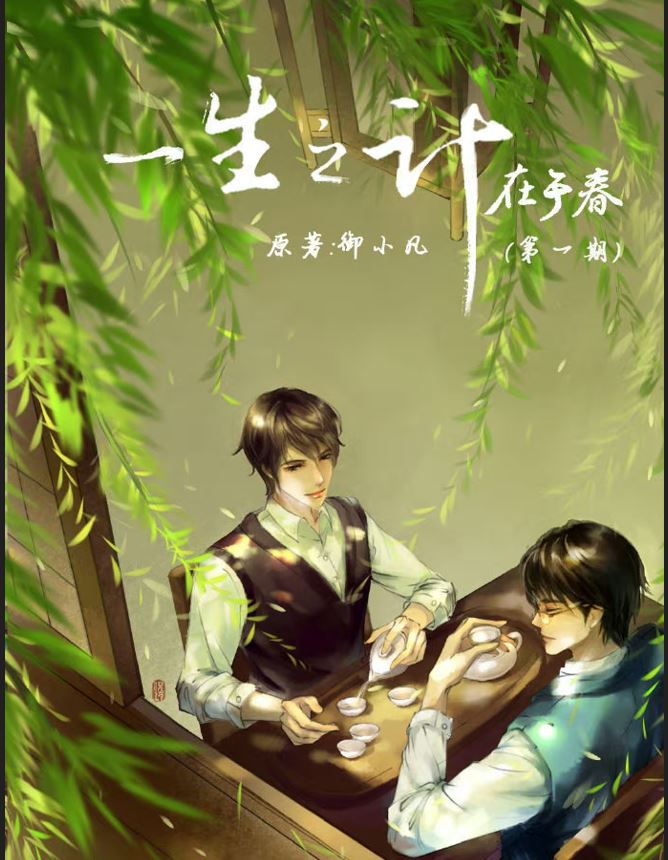
Spring is the Plan of Life
+Add to Custom List
Sort
Add review
... Read More
I need to process what I just read because this chapter absolutely wrecked me in the best possible way. Let's talk about stakes—because the author manages to make a conversation about depression feel LIKE A THRILLER, and I don't use that word lightly. The internal conflict here is devastating. Wu Yang is caught between two opposing forces: the logical part of his brain that knows he should seek help, connect with people, live positively (all things the doctor recommended), and the emotional part that is just SO TIRED. 'Logic tells you that you shouldn't do this. But your emotions can't bear it anymore. You're exhausted.' That line. THAT LINE. It captures the entire experience of depression in one sentence, and it's devastating because it's so TRUE. Then there's Yao Jinxi's conflict, which is equally powerful. He WANTS to help Wu Yang. He clearly cares about him deeply. But he also doesn't know HOW to help. He's trembling. He can barely speak. And yet he stays. He doesn't run away from the heaviness. He just sits there, eating porridge with the person he cares about, listening to trauma he barely understands. His internal monologue reveals everything: 'He couldn't bear to hear more.' And still, he's right there. The external stakes are also interesting. On the surface, this looks like a simple misunderstanding—Yao Jinxi thought Wu Yang was calling some girl late at night, turns out it's related to his depression. But the real external conflict is Wu Yang's relationship with his family. His mother took his compensation money and still couldn't make it. She came to him for money repeatedly. And then she died. This is the sharp blade the narrative describes—'Harm from close family members was like a sharp blade, cutting deep into the heart.' No wonder he wanted to die. What makes this chapter so tense isn't action or danger—it's the fear that Wu Yang might not pull through. That his depression is too deep, that his family trauma is too old, that even though he's 'improved,' he's still one bad day away from giving up. The author raises the stakes with every revelation: the car accident, the mother's death, the failed therapy, the late-night calls. Each one is another layer of suffering, and together they paint a picture of someone barely hanging on. But here's what got ME—the moment Wu Yang says 'After being with you, I haven't called her again.' This is the turning point. Yao Jinxi has become something Wu Yang didn't have before: someone to be WITH. Someone to call instead of that other person. The stakes just shifted dramatically—Wu Yang is choosing Yao Jinxi over his old patterns, and that choice carries enormous weight. The chapter ends on a fragile note: 'Everything suddenly made sense.' Yao Jinxi understands Wu Yang now, but understanding doesn't fix anything. The stakes remain high. Wu Yang is still struggling. But at least he's not alone anymore. And maybe—that's the hope the author is planting—that's enough to keep going.
... Read More
The pacing in these chapters is masterclass-level tension building. The author doesn't throw us into the medical emergency immediately. Instead, we get this slow, almost uncomfortable stretch where Yao Jinxi just... keeps ignoring his symptoms. Morning: feels off. Afternoon: stomach discomfort. Goes out anyway. Eats watermelon. Gets worse. Still doesn't go to the doctor. The reader is screaming at the page the entire time, and that sense of dramatic irony—the audience knowing something the character refuses to accept—is what makes this section so gripping. Then the shift happens. One moment he's typing messages to Xia Ruonan about Fu Hongyu's romance prospects, and the next his body gives out completely. The transition from mundane to catastrophic is almost sudden, which mirrors how real medical emergencies work. Your body doesn't warn you forever. Sometimes it just... stops. The flashback structure—cutting from the present hospital scene to "Last night..."—is also really effective. It lets us see Xia Ruonan's arrival from a different temporal angle, which adds emotional weight. She already called him the night before. Wu Yang missed her calls. Someone was watching over Yao Jinxi while he was unconscious, and we don't know who yet. The author is doling out information like precious drops of water, and I am OBSESSED.
... Read More
The dialogue in this section is quietly brilliant and I think a lot of readers might glide right past it because it doesn't scream for attention, but that's exactly why it's good. Every line between Wu Yang and Yao Jinxi feels like real people who are figuring each other out in real time. Wu Yang's voice is marked by hesitation and self-interruption — those ellipses, the stammers, the moments where he trails off because he's found himself in something he didn't expect. When Yao Jinxi explains the situation with Xia Ruonan and her boyfriend Wang Peng, Wu Yang's response is just "..." twice. That's not nothing. That's a person whose entire internal system has been recalibrated by information he didn't want but now can't unhear. The silence IS the dialogue. Yao Jinxi, on the other hand, speaks in complete, measured sentences. He doesn't rush. He offers help without pressure: "If you find yourself bored, feel free to reach out to me." He explains his philosophy on tea without lecturing: "A cupful is enough to savour the taste of life." Even when he's teasing Wu Yang about waiting for a call, it lands as playful, not accusatory. There's a confidence in his speech that comes from someone who knows who he is and isn't performing for anyone. The balance between them is what makes the conversations sing. Wu Yang tends toward the defensive and self-deprecating — "I probably won't need to call tonight" is both an apology and a boundary, and he delivers it with a smile that says he hopes the other person understands. Yao Jinxi receives these moments without needing to fill the silence, which is itself a form of respect. One line that stayed with me: "Well, a few words that bring joy to both sides, why not?" Wu Yang says this after complimenting Yao Jinxi's tea-making, and it's such a perfectly casual deflection — like he's trying to pretend the compliment wasn't significant, when obviously it was. The author lets the subtext do all the work here. No narration telling us they're connecting; just two people choosing kindness over pretense.
... Read More
okay let me just say it: this chapter is a structural masterpiece disguised as a sweet wedding scene. on the surface, it's xia ruonan's wedding. the plot is straightforward—preparation, ceremony, vows, kiss, applause. but the author is playing a long game here. every beat of this chapter serves a dual purpose: it advances xia ruonan's storyline while simultaneously deepening yao jinxi and wu yang's emotional arc. the setup begins with fu hongyu welcoming guests, but the camera immediately shifts to yao jinxi going backstage. this is a deliberate choice—we're not following the groom, we're following the friend. the narrative eye belongs to our protagonists, even when they're spectators. the climax isn't the kiss between xia ruonan and fu hongyu. it's wu yang saying "i do" while holding yao jinxi's hand. the author places this moment right after the music starts, right as the public ceremony peaks, creating a parallel emotional track that runs underneath the main event. and then—the author's note. breaking the fourth wall to address the elephant in the room. this is bold narrative design. instead of letting readers ignore the impossibility of yao jinxi and wu yang's relationship, the author forces us to confront it head-on. it's a pivot point in the story's emotional architecture. the chapter ends not with the wedding's conclusion but with spring imagery and a housewarming preview. the plot moves forward—not toward a traditional happy ending, but toward something quieter and more honest. that's the story this author is telling, and it's working.
... Read More
The title 'Spring is the Plan of Life' hits different when you really think about it. Spring is supposed to be about renewal, ambition, planting seeds for the future — but Yao Jinxi is literally the opposite of that. He's 26 with the mentality of a 62-year-old, just existing, not planning, not planting anything. He's living in perpetual emotional winter while the title promises spring. And that's the symbolism I can't shake — the juxtaposition of this hopeful, forward-looking title with a protagonist who's basically given up on forward motion. His whole philosophy is 'not easy to become rich, not easy to starve' which is basically the acceptance of stagnation disguised as wisdom. The shrimp fishing itself is symbolic. It's supposed to be this fun, active outdoor date — but it's also artificial (it's in a pool with a tiled bottom), controlled, easy. Nothing wild or dangerous. Just like Yao Jinxi's approach to romance: safe, calculated, with a group discount attached. Then there's the LGBTQ+ theme woven through without fanfare. The 'sister' nickname, the translator's note about Chinese cultural norms — it's all there but it's treated as background texture, not the main drama. Which makes it feel more authentic: for these characters, this is just their normal, not something needing explanation or celebration. The title promises spring. The protagonist is still hibernating. And that gap between expectation and reality? That's where the whole novel lives.
... Read More
I need to address something that could've been a fatal pacing mistake and somehow didn't be: the hospital section. We're talking about a man lying in bed, sleeping, waking up, watching TV. That's it. And yet I couldn't put it down. How? Well, the author understood something crucial: the pacing of recovery IS the pacing of intimacy. Every time Yao Jinxi opens his eyes, Wu Yang is there. The repetition isn't lazy writing—it's deliberate. It mirrors the slow drip of something forming between two people who aren't rushing anything but also can't stop anything. The muted TV, the tilted screen, the stale hospital tea—these small sensory details create a world so contained and real that you forget you're reading about boredom. Then the discharge dinner scene hits and the energy shifts. Four people, car talk, menu scrolling, the awkward triangulation of who's paired with whom. Yao Jinxi and Xia Ruonan both feeling lost in conversation while the couples orbit each other—that's social dynamics rendered in about three sentences. Efficient as hell. And then the tea shop. Quiet. Domestic. Wu Yang cleaning, Yao Jinxi sitting cross-legged on a tatami staring longingly at a barbecue stand outside. This is where the pacing actually slows down to its thickest point, and it's exactly where the important conversations happen. The leave announcement, the brother worry, the unspoken everything. The chapter structure moves from confinement → social gathering → private space, which is basically the classic intimacy arc compressed into three movements. Classic for a reason, but executed with enough restraint that it never feels formulaic.
... Read More
There's a line in this chapter that stopped me cold: 'After all these years, they had grown into adults. But they still yearned for things they couldn't have. In the end, they were just as powerless as they were when they were children.' This isn't just commentary on one relationship. This is the thematic backbone of the entire passage. The childhood trauma — Xia Ruonan hiding from her parents' violent fights, seeking refuge in Yao Jinxi's home — isn't backstory. It's the blueprint. They learned early that love doesn't protect you, that adults can hurt you, that you can do everything right and still be powerless. And now, as adults, they're repeating the same pattern. Yao Jinxi is hurting Xia Ruonan. Wang Peng is hurting Xia Ruonan. But Xia Ruonan is still apologizing. Still accommodating. Still trying to maintain the status quo through self-erasure. She's not a child anymore, but emotionally she's back in that house next door, waiting for the fighting to stop. The water bottles Wu Yang places on the table — two bottles, for two people. Simple, functional, necessary. They represent everything Wu Yang offers: basic human care without conditions, without drama, without expectation. Just... here. Drink if you're thirsty. And the hotel room itself, with its identical layout to Wu Yang's, its proximity, its temporary nature — it's a liminal space. Not home, not office, not anywhere real. Just a place where broken things can sit and recover, or not recover, on their own timeline. The food arriving at the end is another symbol I can't shake: life continues even when your world ends. The hotel will bring you dinner whether you're crying or not. The sun will set. People will eat. This is both comforting and devastating, depending on which angle you're looking from.
... Read More
Okay so I need to talk about Yao Hong first because this woman is a force of nature and I am OBSESSED with how she's written. Let me just say it: she is NOT soft. She doesn't greet her son with hugs or tears. She asks him SPECIFIC questions about his life, his health, his surgery—like she's filing a report. And then she orders food at dinner. ALL THE DISHES are ones Yao Jinxi loved as a kid BUT NOT SPICY because he just had surgery. That's the entire personality of 'I care about you and I will never admit it' right there. I nearly screamed. Wu Yang also deserves credit for noticing and staying quiet the whole time—he didn't try to insert himself into this mother-son moment at all. Smart man. But then the car ride? OH MY GOD. Yao Jinxi keeps checking the rearview mirror and she says NOTHING the whole way. Just pure silence. And then at the end she asks if they're going back to City C. That's not small talk—that's her testing the waters. She's figuring out if he's leaving or staying. And when Wu Yang suggests she go home with Jinxi instead of them taking two rooms, she doesn't even respond. She just gets out and turns to ASK Jinxi why he hasn't gotten out yet. Like she already knows he doesn't want to leave. Like she's giving him an opening. And Wu Yang's hand on his lap saying 'don't be afraid'—I literally had to put the book down. These three people are walking on eggshells around each other but they all WANT the same thing. They're just too proud and damaged to say it. And then the house changes—the bunk beds gone, a big bed set up with a bedspread but NO sheets because Jinchen's been away. She prepared for his return without telling him. She KNEW he was coming back. Just how much does this woman hold inside?
... Read More
The dialogue in this passage is so layered I could sit on it for hours. Let me just highlight a few moments because the author knows how to write people who say one thing and mean another. Yao Jinxi telling Wu Yang "Those in sales are always busy" when Xia Ruonan says Wang Peng is working overtime — that is not small talk, bestie. That is a direct dig at her ex and she LET HIM. She didn't even correct him. She just sat there letting the shade fly. And then Wu Yang's response: "Is Mr. Yao also in sales?" Polite on the surface but curious underneath. He is not taking the bait but he is also not ignoring it. Classic high-functioning socially-aware person energy. Yao Jinxi's self-introduction made me cackle out loud. "No. I just sell tea." Then immediately correcting himself: "From purchasing to sales to cleaning, it's all me. I guess you could say I do some sales too." This man is humble-bragging about being a one-person business empire and I am HERE for it. It tells us so much about who he is — proud of his work, self-deprecating enough to make it funny, and utterly unbothered by Wu Yang's probing questions. The narrator's voice is what really sells this though. Lines like "It was as if her ex-boyfriend and current boyfriend were meeting" and "She felt like she was sighing so much today that she might have fallen in love with sighing itself" — that is a distinct, witty, slightly chaotic narrative voice that makes every scene feel alive. The author isn't just writing dialogue, they are writing a COMEDY of manners with romantic undertones.
... Read More
So the plot structure in these chapters is interesting because on the surface it's just... a road trip narrative. Pack the car, drive to Qionghai, meet mom on the phone, continue toward Yunnan. Very slice-of-life, very peaceful. But the author is clearly setting something up and I can feel it in my bones. The chapter opens with Wu Yang on a business call, Yao Jinxi getting increasingly annoyed until Wu Yang just... hangs up and pays attention to him instead. That's Chapter 224 basically establishing the emotional temperature: their relationship is the priority, everything else is background noise. Then we get the travel sequence which is supposed to feel warm and cozy—and it is! The snack-buying scene, Yao Jinxi accidentally filling a whole cart like he's excited, Wu Yang teasing him about the camera. All of this is world-building through domestic detail. But then—boom. Chapter 227 ends with Yao Hong calling out of nowhere. "Yao Jinxi could sense that there was something amiss in Yao Hong's words and tone. He found it odd but didn't inquire actively." Wait, hold on. She didn't follow their plan to call later. She called FIRST. And Yao Jinxi himself can tell something's off but he doesn't press it. Why is that? Either he's deliberately avoiding the topic because he knows it'll ruin the trip mood, or he genuinely doesn't want to ruin what seems like a much-needed vacation for him and Wu Yang. Either way, this is a classic setup—the calm before something. The Torch Festival detail about missing it also feels symbolic like the author is saying they keep missing moments that matter. The narrative pacing here is very deliberate. Every cozy detail makes the incoming conflict sharper when it arrives.
... Read More
Let me just say — this chapter is a masterclass in visual storytelling. The author doesn't need fancy descriptions, just picks THE right details and lets them do all the work. Opening image: someone passed out on the ground next to a puddle of vomit, and Yao Jinxi's first instinct is to SLAP him awake. Smack left, smack right. The contrast between the gross, chaotic scene and this almost affectionate violence? Chef's kiss. You immediately know these two have a history. Then the hotel room. Afternoon light, Yao Jinxi sitting by the bed on his phone, Yao Jinchen groggy and disoriented. The silence between them is SO loud. 'The only sound was the gurgling as he drank water.' I could literally hear that. The whole tension of everything unsaid packaged into the sound of someone drinking a glass of water. And that moment when Yao Jinchen's eyes land on the hickeys. The prose goes dead quiet. No internal monologue, no dramatic narration — just him looking, and then refusing to look further. 'Causing a sudden pain in his heart and refusing to look further with his eyes.' That restraint is devastating. The author trusts us to feel it. The physical setting mirrors the emotional state perfectly: hungover, disheveled, stumbling, dizzy. Yao Jinchen literally can't stand up straight, falls off the bed, and then slaps the mattress in frustration. Every physical moment is carrying emotional weight. This is how you write subtext.
... Read More
Okay so this is the chapter where the author decides to pull the rug out from under us and honestly? I am HERE for it. Let's talk structure for a second because what happens here is a textbook example of a revelation that retroactively colors every prior scene. We've been watching Wu Yang pursue (or allegedly pursue) this woman, and we assumed it was romantic. Maybe obsessive. Maybe complicated. But no. It was about a LUNCHBOX. She brought her own lunch to work and he wanted what that represented — a sense of home, of domestic normalcy, of someone who had somewhere to go and something to come back to. That is such a specific, grounded, unusual motivation for a romantic pursuit and it completely reframes everything we thought we knew about his character. Yao Jinxi's reaction to this is perfect plotting. He goes through the stages: confusion, then practical questions (has he tried her cooking?), then the pivot to finding someone new, and then — the question that changes everything — "Can you cook?" Yao Jinxi is essentially offering himself as a substitute home-provider and he doesn't even realize he's doing it. That's dramatic irony at its finest. The reader sees it. Wu Yang hears it. But neither of them fully grasps the implication yet. The backstory sequence is structured like an iceberg. Wu Yang starts small — adopted, parents didn't get along, lived with aunt — and each layer Yao Jinxi prods him for more, and each time Wu Yang goes deeper. The father's death. The factory job. The nightclub. The self-education. The houses. Each detail escalates the emotional weight but Wu Yang tells it all in this flat, almost amused tone, like he's narrating someone else's biography. The gap between his delivery and the content is where the real story lives. And the chapter-end pivot is pure craft. Phone rings. He ignores it. Rings again. He turns it off. Then asks about a room to rent. Three beats: avoidance, decision, and then the request that ties back to the chapter's central theme. He doesn't want a house. He wants a place. And he's asking Yao Jinxi to provide it. The plot doesn't resolve here — it deepens. Which is exactly what a chapter this important should do.

Leave a comment

You must be logged in to leave comments. or
