Spring is the Plan of Life - Reviews

Spring is the Plan of Life
+Add to Custom List
Sort
Add review
... Read More
Okay so this whole medical scare plotline is actually BRILLIANTLY built. It starts SO casually—Yao Jinxi feeling a bit off, dismissing it as heatstroke or just being young. Classic setup, right? Like, we've all done that. But then it escalates. The author doesn't just jump to "he collapsed." No, we get these tiny warnings: the nausea from the watermelon, the cold sweat, the way he can barely stand. And then BAM—he falls, hits his abdomen on the table corner, and it all comes crashing down. The irony is KILLING me. He was just laughing about Xia Ruonan potentially dating a lawyer while dying inside. I literally gasped out loud when Wu Yang said "acute appendicitis with perforation, which led to peritonitis." Perforation means it had been building for hours—maybe even a full day. And Yao Jinxi was TEXTING FRIENDS about it instead of going to the hospital?? The story structure here is so tight. The subplot about Fu Hongyu feels like comic relief at first, but I get the sinking feeling it's going to pay off later. The author knows exactly how to make you feel helpless alongside the protagonist.
... Read More
I need to process this scene because it wrecked me. The mother and son facing each other, both crying, but these aren't just sad tears—they're the release of everything they've been carrying separately. That paragraph about the tears being 'not solely of sadness but also a release of accumulated emotional pain and worries'—that line hit me like a truck. Because that's exactly what these kinds of moments feel like, right? When you've been holding your breath for months and someone finally gives you permission to exhale. But then—right when you think it's going to be a warm mother-son reconciliation—she asks 'Do you really like men?' And the temperature in the room drops so fast I felt it. Yao Jinxi literally 'tensed up all over.' I could feel his panic radiating off the page. He's not just scared she won't accept him, he's scared that even if she does, the world won't. 'He'd have to marry a woman and live a lifetime of lies. This kind of deception was harmful to both himself and others.' That internal monologue is so devastating because it shows he's already run through every possible scenario and found none of them good. The translator's note broke me though—'I cried translating this.' And you can tell. The rawness of Yao Hong stripping away his defensiveness, her inability to lie to herself about not understanding, but her willingness to try anyway. 'What kind of illness is depression? How can it make someone feel so hopeless?' She's not talking about his sexuality here, she's talking about the depression that almost killed him, and suddenly those two things—his identity and his mental health—are tangled together in a way that makes everything so much harder. And then Wu Yang waiting outside like a ghost in the dark, knowing exactly when to appear. The way Jinxi feels sorry for him, feeling guilty that Wu Yang is doing this for him while his own family is falling apart around them. The romantic tension between them isn't even really shown yet—it's all in the space between what's said and unsaid, in the way Wu Yang remembers the breakfast shop, in the way he doesn't push when Jinxi's mom is giving him the silent treatment.
... Read More
There's so much packed into this chapter that I want to dig into. Let me start with the Buddhist prayer beads. Yao Hong physically removes them from Jinxi's wrist when she sees his scar. Prayer beads are supposed to be protective—spiritual armor against suffering. But she takes them off, and underneath is just... damage. A wound that's healing but will never fully disappear. It's such a clean metaphor for the way religion and tradition can fail to protect people who are different, and how the things we hold onto for comfort sometimes turn out to be just accessories over something far more fragile. The scar itself is a recurring image. It's not just physical—the stitch marks on his body mirror the emotional scarring from his depression, from the suicide attempt, from years of hiding who he is. His mother says 'I don't want to know what exactly happened back then. I don't want to be separated from either of my sons for so long again.' She's choosing willful ignorance as an act of love, and that's its own kind of tragedy. She wants to protect him but protecting him means not seeing him clearly. And then there's the theme of secrecy that runs through everything. Yao Hong explicitly says: 'You'll have to live your whole life in secrecy.' That's not presented as a problem to solve—it's presented as a fact of life, like weather. The horror of that statement isn't that she's being cruel, it's that she's being honest. She can't fix it. She can only acknowledge it and try to mitigate the damage. The 4 a.m. dawn imagery works on multiple levels too. It's literally the transition from night to day, from darkness to light. But dawn isn't a solution—it's just the beginning of visibility. The darkness is ending, yes, but so is the anonymity. Jinxi has been hiding in the dark, and now the sun is coming up whether he's ready or not. What really gets me is the theme of what Wu Yang knows versus what Jinxi's mother knows. Wu Yang has been sharing information strategically—'I've made arrangements for the pressing issue for you'—and Yao Hong has been receiving it. This creates a weird triangle of knowledge where Jinxi is the only person in his own life who doesn't fully control the narrative. The translator's observation about this being Wu Yang's strategy is so sharp because it reframes everything: is he being loving or is he being tactical? Maybe it's both. Maybe the author is asking us to sit with that ambiguity.
... Read More
'Leaning his hands on the table, he watched Wu Yang eat bite by bite.' This sentence is everything. The entire emotional architecture of this story lives in the small tea shop. It's not glamorous — it's just a room with a microwave, a tea set, and two guys eating dinner together — but the author makes it feel like the most intimate space in the world. The kitchen clattering sounds when Yao Jinxi goes to reheat food, the way he piles everything into one bowl 'as if it were a lunchbox' — these tiny domestic details are doing heavy lifting. The tea shop becomes this sanctuary where Wu Yang's ordinary life exists, and then Yao Jinchen crashes into it like a comet. The contrast between the warm, quiet日常 life and the disruptor brother is so sharply drawn. I also love how the author uses the setting to mirror emotional states. The 'warmth of the sun in cold winter' versus the 'scorching summer' — the temperature metaphors track Wu Yang's escalating feelings perfectly. And the final image of Yao Jinxi's hands pausing while tidying the tea set, that tiny moment of disturbance in an otherwise calm routine, says more than any dialogue could.
... Read More
Let me just unpack the family dynamics in this passage because wow, the Yao family tree is absolutely tragic. Yao Hong, the mother, had two failed relationships—first eloping and having Yao Jinxi out of wedlock, then another man who disappeared and left Yao Jinchen. She's exhausted, bitter, unable to even nurse her own baby. And Yao Jinxi, at three years old, becomes the parent. Not metaphorically—literally. He feeds his brother, does the chores, grows up too fast. This is the origin story of everyone's problems right here. Then you layer on the fact that both brothers are gay, both deeply attached to each other, and the mother discovers something between them. The novel never explicitly states what exactly Yao Hong witnessed, but the implication is clear and it's devastating. Yao Jinxi runs away to City C, skips his university acceptance in City B, and becomes a "walking corpse" by the time Xia Ruonan finds him. That's a full-blown depressive episode triggered by family trauma. The plot here is doing something really interesting—it's not just about the current romance between Yao Jinxi and Wu Yang, it's about how this man's entire sense of self was built on survival and sacrifice, and now he's finally allowing someone to see behind the wall. The narrative structure of having Yao Jinxi confess this to Wu Yang in real-time, during a moment of physical vulnerability (he's injured, in the hospital), is really clever. The body wound mirrors the emotional wound, and Wu Yang's presence becomes the catalyst for healing. I'm genuinely invested in whether Yao Jinxi will ever make peace with his mother and brother, or whether that door is permanently closed.
... Read More
Yao Jinxi: "..." Wu Yang: "..." Two dots. Two whole conversations reduced to silence. This author understands that what people DON'T say is often louder than what they do. But when they DO talk — boy, do they talk. The banter between these two is effortless. Wu Yang playing along when the customer mistakes him for a hired worker, trying not to laugh while saying "Have a safe trip and come back again" like a proper shop assistant. Yao Jinxi walking over deadpan: "Why are you enjoying being mistaken for a labourer?" And Wu Yang's full-on rationale: "Being a labourer is quite nice, you know." This is a man who would genuinely renegotiate his entire life circumstances for food and a place to sleep and honestly? It's kind of adorable. "Forget it. I can't afford to hire an elite like you." / "Being an elite is just me being pretentious. Besides, as long as you provide food and accommodation, everything else is negotiable." The rhythm here is perfect. There's no exposition, no awkward exposition-dumping disguised as conversation. These two have a shorthand that's been built over time and it shows in every exchange. Even the narrator's voice has personality — that line about Yao Jinxi being "accustomed to taking care of others for a long time" lands with the weight of someone who's been observing these patterns for a while. The dialogue never feels written. It feels overheard.
... Read More
This chapter is a pacing miracle and I need to explain why. It opens at 9 PM in a car. Quiet. Two people who just had a fight and are now in that awkward post-argument limbo. The author takes their time here—Yao Jinxi looking out the window, the AC fan adjustment, the radio coming on with soothing music. This is the breathing room before the storm. The reader is lulled into a sense of warmth and resolution. Then the tea shop. The figure at the door. Yao Jinxi stopping mid-sentence. The freeze frame. This is where the pacing shifts from glacial to electric in a single beat. From "can I come over for tea?" to standing frozen in a parking lot staring at a stranger who might be family. Inside the tea shop, the pacing slows again—but it's a different kind of slow. It's taut, like a wire pulled tight. Every line of dialogue is sparse, every description economical. The brother explains where he got Yao Jinxi's info, Yao Jinxi asks him to leave, the offer of a ride, the bag-snatching. Each exchange is a ping-pong rally where nobody's trying to win. The chapter ends mid-scene, basically. Wu Yang is driving, the brother is being difficult, and we're left wondering what happens next. No summary, no reflection, just... cut. The author's note and translator's note follow, which is a bit jarring but also kind of perfect—it's like the story itself couldn't handle sitting with that tension any longer and needed to step away. What's remarkable is how the author controls the rhythm of revelation. We learn Yao Jinxi has a brother. We learn the brother is hostile toward Wu Yang. We learn there's a mother who cares about Fortune 500 companies. We learn nothing about WHY any of this matters emotionally. And that's exactly how it should be.
... Read More
i have never been this devastated and happy at the same time. let me just... sit with this for a moment. all those pages of waiting, of near-misses, of people who crossed their paths and then moved on—and here we are at Xia Ruonan's wedding, the one person they both love, getting married to someone else, and wu yang is sitting in the last row holding yao jinxi's hand while the ceremony music plays and he whispers 'i do.' not to the priest. to yao jinxi. the most quietly devastating thing i have ever read. they can't be public. they can't stand at the altar together. but his voice, soft and sure, reaches yao jinxi's ears like a vow all its own. and when they kiss behind everyone else's backs? a kiss that needed no introduction. that line hit me like a physical blow. they've been doing this since forever. "they carried emotional wounds, as if waiting specifically to meet each other." wait—this narration is calling them soulmates and i am NOT okay with this. the author also drops this author's note about christianity not allowing homosexuality right after the scene, which somehow makes it even more painful. they literally cannot have this church. they cannot have the公开仪式. but they have each other in the shadows. that private kiss is the only wedding they'll ever get, and somehow it's the most romantic thing in the book.
... Read More
On the surface, this chapter has zero action. Two guys catch shrimp and eat lunch. But dig a little deeper and there are actual stakes here - just the quiet, interpersonal kind that makes character-driven stories so compelling. The business conflict is real: Wu Yang needs someone to secure a high-quality Mingqian tea order for He Qi's company during Qingming Festival. This isn't just a favor; it's a substantial order that could matter for Yao Jinxi's tea shop. But Yao Jinxi can't do it because his stock doesn't match the packaging expectations. That's a genuine obstacle - not insurmountable, but real. But the deeper conflict is more interesting: Wu Yang is trying to build rapport with Yao Jinxi while also navigating his connection to Xia Ruonan. The morning call incident is mentioned as potentially disruptive, and Wu Yang is self-aware enough to worry about it. Meanwhile, Yao Jinxi has this past relationship with someone who also loved shrimp and disliked peeling them - and now he's accidentally recreating that dynamic with Wu Yang. The stakes aren't about life and death; they're about trust, about whether these two men can find common ground despite different backgrounds and histories. Will Wu Yang's interest in Yao Jinxi's tea shop lead to something meaningful? Will Yao Jinxi let his guard down enough to form a new connection after his past? Those are the questions keeping me invested. And that translator note at the end says it all - 'Aaaaaa they're so cute. I just wanna scream.' The emotional stakes are working exactly as intended.
... Read More
there's so much going on beneath the surface of this chapter and i need to unpack it. the veil is the first symbol that strikes me. "the white veil only covered her eyes." xia ruonan is about to step into her public role as a wife, but her eyes—her true self, her inner life—are still partially hidden. meanwhile, yao jinxi and wu yang share something private behind everyone else's backs. the veil separates public appearance from private truth. then the vows themselves. "in times of prosperity or adversity, in sickness and in health, i will forever love, honour, and cherish you, till death do us part." this is standard wedding liturgy, but the author places it alongside wu yang's whispered "i do" to yao jinxi, creating a double text. the official vow and the real vow exist simultaneously, and the real one is the one that matters. the author's note about christianity not allowing homosexuality is itself a thematic statement—it's the author stepping outside the fiction to acknowledge the real-world constraints that shape these characters' lives. they can't have the church. they can't have the公开blessing. but they have each other, and the narrative treats that as sufficient. not lesser, not pathetic—just different. and spring. the author ends with spring imagery—"something joyous was always about to happen." after this chapter, spring isn't just seasonal. it's hopeful. it's the season of their housewarming, their next chapter. death and rebirth. endings and beginnings.
... Read More
The atmospheric writing in these chapters is quietly devastating. It's not overwrought or melodramatic—it's the opposite. The author lets ordinary moments carry enormous emotional weight. That opening scene where Yao Jinxi wakes up tired despite not dreaming much? The detail about him nudging Wu Yang awake, them taking turns in the bathroom, rushing to the hospital—it paints such a vivid picture of their domestic routine. Two people who have fallen into comfortable habits together, going about their morning like any other day, except everything inside them has already started shifting. The hospital scenes are rendered with this clinical precision that makes them feel even more real. The endoscope examination, the biopsy, the waiting—these aren't dramatic medical procedurals with monitors beeping and doctors running. They're mundane, procedural, painfully ordinary. And that ordinariness is what makes it so terrifying. But the scene that absolutely destroyed me was the packing scene. Wu Yang's lack of belongings—"he usually didn't accumulate items beyond necessities"—says everything about who this man is. He's lived a life without deeply anchoring himself to places or things, and now Yao Jinxi is trying to create that anchor for him. "Let's move all the extra stuff to my place first" is such a small, practical line that carries the weight of someone silently saying: you're mine now, you belong somewhere. And the hotel room scene transitioning to Yao Jinxi's home? The shift from temporary space to something more permanent feels significant. Even the detail about Wu Yang in the hospital gown—Yao Jinxi's comment about his "handsome cool guy" image being thanks to outfits—this moment of levity between two people facing something terrifying feels so genuine.
... Read More
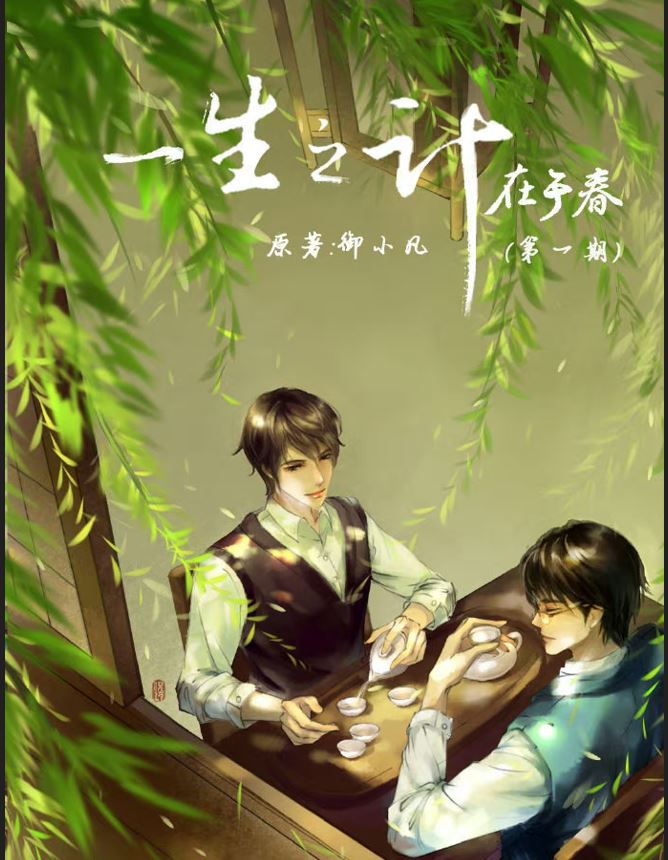
There's something beautifully restrained about how this scene is staged. It's set in a café, of all places — not some dramatic mountaintop or stormy night, just a regular tea shop with a teapot and two cups. The mundane setting makes the emotional weight hit even harder because there's nowhere for these characters to hide. They're sitting across from each other with nothing between them except porcelain and boiling water. The author describes the Bi Luo Chun tea being poured and how "a delicate fragrance gradually wafted through the air, rendering a temporary silence." I love that detail. The fragrance becoming a kind of pressure valve for the tension. For a few seconds, the sensory experience of the tea replaces whatever words might come next. It's such a specific, grounded moment that makes the whole scene feel cinematic. And the physical descriptions! Yao Hong's neatly cut short hair making her look "very lean and spirited" with faint wrinkles at her mouth and eyes that become more pronounced as she furrows her brows. This is a woman who has spent years clenching her jaw. Wu Yang patting Yao Jinxi's hand before getting up to welcome her — that single gesture tells you everything about their dynamic. Wu Yang is the steady one, the one who holds the space while others fall apart. The café setting also mirrors the broader world of the story. This is a tea shop story at its core, and having the reconciliation happen in a tea-focused environment isn't accidental. The ritual of pouring tea, the sharing of a pot, the deliberate slowness of it all — it's all part of the texture of this novel's world.

Leave a comment

You must be logged in to leave comments. or
