Spring is the Plan of Life - Reviews

Spring is the Plan of Life
+Add to Custom List
Sort
Add review
... Read More
The author is playing 4D chess with pacing here and I need to take a minute. We start with the most boring premise imaginable—two guys looking at cars online on a Sunday. Browsing forums. Making lists. This is the literary equivalent of watching paint dry and I was NOT ready for where this was going. Then Wu Yang drops the bomb that he has two weeks off and the scene immediately shifts into something way more intimate. The transition from car-shopping to Wu Yang going upstairs into Yao Jinxi's bedroom is done so casually you almost miss it, which is honestly genius. He's tidying up the room, reading the books on the shelf, basically inhabiting Yao Jinxi's personal space like it's nothing. The whole middle section feels domestic and low-key, almost slice-of-life, and then BOOM: "It'll be more convenient for the two of us when we go on road trips together." The chapter ends on what is probably the single most loaded sentence in the entire book and I am still recovering. The author lets you relax into this cozy vibe and then pulls the rug out. Perfect misdirection. Also appreciate the author's note about posting time—seems like the readers are already checking early which tells me this book has a very engaged fanbase probably waiting for these exact moments.
... Read More
So I've been thinking about this chapter obsessively, and there's a symbol that I can't stop coming back to: the ketchup packets. Yao Jinxi is STUFFING them into his pockets. Left pocket full, then the right one. This is described as 'somewhat childlike action' and Wu Yang finds it amusing. But what if this isn't just cute characterization? What if it's symbolic of something much deeper? Yao Jinxi collects things. He hoards care, attention, validation—the same way he hoards ketchup packets. He's been through enough emotional turmoil to know that small gestures matter, that you should never let a useful thing go to waste. Every packet is a tiny act of preservation, a way of saying 'this might be useful later.' And Wu Yang notices this. He sees Yao Jinxi's instinct to prepare for scarcity, to stockpile whatever comfort he can find, and he finds it beautiful. Then there's the porridge. Warm, soft, easy to eat. Wu Yang ordered it, and the server was puzzled—why porridge for breakfast?—but Yao Jinxi accepted it without complaint. Porridge is the food of comfort, of illness, of someone trying to soothe themselves. And in a way, that's exactly what this meal is: Wu Yang feeding Yao Jinxi something warm while simultaneously pouring out his own wounds. The porridge becomes a metaphor for care exchanged between two people who are both healing and hurting. The glasses. Wu Yang removes them at the end, pinching the bridge of his nose. Glasses as armor, glasses as the mask of composed rationality. When he takes them off, he's visibly vulnerable, physically manifesting his exhaustion. The author writes: 'With a weary expression, Wu Yang removed his glasses and pinched the bridge of his nose.' This is such a specific, visual choice—it's not just that he's tired, it's that he literally can't look at the world through his usual lens anymore. And the depression itself is the central symbol of the chapter. Wu Yang describes it as losing interest in everything, zoning out involuntarily, even while driving. The car accident isn't just backstory—it's the physical manifestation of his mental illness. His depression literally took him off the road. 'I was in a car accident because of it.' The body keeps the score, and Wu Yang's body crashed because his mind couldn't sustain itself anymore. I also want to touch on the theme of calling. Those late-night phone calls aren't just plot points—they represent Wu Yang's desperate need for human connection, his inability to be alone with his thoughts. 'I can't control myself.' This is the thesis statement of his entire struggle: the gap between what he knows logically and what his emotions demand. The author is exploring something really profound here about depression—it's not sadness, it's exhaustion. It's 'logic tells you that you shouldn't do this. But your emotions can't bear it anymore.' The chapter title 'As It Turns Out' suggests that truth emerges gradually, that understanding comes in layers. Yao Jinxi thought he knew what was happening, but the reality was so much bigger. And that's really the theme here: the difference between what we assume about someone and who they actually are.
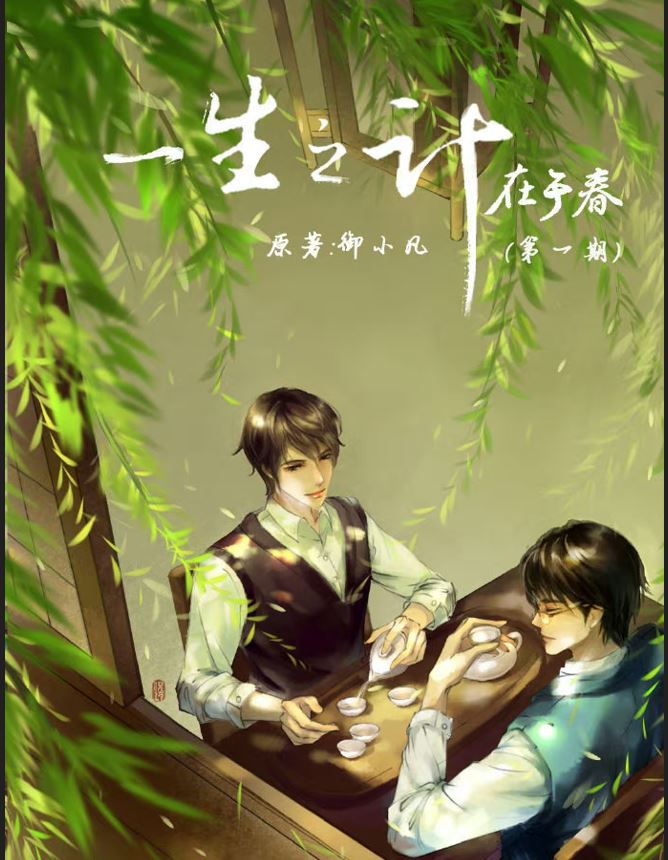
... Read More
Okay so I need to talk about this one line Wu Yang drops while driving, and honestly it wrecked me. He's being all shameless about wanting to become a top entrepreneur, Yao Jinxi calls him out for boasting, and then Wu Yang just… pivots. "Because you are my ambition." Like, that's it. That's the whole essay. He basically just said money doesn't matter as long as it makes Yao Jinxi's life easier, and his only real drive is to spoil him. I keep replaying the scene where Yao Jinxi presses his fingertip against Wu Yang's cheek to stop him from turning his head away. It's such a small gesture but it says everything—Yao Jinxi is the only person who can redirect him, pull him back into the moment. And the sugar frosting detail?? Wu Yang tasting the sweetness off his fingers while looking straight ahead like it's the most natural thing in the world. These two have been together so long that intimacy has become completely mundane for them, which is honestly the hottest thing ever written. Also, the ring detail at the end when Yao Jinxi feels the hardness of it and grips back harder—that's not romance novel fluff, that's two people who have chosen each other repeatedly over years and the physical weight of that commitment literally grounds them. I'm not okay.
... Read More
Okay so the sibling dynamic between Yao Jinxi and Yao Jinchen is absolutely CHILLING. Let me unpack this. On the surface, Yao Jinxi is this picture of calm devotion—sitting by Wu Yang's hospital bed, quietly planning for caregivers, not dragging his family into the mess. But then Yao Jinchen walks in, all icy and composed, and drops that bomb about cancer recurrence like he's casually discussing the weather. My stomach dropped. The fact that he even says it out loud—and then pretends indifference afterward by pursing his lips and looking away? That's not just awkward, that's someone whose jealousy and resentment have curdled into something almost weaponized. And Yao Jinxi's response? Silence. Just folded hands and no eye contact. Who doesn't respond to a betrayal like that? It's deafening. Meanwhile, Yao Jinchen announces he's leaving for the US in three days, expediting everything. This isn't just a career move—it's running away, but he can't even admit that. He can only say 'Congratulations' is the appropriate response from his brother. The tragedy here is layered: both brothers clearly care about something deeply (Wu Yang, their bond, family loyalty), but they express it in opposite directions. Yao Jinxi holds on through service and silence; Yao Jinchen pushes away through aggression and departure. And Yan Zhaowen, the old TCM doctor, sees all of it, understands more than he says, and just smiles that knowing smile that says 'I've been here before.'
... Read More
Okay so Yao Jinxi's whole internal state when he's thinking about Wu Yang is genuinely one of the most specific emotional textures I've read in a long time. The author describes it as this weird hybrid feeling—melancholy WITH a tinge of joy. Not sadness, not happiness, but something that sits right at their intersection. Like anticipating final exam results, where you're exhausted from the waiting but also kind of alive in a way you wouldn't be otherwise. And then there's the scene in the hospital where Wu Yang casually says he took leave, framed it as a family emergency to his boss, and is just there—making tea, muting the TV, noticing when Yao Jinxi's drifting off. And Yao Jinxi's reaction? Almost tears up. Not dramatic, not performative, just this quiet near-break. He's been alone in this. Nobody else is really showing up the way Wu Yang is. Xia Ruonan comes but always with Fu Hongyu attached, and that's... fair, they have their own thing now. But Wu Yang is the one sitting there in silence, understanding without being told. The moment that wrecked me though was when Yao Jinxi actually thinks—no, almost says—why don't we just get together? Just a test, even, just to not be alone anymore. And then Wu Yang asks what's wrong and Yao Jinxi ducks it with a sip of tea. Coward. Absolute coward. I want to shake him. But also I get it, because what if saying it out loud ruins the fragile everything-that-is-right-now? And then later at the tea shop, Wu Yang drops that he's worried about Yao Jinxi's brother Yao Jinchen, and suddenly the warmth gets punctured again. This guy is dealing with a toxic sibling AND can't even figure out how to tell his caregiver he has feelings? The man needs a hug or a punch, preferably both.
... Read More
Okay, I need to talk about THIS moment. The one where Yao Jinxi reaches out and grabs Wu Yang's wrist. "His wrist was suddenly held and his body instinctively trembled but failed to pull away." Let me just sit with that for a second. This is the most physically intimate thing that has happened between them in the entire novel, and it's not even romantic in the conventional sense—it's grief meeting grief. Wu Yang asks if it was painful back then, and Yao Jinxi's body betrays him. He can't pull away because the warmth is perfect, and in that moment, they're not really talking about Xia Ruonan anymore. They're talking about their own unsaid wounds. And then Wu Yang says the line that wrecked me: "You've experienced this too, haven't you?" Yao Jinxi doesn't answer. He pivots to asking about Wu Yang instead, and Wu Yang says no—his pain came from absence, not loss. That distinction is everything. It tells us Wu Yang has been lonely his whole life in a different way. And Yao Jinxi? He was shattered when someone he thought was permanent just... fell apart. The morning scene is the perfect counterpoint. Yao Jinxi wakes up with his leg draped across Wu Yang's waist, blanket half on the floor, having clearly gravitated toward him in his sleep. His body sought comfort all night without his conscious permission. And Wu Yang? "He didn't bother fixing his sleepwear that Yao Jinxi had pulled into disarray." He's completely unfazed. Not grossed out, not awkward—just existing there, smiling, watching Yao Jinxi panic internally. The power dynamic here is delicious. Wu Yang holds all the cards because he's secure, while Yao Jinxi is over here sweating about whether his straight-acting roommate will find him disgusting.
... Read More
The dialogue in these chapters is deceptively simple. On the surface, these people are having a fairly normal conversation at a café. But read between the lines and every sentence is doing triple duty. Take Yao Hong's first real question: "Is your injury getting better?" She's been waiting years to see her son, possibly decades of resentment and pain built up between them, and her opening move is asking about a wound that isn't even the important one. That's not small talk — that's a person who doesn't know how to cross the threshold into emotional vulnerability yet. Every word she says is guarded, measured, testing. Yao Jinxi's voice is equally distinctive. When he says "Mom. I'm sorry." there's something childlike in the simplicity, like he's reverted to whatever emotional register he had before they were estranged. But then he immediately qualifies it: "Whatever you did at that time was right. It was our fault." That's the sound of someone who has spent years trying to understand their parent's perspective and has landed, perhaps不完全, on forgiveness. Wu Yang's dialogue is the most interesting because he's always performing a function. He's the translator between two people who can't speak directly to each other. "Auntie, Jinxi really misses you" is both genuinely kind and slightly manipulative — he's giving Yao Jinxi the opportunity to feel heard without having to say it himself. It's a protective move disguised as honesty. And that opening cultural note about addressing non-blood-relatives as "auntie" and "uncle"? It's a small detail but it establishes the entire relational map of the story. Wu Yang calling Yao Hong "Auntie" immediately signals respect, acknowledges the generational gap, and creates a frame where the emotional revelations that follow feel earned rather than presumptuous. The author's narrative voice itself is restrained and observant, never telling us how to feel but giving us just enough detail to generate our own reactions. It's the kind of writing that trusts the reader.
... Read More
'Once you stopped and looked back after being busy, you'd realise that all your busyness was worthless. There was nothing important to do.' This line about busyness and its emptiness is the key to everything. Both Yao Jinxi and Wu Yang use routine to avoid feeling things — the tea shop, the meals, the predictable patterns. That's why Yao Jinchen's arrival is so threatening, because he forces them to actually PAY ATTENTION to each other. The food imagery throughout this section is doing symbolic work too. Sharing a meal is one of the most primal forms of intimacy, and the author keeps circling back to it — the reheated rice, the piled-up bowl, the tea set being tidied. These are rituals of care between two people who can't quite say what they're feeling yet. But the real symbol is the age gap — or rather, the small four-year difference that Xia Ruonan mentions almost dismissively. Four years between brothers who grew up with an absent mother isn't just a number. It's the difference between being a child and being a parent, between needing care and being responsible for care. That's the dynamic that's been poisoning things, and Wu Yang is only now starting to understand what he's walking into.
... Read More
The way this whole sequence is lit is genuinely masterful. You've got the nighttime scene—that thin gap in the curtains letting in just enough light to see Wu Yang staring at the ceiling, but otherwise it's pitch black. And darkness, in this book, operates as a kind of emotional pressure valve. It's in the dark that Yao Jinxi says things he'd never say in daylight. "You've experienced this too, haven't you?" comes out in the blackness like a confession, and the darkness swallows it whole. Then—bam—morning. "Summer mornings dawned early. The clock had reached 10 o'clock. So the room was already brightly lit." The sunlight doesn't just illuminate the room; it illuminates Yao Jinxi's most embarrassing sleeping position, his mussed hair, the blanket halfway on the floor. Every detail the darkness protected is now exposed. The author is playing with light and dark as emotional states, and it's subtle but consistent. There's also this lovely environmental detail I noticed: "Despite the outside temperature being high, they had each covered themselves with a blanket because the air conditioning was on in the room." Summer heat outside, chill inside—this temperature contradiction mirrors the emotional temperature between them. It's hot (charged, tense, intimate) and cold (reserved, guarded, careful) at the same time. The setting itself becomes a third character in the room, constantly reminding you that comfort and discomfort coexist. And Xia Ruonan's text message arriving at the end—so casual, so businesslike—punctures the atmosphere like a needle. She's present in the narrative even when she's not in the room, and it grounds everything back in the real world.
... Read More
Okay can we talk about this scene with Yao Jinchen because I literally gasped out loud. The way the author handles the reunion between these two brothers after everything that happened—there's no dramatic confrontation, no tears, no screaming. Just Yao Jinxi standing there completely calm saying things like "we're just siblings now" and "no more second chances." And it hit me so hard because this isn't just a plot beat, this is the culmination of everything. He's not pretending anymore. He's not trying to make everyone happy. He literally walks away and doesn't look back. The most powerful line has to be when Yao Jinchen just murmurs to himself: "Then where can I find someone as good as you..." And Yao Jinxi just keeps walking. Not even responding. That's the whole story right there—Yao Jinchen never appreciated what he had until it was actually gone. And Yao Jinxi finally understands too, which is why there's no hesitation. I also love how the author uses Wu Yang as this perfect counterweight throughout. While the family drama is happening, Wu Yang is just standing shoulder-to-shoulder with Yao Jinxi like a silent "I'm here, you're doing great." That contrast between the toxic family dynamic and the healthy partnership is honestly peak fiction writing.
... Read More
Okay so I need to talk about this translator's note because honestly it's one of the most manipulative things I've seen in web novel history and I mean that as a compliment. We just got hit with the cancer diagnosis—boom, right in the face—and then the very next thing is some cheerful little note saying "I can't handle suspense" and "it's a HE okay don't worry." Like, the author KNOWS exactly what they're doing. They drop the most devastating plot twist possible in this series and then pat the reader on the head and say it's all fine. But here's the thing—it doesn't actually make it better. If anything, knowing it's a happy ending makes the current suffering feel MORE painful because now I'm watching two people go through hell with the knowledge that they'll survive it, which means I have to sit through ALL of the agony first. The plot structure here is brutal in its efficiency. We go from uneasy gut feelings → biopsy → agonizing five-day wait → the diagnosis itself, and the author stops RIGHT THERE at the worst possible moment. No comfort, no immediate resolution, just a flat clinical statement and a chapter break. And then in the next chapter, we get the nuance: early stage, optimistic outlook, but still—cancer. The contrast between the doctor's clinical optimism and Yao Jinxi's visceral horror ("you mean he won't die?") creates this incredible emotional whiplash. Also the detail about Wu Yang calmly explaining five-year survival rates while Yao Jinxi is internally spiraling? Chef's kiss. Wu Yang understands the statistics but Yao Jinxi is still feeling the raw terror. That's the plot doing double duty—advancing the medical storyline while simultaneously deepening our understanding of these two characters' relationship dynamic.
... Read More
Okay I need to talk about this moment where Fu Hongyu drops the bomb that Wu Yang made a will. Yao Jinxi's reaction was EVERYTHING. He immediately jumps to the worst conclusion—like, bro, your partner just finished radiation and is apparently cancer-free and your first thought is 'he's planning his own death?!' The way Wu Yang just sits there chuckling while Yao Jinxi paces around like a caged animal is both hilarious and painfully tender. But honestly, what hit me hardest was how Wu Yang explains it: 'I never thought I'd get cancer. Even though it looks like I've pulled through this time, there's still a five-year mark.' That's such a realistic reaction. It's not dramatic or self-pitying—it's practical love. He's planning ahead because he genuinely can't imagine a future without taking care of Yao Jinxi. And then Yao Jinxi's response? 'You better live well! If you dare to die before me, I'll use your money to find another man!' I SCREAMED. That's the most Yao Jinxi thing ever—immediate deflection through humor and threat, but you can tell his eyes are red and his voice is shaking. The plot here is deceptively simple on the surface, but the emotional architecture underneath is incredibly solid. Every beat earns its weight.

Leave a comment

You must be logged in to leave comments. or
