Spring is the Plan of Life - Reviews

Spring is the Plan of Life
+Add to Custom List
Sort
Add review
... Read More
Okay I need to talk about this one part because it genuinely hit me differently. You know all those scenes where they're just existing together and it's domestic and soft? This book keeps doing it but now with so much more weight behind it. Like when Yao Jinxi was lying on Wu Yang's lap and Wu Yang was basically petting him like a cat—"He absentmindedly ran his fingers through his hair as if Yao Jinxi were a cat perched on his knee." That's the most Wu Yang thing ever. He's so deliberately gentle in a way that says everything without words. But then there's this one passage that actually made me pause and re-read it twice. After the trip to buy supplies, the narrative just... drops this bomb on us basically. "Living a simple life on ordinary days, apart from being even more cheerful and relaxed, Yao Jinxi's personality hadn't changed much compared to when he first met Wu Yang. It seemed like time hadn't left a mark of hardship on his body. Wu Yang cherished him a lot and was willing to make any effort to maintain this version of him. He used to be so busy, working hard for no reason. That was especially during the severe period of depression when everything seemed meaningless. Now, Wu Yang is very grateful for his abilities and the efforts he initially made. He managed to allow his loved one to live a relatively relaxed and carefree life without having to worry too much." This is... this is the entire thesis of their relationship in one paragraph. Wu Yang didn't just get rich or successful, he built this entire life specifically so Yao Jinxi wouldn't have to carry what Wu Yang had to carry. And Yao Jinxi? He still eats matcha biscuits and dozes off in the car like a teenager. That's not naive, that's freedom. Wu Yang bought him that. Also the scene where Wu Yang initiates the call about projects and then immediately hangs up because Yao Jinxi is being visibly uncomfortable? He noticed. He always notices. The man reads him like a living document.
... Read More
Every character in this chapter is standing at a loss threshold, and the author is making us feel the ground shifting under each of them simultaneously. Xia Ruonan's stake is clear: she's losing her relationship, her sense of future, her trust in someone she 'carefully guarded.' The text says Wang Peng had an affair with a client who 'brought significant importance to his business.' This isn't just emotional betrayal — it's economic, professional, existential. When he says 'there are some things he couldn't refuse,' he's admitting that his career choices compromised his relationship. The stakes aren't just heartbreak; they're about whether love can survive in a world where business relationships override personal boundaries. Yao Jinxi's stakes are quieter but no less real. He's carrying a visible scar he hides with prayer beads. He's managing his tea shop business while his friend is falling apart. He's grateful for Wu Yang's help but can't quite measure the cost of that gratitude. The tension here isn't about what he'll lose — it's about what he might already be losing without realizing it. And Wu Yang? His conflict is the most volatile. He's jealous of Xia Ruonan's closeness with Yao Jinxi. He's aware of Yao Jinxi's sexuality and knows where the boundaries are. He's offering apartments and cooking meals and driving people around while his own feelings accumulate like unpaid bills. The text says 'the fact was enough to alleviate' whatever he felt — and then stops. The author won't confirm whether it was enough. That uncertainty is the conflict. Wu Yang is standing at the edge of something and we're watching him decide whether to step back or lean forward. Nobody in this chapter is safe. The stakes are rising because everyone wants something they can't have, and the author keeps showing us the distance between desire and possibility.
... Read More
Okay so let me just say this: the phone call from Yao Jinchen is one of the most perfectly structured scene transitions I've read in a while. You have these two guys leisurely going through photos, enjoying this quiet moment, and then the phone rings and WHAM everything shifts. The author doesn't even need to announce it dramatically—both of them just immediately know who it is. That single detail tells you SO much about how this relationship has haunted Yao Jinxi's life. And then the whole conversation unfolds like a slow-unfolding flower. I love how the author handled the pacing here. Yao Jinchen doesn't come out swinging or make excuses. He just... lays it bare. "I told Mom everything about what happened back then." That phrase though. "Back then"—two words that carry five years of silence, resentment, and family fracture. The fact that Yao Jinxi can barely remember the details now because time wore them away? That hit me hard. The resolution arc here is satisfying but not saccharine. Yao Jinxi doesn't just forgive because it's convenient. He acknowledges that everyone in the family made mistakes and paid prices. "Each person in our family has made mistakes. I've paid the price for them. Mom has paid the price too. And now it's your turn." Chilling in the best way. But then—AND THIS IS THE GENIUS PART—the awkward balcony scene immediately follows. You go from heavy emotional reconciliation to "oh god someone saw us being PDA in broad daylight." The tonal whiplash is intentional and I am HERE for it. It keeps the chapter from becoming a monolith of seriousness. The subplot thread with Xia Ruonan drawing their story is also doing a lot of work here. It's cute, it connects to the wider world, and it gives us a glimpse of how their relationship is perceived by outsiders. Plus the stray cat and rabbit metaphor? Let's talk about that later.
... Read More
Okay, so I just finished reading these chapters and I'm still processing how much happens in what basically amounts to one afternoon. The structure here is interesting because it's deliberately low-stakes on the surface - two guys go to a movie, then an arcade, then eat at a tea shop - but there's this persistent undercurrent of plot development happening beneath the casual interactions. The Wu Yang subplot is where I think the real narrative engine lives. This guy has clearly been sitting on something for a while, and every time Yao tries to brush him off, Wu Yang just... persists. "Although I've had a bit of that feeling before, you really are a stubborn person." And then later: "your way of being stubborn is rather clever." It's almost comedic how systematically Wu Yang is wearing down Yao's resistance, but it's also kind of sweet in a really grounded way. Meanwhile, cut to Yan Zhaowen trying to set Yao up with some rich girl, and Yao is straight-up running away. "It's the third time now. You keep using this trick to fool this old man!" The contrast between these two plot threads is fascinating - Yao is simultaneously being pursued by someone who wants something from him (matchmaking) and someone who just... wants to help him (Wu Yang). And honestly? I'm rooting for Wu Yang's brand of stubborn. The hotpot restaurant setup at the end is classic web novel misdirection - you think it's another social obligation Yao has to endure, but the way he's "haggling with the parking attendant" and the casual detail of paying 2 yuan suggests this might actually be a friendly gathering. The author is doing that thing where they make you wonder: is this a date setup or a friend meetup? Either way, I need to know what happens next.
... Read More
The dialogue in these chapters is masterclass-level restraint. Let me count the actual conversations and what they reveal: Yao Jinchen: 'You're quite thoughtful. I heard cancer is prone to recurrence.' — Translation: I see you caring for him and I hate it / I'm afraid for him / I'm afraid for us. Three emotions in one sentence delivered with what the text calls an 'expressionless face.' Yao Jinxi: *silence* — The most powerful response in the entire passage. Yao Jinchen: 'Fine, I'll leave.' — And then the pivot to 'I came to bid you farewell.' This is someone who can't process emotion except through action and exit. Yan Zhaowen's exchange is different entirely—older, warmer, layered with unsaid understanding. 'Your pulse seems quite good. Remember, you must maintain a cheerful mood.' Not medical advice; it's wisdom wrapped in the language of his trade. And then 'He cares about you a lot'—delivered like he's commenting on the weather, which makes it infinitely more meaningful. Wu Yang's reply: 'I will take good care of him.' Not defensive, not grateful, just… committed. In three words, he establishes that this relationship isn't about who saves whom—it's a mutual vow. And the most devastating exchange is between Yao Jinxi and Xia Ruonan, where he literally hands her the shopping bags and says he needs to 'consult' Fu Hongyu about legal matters, but we know what's actually happening—he's feeling threatened and needs a moment alone with the person who's replacing him in someone else's affections. The subtext is so thick you could spread it on toast.
... Read More
Okay so let's talk about Wu Yang for a second because honestly the way this scene is written makes me want to shake him. He calls Yao Jinxi at 3am. THREE AM. For what? 'Just wanted to chat.' That is the most emotionally constipated move I have ever read and I love it. But then—then he sighs. This tiny, almost inaudible sigh that Yao Jinxi somehow feels through the phone line like some kind of emotional radar. And Yao Jinxi, who literally describes himself as wanting to slap his own face for agreeing to this, feels his resistance crack. I keep coming back to the detail where Yao Jinxi says 'He even had a strange sensation that, despite knowing Wu Yang for so long, this almost inaudible sigh was the truest expression of his emotions.' THAT is a line that tells me everything about their dynamic. They know each other deeply but they never actually TALK about feelings. The sigh is basically Wu Yang having a full emotional breakdown without saying a word, and Yao Jinxi is the only one who notices. Also the Xia Ruonan comparison—Yao Jinxi literally thinks 'now I understand Xia Ruonan's pain' which means the 'Saint Mother of Summer' has apparently put up with Wu Yang's nonsense before. There is a whole history here that I am DYING to know.
... Read More
Okay, can we just talk about Wu Yang standing there at the crossroads for a second? Like, everything just cleared up with Zhao Wei and Jin Xiaoxiao, the whole dramatic confrontation was over, and Wu Yang just... stood there. Alone. The text says his tall figure gave off an unexpected sense of solitude, like a lone figure with no one to rely on. And I just... damn. That hit different. But here's what really made my chest tighten: it's Yao Jinxi who shows up. Who walks over to him. Who asks if he's clocked in. Who tells him to go get breakfast. This guy literally just risked his own peace of mind to defend his friend in a potentially volatile situation, and then he doesn't make a big deal out of it. No "you're welcome," no dramatic speech. Just... practical care. Go clock in, then eat. And Wu Yang's response? He asks if Yao Jinxi had breakfast. That's it. Two people who clearly care about each other but have never figured out how to say it directly, circling around something real while talking about work attendance. I swear the subtext was so thick I could've spread it on toast. "I'll wait for you." Four words. Wu Yang doesn't even want to go to work without making sure Yao Jinxi is okay. That's the kind of loyalty that doesn't need grand declarations. It just... is. I also can't get over how Yao Jinxi basically became Wu Yang's bodyguard in that alley. Throwing his bike aside without hesitation, walking right into the encirclement, telling the angry boyfriend to calm down. He had absolutely no reason to get involved past the point of returning a phone, but he did it anyway. That's not just friendship, that's devotion in disguise.
... Read More
I just have to talk about how each character's dialogue sounds distinct — it's rare and I appreciate it when authors nail this. Wu Yang's voice is so... measured. 'Hello, I'm Wu Yang. May I ask who you are?' comes out like he's reading from a script, completely literal and missing all the social subtext. That tells us everything about his character without narration telling us 'Wu Yang is socially awkward.' Meanwhile Yao Jinxi's internal monologue is way more chaotic. He's doing this constant back-and-forth with himself — 'Oh my, that was too direct!' followed by facepalming and rationalizing. His voice feels like someone talking faster than their thoughts can catch up, which perfectly matches his personality of 'I'll figure it out later.' The group discount moment is dialogue gold. Yao Jinxi blurts out 'the group discount only has two spots' like it's some clever strategy, then immediately realizes he's being brutally honest about trying to save money. And Wu Yang doesn't even notice the financial angle — he just picks up on 'shrimp fishing' and agrees. These two are operating on completely different wavelengths and the dialogue makes that clear without anyone saying 'we have different communication styles.' Even the translator note about 'sister' is woven into dialogue naturally — Xia Ruonan calling him that isn't explained or questioned, it's just part of how they talk. It reinforces that this is normalized in their world without needing a lecture. The voices feel lived-in and authentic.
... Read More
What I love about this chapter is that the conflict isn't some giant dramatic fight. It's happening in the space between sentences. The real tension is: does Yao Jinchen belong in this new version of the family, or is he being replaced? Every moment between Yao Hong and Wu Yang is a moment that pushes him further out. She's calling him 'godson' — which is sweet but also erases his name. She's planning his future living situation. She's impressed by how he cleans her dishes. All of this is happening while her actual son sits in his bedroom like he's haunting his own house. And the stakes? They're enormous but totally unspoken. If Yao Jinchen stays quiet, he loses his place in the family narrative. If he explodes, he looks like the villain. So he chose the only move left — show up, ask one uncomfortable question, and disappear back behind a closed door. The trip to Yunnan that Wu Yang suggests? That's another nail. He's already planning the future without considering that this family gathering includes someone who's actively hurting. Not malicious — just blind. And Yao Hong noticing all of this while simultaneously trying to hold it together? That's the real stakes here. This isn't about whether they adopt a child or not. It's about whether a family can expand without someone having to shrink. I'm watching this like it's a slow-motion car crash and I can't look away.
... Read More
I need to talk about how the author USES light and darkness in this passage because it's honestly film-level stuff. The whole sequence is built on this progression from outside to inside, from dark to warm light, and it maps perfectly onto Yao Jinxi's emotional journey. We start with 'it was already dark out' when they're at the restaurant—that's the first visual beat. Then the shops on the street have their signs lit up, which is such a small detail but it grounds the whole scene in a specific kind of city evening that feels lived-in. Then they get in the car and it's nighttime driving, windows probably fogged a little, the interior light off, just the passing streetlights or dashboard glow. That's where the rearview mirror moment happens—Yao Jinxi peeking at his mom through the glass, the reflection, the distance between front and back seat. It's the most visually symbolic thing I've read in months and the author barely even tries. Then they arrive at the house and it's DIFFERENT but still familiar. The author says it 'exuded an intimate and familiar scent throughout' and I immediately understood what that means without any explanation. You know when you go somewhere and the air itself feels like memory? That's what's happening here. And then the bedroom—the bedspread covering the new bed, no sheets or pillows yet, the AC being turned on and the window opened for fresh air. These aren't set dressing. This is a mother preparing a room for her son's return and the reader is watching her do it through the eyes of someone who barely knows if he's welcome. The TV scene later—the cooking show, the drama, the two of them on opposite sides of the sofa saying nothing except 'you should sleep early too' and 'goodnight'—the only sound is the television. That silence between them is louder than anything the author could write. And then 2 AM. Yao Jinxi gets up for water. The living room is dark except for one thing: 'a light out of the corner of his eye.' Under Yao Hong's bedroom door. She couldn't sleep either. She's sitting there with old photos. This is the single most cinematic image in the entire passage—a mother alone in the dark with photographs of her sons, and her other son standing in the doorway after drinking a glass of water. I need the director's cut. Now.
... Read More
I have to talk about the dialogue in this chapter because it's doing something really interesting. Most novels would have the mother either fully accept or fully reject her son here, and the conversation would resolve quickly. Instead, the author gives us something way more honest: confusion, partial acceptance, and a whole lot of people talking past each other. Yao Hong's voice is distinct—she's direct, sometimes sharp, but underneath it all there's this current of genuine love that she can't quite articulate. 'You're all grown up now. How come you don't know how to take care of yourself out there? Huh?' That 'Huh?' at the end is so motherly. It's accusatory but it's also relief. She's not actually mad, she's just processing. Wu Yang's dialogue is minimal but weighted. Every line he says is carefully calibrated. 'Auntie, haven't had breakfast yet?'—polite, defusing, testing the waters. 'Let's eat together. And after that, I'll give you a ride to work.'—he's not asking, he's assuming a role. He's already positioned himself as caretaker of this family dynamic, and the fact that he does it so smoothly is either charming or deeply concerning. I'm still deciding which. But the real masterpiece is Yao Jinxi's silence. Do you notice how many times his dialogue is just... nothing? 'Yao Jinxi: "…"' Four times in this chapter. Four times he has no response. The first time when his mom asks about his orientation. The second when she casually mentions Wu Yang told her everything. The third when she says they should 'continue to be together.' The fourth when she draws the line about not engaging in casual relationships. This kid is emotionally overwhelmed to the point where language fails him, and the author uses those ellipses so perfectly. Each one means something different—shock, embarrassment, panic, resignation—but none of them require a single word. The author's note at the end—'Actually... Jinxi's mom is understanding!'—almost feels like the writer is winking at us, acknowledging that this resolution isn't clean and that's the point.
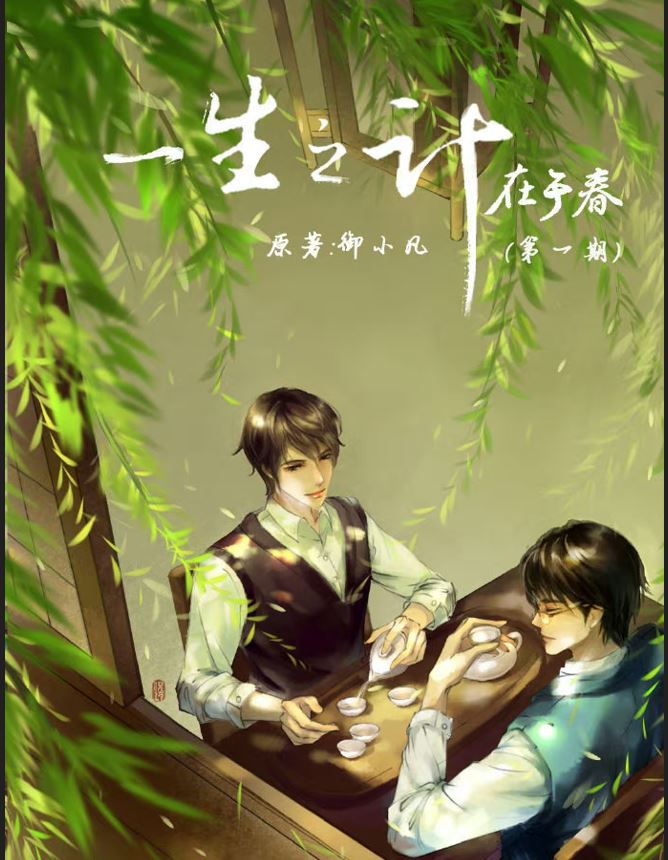
... Read More
Oh my god, can we just talk about the absolute perfection of Yao Jinxi peeling shrimp for Wu Yang? Like, this is the kind of wholesome, domestic energy that makes me want to live in this world. Wu Yang doesn't even like peeling shrimp, and Yao Jinxi just... naturally starts doing it without making it a big deal. That's true love language right there. 'You should have said earlier. I can peel shrimp quickly. Let me do it for you.' And then he just... does it. For both bowls. No fanfare, no drama, just quiet care. And then Yao Jinxi's explanation - 'Blame it on a guy from my past who also loved eating shrimp. But, like you, disliked peeling them. I got used to being his servant.' OH. Okay. So this is a established dynamic where someone in his past also got spoiled like this. And now he's accidentally (or not so accidentally) doing the same thing for Wu Yang. The parallel is beautiful and I'm here for it. Wu Yang calling them 'both good people' when talking about Yao Jinxi and Ruonan having similar habits - that line hit me different. There's this warmth in how Wu Yang observes the world, noticing small things about people. And Yao Jinxi's reaction to being called 'good at taking care of others' - that brief pause, that momentary loss of clarity, invaded by a memory - this is someone with depth, with history, with feelings that don't always surface immediately. The translator literally screamed about this part and honestly? Same. These two are so cute together and I need more content immediately.

Leave a comment

You must be logged in to leave comments. or
