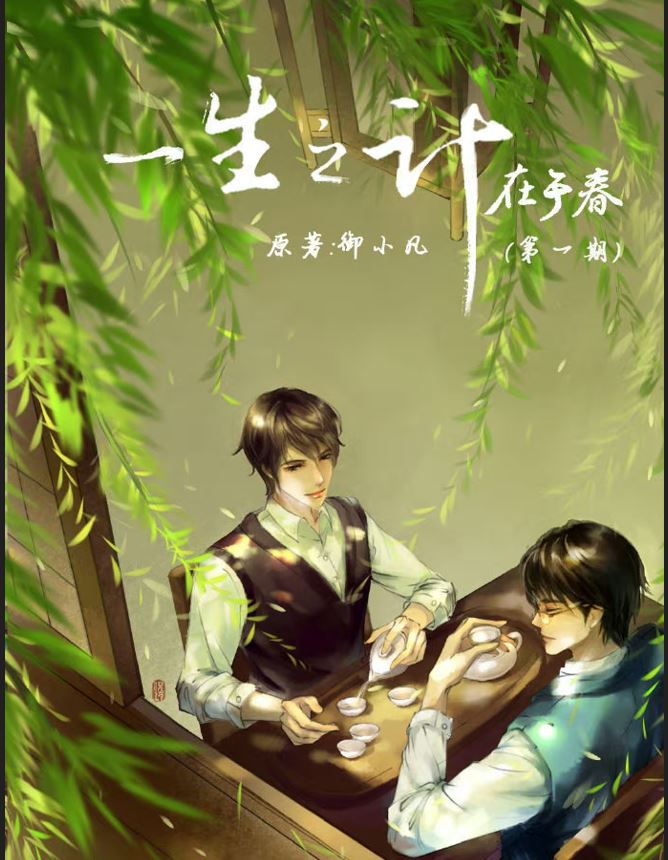
I have to say, the atmosphere in these early chapters is surprisingly vivid for how understated it is. The very first scene has Yao Jinxi finishing a delivery and then casually switching background music in his shop to a piece called 'Gaoshan Liushui' while handling an online tea order. That detail—the Alibaba Wangwang icon blinking blue, the chrysanthemum tea pour, the prayer beads on his wrist—these aren't just props, they're character texture. It paints a picture of someone who's grounded, maybe a bit old-soul, running a small business with autonomy. Then you shift to Sunday morning: sunlight waking him up at exactly 11, the 'slight chill' of spring, grey short-sleeved shirt and jeans, canvas shoes. It reads like a film opening. There's a scene where he's on the escalator, one hand on the rail, phone in the other, smiling at Xia Ruonan through the conversation, and some girls glance at him. The author doesn't over-describe any of this but somehow the spatial awareness is always clear—you know where everyone is, what the lighting is like, the mood of the café with its floor-to-ceiling windows. The setting feels lived-in rather than painted on a backdrop. It's a modern urban Chinese city, not specified which one, but the bus ride, the tea shop, the café—all feel real and specific despite the lack of named landmarks. The world feels like somewhere I could walk around.