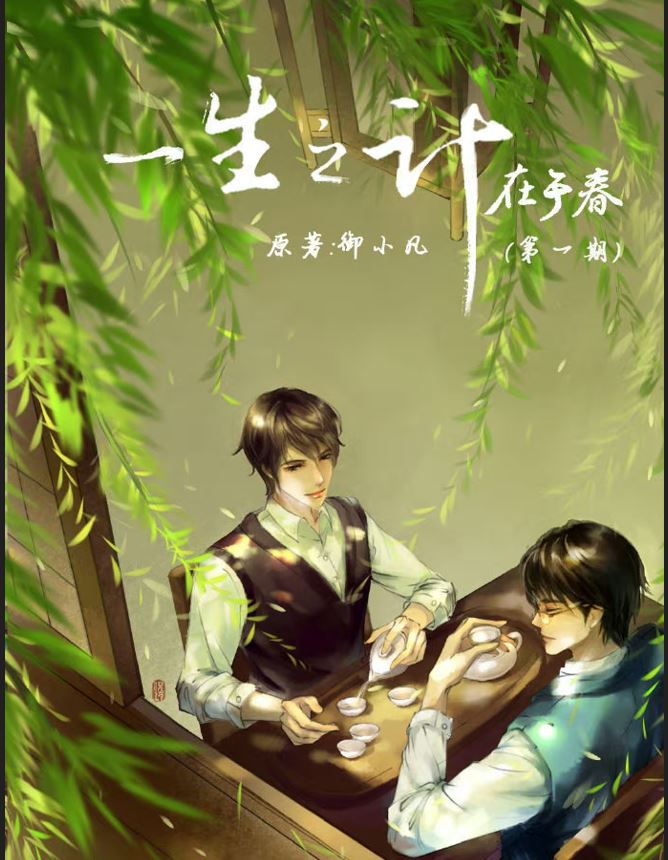
The entire opening exchange about coffee versus tea is quietly one of the most thematically dense passages I've read in months.
Yao Jinxi switching Wu Yang from coffee to jasmine tea isn't just about health advice. Coffee is Wu Yang's current identity — busy office worker, running on fumes, functional but not thriving. Jasmine tea is what Yao Jinxi offers: something slower, something that requires patience, something that unfolds over multiple steepings rather than being consumed in a single aggressive gulp. It's Yao Jinxi literally trying to brew a different pace of life into someone else.
And Wu Yang goes along with it. Not reluctantly, not with resistance, but with quiet acceptance. He rests his chin on his hand and watches Yao Jinxi work. He asks thoughtful questions. He offers a business proposal that would integrate his life with Yao Jinxi's. He's not being converted — he's choosing to expand his world.
Then there's the tea ceremony itself, explained in such loving detail by the author. Multiple steepings. Waking up the tea. Appreciation of color and aroma and taste. The ritual isn't about consuming; it's about experiencing. This is fundamentally opposed to the fast, disposable culture that produced coffee-drinking office workers in the first place. The book is making an argument about how to live, and it's doing it through a man who packages tea leaves.
Even the concert subplot carries symbolic weight. A pop concert is the opposite of a tea ceremony — mass consumption, temporary thrill, something you experience once and move on from. Yao Jinxi's hesitation about attending alone reveals how he's still processing grief as something that needs to be efficiently handled rather than deeply felt. But maybe that's what the concert is for him too — not escapism, but a different kind of ritual, one that allows communal catharsis instead of solitary precision.
The cherries! Fresh fruit, seasonal, requiring effort to pick and share. Another small symbol of care that requires no words.