Spring is the Plan of Life - Reviews

Spring is the Plan of Life
+Add to Custom List
Sort
Add review
... Read More
Okay so this whole arc is basically just cancer treatment and surgery and it could easily have been one long depressing slog but the author somehow keeps it gripping and I don't even know how honestly. The structure is interesting because we get all these smaller moments—the hospital visit, the radiation therapy, the waiting—and then BAM the surgery hit like a freight train. What really works for me is that the author doesn't give us a fakeout. This isn't some where-they-got shot. The surgery is literally the whole chapter and then it just... stops. We're left in this limbo. And the detail about the doctor saying 'In a while, you have to wake him up' is such a normal, clinical thing to say but in context it hits different because we're both holding our breath. The pacing around the surgery itself is masterful too. Yao Jinxi not eating lunch or dinner, barely sitting down, just this relentless focus while his whole world is on a line. That's how real you feel it. Also the subplot with Yao Jinchen showing up right after the surgery with cheap supermarket health products is a quiet plot twist I didn't see coming at all. After everything between them, he still came. The narrative has this weird circular energy to it—remember when Yao Jinxi had appendicitis and Wu Yang was the one running around taking care of everything? Now they've swapped roles and it's not played for drama, it's just there, matter-of-fact, which makes it even more powerful. Life really does come full circle sometimes. The author also slipped in this author's note about taking care of your health which felt genuinely heartfelt rather than preachy. Anyway I need to know if Wu Yang makes it through this is all I'm saying.
... Read More
It's easy to miss the conflict in this passage because nothing explodes. There are no shouting matches, no dramatic reveals, no life-or-death stakes on the surface. But if you look closer, the tension is everywhere, simmering just under the conversation like the bitter aftertaste of over-steeped tea. Wu Yang is caught in a web he helped create. He's been calling Xia Ruonan late at night, asking her out on weekends, and now he's sitting across from her friend Yao Jinxi — someone who clearly cares about her enough to intervene gently but firmly. The stakes here aren't about physical danger; they're about social and emotional consequences. If Wu Yang messes this up, he loses not just Xia Ruonan's trust but also the goodwill of someone who's offering him an olive branch. And yet, he's clearly drawn to both of them in different ways, which makes every conversation a high-wire act. Yao Jinxi's offer to be a companion carries its own unspoken weight. He says he's idle, that he stays up late, that he doesn't have many friends — and while this sounds like vulnerability, it's also a subtle signal that he's investing in this connection. He's positioning himself as someone Wu Yang can rely on, which in any story with romantic entanglements is a dangerous place to be. Is he being genuinely kind, or is he strategically placing himself as the emotional safe harbor while someone else deals with the fallout? The Xia Ruonan subplot adds another layer. Her boyfriend Wang Peng is described as "quite petty" and he "bothers" her when she's spending time with others. Wu Yang's late-night calls are partly motivated by wanting to be close to her, but they're also putting her in an awkward position. The stakes are relational: who gets to be close to whom, who gets protected, and who ends up hurt in the crossfire. What keeps me on edge is that none of this is stated directly. The author trusts us to read between the lines — the pauses, the deflections, the way Yao Jinxi changes the subject when things get too real. The tension isn't in what happens; it's in what's barely being said. And that's what makes me want to keep turning pages.
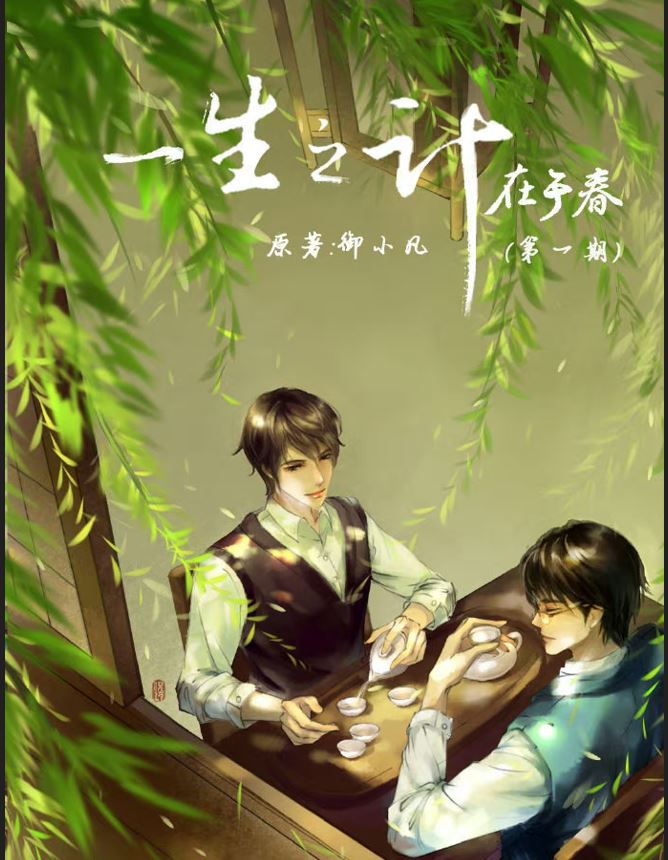
... Read More
'It was as if he held a rope in his hand that could decide someone's life or death.' I read that sentence three times. THREE TIMES. This is the kind of line that just sits in your chest and refuses to leave. Yao Jinxi is essentially describing his own powerlessness in this moment—Wu Yang is on the other end of the phone, barely holding it together, and Yao Jinxi is the only thing keeping him anchored. The fact that he recognizes this himself and then immediately scolds himself for being 'overly sentimental' is just chef's kiss levels of repressed emotion. And then he says the thing. 'Do you want to come over for a cup of tea?' Not 'are you okay?' Not 'what's wrong?' Just... tea. That is the most Yao Jinxi thing to ever happen. His way of caring is literally making someone tea at 3am. I'm convinced that if you wrote 'I care about you' directly, it would actually destroy the entire emotional architecture of this story. The slow burn here is immaculate.
... Read More
I NEED to talk about Wu Yang's energy in these chapters because WOW. The guy goes from 'your brother needs to learn a lesson at a police station' to suddenly packing Yao Jinxi into a car and driving to his childhood home to meet his mother. This man operates at FULL THROTTLE. But honestly? I think that's exactly why Yao Jinxi is hooked. Look at the phone call scene — Wu Yang calling at unpredictable times to lecture him about showering, medication, weather. It's so mundane on paper but the text says 'Yao Jinxi listened carefully every time. As he listened, he found himself oddly warmed and moved.' That's the quiet romance that hits different. The care wrapped in bossiness. And then — the hand-holding moment. Yao Jinxi is spiraling about his mom, vision blurred, mind in disarray, and Wu Yang just takes his cold hand and holds it. Pats his back with the other hand. Says 'don't be so afraid.' No grand speech. Just presence. That's the kind of moment that makes you put the book down and sit with it for a minute. Yao Jinxi's internal monologue about treading 'unfamiliar ground' — he's 26, never been in a relationship, and suddenly his best friend is becoming something more and his trauma is becoming everyone's business. He knows the pit looks like a honey pot but warns himself it's probably an abyss. And yet he gets in the car anyway. Damn.
... Read More
There's something so quietly cinematic about how this scene is staged. It starts in a domestic space—Yao Jinxi reaching for a teacup that Wu Yang has already poured for him. That small detail tells you everything about their relationship already: Wu Yang anticipates his needs, watches over him, has learned his rhythms. Then Yao Jinxi's confession happens in fragments, like he's not really talking to Wu Yang but rather reorganizing his own memories out loud. The way the author writes this—"Yao Jinxi spoke in fragments. It was less like he was speaking to Wu Yang. But it was more like he was reorganising his own memories."—that line alone is worth the price of admission. It captures exactly what trauma recall feels like. It's not linear. It's not clean. It's pieces floating up from somewhere dark. Then the scene shifts to the hospital—emergency room at night, which is already a liminal space where people are most vulnerable. Wu Yang handles everything practically (medicine, hydrogen peroxide, antibiotics) while Yao Jinxi falls apart emotionally. The contrast between the clinical hospital environment and the raw intimacy of the moment is striking. And that final exchange with the rabies joke? It happens while Wu Yang is driving, looking straight ahead, casual—making it feel like normal life is slowly returning to them. The setting itself feels alive. Every space they occupy mirrors their emotional state.
... Read More
I need to talk about the pacing of Chapter 29 because it does something really interesting with silence. The previous chapters had all this external tension — the police station, Yao Jinchen's actions, the confrontation. And then Chapter 29 just... drops us into stillness. Yao Jinxi in the dark. Staring at his phone. Turning it on. Turning it off. Repeating. Waiting for a message that isn't coming. This is masterful pacing because the author understands that sometimes the most dramatic moment in a story isn't a fight or a confession — it's a guy alone at midnight, unable to reach the person he's most worried about, with absolutely nothing to do but sit with his own thoughts. "In the darkness, he stared at the phone screen. He turned it on and off repeatedly several times before finally letting out a long sigh and turned off the phone completely. He then went to sleep." Read that again. He doesn't just put the phone down. He TURNS IT OFF. That's not rest. That's surrender. That's the moment where he accepts he can't control anything and has to just... sleep. The chapter ends with this image and you can feel the weight of it. Then the transition to the next day — "Yao Jinchen still did not send any messages" — and suddenly the anxiety is renewed. The structure mirrors Yao Jinxi's actual experience: false hope, disappointment, false hope, disappointment. The pacing IS the emotion here. No narration needed. And that ending tease about Wu Yang coming over for dinner — it's small, it's domestic, but it lands like a bomb because we've spent the whole chapter watching Yao Jinxi be alone and now someone is coming to break that isolation.
... Read More
There is a scene in here that I need to just sit with for a minute. Yao Jinxi wakes up. Can barely move. Can barely speak. Wu Yang leans in and says "Are you awake?" in this soft, careful voice that sounds nothing like his usual composed self. And Yao Jinxi tries to move his lips, can't even hear his own voice, and Wu Yang STILL understands what he's trying to say. That level of intuitive understanding between two people—it's rare. It's terrifying. It's beautiful. And Yao Jinxi's reaction? He doesn't pull away. He doesn't pretend this doesn't affect him. He just lies there, weak and vulnerable, letting someone take care of him for once. For a character who spends so much of the story holding everything together—running his tea shop, dealing with his mom's expectations, pretending he's fine when he's not—this moment of absolute helplessness is almost radical. Meanwhile, theFu Hongyu subplot is playing out like some rom-com on the other end of the phone, and Yao Jinxi is actively engaging with it, cracking jokes about lawyers and marriage, completely unaware that his own body is shutting down. The emotional whiplash from lighthearted texting to near-death experience in the same chapter is brutal. I love it. I hate it.
... Read More
Okay so can we just talk about Yao Jinxi offering Wu Yang a spare key? Like, this man has been guarding his space for years and suddenly he's handing over access to his home and his shop without a second thought. That's not just practical — that's intimate as hell. But here's what actually sold me: Wu Yang's response. He doesn't just say yes. He says, "What if I leave my ID card here as collateral?" This is such a Wu Yang move — he needs some kind of formal guarantee because trust is still a foreign concept to him. And Yao Jinxi? He teases back, "I am worried… so maybe I shouldn't give you the key after all." The way they orbit each other, testing boundaries with humor instead of vulnerability — it's painfully real. These two aren't good at saying feelings out loud, so they say everything through actions and deflection. Wu Yang offering to quit his job so he can spend more time with Yao Jinxi, suggesting a road trip like it's nothing — meanwhile Yao Jinxi is just sitting there processing all this care for the first time in his life. The narration literally says: "This feeling was unfamiliar but not unpleasant. In fact, it was quite nice. So nice that Yao Jinxi was a bit afraid." AFRAID. Of being cared for. That's the whole relationship arc right there.
... Read More
Okay, I need to talk about this scene because MY FACE. So Wu Yang and Yao Jinxi just had this whole vulnerable moment in the car—Yao Jinxi apologizing, shoulders slouched, looking like a kicked puppy—and then *bam*, the younger brother appears like a plot device with legs. And can we talk about how immediately hostile Yao Jinchen is? He doesn't even say hello to Wu Yang properly. He asks "Who are you?" with what the text calls a confrontational look. CONFRONTATIONAL. This guy shows up uninvited at 9 PM, hasn't even been properly introduced, and already sees Wu Yang as a threat. I love it. I hate it. I'm invested. And the dynamic with Yao Jinxi is so complicated. His brother calls him "Brother" with this pleading, wounded expression, but Yao Jinxi is just... tired. Defeated. He asks if Mom knows he's coming, not "why are you here" or "I missed you." The mother-daughter energy there is real—they're operating on completely different wavelengths. Yao Jinxi offered to let him stay and his answer was just "No." Cold. But then he says thanks when Wu Yang offers to drive him back. The man cannot win at normal human interaction. Also I need to address the Xia Ruonan thing because apparently THAT'S why Yao Jinxi lost his temper earlier. His brother showed up and immediately sized up Wu Yang as competition. The translator's note literally says the author thinks Yao Jinxi's reaction is like "You're just taking advantage of my indulgence, huh?" which makes me wonder if the brother knows about the romantic situation and is already positioning himself as the gatekeeper. This family dynamic is going to be such a mess and I am HERE for it.
... Read More
Let's talk about what these characters are actually risking, because it's not just 'someone is sick'—that's the surface level. The REAL stakes are layered and escalating: On the external level: Wu Yang is fighting cancer. Surgery went well, but the text specifically flags that cancer is 'prone to recurrence.' Yan Zhaowen confirms the pulse is good but immediately adds the caveat about mood. Every chapter is a countdown. On the relational level: Yao Jinxi just witnessed his brother call his devotion 'thoughtful' as if it were a flaw, then weaponize medical knowledge to wound him. That's not a misunderstanding—that's active hostility disguised as concern. And Yao Jinchen isn't just leaving for America; he's EXPEDITING it. The text says he approached the company directly, bypassing normal channels. This is someone who cannot stay in a room where his brother is happy. On the emotional level: Yao Jinxi is watching Xia Ruonan fall for Fu Hongyu while he himself is drowning in responsibility for Wu Yang. He feels displaced—'When did these two become so close without him noticing?'—and his response is to create artificial distance, inventing a 'legal consultation' excuse. The loneliness is compounding. And here's what makes the tension unrelenting: nobody is wrong. Yao Jinchen genuinely thinks he's being honest. Yao Jinxi genuinely believes he's protecting everyone by handling things alone. Wu Yang, unconscious for three days, is the silent center around which everyone orbits. The author has built a pressure cooker where every character loves someone but expresses it in ways that hurt them. That's why I can't stop reading—because the conflict isn't between good and evil, it's between people who are all trying their best and failing anyway.
... Read More
This chapter is a masterclass in how to make stakes feel enormous without raising your voice. Let me explain. On the surface, the conflict here is quiet. Two guys sitting in a tea shop. One telling the other about his past. But the underlying tensions are running at full voltage. Let's map them out because they're layered in a way that most writers would collapse into melodrama, but the author keeps it contained and therefore infinitely more powerful. First, there's Wu Yang's internal conflict — the one he's been carrying silently. He pursued a woman because she represented home. She's gone now. And he's left with a hollow that no amount of property acquisition can fill. The stakes here are existential: what is a man who has built everything and still feels like he belongs nowhere? That's not a plot problem. That's an identity crisis and it's devastating. Then there's the external tension of those phone calls. Wu Yang keeps ignoring them. Who's calling? Why is he avoiding it? The author doesn't tell us, and that restraint is deliberate — we feel the stakes precisely because we don't know the details. Whatever is happening on the other end of that phone, it's serious enough that Wu Yang can't face it yet. He needed this conversation with Yao Jinxi first. He needed to process his past before he could handle his present. And then there's the relational stake — the biggest one. Wu Yang asks for a room to rent. Not "can I stay with you" but something framed as business, as transaction, as casual. But we both know what it actually means. He's asking to move into Yao Jinxi's life. After this confession, after the vulnerability, after Yao Jinxi heard about the psychology sessions and the factory and the nightclub and the hesitation he's proud of being ashamed of — Wu Yang is putting himself in Yao Jinxi's hands. The stakes here are emotional survival. If Yao Jinxi says no, Wu Yang goes back to his hotels and his empty houses. If Yao Jinxi says yes, everything changes. The chapter ends on that question and it's the most suspenseful ending because nothing is shouted or threatened. Just a phone going silent and a request hanging in the air.
... Read More
"Hold this for me. It's quite heavy." She hands him her bag. He opens it immediately and finds a large bottle of shampoo inside. His reaction? Pure comedic exasperation. "Why did you buy this? Aren't you out on a date with handsome guys today?" But that's not what stayed with me. It's the physical closeness—her grabbing his hand, pulling him closer, saying "I've found my match, you know. How long will it take for you to find someone?" There's warmth in that question that goes way beyond casual friendship. She's genuinely invested in his happiness, even if she's also gently trying to push him toward conventional romance. And then there's the moment at the end of the taxi ride where Xia Ruonan looks at his profile and lets out a soft sigh. Yao Jinxi immediately deflects with humor—"Feeling stuffed? Come on, let me give you a massage." He doesn't want to sit in that silence where real feelings might leak out. Later, when Dr. Yan tries to set him up with his niece, the reflexive refusal tells the whole story. "Uncle Yan, there's no need for that." Then internally: If anything, he might have a boyfriend. The line between what he says aloud and what he thinks is where this entire emotional landscape lives. It's quiet, it's aching, it's beautifully restrained. I'm already emotionally compromised by a character who hasn't even confessed anything yet.

Leave a comment

You must be logged in to leave comments. or
