Spring is the Plan of Life - Reviews

Spring is the Plan of Life
+Add to Custom List
Sort
Add review
... Read More
I've been thinking about the symbolism in this chapter and I keep coming back to three interconnected images: the photographs, the family phone call, and the stray cat and rabbit. Let's start with the photos. Wu Yang has taken hundreds of pictures, and every single one features Yao Jinxi. The narrator notes: "whether he was aware or unaware, whether coordinated or uncoordinated." This is about perception and truth. Yao Jinxi doesn't always know he's being seen—he's living his life, sometimes gracefully, sometimes clumsily—and yet Wu Yang chooses to capture him anyway. The photos are an act of love that requires no reciprocation. They exist simply because Wu Yang wanted to preserve moments of someone he cares about. Then there's Yao Jinchen's confession. He talks about how he became a "detestable person" because of hatred, and how confessing to their mother made him feel "light and free." The theme here is clear: carrying resentment is heavier than carrying guilt. The brother chose to become cruel rather than face his own mistakes, and it consumed him. Truth, once spoken, doesn't destroy—it liberates. And then Xia Ruonan's drawing. A stray cat meeting a rabbit. Now, I know what you're thinking—this is probably some adorable metaphor for Yao Jinxi and Wu Yang. The cat (Wu Yang, larger, more predatory-looking) and the rabbit (Yao Jinxi, smaller, twitchy, defensive). But I think it runs deeper. A stray cat has no home, no certainty. A rabbit is prey, always alert, always fleeing. Both creatures survive by staying careful and aware. Neither is naturally dominant. Their meeting isn't a story of rescue—it's a story of two damaged animals finding something gentle in each other. Yao Jinxi's immediate reaction—"Don't tell me, I'm the rabbit?"—shows how much he still sees himself as the vulnerable one in the relationship. Wu Yang, ever the calm presence, just finds it amusing. Maybe the rabbit isn't weak. Maybe it's just smaller and faster and survived by being clever. Which, honestly, describes Yao Jinxi perfectly.
... Read More
okay so the wedding scene. just... the scene. let me break down why it works so well because the author really understood how to build atmosphere. starting with the preparation room: "the white veil only covered her eyes." i love this detail. the reader doesn't see xia ruonan fully until later—we get fragments, and that's deliberate. it makes the reveal feel sacred. and the bouquet that was "big, almost reaching her knees"? this is the kind of small specific detail that makes a scene feel tangible instead of generic. then the church itself. the author tells us there weren't many rows, mostly younger guests, older people wouldn't handle the travel or the western setup. this isn't worldbuilding for its own sake—it tells us about the couple's social circle, their generation, the intimacy of the gathering. it's a small wedding, which makes the emotional weight heavier. and the music. "the music that had accompanied the union of countless couples finally began to play." the author is acknowledging the cliché and leaning into it anyway, which is confident writing. we know this moment. we've seen it a thousand times in movies. and that's exactly why it lands—because it's universal, and yet it belongs to these characters. the visual progression from the preparation room to the church doorway to wu yang's seat in the back row creates a spatial journey that mirrors the emotional journey. we move from behind-the-scenes intimacy to public ceremony to private devotion. three spaces, three moods, one scene.
... Read More
I need to talk about this restaurant scene because it's doing SO MUCH work and I don't think people are giving it enough credit. It's past 11 PM, they're in some busy Cantonese tea restaurant filled with taxi drivers and night people, and somehow it's the most intimate setting in the entire chapter. Look at the details the author chose: Wu Yang notices the cabbage half-rotting in the fridge. There's no food at home. Not even close. And yet — and this is the important part — Wu Yang doesn't make it a big deal. He just says "you go home first, I'll buy things." Like he's already imagining them eating together in a place that isn't either of their homes. That's not just grocery shopping. That's... building something. "Let's have some congee. It's quite late. Eating heavy food at night might not be good for digestion." Yao Jinxi doesn't even have a strong preference for Cantonese food but Wu Yang remembers his body, his schedule, his injuries. He orders the roast goose, the greens, the fish slice congee — then adds the braised meats specifically because it might be too bland for Yao Jinxi. This man pays attention. He actually pays attention. The restaurant is loud and busy but they're just... there. Together. No big dramatic moments. No confessions. Just two guys eating late-night food after a day that could've destroyed them. And I think that's what makes it hit so hard. The world keeps turning around them, and for once, Yao Jinxi gets to exist in normalcy instead of crisis.
... Read More
'The exhausted couple was reminded by the doorbell.' No — the exhausted couple was accompanied by Wu Yang the entire time, and I need to talk about this guy because he is doing something extraordinary here. Wu Yang is the kind of character who never enters a scene without changing its temperature, but he never makes a scene either. He drives them somewhere, waits while they argue, hands out tissues without looking back, orders food without being asked, and then says 'I'll be next door' like he's a hotel amenity. But look at what he actually knows. He knew there was going to be a confrontation before Xia Ruonan did. He went into the Network Department meeting, presumably to talk to someone or get information, and came out with the solution already formed: go to the hotel. He didn't tell Yao Jinxi the plan in detail. He just made it happen. And Yao Jinxi — this man sat in a car for thirty-five minutes sweating in the heat, probably replaying every moment of his five-year relationship, and when he finally got to explain things to Xia Ruonan, he left out the fight. He protected her from even more ugliness. That's... that's love. Not romantic love for her, but a real, complicated, deeply human care. Xia Ruonan's relationship with Yao Jinxi is the most interesting thing in this passage. They have history — childhood trauma, her parents' violent fights, him as the refuge next door. They grew up together. And now here they are, adults who still 'yearned for things they couldn't have.' The narration literally says they were 'just as powerless as they were when they were children.' FIVE YEARS and they're back to that exact spot. And Wang Peng? We haven't even heard from him directly. He's a voice on a phone, a presence only felt through absence. That's clever writing — the antagonist who doesn't need to appear to dominate the scene.
... Read More
"If I had to tell this story myself… I understand why back then, I refused to tell the truth." I need a moment. I genuinely need a moment. Yao Jinchen's phone call isn't just a plot point—it's the emotional spine of this entire chapter. Five years of hatred, of turning himself into someone he despised, of hating his brother and his friend and even his mother for making him feel like such a detestable person. And then one conversation with their mother cracks it all open. What destroyed me was the vulnerability in his admission: "I felt light and free. But I also feel scared. If I keep carrying these things with me, what will I become? I can't even imagine. If you want to hate me, it's justified." He's handing Yao Jinxi the weapon and asking to be struck. And Yao Jinxi? He doesn't strike. He says, simply: "I don't hate you, Jinchen. I've been confused and disappointed by you. But I never thought about hating you." The difference between disappointed and hateful is the entire world, and Yao Jinxi makes that distinction clear. He's not absolving his brother— he's saying the resentment has already burned itself out. Time did what years of anger couldn't. And then the invitation: "Come back for the Chinese New Year with Nick. It's been a long time since our whole family celebrated the New Year together." Family. Not "you're forgiven" but "come home." That's so much heavier and more meaningful. The scene that follows—the balcony encounter—actually serves the emotional arc too. After such a heavy, intimate moment, the author forces them back into the ridiculousness of everyday life. Yao Jinxi hiding his face against the door muttering "I have no dignity to go out anymore" is the perfect pressure release. Even in embarrassment, he's still touching Wu Yang, still leaning on him. Their romance in this chapter isn't dramatic or declared. It's in the chin-on-shoulder hug, the nibbling at the neck, the way Wu Yang pulls him back into the room like a shield. It's domestic intimacy at its finest.
... Read More
This whole arc is quietly obsessed with the idea of what happens when the caretaker becomes the cared-for, and I think that's where the book's deepest theme lives. Remember: Yao Jinxi had appendicitis once, and Wu Yang was the one 'running around taking care of things.' Now the tables have turned. The author explicitly states 'So, life comes full circle' and it's such an understated line but it carries the weight of the entire narrative. It's not presented as poetic justice or punishment—it's just presented as fact. Life changes roles. People switch places. Care is not a permanent assignment. But what I find even more interesting is the symbolism of food. Yao Jinxi collecting dietary therapy recipes, cooking at home, bringing meals to the hospital, watching Wu Yang slowly consume each bite. Food here is love language, it's control (the one thing he can still do for Wu Yang), it's normalcy in an abnormal situation. And then the irony that Wu Yang eats and still vomits—care offered and care rejected by the body itself. That image is brutal. The house renovations and travel plans they discuss while Wu Yang is dying? Those are symbols of a future both of them are trying to believe in. Planning a house together when one of you might not be in it—that's either profound hope or profound denial, and I think the book wants us to sit in that ambiguity. There's also this recurring motif of silence—Yao Jinxi's silent cigarette in the hospital hallway, the brothers' silent phone call, Yao Hong staying silent while helping care for Wu Yang, the hospital's oppressive quiet. Silence as both comfort and barrier. As love and as something unspoken between people who can't find the words. The title 'Spring is the Plan of Life' itself is deeply ironic in this context—a book about cancer treatment and near-death and the stubborn persistence of planning for tomorrow.
... Read More
There's a scene in here that I can't stop thinking about and it's not even the big dramatic one. It's the quietest moment in the whole passage. Xia Ruonan goes downstairs to buy drinks and daily necessities after the breakup, and she comes back with this little plastic bag of toilet cleaner and dishcloths, trying to act normal, trying to take care of things because that's what you do when your world is ending — you buy household items and pretend you're just moving in. "The environment here is really nice," she says, and she's literally trying to convince herself. And then she breaks down crying on the sofa afterward and Wu Yang and Yao Jinxi just sit there silently handing her tissues. No grand speeches, no dramatic comfort. Just three people sitting in the dark with a tissue box. But the real emotional gut-punch is Yao Jinxi's internal monologue about Xia Ruonan. "She's not young anymore. But it always feels like she hasn't grown up." There's this tenderness in his frustration, this ache. He's watching someone he cares about get hurt and he doesn't know how to fix it, so he ends up taking it out on the person standing next to him. And Wu Yang's balcony confession — "I always hoped that one day, that place could become my home" — this is the quietest kind of heartbreak. He built something, worked for it, saved for it, and it sat empty. That metaphor is doing so much work without the author ever acknowledging it directly. The romantic tension between Yao Jinxi and Wu Yang is barely visible on the surface but it's vibrating through every interaction. The unfinished sentence at the end where Wu Yang reaches over... I've read that passage five times and I still don't know what happens next.
... Read More
Let's talk about tension, because this chapter is ABSOLUTELY CHOKING with it. On the surface, the external conflict is straightforward: Wang Peng has somehow blown Xia Ruonan's secret, and now Yao Jinxi and Wu Yang are mobilizing to protect her. Hotels, IDs, damage control—this is a crisis response, and the stakes are clear. Xia Ruonan's reputation, her safety, her future. If they fail, she pays the price. Simple. But the REAL conflict—the one that's making my heart race—is happening inside the car between Yao Jinxi and Wu Yang. Wu Yang starts this whole conversation by asking about Yao Jinxi's depression, and I think what he's actually doing is testing the waters. He wants to know how much Yao Jinxi trusts him. And Yao Jinxi, bless his anxious heart, gives him everything. The suicide attempt. The hospital. Xia Ruonan holding him. All of it, spilled out in this quiet tea shop like he's been waiting years to say it out loud. And then Wu Yang pivots. 'So Xia Ruonan is very important to you?' Which is a fine question on its own, but coming right after Yao Jinxi's vulnerability, it feels like a retreat. Like Wu Yang heard himself getting too close and stepped back. Then he drops the bomb: 'As I once thought, do you like her?' And Yao Jinxi's response is this hilariously inadequate defense that somehow reveals everything he's NOT saying about Wu Yang. And then—the sexuality conversation. Wu Yang brings it up so casually, like commenting on the temperature, and Yao Jinxi is immediately on guard. 'But he felt it would be a shame if the only person he had a close relationship with, apart from Xia Ruonan, were scared away by his sexual orientation.' This line destroys me because it's Yao Jinxi admitting, in the most roundabout way possible, that Wu Yang is THE person he's afraid of leaving. Wu Yang's response? 'If you're gay, does that mean you might fall for me?' He's PROVOKING him. Deliberately. And when Yao Jinxi snaps 'No way,' the silence that follows is so heavy I could hear it ringing. Then Wu Yang's phone rings and he uses it as an escape hatch, and Yao Jinxi breathes a sigh of relief—which he immediately regrets because he realizes he actually MISSes Wu Yang's closeness. The stakes here aren't just about saving Xia Ruonan from scandal. They're about two men who are desperately trying to navigate a conversation where every word could change everything, and neither of them knows how to say what they mean. And the author just sits back and watches them stumble through it like it's the most natural thing in the world. I am HERE for it.
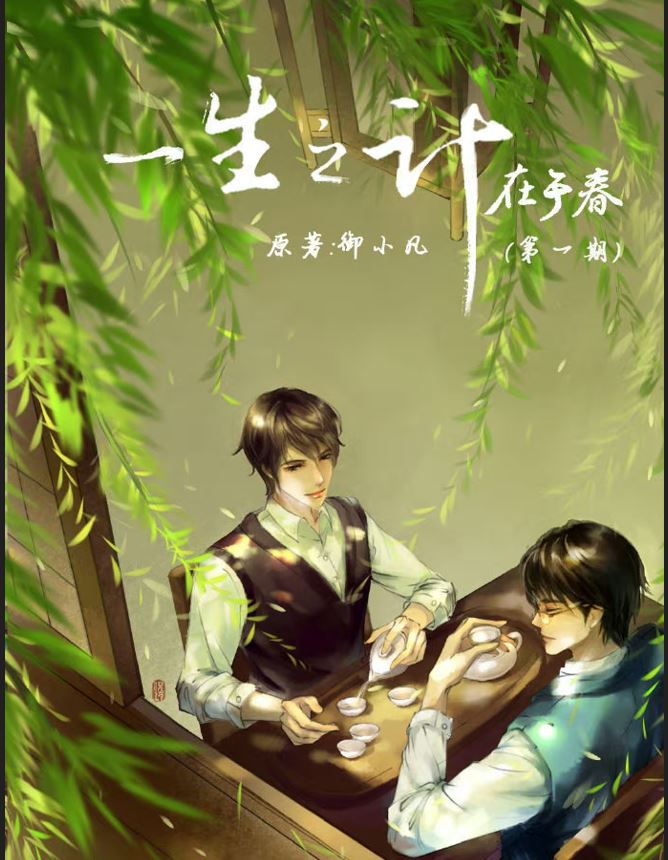
... Read More
The pacing in this four-chapter batch is what I'd call controlled drift—like a boat moving with the current rather than against it. The author understands that emotional stories don't need constant propulsion; they need rhythm. Let's break it down. We open with a practical exchange: concert tickets, financial arrangements, weekend plans. This is expository but efficient, establishing baseline before we enter the main event. The transition to the stadium is where pacing really shines. Instead of summarizing the concert, we're placed inside it—through Yao Jinxi's excited participation and Wu Yang's observant distance. The author uses sensory details to control tempo: the fluorescent sticks glowing green, the hoarse voice after two hours, the mineral water chugged in relief. These are punctuation marks in the narrative sentence. Then comes the crucial deceleration. Back at home, Yao Jinxi showers, plays games, loses repeatedly, checks QQ, reads classic literature, sleeps. This sequence could drag, but the author makes it breathe by matching the rhythm to Yao Jinxi's mental state: restless but empty, seeking distraction that fails, settling into old habits. The late-night awakening is the structural pivot. Pitch-black morning, ringing phone, half-asleep confusion—this isn't a cliffhanger of danger but of intimacy. The pacing here mirrors Yao Jinxi's consciousness: slow to register, gradual acceptance, then playful resistance. The author's use of the author's note and glossary actually serves the structure well. It breaks the fourth wall briefly, reminding us this is a constructed narrative, then grounds us in cultural context that may pay off later. The overall arc moves from external gathering to internal solitude to interrupted sleep—a classic compression-expansion-compression pattern that prevents fatigue. What I love most is how the author trusts silence. Wu Yang's decision not to return calls speaks louder than any dialogue could. The missed rounds in the game mirror missed connections in life. The chapter ends not with resolution but with potential—the phone call hangs in the air like a question mark waiting to be answered. This is pacing that understands emotional truth often lives in the spaces between events, not just in the events themselves.
... Read More
Okay so this chapter hit different in how it layers everything. Wu Yang comes in asking about Ruonan and Yao Jinxi's relationship — sounds innocent enough right? But reading it with hindsight? Man. He's absolutely fishing. 'Do you have feelings for Xia Ruonan?' comes out casual but there's this undercurrent of... something. Possessiveness? Jealousy? And Yao Jinxi's reaction is so naturally defensive, like 'why are you even asking me that' — classic misdirection because he doesn't realize Wu Yang is the one with competing feelings here. Meanwhile the subplot with Wang Peng drops in when Wu Yang brings up buying a car, and Ruonan's boyfriend name casually appears. That detail alone means the romantic triangle situation isn't over just because they're hanging out at the tea shop now. The narrative is quietly building this tension where everyone's playing at normal while underneath things are shifting. Also the fact that Wu Yang goes from depressed emotional zombie to 'I want to buy a car' in this span? That's plot progression that matters — someone is pulling him back toward living, and it's not a huge dramatic event, just domestic mundane moments accumulating.
... Read More
Yao Jinxi's dialogue is absolutely vicious and I am here for it. The man says 'I'm the toilet paper, remember? Always there to wipe your ass for you' to a woman he's apparently romantically interested in and calls himself his childhood friend. What kind of energy is this. The girl responds with an ellipsis like 'do you realize you're talking to the opposite sex?' and he fires back 'but you always call me your bestie.' BRO. The casual cruelty is actually kind of impressive as a defense mechanism. Wu Yang's voice is totally different though—smooth, helpful, always slightly polite in a way that feels rehearsed. 'If it's an extra fifty cents, I won't ask you for change.' 'You guys have to work on Saturdays too? That's really tough.' He's performing kindness the way Yao Jinxi performs insult. Both of them are wearing masks, just different masks. Xia Ruonan is the loudest voice but honestly the flattest. She screams at horror movies, complains about her weight, jokes about princess treatment. She's functional. She exists to bounce off the two real personalities. The narration itself has this dry, observant quality—Yao Jinxi's POV lets us hear his judgments constantly. He notices Wu Yang's 'subtle, superficial expression,' his 'scholarly demeanour,' the way his 'facial expression contradicted his tone.' The narrative voice is basically Yao Jinxi's inner critic, and it makes every interaction feel like a chess game where everyone's hiding their cards.
... Read More
can we just talk about this moment where Yao Jinxi tries a piece of the spicy pork and immediately regrets it because he's gotten used to eating bland food for Wu Yang? that's not even the main point but it destroyed me. he's just sitting there chewing a tea tree mushroom like a sad little rabbit while Wu Yang is happily feeding him vegetables, and Wu Yang notices and seems to genuinely enjoy being the one taking care of him instead of the other way around for once. and then later when they're on the sofa after the move and Wu Yang wraps his arms around Yao Jinxi and they just hold hands clasped together like that's enough? i need a minute. the cancer thing is always hovering in the background—the five-year benchmark hasn't passed yet and Yao Jinxi carries that weight visibly, like a ticking clock in their life—but in these quiet moments the story lets them just exist. no grand declarations, just two people who've survived enough to choose each other again. 'This is the first night in their new home. They will spend many days and nights here.' that line at the end hit me harder than any dramatic confession ever would.

Leave a comment

You must be logged in to leave comments. or
