Spring is the Plan of Life - Reviews

Spring is the Plan of Life
+Add to Custom List
Sort
Add review
... Read More
What I love about these chapters is how the author constructs tension without any actual danger. The stakes are real but domestic: can Yao keep his tea shop afloat? Will Wu Yang finally convince him to let him help? Can Yao dodge Uncle Yan's matchmaking one more time? These feel small, but they're charged with emotional weight because we've invested in these characters. The biggest conflict is internal, and it's Yao's. "Can't a person want to do something without a reason?" he asks when Wu Yang presses him about compensation. This is Yao wrestling with his own generosity, his own need to not be a charity case, while simultaneously being unable to refuse Wu Yang's presence. The push-pull is delicious. Wu Yang's conflict is equally fascinating - he's this guy who "never gives up once he sets his mind on something" (as the translator note points out), and we're watching him methodically work toward something he hasn't fully articulated. Is he trying to save Yao's business? Or is he trying to save something else? The ambiguity IS the tension. Then there's Uncle Yan's subplot, which raises the external stakes. This mysterious well-off girl exists in the narrative periphery, and every time Yao mentions her declining status, I feel the author setting up a potential romantic obstacle. "Why make her suffer by being with me?" Yao asks, and it's self-sabotage dressed as consideration. The hotpot restaurant at the end? More friends, more social complications, more potential for conflict. The author is stacking these quiet tensions like dominoes, and I'm here for it. Every chapter ends with a question mark hanging in the air, and I cannot stop turning pages.
... Read More
I need to talk about this one scene—actually, this one MOMENT. They're in the car, heading to pick up Xia Ruonan, and the silence between Yao Jinxi and Wu Yang is so thick you could cut it with a knife. Then at a red light, Wu Yang suddenly turns toward Yao Jinxi, and Yao Jinxi's reaction? His eyes WIDEN. He thinks Wu Yang is about to hug him. And then—this is the part that wrecked me—Wu Yang just fastens his seatbelt for him. No words. Just clicks it into place and goes back to driving like nothing happened. That's it. That's the scene. That is a NOVEL-length emotional beat compressed into ten seconds of screen time in your head. Because here's the thing: Wu Yang has been circling this whole chapter, probing, teasing, pushing Yao Jinxi to confess something about himself. And when Yao Jinxi accidentally says 'No way' to the question of whether Wu Yang might develop feelings for him, the air leaves the car. Wu Yang doesn't get angry. He doesn't pull away dramatically. He just… goes quiet. And then he does something so domestic, so carelessly intimate, that it undoes Yao Jinxi completely. Yao Jinxi notices it immediately. 'Surprisingly, Yao Jinxi found himself unable to accept this distant version of Wu Yang.' Wait—what? You were just teasing me to death five minutes ago, and now you're mad and I miss you? YES. That is the exact emotional logic of a person who is already in way over their head and refuses to admit it. And Wu Yang? He's playing the longest game I've seen in this genre. He drops the sexuality topic like it was nothing, makes practical plans about hotels and IDs, acts like the reliable friend—but that silence in the car? That's not indifference. That's hurt. Or maybe it's something worse: it's him retreating into the safety of being useful instead of being desired. I also want to highlight how Wu Yang handles Xia Ruonan's crisis. He's immediately thinking three steps ahead—hotels, ID documents, making sure she's not at a disadvantage. While Yao Jinxi is emotionally unraveling, Wu Yang is already solving the problem. This is the kind of man who shows love through logistics, and honestly? That's kind of beautiful in its own devastating way. But Yao Jinxi—the way he grabs Wu Yang's arm when Wu Yang goes to leave the car, and then can't let go because he suddenly remembers Wu Yang's on leave and shouldn't have to do this for them? That's not friendship. That's dependency wearing a disguise. And Wu Yang lets him hold on a second longer than necessary before pulling away.
... Read More
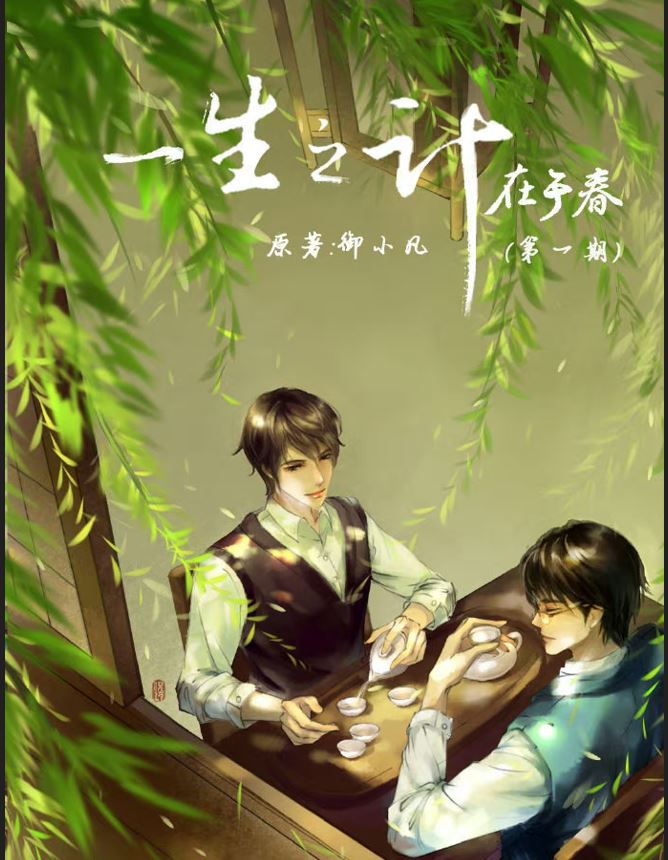
On the surface this is a chill afternoon tea scene. No one is yelling, no one is crying, there's literally cake involved. But if you look closer the stakes are actually pretty intense and I think that's what makes it so good. Xia Ruonan is caught between Wang Peng (the ex who clearly still causes drama) and Wu Yang (the new guy she's trying to see if things could work). But Yao Jinxi's involvement adds a whole other layer — he's her close friend, her confidant, the guy she trusts enough to bring into this situation. And yet you can't help but feel like he's also testing the waters with Wu Yang, seeing what kind of person he is. What's really interesting is that NO ONE is being openly hostile. The conflict is entirely subtextual. Wu Yang pours tea for Yao Jinxi. Yao Jinxi makes sarcastic internal comments. Xia Ruonan sits there smiling while her two worlds collide. The tension comes from everything unsaid — the questions they're too polite to ask directly, the judgments they're making but disguising as small talk. And the personal stakes for Yao Jinxi? He says he's helping because it's Xia Ruonan's trouble, but the narrator's reaction to Wu Yang's appearance — "Damn. The product description and the actual content don't match at all" — suggests he might be more personally invested than he's letting on. He's not just a helpful friend here. He's a man who just walked into a room and met someone who immediately made him reconsider something. I'm not saying it's romantic tension, I'm just saying THE STAKES ARE PERSONAL now and everyone at that table knows it to some degree.
... Read More
'Hey~ What happened to you this time? You must be mentally prepared to ask for help from me, right?' — sent as a Yao Ming meme. This alone tells you everything about their friendship. The dialogue between Yao Jinxi and Xia Ruonan is effortless, natural, and funny without trying too hard. They have that kind of long-term platonic rapport where jokes land because the history is already there. Yao Jinxi's teasing voice is distinct—calm, slightly sarcastic, never mean. His line 'Could it be that this Wu Yang has taken a fancy to you?' delivered right after Xia Ruonan's earnest explanation is perfectly timed humor. And Xia Ruonan herself has a voice: slightly dramatic, earnest, hesitant when discussing sensitive topics. Watch how she says 'I feel that... similar to you' and then immediately deflects by asking if he means Wu Yang is handsome. That's a real human reaction—vulnerability followed by panic cover. One moment that stuck with me: the online customer service exchange where the buyer keeps saying 'darling~' and Yao Jinxi just plays along while actually closing a sale. It's a tiny scene but it reveals so much about his personality—patient, professional, able to wear different masks depending on the situation. The author's dialogue rhythm feels confident. No one sounds like they're explaining things to the reader. Everyone just talks.
... Read More
The dialogue in these chapters is deceptively simple. On the surface, these two are having normal conversations—about tea, about food, about moving stuff. But read between the lines and it's a completely different conversation happening underneath. Take this exchange: "You haven't had any drinks this morning, right? I brewed some black tea... It's good for the stomach..." This is Yao Jinxi in full caretaker mode—offering something practical, something that might help, something that shows he's paying attention. But it's also him trying to do SOMETHING, because sitting still would mean thinking about what might be wrong. And Wu Yang's response—just smiling and suggesting they eat—shows how they're both performing normalcy for each other. They're both aware of the elephant in the room and neither will name it. The author captures this beautifully: "The usual banter in their conversation felt strangely absurd in the face of the enormous worry." The dialogue between Wu Yang and the doctor is also noteworthy. Wu Yang's calm, almost detached explanation of five-year survival rates contrasts sharply with the doctor's own confusion about who the actual family member is. This single exchange tells us everything about Wu Yang's character—he processes emotion through information, through facts and logic, because that's the only way he knows how to handle things that feel uncontrollable. And Yao Jinxi's final line—"Take good care of yourself, okay? I'll be with you."—so simple, so direct, after all the roundabout ways they've been communicating. Sometimes the author just lets characters say what they mean and it hits harder because of everything that came before.
... Read More
The stakes in this chapter are deceptively simple on the surface—you've got a family confrontation and a romantic subplot—but the emotional weight behind it is enormous. Yao Jinxi is fighting for something incredibly hard: his peace of mind. Not revenge, not justice, just... peace. And that's actually way harder to achieve. The internal conflict is what gets me. All those things he anticipated feeling—unease, gloominess, pain—none of it happens. Instead he feels "light and calm ease." That's the real stakes here: can he actually let go or will the guilt pull him back? The author makes us feel every ounce of that tension because we've seen how much Yao Jinchen has manipulated him over the years. External conflict-wise, there's Wang Peng still lurking in the background affecting Xia Ruonan, plus the entire family situation with the mother calling and creating expectations. But the chapter handles these threads without letting them overwhelm the main emotional arc, which is exactly right. The most dangerous moment isn't a fight or a betrayal—it's Yao Jinchen saying "Then where can I find someone as good as you" with those eyes. That's the trap. That's the moment where Yao Jinxi could have softened, could have gone back to the old pattern. And he doesn't. That restraint is where the real stakes live.
... Read More
I want to focus on the physical spaces in these chapters because they're doing more work than you'd expect. The apartment on the 17th floor with that shady balcony overlooking greenery — it's not just a backdrop, it's practically a character. Wu Yang and Yao Jinxi are standing side by side looking down at nothing in particular, and the view is 'refreshing.' That word choice is deliberate. They're both trapped in situations they can't control (Wu Yang with his empty houses, Yao Jinxi with his unresolved feelings), and this temporary shelter on the 17th floor is the only place where they can just... exist without performance. Then contrast that with the tofu hot pot dinner — 'no fancy restaurants nearby,' less than 100 yuan spent. The author keeps grounding us in the mundane. This isn't a glamorous city life story; it's about people making do. The plastic bag of daily necessities Xia Ruonan brings back, the supermarket runs, the cheap meals — these details make the world feel lived-in rather than constructed. And the elevator. God, the elevator. It's such a confined, pressurized space and the author uses it perfectly. Three people, two leaving, one staying, and that cramped metal box becomes this emotional pressure cooker. The doors closing slowly at the end as Wu Yang presses the button — it's cinema. I could literally see this shot: the metal doors sliding shut, separating Wu Yang from Yao Jinxi, separating them from whatever was happening between them in that moment. The underground parking lot that follows is another great choice — enclosed, artificial light, that transitional space between home and elsewhere. And the fact that they're silent in the car... the author knows exactly when to use setting to amplify emotional distance.
... Read More
I need to talk about this elevator scene because honestly it changed everything for me. Up until this point, Yao Jinxi and Wu Yang have this easy, companionable dynamic — they're hanging out together, sharing an apartment, bantering about real estate and quitting smoking. It feels warm. It feels safe. And then Wu Yang says something like 'I think Xia Ruonan handled it quite well' and Yao Jinxi just... snaps. "How long have you known us? Do you think you understand her better than I do? What do you know about our relationship?" This is not the reaction of someone who's just being protective of a friend. This is the reaction of someone whose entire world gets inverted in three seconds. The way he turns around in that confined elevator space, the muffled quality of his voice — you can feel the panic beneath the anger. And then the apology that follows, and Wu Yang's response with that smile that carries 'a hint of indulgence,' it's clear something fundamental has shifted between them. What really gets me is how Wu Yang reacts. He doesn't push back. He doesn't argue. He just apologizes with this look that's part regret, part something else entirely. And then later, when Yao Jinxi says sorry first, Wu Yang reaches over to help lower... and the text cuts off. That moment is so loaded. There's physical closeness here, but also this unspoken wall between them that Yao Jinxi is clearly fighting against. Meanwhile, the dynamic with Xia Ruonan is fascinating too. She's going through the worst breakup of her life and these two men are orbiting her pain in completely different ways. Yao Jinxi is hands-on, protective, almost desperate. Wu Yang is observational, measured, distant. And Yao Jinxi resenting Wu Yang's distance isn't just about the situation — it's about feeling replaced or secondary in his own emotional landscape.
... Read More
"I was afraid you might have some business to do so I might be bothering you." I need a minute. That's it. That's the line. Wu Yang didn't eat because he didn't want to bother Yao Jinxi. He just waited by the rolling shutter door smoking until Yao Jinxi came back. And Yao Jinxi — who cooks him another pack of instant noodles with eggs and baby bok choy because their tastes are apparently synced — has no idea the damage he's doing just by existing in this kitchen with him. The whole scene is built around something so small: two guys sharing a pot of upgraded instant noodles. But the emotional weight behind it is enormous. Yao Jinxi noticing Wu Yang's guilt when Wu Yang admits he forgot to say he'd come over for lunch yesterday — that's the kind of attention to detail that says Yao Jinxi has been watching Wu Yang longer than Wu Yang realizes. And then Wu Yang turns it around with the ID card thing, looking up with those "deep eyes filled with indescribable emotions" while Yao Jinxi's throat goes dry. The narration doesn't even try to hide what's happening — "their complicated feelings needed no words and their lifelong hopes were now within reach." Within reach. Not there yet. Just within reach. That's the whole romantic tension of this book compressed into one kitchen scene with stir-fried bok choy.
... Read More
The 'giving face' glossary at the start of this chapter is NOT just cultural context padding. I keep thinking about it and it connects to literally everything that happens. Wu Yang is a man who understands face on an almost instinctive level. He didn't know the girl had a boyfriend because she concealed it from him—and from everyone else at the company. She maintained her face, her reputation, her double life. Wu Yang's response wasn't to expose her publicly (which would make her lose face) but to hire a private detective and learn the truth in secret. He preserved her face even while dismantling the deception. That's a deeply complicated relationship with the concept. Then there's the Pu'er tea itself. Yao Jinxi explicitly says it 'helps to cut through the greasiness.' After the heavy, greasy hotpot meal—the indulgence, the excess, the socializing—they drink tea to cleanse and restore balance. The tea is a cleansing agent, a way of processing what was consumed. But here's the thing: tea also HIDES things. When you drink tea, you don't taste the bitterness as sharply. Wu Yang's entire approach to this girl was like Pu'er—he smoothed over the greasy parts, made the unpleasant truth palatable through analysis and detachment. 'I'm back' is such an ordinary phrase but it carries so much weight thematically. In a world where everyone is performing, concealing, managing face, Yao Jinxi's simple return is radical honesty. He doesn't pretend he wasn't gone. He doesn't perform a more elaborate greeting. He just states the fact: he returned. Wu Yang's trembling reaction suggests that this honesty is both what he craves and what terrifies him, because someone who speaks so plainly might also see through all his own layers of concealment. The business transactions between them—He Qi's payment, the profit, the joking about unsold tea—these are all about transparency and trust, the opposite of the girl's deceptive behavior. The author keeps pairing intimacy with commerce and I wonder if that's intentional. 'As if his heart had been struck, surged in his chest. He suddenly realised that what he had been yearning for might be just like this.'
... Read More
I need to talk about this chapter because it genuinely took me by surprise. Up until now, I was kind of treating the Yao Jinchen situation as background drama, you know? Like, okay, weird brother exists, whatever. But this? This is where the plot went from 'tense family stuff' to full-blown nightmare. The whole scene with Yao Jinchen—kissing him like a 'hungry beast,' pinning him down, the biting—it wasn't just dramatic, it was terrifyingly visceral. And then Wu Yang shows up and literally crashes through the rolling shutter like some kind of hero from a wuxia novel? The contrast between the violence inside and Wu Yang's almost casual cleanup afterwards... chef's kiss. Also, the fact that Wu Yang calls in a favor from the deputy head of criminal investigation instead of regular police—that's such a smart plot move because it keeps Yao Jinchen out of the system while still removing him from the immediate situation. And the most gut-punching part? Yao Jinxi actually HOPED this could be an opportunity to reconnect with his family. The author literally writes: 'He had thought that this might be an opportunity. An opportunity to reconnect with his long-lost family.' But then immediately follows it with 'nothing had changed.' Oof. That hit me like a truck. The plot is doing something really sharp here—it's deconstructing Yao Jinxi's longing for family while simultaneously giving us a protagonist who's actually standing up for him, even if quietly.
... Read More
The structure of this chapter is deceptively simple. It starts with shrimp fishing, meanders into a business conversation about Mingqian tea, goes to a meal, and ends with this deeply personal exchange about peeling shrimp and past relationships. On paper, that sounds scattered. In practice? It flows like water. The author knows exactly when to let scenes breathe and when to tighten the screws. The transition from fishing to business is smooth because it happens organically - Wu Yang brings up He Qi, and suddenly we're talking about logistics departments and high-quality tea. But here's the genius: the business talk doesn't drag. It's quick, practical, and then it pivots back to something more personal. When Yao Jinxi explains why he can't handle the deal (his tea shop is small, packaging wouldn't pass, customers are true enthusiasts who don't care about formality), it reveals character instead of just advancing plot. The meal scene is where the pacing really shines. You've got all this dialogue intercut with action - serving food, adding cilantro, Wu Yang's clumsy shrimp-peeling attempt. It's active, not passive. And then the reveal about the past companion comes right after Wu Yang comments on Yao Jinxi being good at taking care of others. Perfect timing. The emotional beat lands because we just spent time watching them interact in this domestic setting. And that translator note at the end? A meta break that tells us the author is aware of how cute this is. Sometimes you just need to scream about things, and this chapter earns that reaction.

Leave a comment

You must be logged in to leave comments. or
