Spring is the Plan of Life - Reviews

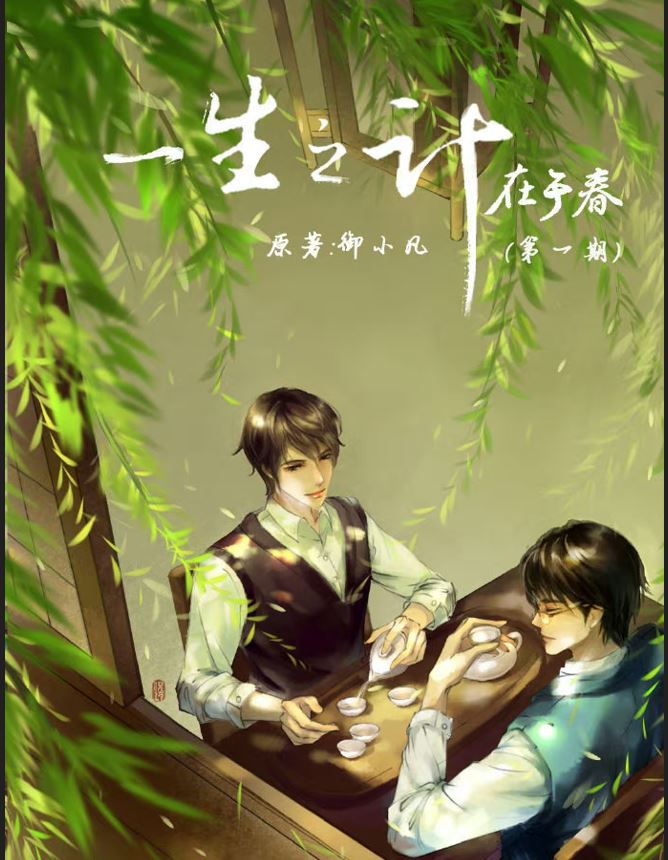
Spring is the Plan of Life
+Add to Custom List
Sort
Add review
... Read More
Here's what makes this book genuinely tense despite having zero explosions or dramatic confrontations: Yao Jinxi is already wounded, and we know it. "It's not like I just went through a breakup" — this line is doing SO much heavy lifting. It's casual, almost dismissive, but it lands like a hammer because it tells us Yao Jinxi is still processing something significant. Every interaction he has with Wu Yang is filtered through this unprocessed grief, and that creates a subtextual stakes that's far more compelling than any external conflict could be. The external stakes are minimal on the surface: will Yao Jinxi accept Wu Yang's business proposal? Will they go to the concert together? These seem like small questions. But they're not. Each one represents a choice about how much of his guarded life Yao Jinxi is willing to open up. Accepting the business proposal means financial interdependence. Going to the concert means publicly being seen with someone. Both are acts of vulnerability for a man who clearly built walls after his last relationship ended. Wu Yang's stakes are equally personal but expressed differently. He's the one initiating, proposing, noticing. What does he want from this? The text doesn't say explicitly, which makes it more affecting — we're meant to feel his desire through action rather than declaration. His offer to handle business negotiations isn't just helpful; it's a way of inserting himself permanently into Yao Jinxi's daily existence. Xia Ruonan adds a third layer of stakes through her desperation. She's invested in this outcome emotionally, and her internal panic about whether she's being too obvious creates comic relief that doesn't undercut the real emotional tension — it frames it. She knows something these two don't, and that dramatic irony keeps us watching. The He Qi mention! That's a stake we can't see yet, a ghost on the horizon. Something from Yao Jinxi's past that might complicate everything. The author drops it and immediately buries it, which is both cruel and brilliant — now we're worried about something we know nothing about.
... Read More
So the chapter opens with Wu Yang talking about his lack of ambition and it spirals into this whole 'I have everything I need' speech that's supposed to sound humble but is actually just another confession of devotion to Yao Jinxi. Then they arrive at Lijiang, check into the inn, wander the streets, and BAM—young woman appears out of nowhere. That's the plot structure in miniature: setup, journey, disruption. The Wang Juan entrance is perfectly timed because they've just had this peak intimate moment where Yao Jinxi is feeling philosophical about youth and love, and immediately some random person from his past shows up reminding him that the world exists outside their bubble. The author uses her as a plot device in the smartest way possible—she's not there for romance drama or revenge, she's just a mirror. Her reaction to seeing them together (the wounded embarrassment, the quick retreat) confirms what Yao Jinxi was just feeling internally. The encounter resolves itself almost immediately—they don't exchange numbers, don't revisit anything—just a brief collision that proves the point and moves on. What I found clever is how the chapter then returns to stillness. The night sky, the stars, the ring. After the disruption, the plot doesn't escalate—it contracts. It gets smaller, quieter, more concentrated. Which is exactly the right move for a chapter this short. No cliffhanger, no dramatic reveal, just two people walking back through a lantern-lit ancient town holding hands.
... Read More
'I didn't say you should give birth to one!' Yao Hong furrowed her eyebrows, her wrinkles from the passage of time becoming more pronounced. She continued, 'Even if you want to, can you give birth?' And then — absolute comedic gold — Wu Yang just casuallydrops 'Are you talking about surrogacy?' like he's explaining something at a dinner party and not introducing an entire concept to people who've never heard of it. The silence that follows is perfect. Everyone turns to look at him like he just pulled a rabbit out of a hat. This man walks into a family dinner, gets called 'Gan Ma' by the mother in what is clearly the most awkward naming convention ever, and immediately becomes the family educator on reproductive technology. I love him so much. But the dialogue that actually got me was later, when Yao Hong says 'Oh, I don't even know what I'm talking about.' She just... folds. After all that confidence about adoption, she catches herself and admits she's just spouting off traditional expectations. That self-awareness is what makes her character feel real — she's not a villain, she's not perfectly enlightened, she's a mom who loves her kids and is fumbling through it like the rest of us. And then her final line — 'you just got an extra godson and already forget that you still have one more biological son?' — that's Yao Jinxi at his most devastatingly calm. Zero yelling. Just a statement of fact that carries the weight of an entire relationship. The author understands that the most powerful dialogue isn't what people shout. It's what they say when they're tired enough to stop performing.
... Read More
Yao Jinxi is caught between two conflicts simultaneously and honestly the internal one might be worse. External conflict: Yao Jinchen. His own brother. The text makes it brutally clear this isn't just a strained relationship—it's something that has left Yao Jinxi needing to lie about going on vacation just to avoid the confrontation. Wu Yang's warning about him being "defenceless" against his brother is the key line. Defenceless doesn't mean physically vulnerable. It means emotionally exposed. This brother has access to Yao Jinxi's soft spots precisely because they share history, blood, whatever complicated bond they have. That's the kind of conflict that doesn't resolve with a clear victory—it resolves with boundaries, and learning to build them. Internal conflict: Yao Jinxi's feelings for Wu Yang. This one is even more insidious because there's no villain, no external force forcing them apart. It's just... fear. Fear of ruining what they have. Fear of being too much or not enough. Fear that wanting someone this much makes you vulnerable in a way he's not ready for. The appendix removal metaphor is interesting here—even something as physical as surgery can't fully explain what he's processing. The stakes are quietly enormous. If he stays silent, he loses the person who's actually showing up. If he speaks up and gets rejected, he loses the safety of the current arrangement. Either way he loses something. That's why the hospital bed scenes hit so hard—they're the calm before whatever storm comes next. And Wu Yang leaving for a "personal matter"? That's the author pulling the rug. Because now the stakes just doubled and neither of them knows how to handle it.
... Read More
Let me just say this about Wu Yang's dialogue: the man says almost nothing and it all lands. "I took leave." Four words. He doesn't elaborate, doesn't seek gratitude, just states it like it's the most normal thing in the world. And yet it's one of the most generous sentences Yao Jinxi hears in this entire section. The author trusts Wu Yang's character so much that his dialogue never needs to perform. He's not trying to impress anyone. Then there's the tea shop exchange: "I'll be leaving for a while in a couple of days." Not dramatic. Not apologetic. Just information shared with someone who matters. And Yao Jinxi's response—"What?"—that single word carries so much subtext. He's not surprised about the leave, he's surprised that he wanted to know. That's the dialogue doing the real work here, not the words themselves. The BBQ scene is pure character voice: "The more we talk about it, the more I crave for it. I'm hungry." Yao Jinxi deflects vulnerability with hunger. Classic. And Wu Yang's response—"Should I go down and buy you two more steamed buns?"—is so casually affectionate it barely registers as affection until you sit with it. But the line that stuck with me longest is Wu Yang's serious one at the end: "I'm more worried about you." Said flatly, no drama, just fact. In a genre where people yell their feelings, this quiet delivery is devastating. The author's dialogue style here is basically: say less, mean more, let silence do the heavy lifting. I'm here for it.
... Read More
This book has this amazing ability to make you feel like you could literally walk into these spaces. The tea shop with its regular customers, the residential area where a key-making shop sits diagonally across the street, the kitchen where Yao Jinxi is chopping green onions and chilli peppers like it's the most normal thing in the world — it all grounds the story in something tangible. You're not floating in some vague romantic void; these characters have a ACTUAL LIFE with actual addresses and actual routines. And then there's Xia Ruonan's apartment — messy, mingled belongings, security guards who know her. The detail that she only picks up her underwear and clothes because Wang Peng doesn't need those is the kind of specificity that makes a world feel real. One suitcase, two cardboard boxes. That's all she owns after living with someone for so long. The image of them carrying boxes through the entrance while the security guard asks a symbolic question and she just says they're moving — there's so much unsaid in that moment. The world around these characters isn't just backdrop; it's actively shaping their choices. The car Wu Yang buys is perfect for moving things. The key-making shop exists. These aren't random details — they're the scaffolding that makes the emotional beats land harder because the world around them is solid enough to believe in.
... Read More
The dialogue in this passage is a masterclass in saying things by not saying them. Look at this exchange: "Can't sleep?" "Can't sleep. What about you? What are you thinking about?" "Nothing." Three lines. Wu Yang says "nothing" but obviously isn't thinking about nothing. He's thinking about Yao Jinxi. He's thinking about Xia Ruonan. He's thinking about the fact that Yao Jinxi is lying next to him unable to sleep. And Yao Jinxi hears it. He knows Wu Yang isn't telling the truth, and instead of pressing, he asks about Xia Ruonan—redirecting the conversation to safe ground. That's not clumsy writing; that's two people who understand each other navigating carefully around their own feelings. Then there's Wu Yang's line: "She simply made an unfortunate choice in a partner." On the surface, he's talking about Xia Ruonan and Wang Peng. But he's also giving Yao Jinxi permission to reframe his own heartbreak—not as a tragedy, but as a bad decision. It's advice disguised as observation. Brilliant. And Yao Jinxi's response: "But when you see something that was a given in your life suddenly collapse, it's an incredibly painful feeling." This is the most honest line in the entire passage. He's not just talking about Xia Ruonan. He's talking about whatever happened to him six years ago, before college, when he wasn't even in college. The conversation spirals away from there—Yao Jinxi deflects, changes the subject, says he's going to sleep—and Wu Yang lets him. "Goodnight." That's it. No pressure. No pursuit. And Wu Yang's restraint here says more about his character than any declaration ever could. The translator's note voice and the author's note both have such distinct personalities too. The author is self-aware and playful; the translator is visibly suffering from the tension. Both add texture to the reading experience.
... Read More
Okay, I need a minute because Yao Jinxi's backstory hit me like a freight train and I am NOT okay. The author didn't even try to make this gentle. Yao Jinxi just… tells Wu Yang about it. Like he's sharing the weather forecast. 'I've also struggled with depression. And it was quite severe.' And then the prose just pivots into this raw, unflinching account of his lowest period. Living in a daze. Numbing himself with alcohol and tobacco. The vicious cycle where sobering up only made the despair deeper. 'Each day felt more disheartening than the last.' And then: 'He was so afraid because he was living but felt as though he were already dead.' That line. That single line. I had to put the phone down. Because that is THE most accurate description of clinical depression I have ever read in any novel, and it's delivered with this casual, almost offhand tone that makes it hit even harder. But what really broke me was Xia Ruonan. This girl—this absolute saint—kept dragging him out of the mire. And when he finally did attempt suicide (and thank goodness the author made sure to note it was 'unprofessional technique,' because obviously he survived), she held him in the hospital and cried. And the parallel the author draws? Xia Ruonan became to Yao Jinxi what he once was to her: the person who stayed by their side when their family failed them. 'She was there just like Yao Jinxi had done for herself whenever she was frightened by her drunken father and her mother's madness when she was a child.' This is a friendship so deep it loops back around into something that looks like romance from the outside, which is exactly why Wu Yang can so casually ask 'do you like her?' and Yao Jinxi is forced to defend himself with the most ridiculous argument in human history: 'If I truly liked her, would I have given Wang Peng a chance, that jerk?' Bro. No. That is not how any of this works. But the emotional core here isn't the friendship—it's Yao Jinxi's vulnerability. He shares this with Wu Yang and then immediately deflects, asking Wu Yang if HE should be the one receiving comfort. And Wu Yang sees right through it. 'If you need it, I'm always here to comfort you. But I believe you don't need it.' Because people who've survived what Yao Jinxi survived don't need pity. They need someone to sit with them in the car in silence and fasten their seatbelt without making it a big deal. I'm still processing this chapter. I need to lie down.
... Read More
I need to talk about this scene where they're just... eating hotpot and nobody else is talking to them and they end up having an academic discussion about how to cook beef tripe. FIVE HOURS. They sat through five hours of Wang Peng's grandiose talking and then somehow ended up bonding over cooking techniques. And Wu Yang is like "maybe it's because it was prepared by your hands." I literally cannot. I cannot with this man. Wu Yang drops that line completely deadpan and Yao Jinxi just... takes it as a compliment to his cooking skills. Bro. BRO. You do not get to be that flirty and then act like you didn't just say something incredibly intentional. And then the bicycle scene at the end. Wu Yang offering to take a taxi ahead and wait for him—that's such a mundane thing to say but the way Yao Jinxi reacts, completely baffled, like he can't figure out what's happening—how do you not see what's happening?? And then Wu Yang just casually asks "is it too late to decide now?" Going to his place. Like it's nothing. Like he's not just steering the entire evening toward being alone with the person he clearly wants to be alone with. Yao Jinxi letting him in anyway. Giving him his keys. Saying "if you find something worth taking, feel free." That's trust. That's... something. And Wu Yang's response about developing a liking for tea—after previously not liking it at all? That's him saying I changed for you without actually saying it. I'm sitting here feral.
... Read More
The emotional architecture of this chapter is so precise it hurts. On the surface, it's a concert date between friends. Underneath, it's a study in unrequited longing and accidental reciprocity. Let's start with Yao Jinxi's emotional journey. He enters the concert genuinely excited—not about the celebrity, but about the atmosphere, the collective energy. He's fully present, waving fluorescent sticks, singing along, living in the moment. This authenticity is what draws Wu Yang in like a moth to flame. But notice what happens after: Yao Jinxi goes home, tries to lose himself in kart racing, loses dozens of rounds, checks QQ, sees Xia Ruonan offline, and falls asleep reading classic literature. That sequence isn't random; it's the emotional aftermath of a day spent pouring joy outward while having nothing returned. He's satisfied but vacant, like a battery charged by giving away power. Wu Yang, meanwhile, experiences the concert through Yao Jinxi. The noise oppresses him, but Yao Jinxi's presence transforms it into something bearable, even beautiful. His envy isn't jealousy of the singer or the crowd—it's jealousy of Yao Jinxi's capacity to feel such uncomplicated happiness. That's the emotional core: Wu Yang doesn't want the concert; he wants the person experiencing it. The missed calls from the unknown number add another emotional layer. Is this Xia Ruonan? Someone from Yao Jinxi's past? It creates a subtle threat to the bubble Wu Yang is carefully constructing. Then there's the midnight call—this is where the emotional line becomes almost unbearable in its subtlety. Wu Yang calls when Yao Jinxi is asleep, knowing he won't answer immediately, but needing to hear his voice eventually. When Yao Jinxi finally wakes and responds with playful annoyance, there's a crack in Wu Yang's composure. The author doesn't describe Wu Yang's feelings; she shows them through action: checking the time, ignoring other calls, choosing this moment to reach out. It's the emotional equivalent of holding your breath underwater. And Yao Jinxi's groggy joking about pimps and grudges? That's him instinctively testing the waters, not yet understanding what he's touching. The emotional tension here isn't in grand declarations but in silence between words, in water bottles passed, in fluorescent sticks waved versus watched. I literally felt my chest tighten during the concert scene. This is how you write longing without making it melodramatic.
... Read More
I cannot stop thinking about this mother-son reunion. Like, I knew it was going to be emotional but I did not expect it to hit me this hard. The scene in the café is just so quietly devastating. Yao Jinxi says "Mom" and his voice is described as conveying sorrow and timidity, and then both of their eyes go red immediately. It's not dramatic crying or anything — it's this suppressed, clenched-teeth kind of pain that Yao Hong is clearly enduring. And then she asks about his injury instead of hugging him or saying anything normal, which is so real. That's how people actually react when they've been hurt by the ones they love most — they ask about the small stuff because the big stuff is too dangerous to touch. What wrecked me though was Wu Yang's intervention. He just steps in and says "Auntie, Jinxi really misses you" and you can practically see Yao Jinxi's soul leaving his body. But it also worked. Because Wu Yang understands something crucial here — he's been through the same illness Yao Jinxi had, so he knows exactly how much pain his friend endured. And that's what makes their bond feel so genuine. It's not romantic tension or anything like that, it's this deep, lived-in understanding between two people who've carried similar weights. The flashback about Yao Hong's past is brutal too. Twenty years old, abandoned during childbirth, called worthless by everyone. She moved to a new city with two sons and swore to never let anyone look down on her again. And then her son doesn't come home because of an illness that nearly killed him? Of course she couldn't understand. She survived by being strong, and her son's vulnerability felt like betrayal. "If a problem couldn't be solved, time would solve it." Wu Yang says this and honestly it sounds almost dismissive on paper but in context it's the truest thing in the chapter. Time doesn't fix everything but it changes the conditions enough that reconciliation becomes possible. I'm still not over this.
... Read More
OK so let me just… okay. The car scene. Wu Yang saying "you've already paid a lot for your mistakes" and Yao Jinxi literally choking up again. Like bro, you cannot control your emotions around this man??? I was SCREAMING internally. But what got me was that contrast between Wu Yang being this rational, almost cold voice of reason ("Jinchen's life belongs to himself") and then Yao Jinxi literally breaking down because he can't accept being absolved. He WANTS to blame himself. It's his whole framework for dealing with guilt. And then there's this one line that wrecked me: "If I'm not biased towards you, then who should I be biased towards? Your brother?" Not romantic. Not a love confession. Just... absolute, unmovable positioning. Wu Yang isn't saying "I love you." He's saying "I choose you. Every time. Even when it's inconvenient. Even when your brother hates me." Also can we talk about how absentminded Wu Yang has become toward literally everyone except Yao Jinxi? He admits he barely checks in on Xia Ruonan anymore. That's kind of terrifying in a totally normal relationship way. And Yao Jinxi is the one bringing her up! Who's taking care of whom here?? The ending of this batch where Wu Yang says "if it weren't for you, I wouldn't have done any of these things" — that reciprocity though. This isn't a savior story. Wu Yang keeps insisting he benefits too. They're building something together and both of them know it.

Leave a comment

You must be logged in to leave comments. or
