Rose of the Abyss - Reviews

Rose of the Abyss
+Add to Custom List
Sort
Add review
... Read More
Let me just say—the stakes in this chapter went from 'maybe we should get more supplies' to 'people are dying at the train station' in about five pages and I am SHOOK. The conflict isn't just external (mutated beasts, infection, district lockdowns) it's ALSO internal. Chai Yuening wants to refuse the security officer's call for help because she has her own mission—finding Du Xia. But she can't refuse. The weight of leadership is crushing her, and we feel it. 'She knew a request for help like this couldn't have been sent only to her.' She knows she's not special, she's just one of many being asked to sacrifice. And Chu Ci's fear versus her loyalty—she says 'I'm not scared' but we KNOW she's terrified. That's real tension. The scene at the station where the beast appears and 'the color of blood bloomed like a flower'—that's not just violence, that's the moment safety dies. And those 'civilian mercenaries with clearance' being a minority? The author keeps reminding us that most people in this world have never seen a mutated beast. These are regular people facing something they can't understand. The stakes aren't just physical survival—they're psychological. Can people handle the truth of their world?
... Read More
I have to talk about this scene where Ren Dong, Chai Yuening, and Chu Ci all end up in the cockpit at the same time. It's such a quiet moment after all that tension, and it hit me so hard. They're all lying awake, can't rest, and then Chu Ci just says she can't sleep either and asks if she can stay. And Chai Yuening's response is just... “Of course.” Two words, but it says everything. It's funny how the author doesn't make this overtly emotional. There's no big speech about how much they trust each other or anything like that. But you can feel it. These three people are sitting together in the dark, listening to the rain, and Lao Xiang's snoring is basically their lullaby. It's domestic. It's weirdly peaceful for people who are literally driving through an apocalypse. And then Chu Ci spots something and screams “Go!” and everything shatters. The contrast between those two moments—the quiet solidarity of the cockpit and the sudden chaos—made my chest ache a little. I love how the author uses silence and stillness to make the violence hit harder. That's not easy to do.
... Read More
I need to talk about the emotional architecture of this chapter because it's devastating in the most understated way possible. There's a scene—just three sentences, really—where Chai Yuening is half-asleep in the vehicle, her head drooping to the side, and 'a hand gently supported the side of her face, its touch somewhat cool, somewhat soft.' Someone held her while she slept. Someone watched her dream of being alone in a wilderness full of monsters, and they made sure she didn't fall. And then when she wakes up groggy and disoriented, the very first thing she does is look at the girl in the corner and put a jacket back on her. Two people who don't fully know each other, both carrying invisible weights, both reaching for the other without having the words for it. And Chu Ci—this kid who lost everything, who can't even remember where she's from, who sits at the checkpoint in total silence while grown adults argue about whether her wounds might be infected—she speaks exactly three times across the entire batch, and each time it's quieter than the last. 'It's okay, I don't remember anyway.' That's not acceptance. That's grief wearing a mask so thin you'd miss it if you weren't looking closely. And Chai Yuening, who can't fix it, who can only offer a helpless look and an apology for a world that won't let her help, that moment of shared powerlessness between them—is that the beginning of something? Or is it just two lonely people recognizing loneliness in each other?
... Read More
The pacing in this batch is genuinely excellent. It starts slow and atmospheric—walking through dense fog at night, barely enough light to see, sounds of footsteps and breathing becoming almost hypnotic. That quiet middle section where Chai Yuening talks about the old world, about cities lighting up at night and stars and insects chirping—that's not filler. It's deliberately slowing us down so we feel the isolation, the weight of silence, the fragility of these two people walking through what should be deathly dangerous territory. Then you have these bursts of tension. The giant beast description from Chai Yuening toward the end—'Its legs were thicker than the elephants in the history books, its forelimbs were like two giant blades'—that's pure adrenaline. And right before that, the discovery of Luo Kun's wrecked vehicle, blood everywhere, severed limbs. The author knows exactly when to pull the rug out from under us. What really works is the transition from the night journey to the return trip. One moment they're trudging through fog, the next they're in an armored vehicle with bantering teammates. It gives us room to breathe after all that tension, but it doesn't drag because the dialogue keeps moving forward. Lu Qi complaining about the ride quality, Lao Xiang's protective lecturing, Chai Yuening deflecting with humor—that's all character development disguised as downtime. The structure feels very intentional. Night journey (quiet, eerie, mystery-building) → Discovery of wreckage (shock, horror) → Return journey (relief, character moments, exposition) → Giant beast description (cliffhanger energy). Each section serves a purpose, and nothing feels wasted.
... Read More
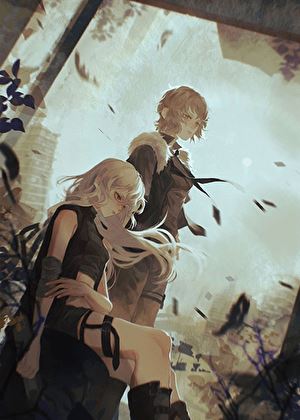
"Until humanity truly finds its freedom, we are all in a cage," Ge Heguang says, and this single line becomes the lens through which everything else in the chapter refracts. Let's talk about cages first. The outer city is literally a cage — surrounded by mutated beasts, dependent on the floating city's mercy, running on a self-destruct countdown. But Ge Heguang is talking about something deeper: the cage of hope itself. The distress signal being sent is both a lifeline and an admission of captivity. They're not rescuing themselves; they're begging someone else to save them. The base proclaims "freedom and hope" loudly, and yet the narration reminds us that this same base once made "a cruel decision" that they'd never let anyone know about. The self-destruct plan postponed, not cancelled — that distinction matters. Hope is suspended, not secured. The radio broadcast continues: "The Base never allowed any talk that could incite panic, even when its own high command had once fallen into despair." A state that manages information the same way it manages survival — by controlling the narrative. Freedom and hope as manufactured commodities. And then there's the meal. Ge Heguang offers them mashed potatoes and vegetable soup — the food of the base's most respected doctor, indistinguishable from the outer city's common rations. In a world of extreme inequality, the fact that the elite eat the same as everyone else is either genuine egalitarianism or a performance of it. Given everything we know about this world, I suspect the latter. The drinking scene is the chapter's most potent symbol of all: four people pretending tomorrow exists. You Lan planning employment, Lao Xiang defending his driving skills, Lu Qi already bouncing back from relief — they're performing normalcy like a ritual, and the ritual works because they need it to. But the real symbol, the one that haunts me, is Chu Ci's rare liveliness running up the stairs. What makes her happy? We don't know. She's the only character in this chapter whose inner life remains genuinely opaque. She's the cage's secret occupant — light where others are heavy, hopeful where others are resigned, and somehow the most unknowable person in a story about people who claim to know everything.
... Read More
I need to talk about You Lan because this woman is a whole emotional earthquake. Here's someone who walks in with this flirty, sarcastic, "I'll definitely remember to collect the debt you owe me" energy, and then the door opens and she BURSTS into tears. Like full-on wailing, handkerchief-soaked, "I thought you'd abandoned me" level crying. And Chai Yuening's response? "Are you having a fit?" Of COURSE that's what she says. That is SO Chai Yuening. But the moment that absolutely wrecked me was when You Lan tried to hug Chai Yuening, saw Chu Ci's displeased expression, and immediately braked mid-run "like a butterfly folding its wings." I cannot stop thinking about this metaphor. She's so used to navigating the tightropes between these two women that her body reacts before her brain even processes it. That's not a side character—that's someone who has spent years reading the room to survive. And Chu Ci! The silver-white hair, the sleepy eyes, the silent observation. She doesn't say a word for most of this chapter but her presence is so loud. She follows Chai Yuening without being asked. She watches You Lan with that unmistakable edge of protectiveness. Their dynamic is this incredible three-way orbit where everyone knows exactly where the others stand. Then there's Lu Qi—who else gets this excited to see their captain but also immediately gets shut down by Ren Dong's "If you want to die"? These people have been through hell together. Five days separated felt like a lifetime, and you can see it in how they just stare at each other during that plain vegetable hot pot. No one needs to speak. They're all thinking the same thing: we're still here, we're still together, and we're not letting go again.
... Read More
Okay, the author notes at the end say it all: Chai Yuening: I have no other choice. Chu Ci: No, you do. Two lines. That's the entire philosophical argument of this batch compressed into ten words. But the dialogue throughout is what makes that ending land. Lao Xiang's voice is instantly recognizable. "We mercenaries live with our lives on the line. Death is just an instant away. When our time is up, if the place where our corpse lies can switch from the surface to underground, it's not such a bad thing." This is a man who has seen too much and processed it through dark comedy. He yawns while talking about his own death. That's not cowardice—that's armor. You Lan is the emotional honesty of the group. "I'm afraid of dying. So afraid that I've never even glanced at the surface in my entire life… I thought that as long as I stayed obediently in the Base, I could live out my life in comfort. Now look, everything's gone." She's the reader surrogate—someone who followed the rules and the rules still failed her. Ren Dong brings the hope, but it's not naive hope. It's researched, specific hope. She knows the Floating City agreement. She knows the signal towers are down. She's essentially building a case for miracle while knowing she's probably deceiving herself. And Chu Ci—so few lines, but each one carries weight. "It's possible." "So we need to buy them more time." "We can stop the self-destruct sequence from activating." Three sentences total across the entire batch, and they reframe everything. The silence before those lines makes them hit like a physical thing. The banter between Lao Xiang and Lu Qi about his age is small but it does important work—it reminds us these are people who have known each other long enough to roast each other, even while the world is ending. That's the dialogue doing double duty: advancing character while keeping the human moments alive beneath the apocalypse.
... Read More
'They were a rare brownish-red, the brown not too deep, the red not too dark, as translucent as red amber.' I just—what is this author doing to me with two sentences about eyes? I've been rereading this description like six times. The girl is curled in a corner, silver hair stained with blood, barely speaking, and somehow she's described as beautiful in a way that cuts right through all the grime and danger around her. It's not glamorous beauty. It's raw, quiet, almost unsettling beauty. Like finding something untouched in a world that's been eaten alive. And the dynamic between her and Chai Yuening? Already there. Already humming. Chai Yuening saved her. Not for money. Not for glory. Just... because. And the girl's just watching her with those amber eyes, saying nothing, absorbing everything. That silence is doing SO much work emotionally. It's not emptiness—it's the kind of silence that comes from someone who's been through too much to trust words right now. I keep thinking about Chai Yuening's frustration in that vehicle too. 'She had left her team alone at a time clearly unsuitable for missions, risking her life to cooperate with people who valued profit over loyalty—all for a transaction that had nothing to do with money.' What does that mean? Who is this girl to her? Something precious. Something worth betraying everyone else for. I'm already obsessed and we haven't even gotten to chapter five.
... Read More
Okay, I need to talk about this one sequence because the imagery is absolutely cinematic. The dense fog and heavy rain obscuring everything, then that flash of lightning that briefly illuminates the night like daylight. And in that split second—this enormous figure, six or seven stories tall, standing silent as a mountain. The author writes: “But there were no mountains in this place, only skilled predators lying in wait.” What a line. It does so much work in one sentence. You get the geography, the danger, and the predatory nature of this world all compressed into one image. And then the horde—“In the misty rain, the black vine flowers, shimmering with a faint reddish-purple light, swayed in the downpour.” I don't even know what that means literally but it sounds terrifying and beautiful at the same time. The writing makes me feel like I'm there in that vehicle, watching these eyes appear in the fog, one by one, until the whole world is alive with them. The worm creature that slams into the side window and transforms into a tentacled sucker? The window cracking into a “flower tree”? These descriptions are grotesque and vivid in the best way. The author knows exactly how to paint horror without relying on cheap jump scares. It's atmosphere-first, which is why this scene lingers with me.
... Read More
This chapter sequence is masterclass pacing. It starts slow—you've got people unable to sleep, moving to the cockpit, quiet conversation, the sound of rain and snoring. It's almost meditative. And then—BAM. “Chu Ci: ‘Go!'” The transition from stillness to pure adrenaline is so sudden but it doesn't feel unearned. The author builds it through small details: the rain getting louder, the suppressed thunder, Chai Yuening's instinctive leaning forward when Chu Ci moves, the wipers going to maximum. Each beat pulls you tighter until the snap point. And what I love is how the action doesn't let up. Even after they break through the horde, the beasts are still on the roof, the sides, the rear. The glass gets slashed, the worm creature attacks, and the vehicle is still moving. The pacing never gives you a breather, which is exactly what you want in a chase sequence. But here's the thing—that opening section where nobody can sleep? It's not filler. It's necessary. You need those quiet moments to make the chaos matter. If the author had just opened with “GO GO GO,” I wouldn't have felt as much relief or tension as I did. The structure here is deliberate and effective.
... Read More
Can we talk about how the author handles information delivery in these chapters? Because it's genuinely masterful. You've got the Major General's announcement — that heavy, deliberate speech about choosing hope — and then IMMEDIATELY the pivot to Chu Ci being summoned. No breathing room. Just... transition. And then the car ride with Ge Heguang, who's so exhausted he can barely stay awake, and it's so quiet and slow and mundane, and I was starting to wonder if something was wrong — why isn't there more action? Then he wakes up. They arrive. And the pace EXPLODES inward instead of outward. It's not explosions or fights — it's a conversation that digs deeper and deeper into territory that has NO GOOD ANSWERS. The history of the four bases. Their fall. The Black Vine's unstoppable spread. Each revelation lands like a hammer blow, but the author spaces them out with these quiet moments — Ge Heguang's sigh, Chu Ci's silence, Chai Yuening's protective stance — so you actually FEEL each one instead of just skimming over a data dump. The chapter structure itself mirrors the theme. The Big Decision comes first (external, political, hopeful), then the personal consequence (Chu Ci going to the doctor), then the existential reckoning (the history of human failure). It moves from hope to dread in three acts, and by the time Ge Heguang says "we still haven't found a way," you're not just sad — you're terrified. Because the pacing made you earn that fear. It didn't rush to it. It let it grow.
... Read More
So this batch hits you with three separate plot threads and somehow they all tie together in the most quietly devastating way. First, there's the black vine leaf Chai Yuening finds under her own bedsheets. She tries to play it off—just tosses it in the trash—but the fact that she notices it at all, that she freezes for a moment, tells you this matters. Something from the surface got into Chu Ci's room, into her bed, and she's been carrying around evidence without even knowing it. Then the infection test kit appears on the coffee table like it grew there, and Chu Ci deliberately doesn't touch it. She picks up the book instead. That small refusal says everything. And then the military shows up and the whole fragile house of cards nearly topples over a piece of paper. They refuse to recognize Chu Ci's temporary ID. Of course they do—it's the Underground City version of every system that has ever said 'you don't belong here.' Chai Yuening has to drag them across districts, sign someResponsibility Letter' she doesn't even understand, just to secure a subsidy for the person sleeping in her bed. The plot isn't doing big explosions or dramatic reveals here. It's doing something more insidious: it's showing you how a world systematically erases people who don't have the right stamp on the right document. And yet—Chai Yuening figures it out. She wheedles, she pleads, she gets it done. That's the thread I can't stop picking at. What happens when the military eventually finds out what Chu Ci actually is?

Leave a comment

You must be logged in to leave comments. or
