Rose of the Abyss - Reviews

Rose of the Abyss
+Add to Custom List
Sort
Add review
... Read More
I literally cannot with You Lan's character voice. She is the type of person who will gossip about your romantic life while the world is ending and somehow that makes her more lovable not less. 'What do you think of Captain Chai?' coming out of her mouth in the dark at 3 AM like they are at a sleepover and not a refugee evacuation. The author has given each character such distinct voices here. Chai Yuening's dialogue is all short, clipped, practical: 'No.' 'Alright, alright.' 'We'll figure out what we're missing tomorrow.' She speaks in survival mode. You Lan speaks in chaos mode. 'The sky is about to fall, can't you let a person have a little chat before they die?' That line is PERFECT. And Chu Ci?? Her dialogue is barely there sometimes but when it comes, it carries so much weight. 'I had no money,' she says about her old apartment and suddenly you understand everything about her backstory without a single exposition paragraph. The way she replies to You Lan's questions with simple, earnest answers while You Lan is making increasingly suggestive 'ohhh' sounds is comedy gold. These three have such different speech patterns that even in total darkness you could tell who was talking blindfolded.
... Read More
There's this one paragraph that I just—stop. Just stop. Let me quote it because it's perfect: "She thought that since it was still early, she should take Chu Ci to buy some new clothes." And then: "They sorted and put away the clothes and various items together, making the already tiny room feel even more crowded. However, Chai Yuening didn't mind this kind of crowdedness. This crowdedness had ended her solitary life, bringing a long-lost warmth to her small room." That's it. Three sentences. That's the entire worldbuilding thesis right there. The story has spent so much time showing us the brutal logistics of this underground base—soundwave attacks, memory erasure, simulated ecology zones with price tags that make your jaw drop, biologists declaring extinction—and then it just drops you into this tiny room where two people are taking turns washing up in the morning and waiting in line for water and Chai Yuening is sitting on a sofa helping someone identify objects from picture books. Half a month ago, she would never have imagined it. Never. The detail about the picture books borrowed from Ren Dong killed me specifically because it shows how far these characters have come. This is someone who was probably surviving on pure adrenaline and duty, now spending her free time teaching another human being what a tiger looks like from a photograph. The mundanity IS the worldbuilding. The fact that they share a coffee table, that Chu Ci reads face-down books while waiting for meals, that the communicator sits on the table like a normal piece of furniture in a normal home—it all quietly constructs a life that's possible down here despite everything. The base isn't just concrete and artificial light. It's also this: two people, one tiny room, and enough warmth to fill it.
... Read More
The stakes in this passage operate on three levels, and the genius is that they all escalate simultaneously. At the surface level, there's Chu Ci's immediate physical danger—she's already been exploited by You Lan's operation, and the fact that she followed Chai Yuening to the market suggests she has nowhere else to go and no one else to turn to. The detention center was barely a warning; the real threat is still waiting outside the Base walls. At the emotional level, the conflict is between Chai Yuening's instinct to protect and her awareness that she's not equipped to do so. She's broke, her communicator doesn't work, she's barely feeding herself—and now she's responsible for a traumatized girl with amnesia. That guilt she feels when she realizes what Chu Ci endured over ten days? It's the weight of every choice she made (or didn't make) in that window. And at the thematic level, there's the larger conflict between the Base and the outside world, between order and exploitation, between people who follow rules and people who make money by breaking them. The question hanging over every line is simple and devastating: what happens when Chai Yuening runs out of potatoes?
... Read More
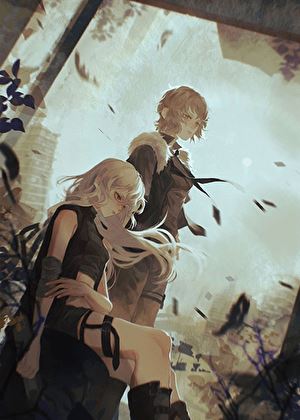
I need to process what I just read and the emotion I'm sitting with is... complicated. Like, my heart is pounding but also somehow calm at the same time? Does that make sense? The scene where Chai Yuening leaves the cabin — she's visibly uncomfortable. "In a seemingly casual but actually awkward manner" — she's trying to give the girl space, to not make things worse by staying. That small gesture matters more than any heroic speech ever could. She noticed the girl was watching her, felt the weight of it, and chose to step out rather than impose. Then the drunk enters and everything goes to hell fast. The girl's response — no screaming, no tears, just a dagger appearing like magic — that's not bravery. That's survival instinct honed to a razor's edge. "Her hands, wrapped around her knees, slowly clenched into fists, but she remained silent" — this woman has been through enough to know that noise gets you killed. But then Chai Yuening comes back and the dynamic flips. She doesn't ask questions. She doesn't need to. She sees the situation and acts. Gun to Luo Kun's head, zero hesitation. And that monologue about her own blood-stained hands? That's not intimidation. That's her saying: I understand what this world does to people. I've done what I had to do. And I will protect what's mine. The girl's reaction throughout all of this — silent, watching, studying — is heartbreaking in its restraint. She doesn't thank Chai Yuening. She doesn't speak at all. Because in her experience, words probably haven't helped much. Yet. Somehow. They're both alive. They're both standing. And for now, in this foggy nightmare of a world, that has to count for something.
... Read More
The stakes in this section are layered and I love it. On the surface, there's the immediate physical danger - mutated beasts, thick fog, broken vehicle, night approaching. But underneath that, there's this much more complicated question: can Chai Yuening trust this stranger? Here's what gets me - the girl could be infected. Even with a negative test result, Chai Yuening has every reason to be cautious. The civilian test kits aren't super accurate. And the girl's behavior... she's too calm, too careful, too self-sufficient for someone who's been alone in a Level-Six zone with serious injuries. But then there's Chai Yuening's own conflict. She's been abandoned before - by Luo Kun's squad, by people she probably thought were on her side. And yet she's still offering help. Still extending her hand. That's either incredible courage or incredible naivety, and I can't tell which. The moral stakes are also huge. That conversation about 'salvation' - killing someone before they mutate to preserve their humanity - that's a choice no one should have to make. But in this world, it's apparently normal. And Chai Yuening can't do it. She can't look at this broken, terrified girl and pull the trigger, even to 'save' her. What if the girl leads them to danger? What if she's not who she says she is? What if she's the 'non-human' the author notes mention? The tension between wanting to protect someone and needing to protect yourself - that's the real conflict here, and it's delicious.
... Read More
Can we talk about how Chai Yuening's decision to trust Chu Ci completely, even without knowing everything, defines their entire relationship? This might be the most important character moment across these four chapters. You know what hit me? When Chu Ci says 'It was only after I got drunk that day that I discovered I might be a little different from everyone else'—and Chai Yuening doesn't press further. She could have. She's clearly dying to know. But instead she smiles nonchalantly and says, 'If it's not convenient to say, you don't have to tell me.' That moment right there? That's love language. That's choosing someone over curiosity, choosing respect over information. Then there's You Lan, who operates on a completely different wavelength. Her comment about Chu Ci's 'gloomy look' and 'heart full of worries' suggests she's actually observant in ways she pretends not to be. The businesswoman exterior is armor—just like Chu Ci's aloofness. They're all hiding something, and the way they navigate around each other's secrets creates this beautiful triangular dynamic. The physical proximity moments blew me away. Chu Ci stealing the bolster pillow after her shower, lying down barefoot with water droplets still on her skin while Chai Yuening fusses over her like a worried parent... it's domestic intimacy that says more than any confession ever could. And that scene where Chu Ci's gaze gets 'slightly more turbulent than usual' when she asks why Chai Yuening is blushing? Oh, she knows. She definitely knows. But the moment that broke me: Chai Yuening, alone with her pillow, hearing You Lan's suggestions looping through her head, getting genuinely flustered while simultaneously feeling guilty for imagining things. She's trying SO hard to be the caretaker, the protector, and this sudden awareness of something else between them completely unravels her composure. The pink bolster pressed against her 'slightly feverish face'—that detail alone carries so much weight.
... Read More
The dialogue in this chapter is deceptively sparse. So much of the power comes from what characters DON'T say. Chu Ci's conversation with Xue Zhou is basically all business—she states her identity, explains the Fog Zone recon, offers the tracking device. But her voice shifts when she's with Chai Yuening. Notice how she talks differently? With Xue Zhou it's formal, almost clinical. With Chai Yuening it's quieter, hesitant. 'Chu Ci looked at her for a long time, as if wanting to say something but hesitating.' That hesitation is more revealing than any monologue. And Chai Yuening's plea to Xue Zhou—'I don't think wanting to do something is being hard on myself'—that's her voice, sharp and unbending, the voice of someone who's spent her life fighting for scraps. The author's note at the end is basically dialogue-without-dialogue. Just three words and a ducking motion that captures everything about the author's feelings toward this pairing. Sometimes the loudest statements are the shortest ones.
... Read More
The fundamental question of this entire arc isn't really about the beast horde invasion—that's the plot engine. The actual thematic core is sitting in Chai Yuening's bathtub and it goes like this: what separates the human from the mutated? Chu Ci is the living embodiment of this ambiguity. She looks human, she speaks human, she has human memories—or at least the appearance of them. But she releases mist that makes giant mutated beasts retreat. She acted in ways that suggest knowledge or instinct she shouldn't possess. And her calmness in the face of death... that's the thing that haunts me most. Whether she's an infected human who retained consciousness or a beast that devoured someone and learned to wear their skin, the answer to that question reshapes everything about how Chai Yuening should feel about her. The fog zone itself is symbolic here. That's where Chai Yuening found Chu Ci. Mist obscures, it distorts, it hides the truth. Chu Ci came FROM that mist, and now she's moving through human spaces like she's learning the script. The recurring image of mist as both protective (the beasts avoided them) and threatening (it's where mutation happens) really mirrors the central dilemma. "On these questions, Chu Ci had clearly hidden far too much." Hidden too much from whom? From Chai Yuening, or from herself?
... Read More
The Base scholars had clearly stated that human consciousness was insignificant in the face of the genetic infection brought by mutated beasts. Countless studies had proven that once genes were infected and mutated, a human's own cognition and memories would completely dissipate in a short period, with almost no possibility of remnants. But Chu Ci is different. This is the central question of the entire passage, isn't it? What is the value of human consciousness when science says it doesn't matter? Chu Ci exists as living proof that the science might be wrong, or at least incomplete. She has black vines growing from her body, she should have lost everything that makes her human, and yet she's still there — concerned about washing clothes, helping with bandages, sleeping beside her friend. The black vines themselves are such a rich symbol. They represent infection and mutation, yes, but also adaptation and survival. Scientists had never said that black vines could infect humans — meaning the vines are both the threat and potentially the cure. The broadcast Chai Yuening vaguely remembers about the fusion of black vines and humans as a direction for resisting infection suggests that the line between human and monster might be more permeable than anyone wants to admit. And Chai Yuening's internal struggle — should she hand Chu Ci over to the research institute? The institute would not treat an aberration as a person — this is where the theme becomes visceral. It's not just a philosophical question; it's about whether someone who looks different, who has been changed by infection, still deserves to be treated as human. The answer the story seems to be building toward is an emphatic yes, and that's what makes it resonate.
... Read More
The atmosphere in this chapter is SO thick you could choke on it. Let me paint you some of the images that haunts me: That waiting hall — 'exceptionally oppressive.' People sitting in corners, far from crowds, being watched with admiration, fear, or loathing. And Chu Ci, alone, toying with a gun in her hands like it's a stress ball. The sheer visual of her sitting there, ignoring all those judgmental stares, just... existing in her own world while chaos simmers around her. Then the beast itself — 'lizard-like eyes, like a predator coveting its prey,' 'sharp, blood-reddened tail glistened eerily under the incandescent lights,' 'tattered pieces of human clothing stretched to the breaking point hanging from its body.' This creature was wearing a SECURITY OFFICER'S UNIFORM. That detail alone sent chills down my spine. The thing that attacked them was dressed in the symbol of safety. And the clock. Oh god, the clock. 'The time read 21:47. The numbers were red; they had been red for so many years. But Chai Yuening suddenly felt they were like blood, each changing minute so jarring to the eye.' I GOT CHILLS FROM THAT SENTENCE. The red digital numbers transforming into something visceral and bloody in her mind — that is worldbuilding through emotion, not exposition. Masterful. The station itself feels like a character. Those smooth floor tiles stained with blood. The incandescent lights buzzing overhead. The testing line stretching out like a procession to execution. Every sensory detail pulls you deeper into this nightmare world.
... Read More
The author here is playing a subtle game with pacing that I think a lot of readers might glide right past. The chapter opens in this almost meditative space—Chai Yuening sitting in a rocking chair, thinking about whether life in the Fog Zone might have found its own path forward. It's slow. Intimate. Then we drop into the domestic routine, and it stays there for a long time. The shower, the sheets, the water on the floor, the radio that needs replacing. It's deliberately mundane. And then—right when you're settled into this cozy rhythm—the midnight broadcast cuts in. 'Sleeping early and waking early is beneficial to your health. May you have sweet dreams tonight.' This line hits different when you know what's actually happening in this world. The state is telling people to sleep because the power will be shut off in thirty minutes. Sweet dreams. Right. Then the chapter pivots hard into bureaucratic territory. Ren Dong's rushed phone call. The four-hour train ride. The military inventory process. The pacing here feels almost intentionally flat, like the dull grind of paperwork IS the story. But it works because the tension doesn't disappear—it just changes shape. We're not waiting for a monster to attack. We're waiting for Chu Ci's ID to be accepted, and it isn't. The chapter ends on that unresolved note of a woman who finally got what she fought for, still not knowing what the responsibility letter actually means. Classic misdirection. The real conflict is always one step behind the visible one.
... Read More
One sentence to set the tone, then dive back in and break it apart piece by piece. "The Fifth District fell because of an accident at the Mutation Control Center." Boom. Chapter opens with devastation and the reader is already leaning forward. Then the author does something brilliant with pacing — instead of rushing into action, it deliberately slows down. We're at the station entrance. The glass doors are shut. Security is checking IDs. People are waiting. Nothing is happening. Or at least, it seems like nothing is happening. But that stillness is the point. The author is letting the dread accumulate like pressure in a sealed room. Then Cheng Shan appears and the exposition dump hits — but it's not a dump because it's framed as confidential military intel delivered in a deserted corner. The rhythm of the revelation mirrors the rhythm of the situation: slow, methodical, mounting. Each paragraph adds another layer of horror. The mutated person had human intelligence. It mimicked humans. It infected through a tiny scratch. Half an hour to full mutation. Two passengers already turned. The testing machine stands like a god judging the world. And then — the chapter just... stops mid-sentence. "As she sp—" Cut off. No resolution. No comfort. Just the clock ticking and the unanswered question hanging in the air. The author knows exactly what they're doing here. The pacing isn't about action beats, it's about the slow suffocation of uncertainty. Every scene transition reinforces the theme: the real enemy isn't outside the walls, it's already inside, and everyone is just waiting to see who mutates next.

Leave a comment

You must be logged in to leave comments. or
