Qing Gu - Reviews

Qing Gu
+Add to Custom List
Sort
Add review
... Read More
The mother's line haunted me. "What do you know? We truly love each other!" said while clutching her husband's blackened ashes to her chest after a love Gu killed him. The absolute delusion required to say that and mean it. And yet — the narrator doesn't even refute it. Just observes, almost clinically: "Love means not letting go, even in death." That's the narrative voice doing its thing here. The narrator watches their parents' tragedy the way they'd watch a storm from inside a house — safe but not untouched. When the mother went mad over the burning body, she kicked and scratched the narrator and they still just... recorded it. "She could instantly transform into a screaming madwoman." Not "my mother." Just... she. Like observing a specimen. Compare that to Shen Jianqing's voice entirely. Different register. Simple sentences. Affectionate nicknames. No grand declarations except the ones that matter: "You're mine. You can never leave me for your whole life." and the quiet "In your Gu container…?" response where he just smiles like a kid caught hiding candy. The contrast between the two relationships in this text — the parents vs. the narrator and Shen Jianqing — is communicated ENTIRELY through dialogue style. One is dramatic and delusional, the other is sparse and precise. Both think they understand love. Only one survives it.
... Read More
This chapter is a masterclass in emotional whiplash and I need to talk about how the author structures it. We open with Ah-ma's death—immediately, we're in grief territory. Heavy, slow, intimate. Then the narrator's thoughts drift to Li Yuze and suddenly we're in a completely different tonal register. The shift isn't jarring though, it's seamless because it mirrors how the narrator actually thinks. Grief doesn't wait for you to finish mourning before something else grabs your attention. What's brilliant is how the author uses the narrator's回忆of their first meeting with Li Yuze to reframe everything. We go from 'I followed them into the Miao village as entertainment' to 'My heart was pounding like I'd never felt anything before' to 'Why am I angry that he didn't notice me step on his shoe?' It's a slow reveal of obsession, and each beat hits harder than the last. Then—BAM—we cut to the narrator's conflict with the leader and Wan Ying. The backstory about being half-Han, about political marriage schemes, about being told to marry your cousin to inherit power. This isn't just exposition dumping; it's the reason the narrator is so desperate for control. They've never had agency over their own life, so of course their idea of love looks like possession. The chapter ends with 'I merely saw it as amusing myself with new toys' and I swear that line made my blood run cold because I KNEW that wasn't going to be the end of it.
... Read More
"Love makes people look hideous, but it's all normal, isn't it?" This sentence opened my mind to everything. The entire passage is built around this central question: what IS love when it crosses the line into ownership? Ah-ma refuses to scatter her husband's ashes because she can't bear to be apart from him—even in death. Her love is tender, tragic, almost pure in its longing. But the narrator? Their love for Li Yuze has already twisted into something predatory. They talk about 'tricks,' about keeping him from leaving, about how 'to love someone is to possess them.' The Gu insects themselves are symbolic here—these creatures that the narrator refines and controls, used to repel swarms and manipulate outcomes. Isn't that exactly what they want to do to Li Yuze? The iron chain their father left behind is another symbol I couldn't shake. A chain meant to guide or to bind? The narrator followed it into the outside world and found wonder, but also found that the outside world's rules still trapped them. The leader using 'half-Han bloodline' as an excuse to force a political marriage—that's the cold, calculating version of love too. Everyone in this story is bound by something, and the question the author keeps asking is: who chooses their chains?
... Read More
'I'm willing to go to a place close to him, even if he's not there.' I said it out loud. Then I said it again. Because some lines just hit different. Wen Lingyu is one of those characters who doesn't announce herself as important, but the second she speaks, you can't stop listening. Here she's laying out her entire emotional case for why she's going to Dongjiang—knowing Ah Song liked her, knowing he held back when he could have done far worse, knowing he probably never saw her the same way, and choosing to go anyway. That is not weakness. That is a kind of fierce, quiet heroism that most stories would waste on a male protagonist. And then there's the narrator. Watching them at that class reunion was like watching someone finally take off a tight jacket they'd been wearing for four years. Every time Zhang Xu brought up the sleep-talking thing, you could feel the narrator's panic building. But then—'I really like him. It's not strange to dream of someone you like, is it?' The room loses its mind. Zhang Xu gives a thumbs-up like he's proud. And the narrator? Lighter. Finally lighter. But here's what really gets me: both of them are moving toward people who may never fully receive them. Wen Lingyu toward Ah Song. The narrator toward Shen Jianqing. The story seems to be asking whether love is still valid when it's not perfectly returned. My answer? Absolutely. But I'm watching these characters figure that out in real time, and it's devastating and beautiful.
... Read More
The environmental writing in these chapters is genuinely underrated. Let me just quote this: "Trees grew lush and thick, and wild grasses flourished verdantly. The mountain forest was silent and still, with green hills facing each other across the valley. The stream flowed cool and clear, a ribbon of emerald water winding between the banks." That's not just description — that's a mood shift. After the claustrophobic tension of the stilt house, the escape, the blood and tears, suddenly you're walking beside a stream and the world feels infinite. The contrast is brutal and beautiful. And earlier, when Li Yuze is running toward the village: "Red ribbons fluttered in the wind, each one seeming to possess life anew under the sunlight." The red silk ribbon with the character "Shen" — that image just sits with me. It's like the entire village itself is watching, remembering, waiting. Lu Qi's stilt house, the dried herb, the stone mortar, the gray smoke curling upward... every detail feels lived-in, not decorative. This world breathes.
... Read More
'Late; withered lotuses remain to hear the sound of rain.' This line is doing SO much work in this chapter. Withered but still standing. Listening. Enduring. Isn't that exactly what both Yuze and Shen Jianqing are doing? They're damaged, trapped in these mountains, bound together in this strange forced proximity—and yet they're still here, still noticing things, still finding these small moments of connection. The lotus is also a classic symbol of emergence from mud, and there's something almost ironic about that in a story where neither character can actually leave. Then there's the Gu insect itself. These people use insects to control insects. The village is literally built on this system of parasitic dominance. Shen Jianqing refines one creature to protect against another. And Yuze is refined—or controlled—by Shen Jianqing in a completely different way. The hierarchy of control runs through everything: the mountains control the weather, the village controls the land, Shen Jianqing controls Yuze. Nothing escapes. Not even silence.
... Read More
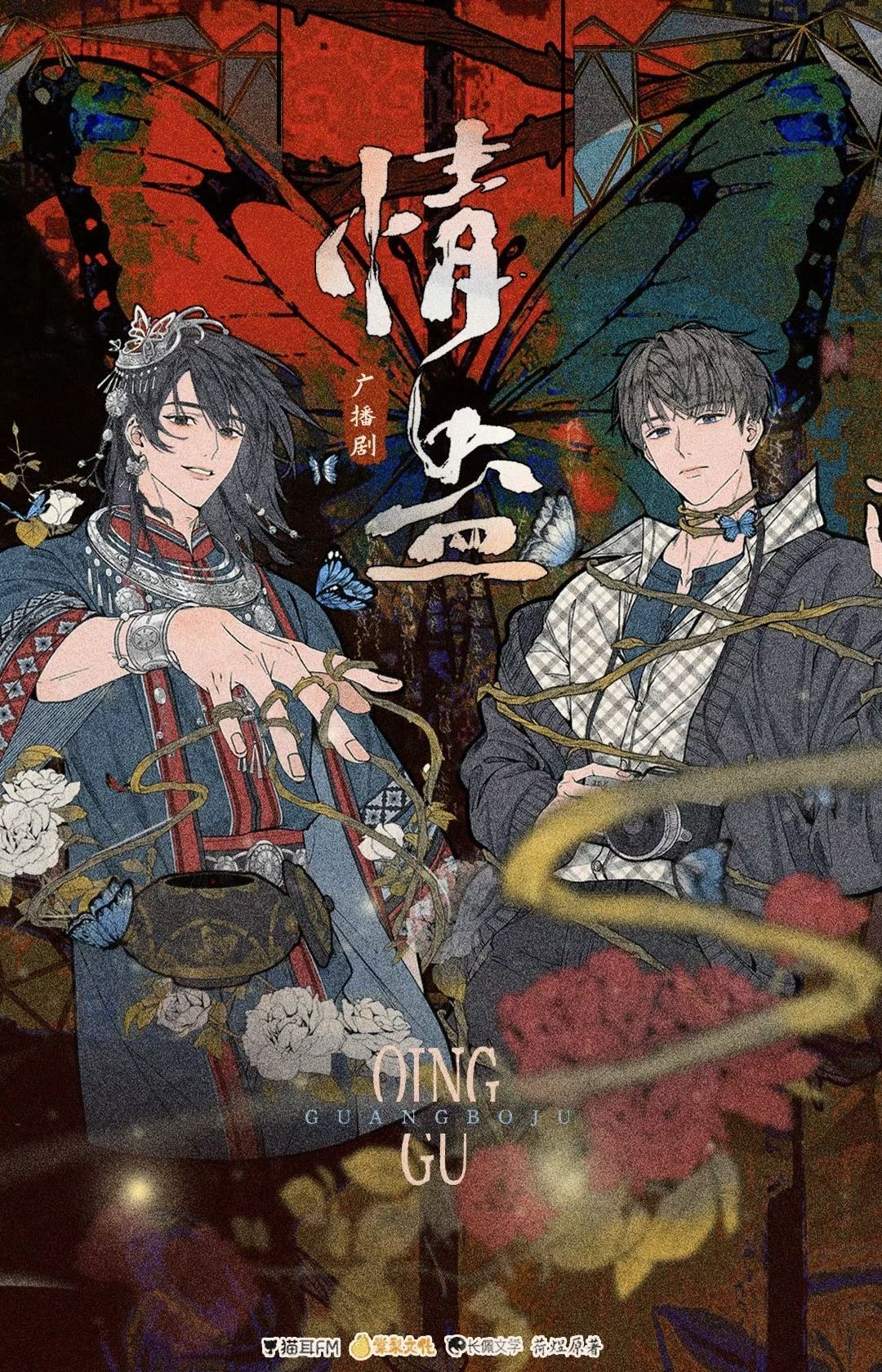
I am absolutely FUMING about Shen Jianqing right now and I need to process this. Let's be clear about what this text reveals: this is a textbook grooming-to-assault arc disguised as romance. Half a month of calculated kindness, of building trust, of making the protagonist feel safe — and every single moment of it was an act. The moment the protagonist pulls away, Shen Jianqing doesn't even pretend to respect the boundary. His dialogue shifts in real time from soft to cold to demonic, and that transition is the most chilling character reveal in the entire novel. "I spent half a month playing harmless and gentle with you, but since that doesn't work, I'll just have to find another way to keep you." That line. That absolute, casual, calculated line. He's not some失控 emotion-driven villain — he's a strategist. He had a plan, it didn't work, so he moved to phase two. The humanity drains out of him completely in that moment, and the protagonist notices it: "He felt utterly unfamiliar to me now, like the snake from last night, beautiful yet dangerous, a completely different person." But here's what gets me the most — the power dynamic. Shen Jianqing knows exactly how to manipulate the protagonist's physical vulnerability. The injured leg, the cave setting, the total isolation. He toys with the protagonist's pain almost sadistically: "How pitiful, a lame leg — serves you right!" And then there's the sachet scene — using cultural tradition as a weapon. The sachet, which should represent love and affection, becomes a chains around the protagonist's neck. This is someone who weaponizes intimacy itself. What's truly horrifying is that the protagonist's first thought after waking up isn't just hatred of Shen Jianqing — it's hatred of THEMSELVES. "What I hated most was myself. We were far too naive." That internalization is exactly what abusers want, and it breaks my heart.
... Read More
"What kind of person was he? Should I believe what he showed, or should I believe my own deductions?" This line absolutely destroyed me. Let's talk about Shen Jianqing for a second, because this character is haunting the entire chapter without even being physically present. That mosquito repellent sachet - plain white, scent barely there anymore - it's become this massive symbol for everything unsaid between the narrator and him. Think about it: she almost threw it into the fire. Almost. But then she couldn't do it. So she keeps it. Not because she wants to, but because she can't bear to destroy it either. That tension right there? That's the whole relationship in miniature. And the details she remembers - his stubborn expression, his deep eyes, his straight back and lean waist as he left - these aren't random memories. They're the things she paid attention to when she was trying NOT to pay attention. The fact that Wen Lingyu blushes when the narrator says "I can't let a girl like you go in" is also interesting. There's clearly something there, whatever it is, and the narrator is either oblivious or deliberately ignoring it. Meanwhile, Qiu Lu and Xu Zirong are being all couple-y while everyone else watches. The group dynamics are shifting, and I'm here for it.
... Read More
Okay so this section is doing something really smart plot-wise. Let me break it down because it's one of those rare moments where a story plants a question and refuses to answer it for chapters. The whole "Shidi Mountain" reveal came out of nowhere during that lunch scene. One minute they're joking about Gu insects, the next Ah Li almost blurts out the name and then slams her hands over her mouth like she just let something slip she shouldn't have. That was a classic accidental-reveal structure - the author doesn't announce "HERE COMES THE MYSTERY" loud and obnoxious, they let it happen almost casually mid-conversation. What I loved: the escalation of the secrecy. First Ah Li and An Pu won't talk about it. Then the narrator searches maps and finds NOTHING. Then the inn owner freezes mid-watering-flowers when asked. Each layer adds suspense without the author having to do anything fancy. It's just natural human behavior - people who know secrets avoid talking about them. I think the author is building this slow-burn mystery where the "treasure" might not even be physical. Shidi Mountain could be literal, metaphorical, or both. The fact that it's not on satellite imagery is genuinely unsettling. In 2024, if a place doesn't show up on Google Maps, something is actively hiding it. The interview with the old woman at the beginning also loops back beautifully - the narrator said they "gained a great deal" but didn't specify what. Probably clues about the mountain that weren't obvious yet. Classic setup/payoff structure where the reader has to go back and reread to catch what was planted. My only question: is the author going to make us wait too long for the answer? Sometimes these mysteries can drag if the payoff isn't earned. But so far the pacing feels right - one question answered, two more opened. I need to go back and reread that first interview section now. Something tells me the old woman mentioned things that foreshadowed Shidi Mountain.
... Read More
Okay so here's the thing that's been driving me absolutely crazy. The author literally drops this random mysterious youth in dark blue between two stilt houses, captures him in a photo, the protagonist chases him, and then — nothing. Poof. Gone. Just a hem of fabric in the wind. And then the next morning An Pu calls and it's basically over? I was reading this going 'wait, wait, hold on — what happens next' and the chapter just... ends. It's infuriating. But I also respect the craft here. The way the author teases us is masterful. You get this entire setup — the whole Unassimilated Miao legend, the missing search team, the mysterious youth, the creepy 'sticky snake' vibe — and then it all dissolves into ambiguity. No resolution. Just a phone call about the protagonist going home. What I appreciate is how the investigation plot and the personal mystery keep feeding each other. The boss warns about Shidi Mountain being dangerous, people going missing... and then right after, the protagonist sees THIS figure. Is the mysterious youth connected to whatever happened in the mountains? The text never confirms it, never denies it. And that's what makes me want to read the rest. There's also this weird structural choice where the protagonist decides to stay two more days for shopping and then the whole dramatic encounter happens during those extra days. The mundane and the mysterious are braided together so casually it almost tricks you. One minute it's 'Qiu Lu made a list of gifts' and the next it's 'a ghost boy between wooden houses.' That tonal whiplash is intentional, and it works.
... Read More
Okay, I need to talk about this moment when Shen Jianqing reveals his dad built the iron chain, and his whole backstory just snaps into focus. The narrator casually asks why the chain exists, and Shen drops this quiet bomb about his father being an outsider who fell in love with his mother, got sick, and stayed. Then he admits he used to sneak out at night via that chain, and his reason for being grateful wasn't even philosophical—it was because the chain let him meet the narrator. "So I could meet you." What. That's not just a plot detail; that's a full-on narrative pivot. It reframes their entire meeting as almost fated, which makes every subsequent interaction feel layered. And then the plot keeps stacking: the invitation to the Huoxing ceremony, the mysterious jar with the butterfly pattern, the sudden doubt about whether Gu poisoning is real or just rumor. The story isn't just moving forward; it's digging deeper into its own mythology. I love how the author uses physical objects—the chain, the jar, the red silk ribbon—to tether character history to plot mechanics. Everything feels connected, not random. The only thing I'm wondering now is whether the ceremony will tie directly into whatever's going on with Gu, or if it's just cultural backdrop. Either way, the plot has this beautiful, creeping momentum.
... Read More
Okay so this part about Wen Linyu asking about Ah Song absolutely wrecked me. Like, the author drops this tiny detail — "Wen Linyu's expression felt very familiar to me. I suddenly recalled that I had seen the same expression on Shen Jianqing's face. He had also looked at me with such tender affection." And that hit me like a truck. The protagonist realizes, in real time, that Wen Linyu has fallen for Ah Song. Not just any crush, but the kind of look that mirrors his own feelings for Shen Jianqing. It's almost poetic in its cruelty, isn't it? Everyone around him is falling for someone who can never come back. And he's stuck there, holding all this truth he can't tell her. When he says "His name is Ah Song" and she murmurs it back like it's something precious, I literally had to put the book down for a second. But then he withholds the worst of it — doesn't tell her what really happened to him. That decision? That's the kind of protective silence that defines their whole dynamic. He's been carrying this burden alone for months and even when she asks, he deflects. "Let's go see Qiu Lu and Xu Zirong first. After we've seen them, if you can accept it, I'll tell you then." Meanwhile, Xu Zirong is over there trying so hard to be the strong one, almost falling while walking, sweating through his shirt, but grinning like everything's fine. And Qiu Lu? Clutching a cotton doll that looks like him, surrounded by tiny handmade dolls of everyone. These relationships are so layered — people pretending to be okay for each other, protecting each other from painful truths, finding comfort in tiny stitched representations of people they love.

Leave a comment

You must be logged in to leave comments. or
