Qing Gu - Reviews

Qing Gu
+Add to Custom List
Sort
Add review
... Read More
Okay, can we just talk about this one moment for a second? Li Yuze asking Shen Jianqing not to lock the door anymore. That's it. That's the whole scene. And it hits harder than any dramatic confrontation could. Think about what he's actually saying there. He's been terrified of Shen Jianqing—remember the wilderness incident, the violence, the scar on his forehead? He's spent days convinced that every interaction is a prelude to something he can't escape. But then last night happens, and everything shifts. The fear doesn't disappear, but it warps into something else entirely. Something confusing and unwanted and yet... And so he makes this request. I won't leave, he says. I can't leave either. Whether you lock the door or not makes no difference. He's negotiating his own captivity with the man who holds the keys. That line is devastating because it's both an act of bravery and an acknowledgment that he has zero actual power here. Shen Jianqing could still hurt him. He could still take whatever he wants. The door being unlocked changes the geometry of the situation only slightly—it transforms coercion into something that almost resembles consent, but almost isn't quite enough. The way Shen Jianqing responds is where this really gets good: He agrees easily, maybe too easily, and then drops the knife gently: "You must firmly remember what you said. You must not lie to me." He's not just opening the door. He's trapping Li Yuze in his own words, making him accountable for a vulnerability he just暴露ed. One wrong move from Li Yuze and Shen Jianqing has every justification in the world to escalate again. The stakes here aren't physical survival—they're something more insidious. It's about autonomy, about whether Li Yuze can exist in this space without constantly bracing for impact. And Shen Jianqing knows it. That ambiguous scoff before agreeing? Chilling.
... Read More
There's this passage about the Unassimilated Miao that keeps coming back to me, and I think it's doing WAY more work than the surface plot lets on. The text says they 'speak ancient Miao, work from sunrise to sunset, do not interact with the outside world, and cannot communicate with it either.' They're compared to characters from Tao Yuanming's "The Peach Blossom Spring" — a utopia that exists precisely because it stays hidden, untouched, preserved. But here's what struck me: the protagonist, fresh from this exposition about people who chose isolation to preserve their purity, goes on to describe their OWN life in devastating detail. Parents divorced. Mother in New Zealand. Father remarried his assistant. Holiday greetings sent into a void. The protagonist is part of the modern, connected, assimilated world — and it has left them completely untethered. So who's really the 'unassimilated' one? The hidden Miao villagers who chose their isolation purposefully? Or the protagonist, isolated by circumstance and loss and the indifferent march of modernity? Both are cut off from the world. Both are searching. The Unassimilated Miao are a mirror, and the protagonist's reflection is uncomfortable. The dark-clad youth then becomes this perfect symbol — he's literally dressed in traditional dark blue, appearing like a ghost between the stilt houses, connected to whatever mystery the mountains hold, yet completely inaccessible. He's everything the protagonist wants: rooted, mysterious, ALIVE in a way that the protagonist doesn't feel. The smile that transforms him — golden light through clouds — suggests connection is possible but only as a flash, a glimpse, never graspable. The imagery is layered and it lingers.
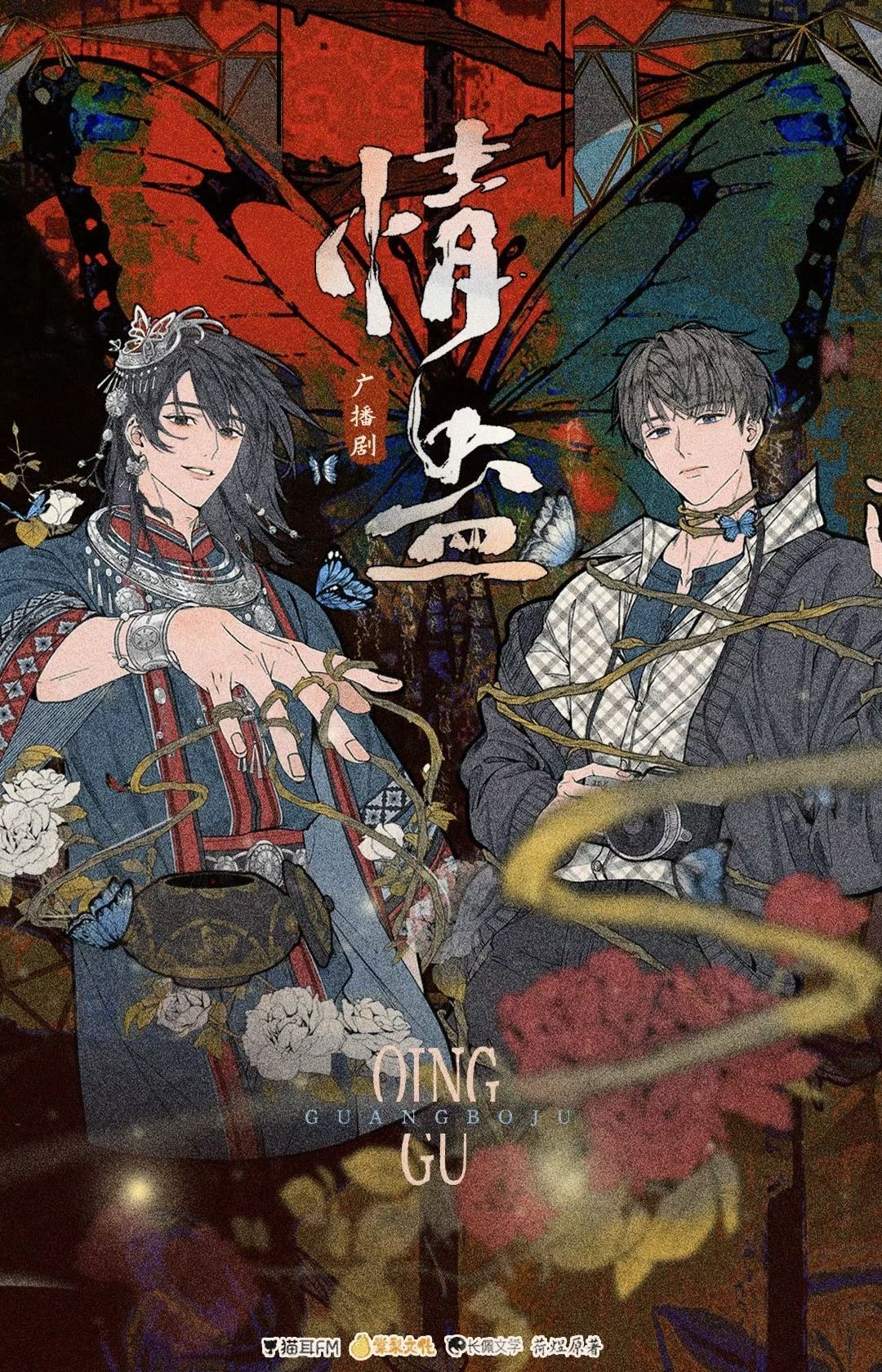
... Read More
"To use an unpleasant analogy, his eyes reminded me of a sticky snake hidden in a dark corner." I need to talk about this scene because it wrecked me in the best way. The protagonist has JUST been told about people vanishing in those mountains, they're already on edge, sitting in a bar feeling 'a chill down their spine' — that visceral, electric wrongness — and then they LOOK UP and there's this person. This COMPLETE stranger. Shoulder-length hair, dark blue, standing in the shadows. And the very next sentence is the one that killed me: "like golden light piercing through the clouds, revealing the sky's true nature." One moment the guy reads as threatening, the next he smiles and suddenly the whole world shifts. The author doesn't explain this transformation. Doesn't say WHY it feels like sunrise. It just... hits. What makes it even more devastating is the context the author gives us RIGHT BEFORE this encounter. The protagonist's parents are divorced. Mom's in New Zealand. Dad remarried his assistant. The only connection the protagonist has is sending holiday greetings to people who barely notice. This person has ZERO anchors in their life. And then — bam — this unrecognizable young man appears between two buildings like some kind of mirage, and the protagonist SPRINTS after him. Not thinking. Not planning. Just running. Afterward they sit back down, their tea already gone, and just... admit to themselves: "I didn't know what was wrong with me, suddenly caring so much about a fleeting passerby." Caring so much. About someone they've never met. That line has been looping in my head. It's not romance, not yet, maybe never — but it's that raw, aching human need to connect with ANYTHING when your own world feels this hollow. I am NOT okay.
... Read More
I need to talk about Wen Lingyu because this woman just delivered one of the most powerful character moments in the entire novel and I'm still recovering. She tells us she's going to Dongjiang — a remote little county — to teach middle school history. And Xu Zirong is genuinely confused because she used to say she wanted a first-tier city or to stay in Yancheng. But then she says this absolutely devastating line: "If every step of life went according to one's plans, life would be too boring." She's not just making a career choice — she's redefining what her life is supposed to look like. But what really gets me is the subtext with Li Yuze. Wen Lingyu brings up the Miao village incident and admits she used to have feelings for him. She says, "I knew I wasn't the right person for you." There's no bitterness in her voice at all. She's genuinely at peace with it. She sees his distance, his coldness, and she's made her truce with reality. Meanwhile, Li Yuze is sitting there realizing that he pushed everyone away with his detachment, and he doesn't even seem to have noticed until now. And then there's Li Yuze's internal monologue about Shen Jianqing — that person who burst into their lives like a variable they never saw coming. The whole passage about how Li Yuze is clinging to old plans because they're terrified of changing and losing everything... it reads like someone finally understanding their own heart but arriving at the understanding too late.
... Read More
Okay so let me just start by saying the entire section where Ah Ze and Wen Lingyu exchange that look after the wine spill is genuinely one of the most tense romantic moments I've read in a while, and I don't even think they're officially anything yet?? The way Wen Lingyu is clearly uncomfortable sitting next to some guy who keeps making moves on her, and she and Ah Ze lock eyes like "did you see that" and then she just shrugs and decides not to make a scene — that's such a specific kind of intimate friend-zone tension that makes me want to scream. And then on top of that, there's the whole thing with Shen Jianqing. The chieftain staring him down like "you think you're smart, boy?" and Shen Jianqing just... doesn't flinch. But we KNOW something happened between them, something Ah Ze is hiding from everyone. The guilt on Ah Ze's face when Xu Zirong asks "what's wrong with the two of you" and Ah Ze can't even answer is devastating. Xu Zirong says "I thought you two got along best" and it literally breaks my heart because he has no idea how complicated things actually are. And Qiu Lu's silent communication with Xu Zirong — waving at him to not bother Shen Jianqing — that's such a small detail but it shows how much the whole group is walking on eggshells around each other. Nobody's being honest, everybody's pretending everything's fine, and the reader is just sitting there dying. The friendship dynamics are equally messy. Xu Zirong is so genuinely happy to have Ah Ze sit next to him — "can't be without me, huh?" — but Ah Ze's response of just smiling and not speaking tells us everything. There's a distance forming and nobody wants to name it.
... Read More
Qixi Festival is the perfect backdrop for this story, and not just because it's Chinese Valentine's Day. The Miao people celebrate their own version on the sixth day of the sixth lunar month — wandering, singing, seeking beloved. But in this modernized version, it's bonfires and tourists and commercialized romance. The narrator walks through all of it and sees love everywhere except their own. The specialty shop is a symbol of the past preserved in amber. Exactly the same display. Exactly the same products. The narrator walks in on a whim and finds Li Yuze and Shen Jianqing living their happy ending among the same goods they once browsed together. Time stands still for objects but not for people — or does it? The narrator hasn't moved forward either. The portrait artist at the end is another brilliant symbolic touch. "Even without seeing you, I can capture an eighty-percent likeness just from a description!" How fitting. The narrator has been describing this moment in their head for five years — what would it look like, what would they say, how would it feel. And now that it's happening, they can't stay. They walk away from the sketch, from the shop, from the possibility of closure. The eighty percent is all they'll ever get. The final twenty — the unspoken words, the unresolved feelings — stays forever unwritten.
... Read More
'True confinement isn't about controlling his body but about confining his heart.' This line sits at the center of everything these chapters are trying to say, and it's delivered with the casual certainty of someone who genuinely believes this is love. That's what makes it so horrifying. Hong Hong the Gu insect is basically the physical manifestation of this philosophy. A creature that was black — feared, isolated, surviving by eating its siblings — and became red through violence and dominance. It was 'the fiercest, most venomous, and most beautiful one.' And Shen Jianqing chose it precisely for those qualities. The insect's entire existence is a metaphor for possessive love: it watches, it bites, it releases poison, it cannot survive away from its master. It even helped Shen Jianqing 'win' Li Yuze by manipulating the situation so Li Yuze would feel sympathy and bring Hong Hong back. Meanwhile, Wen Lingyu's section explores the inverse — the pain of wanting someone you can't have, the realization that being 'good to all of us' is not the same as being chosen. Her quote 'If you have no heart, then I shall cease' echoes Hong Hong's logic but arrives at the opposite conclusion: if you can't have someone's heart, walk away. No poisoning required. The red color motif connects everything. Hong Hong turned red through violence. The young man in the Miao village flashback flushed 'crimson.' Red is danger, passion, blood, and love all at once.
... Read More
The red silk ribbons on this bridge - I cannot get them out of my head. Think about it. They look like those love lock trees at tourist spots, right? Someone could totally make that assumption. But then they're embroidered with characters in dark red thread, and the script is crooked and unfamiliar. This isn't decoration - it's a language. It's a way of marking identity, memory, maybe prayers or wishes tied to specific people. And then the protagonist catches what looks like a Chinese character on one ribbon before it's blown away by the wind. A Chinese character in a Miao settlement. Among red silk ribbons that look beautiful but clearly carry deeper meaning. The worldbuilding here is doing SO MUCH WORK. You've got the stone arch bridge, the polished stones that required considerable craftsmanship, the rice paddies with cucumbers and beans and five grains, the narrow dirt paths between fields, and then the stilt houses with cured meats hanging on second-floor verandas. This isn't just 'exotic location' - it's a fully realized world with agricultural practices, craftsmanship, customs, and visual markers that tell you something about these people's relationship to each other and to memory. The atmosphere shifts from slightly creepy (Qiu Lu's comment) to beautiful (Wen Linyu's disagreement) to almost dreamlike with the wind taking the ribbon away. Every sensory detail is working. And that moment when the elder appears - 'His eyes were slightly cloudy with age, but they held an undeniable shrewdness' - the authority in that description alone makes this village feel ancient and real.
... Read More
I need to talk about the description of that valley because WOW. The way the narrative pulls back from the cramped kitchen tension into this sweeping reveal of emerald water, stone arch bridge like a rainbow, red ribbons fluttering in the wind—it's a masterclass in environmental contrast. First you're suffocating in smoky domestic space with interpersonal anxiety, then BAM: 'dense layers of forest receded, revealing a bend of emerald-green water hidden among the lofty mountains.' It's almost painful how beautifully the world opens up once they leave that house. And those stilt houses! 'Built haphazardly along the mountain slopes, but each household wasn't far from the next.' That's not just set dressing; that's community architecture. People who can't completely isolate themselves even while choosing isolation. Qiu Lu's reaction—'There's actually such a beautiful place in here!'—captures that specific awe of urban outsiders encountering untouched landscape. She's right about the lack of WiFi, but wrong about there being 'nothing to do.' Because nothing? This place is drowning in meaning. The river carries ash. The bridge holds memory. The wind moves silk like breath. Every element feels alive with cultural specificity. And notice how the setting itself becomes a character in that bridge scene—the strong wind making hair dance, ribbons fluttering loudly, some bright and recent, others faded beyond recognition. That visual detail about the ribbons' varying states of preservation mirrors how memory works: some loss fresh and raw, some ancient and weathered into tradition. The landscape doesn't just host the story; it remembers. It watches. It holds the dead in its current. And Li Yuze standing between two men on that bridge, surrounded by whispers of silk and mountain mist, feels like a moment suspended in time. The worldbuilding here isn't about explaining systems; it's about making you feel the weight of every stone, the chill of river wind, the sacred weight of what those red threads represent. I kept pausing to visualize this like a film scene. Whoever handles the adaptation needs to get the color palette exactly right—emerald water, grey ridges, vibrant crops, faded red against green. Chef's kiss.
... Read More
I laughed out loud at 'love makes one's IQ drop' — such a dry, exhausted observation from the narrator who's just sitting there watching two people make up in the front seat like they're not potentially dying in a forest. But underneath the humor there's something tender about how Qiu Lu and Xu Zirong's reconciliation works. It's not grand. She doesn't give a speech; she just says 'don't blame me' and wraps her arms around him. He sobs. That's it. That's the whole emotional arc of their relationship compressed into three lines of dialogue. What struck me most though is how fear becomes the great equalizer here. Before the bug incident, there was probably normal group tension — people annoying each other, different personalities rubbing along. But fear strips that away. Qiu Lu's mockery dissolves into genuine comfort. Zirong's pride cracks open. Even the narrator, who seems to keep everyone at arm's length emotionally, participates in the group decision about taking turns watching. Survival forces intimacy in a way that peacetime never could. And Wen Lingyu — quiet, observant, the one who notices things first — her silent exchange with the narrator through the rearview mirror. No words needed. Just shared recognition that they're both outsiders to whatever romantic entanglement is unfolding. There's friendship in that glance, a kind of solidarity born from seeing clearly while others are wrapped up in feeling.
... Read More
Okay so this whole chapter is structured like a beautiful trap, right? You spend two days of these really soft, intimate moments—him singing that nameless Miao song, the way the morning light falls on his face—and then BOOM, the phone vibrates and everything collapses. The author doesn't even let you process the good stuff before yanking the rug out. And what's genius about it is that the real 'plot twist' isn't some big dramatic revelation. It's just… the quiet realization that they both have lives that exist outside of each other. He has the village. She has her world. No villain to blame, no external force causing the break—just two people who genuinely care about each other facing the geometry of their positions. That's what hit me hardest. The last line, 'And perhaps...' trailing off into nothing? That unfinished thought is doing so much work. It's not a cliffhanger for the story—it's a cliffhanger for the heart. Like the narrative itself doesn't know what comes next and is just standing there in silence with us.
... Read More
The description of the Miao village celebration was so vivid I could practically smell the glutinous rice wine. Let me paint what the author gave us: First there's the lusheng instrument - 'accompanied by the clear and high-pitched singing of a Miao girl.' Then the sun-drying yard transformed with a long table, the air thick with wine smell. Ah Li appearing in 'a striking yet tasteful red Miao dress, adorned with a silver headdress' - the visual of those silver ornaments sparkling when Shen Jianqing turns his head is pure cinema. But what really sold me was the crowd detail: 'Young men hoping to court her could form a line stretching from the top of the mountain to the bottom.' And then 'many had been brought by Shen Jianqing from Shidi Mountain. It seems they've integrated quite well.' This world feels lived-in. The Miao community isn't just backdrop - it has its own social dynamics, its own dating market, its own history with these characters. The contrast between the loud public celebration and the quiet private moment on the bench afterward was perfectly paced. From hundreds of people to just two.

Leave a comment

You must be logged in to leave comments. or
