Qing Gu - Reviews

Qing Gu
+Add to Custom List
Sort
Add review
... Read More
I love this village. Not in a tourist way, but in a 'I could live here and absolutely would' way. The opening description of the Miao village morning is SO vivid — thin mist between stilted buildings, the smell of earth, cool moist air, roosters crowing somewhere far away, mountains blurring into haze. I felt like I was actually there. The low season means fewer visitors, which gives it this quiet authenticity you can't fake. And then you have the contrast — the street scene where the portrait artist works, neon lights shifting colors above someone's head, the narrator's student crying beside them, the old woman calling out. It's noisy and alive and real. Then you cut to the stilted building at dawn, laptop open, blank document, and the whole world shrinks down to just two people in a room. The Miao cultural details are woven in so naturally too — Butterfly Mother, the twelve eggs, the belief that life paths are determined at birth. The author doesn't lecture you, they just let the world breathe and you absorb it. Every location feels like it has its own temperature and smell. This isn't just backdrop, it's a CHARACTER itself.
... Read More
I need to talk about this phone call because it is arguably the most ruthless scene in the entire novel and I'm still not over it. Li Yuze's dad — Li Shaoheng — calls him and the stakes are laid out so brutally fast. On the surface, it's about a postgraduate recommendation program. But really? It's about whether his son even exists as a human being to this man. Li Yuze had the courage to ask: "You haven't contacted me for almost half a year. Did you never worry that something might have happened to me?" And the answer he gets is nothing. Absolutely nothing. "What could possibly happen to you? You're a man, not a little child." — this line replayed in my head for like ten minutes. It's not just neglect, it's active erasure. His son was missing for FIVE MONTHS, possibly dying, and this man's first instinct when he finally calls is to lecture him about career opportunities. The stakes here aren't dramatic in a plot-twist way, they're existential. Li Yuze is standing on a busy street surrounded by people and crying, and the person he probably wanted to tell is the one person who will never listen. But the real stakes reveal themselves later, when he's lying on his sofa — hadn't even bought dinner, by the way, can you even — and catches sight of the sachet from Shen Jianqing in the trash. He threw it away yesterday because it represented a dark past he wanted to leave behind. But now he picks it back up. The conflict isn't just father vs son. It's Li Yuze vs his own identity. Who is he without these connections? Who was he before the mountains? The sachet is the physical manifestation of everything he can't quite let go of, and picking it up from the trash instead of throwing it away — that's the moment where all his internal conflict becomes visible. He says he wants a bright new life but his hand betrays him.
... Read More
Starting in a cave like this? Bold move. Most novels would spend three chapters building up to someone getting trapped, but here we're thrown directly into the moment of vulnerability—the narrator can't move, has a fever, can barely speak, and this towering figure appears. No context, no explanation, just immediate stakes. The structure is doing something really interesting here. We get this intense, almost horror-tinged scene that ends on a cliffhanger—"what can you offer in return?"—and then it cuts to a completely different tonal register: a road trip comedy with banter about wine and threshold taboos. That whiplash is intentional. It's making us work for the connection. What's keeping me hooked is that I already know two things: (1) this road trip is how they end up in that cave, probably, and (2) the youth in the cave is going to be significant to the larger plot. Everything after the opening is basically setup—introducing the cast, the setting, the cultural rules that will probably become traps later. An Pu dropping all these warnings—the Lanmen Wine, the threshold taboo, the Wandering and Making Friends festival—feels like classic foreshadowing. Every rule he mentions is basically a landmine waiting to be stepped on. I'm betting heavily that at least one of these customs becomes a plot point that the characters can't escape. The question is which one, and who pays for it.
... Read More
The stakes in this scene are absolutely brutal and I need to process this. Li Yuze is standing at a gorge edge with two armed men behind Wan Ying, and EVERY option leads to suffering. Don't drink the wine? They come for him physically - and he already assessed that he has zero chance against two men nearly two heads taller. Drink the wine? End up like Ah Song, become a puppet, lose his mind. Try to run? Fall into the gorge with a swift river below. The conflict isn't just external - it's internal too. He's dealing with the fact that EVERYONE he's trusted has been compromised. Shen Jianqing lied to him. Ah Song paid the price. And now Wan Ying, who he thought might be an ally or at least neutral, reveals herself as the architect of everything. The stakes escalate layer by layer: personal survival first, then the question of who he becomes if he survives (broken or defiant), then the larger question of what happens to Shen Jianqing if Wan Ying gets what she wants. When Li Yuze laughs at the absurdity of it all - 'for this absurd village, for its selfish and pathetic chieftain, for Wan Ying, and for Shen Jianqing' - that's not hysteria. That's someone who has calculated every possible outcome and found them all devastating. The greatest tension here isn't whether he'll live or die. It's whether he'll maintain his sanity while facing something that has no winning moves. And that's what makes this conflict so genuinely disturbing.
... Read More
I need to talk about how the author builds atmosphere through sensory detail alone. The cave scene? Absolutely chilling. Not literally cold (though it IS cold), but the way the description works - "the further in I went, the lower the temperature, and my body broke out in dense goosebumps due to its self-protective mechanism" - that's your body telling you something is wrong before your brain catches up. And the sounds! "Hiss—" "Squeak—squeak—" cave dwellers scattering. You can practically hear them. Then the dripping water becoming the only sound worth following, and finally that beautiful, almost sacred moment when the narrator sees the water seeping from the ceiling, hitting that mirror-smooth protrusion, creating this tiny pool with a crisp sound. It's so peaceful compared to everything else, and then - slip. Fall. Blackout. The contrast is brutal. The author understands that good horror isn't about monsters jumping out; it's about making you feel vulnerable in familiar ways. That pit wasn't described as threatening. It was just... there. Invisible. The kind of danger that exists in real caves, in real forests, in real dark places. This world feels dangerous because it feels plausible. The deep old forest with no streams along the way, the gorge with steep treacherous walls - every environmental detail reinforces that they are truly isolated, truly alone, and the environment itself is not friendly.
... Read More
Let's be honest — I did not sign up for a chapter where the protagonist gets strangled in their sleep and wakes up with a physical injury to prove it. The tension in these pages is absolutely suffocating and I mean that in the best possible way. Start with the external stakes: we have an unknown threat in this mountain location, a mysterious container that Shen Jianqing guards like his life depends on it, and the implication that the Miao people's Gu practices are real enough that the protagonist jokes about them. The protagonist is isolated — no electricity, no internet, deep in the mountains with people whose intentions are unclear. That's a classic pressure-cooker setup and it's working brilliantly. But the internal stakes are what really got me. The protagonist is torn between attraction and terror when it comes to Shen Jianqing. They're drawn to him — that embrace, those cryptic words, the way their heart races — but something deep down knows this isn't safe. And yet. They still go to his room. They still let him touch their neck. The conflict isn't just 'will they survive?' It's 'why are they staying?' That's the kind of question that keeps you up at night. The author has mastered the art of making every pleasant moment feel like it could be the last one before everything goes wrong. I'm not okay and I don't want to be
... Read More
Okay so let me just say this out loud because I am still processing: Shen Jianqing is a master manipulator and the fact that I keep finding myself charmed by him is deeply concerning. This chapter literally shows the full cycle — he explains the horror of the Gu insects, then casually reveals he protected the narrator the whole time, then plays it off like it's nothing. The line where he says "I already left something on you; no blind Gu insects would dare approach you" with that completely matter-of-fact tone? Chef's kiss. Absolute menace wrapped in a sweet gesture. And then he gets mad when the narrator doesn't immediately swoon over it. His whole energy here is "I did something protective and heroic and why aren't you grateful?" but he frames it so subtly that it's nearly invisible. He calls the narrator "worthy of being the person I like" and honestly that's the most romantic thing said in this entire scene while simultaneously being the most possessive. You can't tell if he's confessing or claiming ownership. The physical proximity throughout this chapter is insane. He touches the waist, comes close enough for breath on the neck, pulls the narrator back onto the bed — all while talking about parasitic brain-eating insects. The contrast between tenderness and terror is basically his entire love language. And the worst part? The narrator has literally only known him for a few days and is already Pavlov-d conditione to respond to his touch. Habit is terrifying. Who let the author write like this
... Read More
I need to process what happened with Zhao Rugu because this scene actually revealed so much about Li Yuze through indirect comparison. When Zhao Rugu shows up with this protective boyfriend who immediately scans Li Yuze with 'a subtle warning,' and then casually mentions 'he's from the Department of Literature too,' something clicks. The girl who previously claimed to admire Li Yuze for years was never actually in love with her—it was superficial attraction. But this moment where Zhao Rugu 'seemed to slip on some ice or snow' and the boy immediately catches her waist? That's genuine devotion. That's the kind of physical protectiveness that whispers love without saying a word. Li Yuze watches them walk away and simply notes 'now, it seemed she had found her true ideal type' with this strange mixture of relief and resignation. Meanwhile, Li Yuze's own relationship with Shen Jianqing exists in this painful liminal space—she's holding onto a cat he left behind, replaying nights when he appeared at her door covered in dust but with 'eyes still full of me,' and questioning whether she should chase him or wait for him to return. The tension between Zhao Rugu's completed romantic arc and Li Yuze's suspended one creates this achingly sharp contrast that reveals everything about what Li Yuze herself wants but hasn't dared to ask for.
... Read More
"I chose a secluded corner and sat down, quietly waiting for Wen Linyu. School hadn't officially started yet, but more students had arrived, and there were a few scattered customers in the coffee shop." This opening feels so normal, so mundane, and then the author immediately undercuts it: "I silently stared at the small potted plant on the table, my mind empty. The surrounding human voices gradually faded away, and I suddenly shivered for no reason. It was too quiet, which always reminded me of that lonely stilt house." The transition from a regular coffee shop to a trauma trigger is so smooth you barely notice it happening, which is exactly what PTSD does in real life. One moment you're ordering coffee, the next you're somewhere else entirely. And the setting keeps doing this throughout the passage. The sanatorium is described as having "a very pleasant environment, free from the city's hustle and bustle and the deep mountains' loneliness" — but that description itself is unreliable, isn't it? Because the deeper you go into the sanatorium, the less pleasant it becomes. The wire mesh, the emaciated figures, the humming in a wordless language, the mother patting a quilt. The idyllic surface cracks open and what's underneath is pure vulnerability. Even the protagonist's internal monologue about the police station — how glad he was they didn't ask questions — reveals a world where unspeakable things happen and the system just files them under "tourists who got lost." The institutional indifference is itself a kind of setting, a backdrop against which personal horror plays out.
... Read More
The pacing here is absolutely masterful and I have nothing nice to say except that the author clearly knows exactly what they're doing. Think about the structure: you start with a whispered conversation ("you must seize the time, yourself"), then cut to midday sun and silence, then the FOOTSTEPS. Tap-tap. Thump-thump-thump. The author stretches these seconds out like taffy — you can feel each step getting closer, and your own breathing syncs up with the prose. Then BAM, the chair swings, the crash, the scramble down the stairs, the grab at the robe, the running. One chapter you're holding your breath, the next you're turning pages like your life depends on it. And the ending? Walking along the river, uncertain, wondering about Wan Ying, realizing he has nothing — no clothes, no food, no notebook. The author deliberately deflates the triumph. You think you escaped, and then reality hits: escape is one thing, survival is another. That cliffhanger of the clear call echoing from behind — "Li Yuze." Just two syllables and the chapter ends. I immediately opened the next one.
... Read More
There are basically two ways authors write charismatic dangerous men and 90% of them just make them loud and aggressive. Shen Jianqing is neither. His voice is calm, precise, occasionally playful, and that's what makes it so unsettling. Listen to how he handles the Gu insect explanation — it's almost clinical. "The environments of wine and the human body are vastly different." That's not a villain monologue, that's a lecture. He's treating cosmic horror like a biology fact. But then he switches registers instantly when he's talking to the narrator directly. "You're so smart, Li Yuze! Truly worthy of being the person I like." That exclamation mark is doing so much work. It's genuine praise but it's also performative, like he's putting on a sunny face while saying something that could be read as ownership or adoration depending on your mood. And the Honghong scene is peak Shen Jianqing dialogue: "What should we do, Honghong? Yuze Ah-ge still doesn't like you. You'll have to work harder!" He's literally talking to an insect about the narrator's feelings. The casualness of it, the way he defaults to playfulness even when the narrator is clearly uncomfortable — that's the voice. It's consistent across every line he speaks. The narrator's voice is similarly distinct: self-aware, slightly sarcastic, constantly second-guessing their own reactions. "Habit truly is a terrifying thing" is the kind of line that could only come from this narrator, not any other character in this book.
... Read More
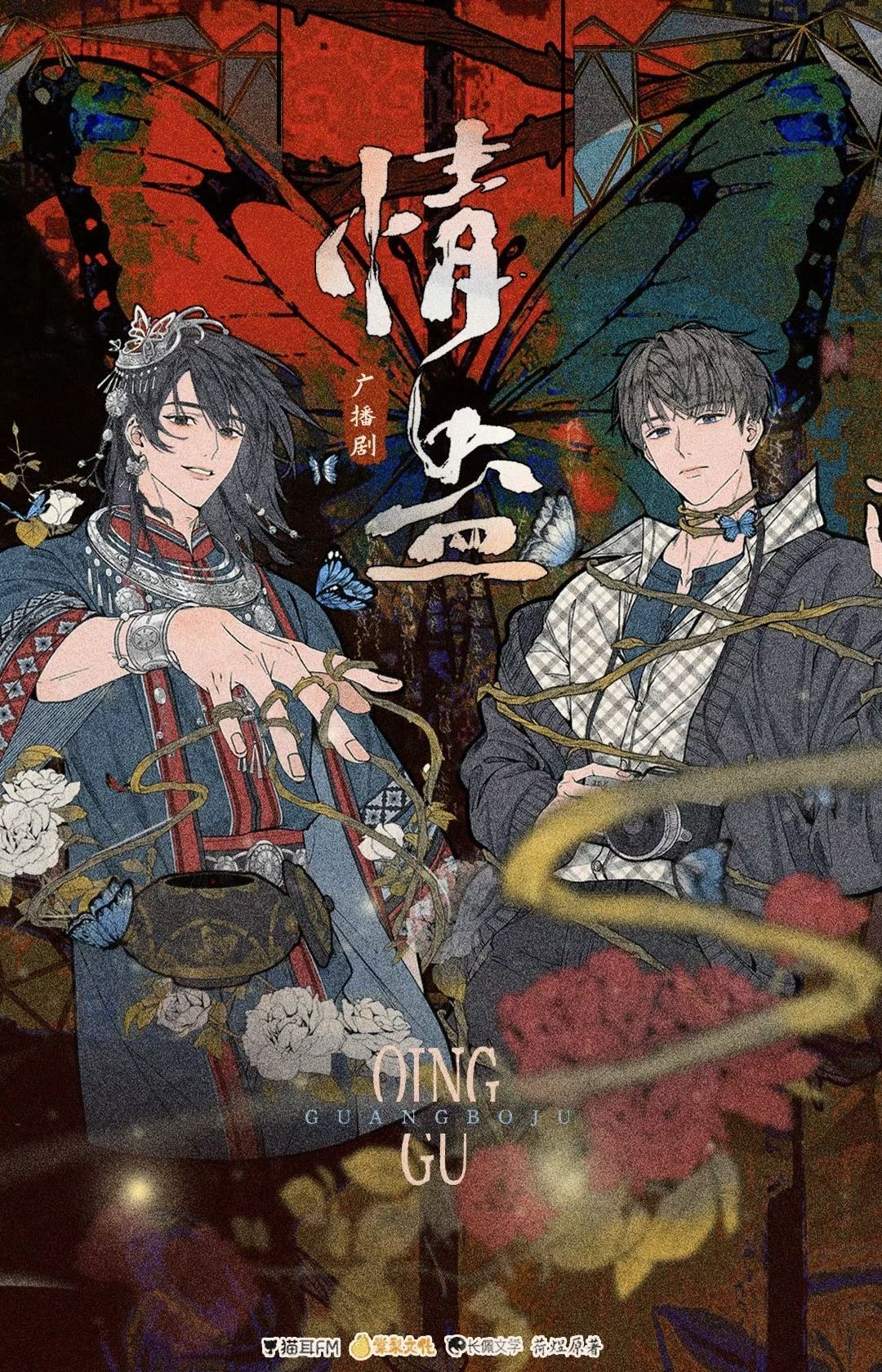
There's a reason this nightmare sequence feels so visceral and it's not just because bugs are gross. The black insects aren't random horror imagery—they're a symbol of everything closing in on Li Yuze at once. Think about what they represent. They come in 'groups, like countless black waves'—an overwhelming force that can't be fought individually. They crawl through windows and doors, finding every entrance. And they want to devour him. This is the forest itself, the danger, the illness, the betrayal of the Unassimilated Miao people, all condensed into one crawling, biting image. The insects are the embodiment of helplessness. Then there's Shen Jianqing in the dream. 'Where are you going, Li Yuze?' asked like a broken record, gaze like a beast that has lost its reason. He's not protecting Li Yuze from the insects—he IS the threat. The doorway becomes a trap: insects behind him, Shen Jianqing in front. This is the theme of无处可逃—nowhere to run. Every exit is blocked. Every choice leads somewhere worse. It's a perfect metaphor for Li Yuze's waking situation too: broken leg in a pit, friends potentially dying from poisoned wine, the forest around him full of unknown dangers. The cold is another layer. The text emphasizes it repeatedly—shivering, teeth chattering, the cave 'freezing, solidifying everything.' Cold isn't just temperature here, it's emotional isolation. He's alone in the dark, his body failing him, watching the people he cares about walk away. The cold seeps into his bones just like the fear seeps into his mind. And the stilt house from his memories appearing in the dream? That solitary place he thought was safe now becomes a trap. The past offering no shelter. The window—the same window that once let in 'bright, moon-like light'—now lets in black insects. Safety has been corrupted. Everything familiar has turned hostile. But then there's the red light. Through all that black and cold and darkness, there's a pinpoint of red that pulls him back. Fire. Warmth. Human voices. It's the opposite image of the insects—singular, warm, lifegiving. The symbolism here is pretty direct but it works because it's earned. After pages of cold and darkness, that red light feels like actual hope.

Leave a comment

You must be logged in to leave comments. or