Qing Gu - Reviews

Qing Gu
+Add to Custom List
Sort
Add review
... Read More
The dialogue in these chapters reads like eavesdropping, which is rare and precious. Notice how no one delivers complete thoughts? Qiu Lu cuts herself off mid-sentence when Zirong starts confessing. The narrator interrupts with blunt questions — 'What happened after that?' — because when you're panicked you don't do polite conversation. Even the internal monologue has this fragmented quality, like 'Rustle—rustle—' repeating in the narrator's head mimicking the sound. Each character has a distinct verbal fingerprint. Qiu Lu is sharp and teasing ('Can't believe the cool, straight guy is actually afraid of bugs!') but her vulnerability shows through in abrupt shifts. Xu Zirong speaks in long, guilt-laden paragraphs that trail into broken sentences — 'we wouldn't, we wouldn't be in this situation now' — the hesitation betraying how overwhelmed he is. Wen Lingyu's lines are minimal but precise; she's the one who immediately correctly diagnoses that the narrator's fear has a real basis ('there must be something else going on'). The narrator's voice stands out as the most self-aware and slightly sarcastic, which makes them the perfect anchor. When they describe eating the dry rations and thinking 'they actually seemed quite alright,' that's not just observation — that's dark humor as a coping mechanism. The prose balances between visceral description and wry commentary, and it never tips into melodrama even at the most intense moments. The author trusts the reader to feel without explaining everything.
... Read More
"guaranteed graduate admission" "quota" "competition" — three words whispered between Wen Lingyu and Qiu Lu, and suddenly the entire group dynamic shifts. This is the kind of detail that makes my skin crawl because it reveals everything about these people. Wen Lingyu isn't just ambitious; she's strategically manipulative, using academic pressure as leverage on her teammate. And Qiu Lu? She pouted but nodded. She's already been squeezed into submission. Meanwhile, Xu Zirong, despite being aggressive and confrontational, has zero objection because Qiu Lu went along with it. The power dynamics in this group are so clearly established in one scene. And then there's Shen Jianqing — his gaze lingers on Wen Lingyu's hand still holding the narrator's arm, and the narrator feels a chill. "Reminding me of the snake we encountered in the forest." Is that paranoia or intuition? Because Shen Jianqing's behavior throughout this entire exchange is deeply unsettling. He offers to guide them, seems sincere, even says he lives down there as if sharing something personal. But that half-smile at the end? That's not friendliness. That's calculation. The relationship between these characters isn't just evolving — it's becoming a battlefield.
... Read More
The fuel gauge. That one detail — one-third full — hit me like a punch. It's such a small thing to fixate on, but it's literally their ticking clock. If the car dies before they get out, they're stranded in this impenetrable forest with whatever is watching them. And Li Yuze admits he has no confidence in self-rescue. He's just hoping An Pu finds them. That's not a plan, that's a prayer. The group dynamics during this scene are also doing a lot of heavy lifting. Everyone is too afraid to make a decision because whoever decides and fails gets blamed. That silence in the car — you can feel it. No one wants to own the choice. So Li Yuze just drives. No discussion, no voting. He's carrying the weight of leadership even though nobody asked him to. Then the stakes shift again when they spot the youth. That explosion of excitement from Xu Zirong — "we finally met a living soul!" — it's almost comical in how desperate it sounds. But beneath the humor, it's devastating. These people are so starved for human contact that a stranger on a road feels like salvation. And yet... I'm not convinced this youth is salvation. There's something OFF about him. The way his gaze settled on Li Yuze last. The way his broken Mandarin suddenly became perfectly articulate when he said "I've seen you." What exactly is the price of getting out of this forest?
... Read More
There's something hauntingly beautiful about this passage that goes way beyond the surface plot. Let me unpack what I think the author is really doing here. The threshold. I keep coming back to this. 'Be careful not to step on the threshold!' This isn't just a cultural detail — it's a ritual boundary. The old woman is asking them to cross from the outside world into her world, and she's giving them the rulebook. The high door sills carved from single pieces of wood, the careful lifting of feet — these are gestures of reverence. Entering someone's home in a traditional Miao household isn't casual; it's an act of trust on both sides. Then there's the oil tea. This drink settles at the bottom — peanuts, rice, soybeans. You have to dig through the surface to get to what's really there. Isn't that exactly what this survey is about? The commercialized village at the bottom is the surface. The real culture, the real people, the real traditions — those are at the bottom, and you have to work to reach them. Ah Li's role is fascinating too. She's a bridge between worlds — she knows the tourists, she knows the traditions, she can translate not just language but intention. When she sits beside Li Yuze and watches him taste the tea, she's performing cultural mediation. She's saying: this is who we are. Try to understand. And the old woman herself — her 'cloudy eyes brightened' when she saw them. What does that mean? That she's tired of being studied? Or that she's glad, finally, someone is asking the right questions? The ambiguity is the point. We don't get to know her thoughts. We only get her actions — the invitation, the tea, the careful preparation. She controls what she shares. I think the deeper theme here is about being seen versus being looked at. The tourists look. The survey researchers observe. But the old woman — she chooses to see them, to welcome them, to offer her culture on her own terms. That's the power dynamic the author is quietly exploring. The flower from the beginning, wrapped carefully in paper — someone thought Li Yuze would appreciate it. Someone noticed him. In a story about observation and research, that small romantic gesture feels surprisingly significant.
... Read More
Let's talk about the sensory details because the author is doing something really special with atmosphere in these chapters. First, the journey from the commercial area up to Shen Jianqing's stilt house. The transition is described so clearly—you can literally feel the commercial noise fading behind you as the ethnic charm takes over. That's not just setting description; that's emotional storytelling through environment. The path itself mirrors Shen Jianqing's character: he stepped away from one world (the traditional, isolated Shidi Miao Village) but carried its essence with him into another. Then there's the interior of his home. Two small rooms, old but spotless, warm. This single description tells us everything about who Shen Jianqing is now. He's not living in grandeur; he's living intentionally. The place feels like a person—carefully kept, humble, full of quiet dignity. And the New Year's Eve scene! The lusheng instruments playing, the Ah-mei dancers linking arms, the bonfires, the fireworks exploding across the dark night sky—this is cinematic. I swear I could see this as a film. The colors, the music, the crowd pressing around them while Yuze and Shen Jianqing just sit on the platform, hands linked. The contrast between the noisy celebration outside and the intimate stillness between them? Masterful. What struck me most though was the parallel the narrator draws—remembering wandering Yancheng streets alone, and then feeling that exact same scene but now complete. The author is building a world where geography and emotion are intertwined. Every location carries the weight of where these characters have been and where they're going.
... Read More
"You see, he really was waiting for me right where he was." I need a minute. I genuinely need a second to process what just happened because my heart is absolutely destroyed and rebuilt in the span of two paragraphs. Yuze leaving everything—his education, his expected future, his entire conventional path—and choosing DONGJIANG. Choosing Shen Jianqing. And the thing that wrecked me most is how NORMAL this is framed. There's no dramatic confession scene, no grand declaration. Just a man in a Miao outfit holding a bowl of wine, silently calling out "Yuze Ah-ge" through a crowd, and the narrator realizing mid-tear that this person has been waiting this whole time. The Lanmen wine moment? Touching the hand means you can't leave? That's not worldbuilding, that's romantic tension wrapped in cultural tradition and I am NOT okay. "If it means becoming a live-in son-in-law, I suppose I wouldn't be entirely opposed"—Yuze joking while his voice probably cracked and I was just sitting here losing my mind. And then Shen Jianqing laughing and opening his arms. That's it. That's the whole emotional arc compressed into a single embrace. I'm not crying, you're crying.
... Read More
Two scenes here that stuck with me for completely different reasons. The counseling room description is surprisingly vivid. 'A very bright room, with clean windows and walls, and the incandescent light was soft and not harsh.' There's a solid wood table, psychology books on the bookshelf, another bookshelf against the wall. It feels clinical but warm at the same time. And then Dr. Chen Ci — 'Her short hair was neatly combed back, and with a clean, decisive motion, she gestured to the already pulled-out chair.' This woman radiates competence and calm. The scene is designed to feel like a safe harbor, which contrasts sharply with Li Yuze's inner turmoil. He's wrapping his hands around a paper cup of water like it's an anchor. 'The warmth spread through his limbs.' Small sensory details that make you feel his desperation. Then the terrace scene with Zhao Rugu. They step outside because the study room isn't crowded but still has other students around. The terrace is empty — just the two of them, late afternoon light, the campus air. It's a quiet, almost mundane setting for a confession, which makes it feel more real. Real life doesn't have dramatic weather or cinematic lighting when people confess love. It has empty terraces and awkward silences and sparkling eyes. The author captures this perfectly.
... Read More
The stakes in this passage are deceptively simple on the surface—Shen Jianqing is injured, Li Yuze is torn about staying—but the underlying tension is what makes it unbearable to read quickly. Because EVERY choice here has consequences, and the text forces you to feel the weight of each one. Li Yuze considers leaving. They genuinely consider it. The internal monologue is brutal: 'My life was already a mess, yet I was still bound by some inexplicable sense of morality.' That's not just guilt—that's the realization that their ethical compass is both their prison and their identity. Walking away would mean becoming someone they might actually be comfortable with. That's terrifying. Shen Jianqing's stakes are different but no less real. He climbed a cliff. He fell. He has a permanent scar. And his fear isn't about pain or disability—it's about being unlikable. About being abandoned. The physical injury is recoverable; the emotional one might not be. And then there's Wan Ying, who represents an actual exit strategy. She's not an obstacle—she's an opportunity disguised as kindness. The fact that she offers this freely, without malice, makes her infinitely more dangerous. What is she hiding? Why are the insects not deterred by the herbs? Who is Uncle Lu Qi really, and what is he preparing? The suspense isn't in action sequences. It's in silence. In a stare. In the space between two people who can't tell each other what they mean. And honestly, that's way more nail-biting than any cliffhanger.
... Read More
The dialogue in this passage is genuinely masterful in how it functions as both conversation and weapon. Let me break down some of the lines because they're sticking in my head. "I only want you." — Three words that sound romantic out of context but are absolutely terrifying in this scene. It's the kind of line a predator says to make the victim feel like they're special, even while being trapped. "My patience is limited." — Cold, measured, bureaucratic. He's not raging; he's inconvenienced that his original plan failed. This is someone who treats people like resources. "According to our customs, accepting a sachet means accepting affection. You kept my sachet, so do you have feelings for me too?" — This is the most insidious line in the entire passage. He's using cultural tradition as gaslighting — reframing a weapon as a love token. The protagonist's desperate shake of the head goes completely ignored, which tells you everything about how this character operates. "Neither of us should be picky now, Li Yuze!" — He bites out the name like he's trying to chew it into pieces. The possessiveness is pathological. And the narrator's own voice — the internal monologue — is what really carries the emotional weight. Lines like "It felt as if I was suddenly shattered by an external force, but what fell away in pieces was my dignity" and "The world spun, my stomach began to cramp and churn, and a chill permeated my blood" — these aren't just descriptions, they're phenomenological accounts of trauma that most fiction never attempts to capture with this kind of visceral honesty. The author's narrative voice doesn't flinch. It doesn't romanticize. It doesn't look away. And that restraint is what makes the horror land so hard.
... Read More
I need to talk about the photo scene because WOW. The narrator shows Shen Jianqing this candid shot they took of him and his reaction is everything. "His face slowly turning red... His slender eyelashes trembled slightly, and his eyes sparkled as he looked at me affectionately, beautiful enough to be enchanting." I am not okay. This is such a delicate moment—on one hand the narrator explicitly says "this photo wasn't taken on purpose" which feels like a very transparent attempt to play it safe, and on the other hand, what were you expecting? You took a picture of him looking at you through the wooden slats. That's not accidental. And Shen Jianqing—he goes from wide-eyed wonder to visible disappointment so fast. He forces a smile and says something like "Ah, is that so?" and you can just feel the little hope deflate. The subtext is SO thick you could cut it with a knife. Everyone else is cracking jokes and talking about co-authorship and he's just over there processing the fact that someone he clearly likes took a picture of him without telling him. Meanwhile the narrator is sitting there thinking "I suddenly realized my actions could easily be misinterpreted" which honestly feels like the understatement of the century. They're both walking around pretending nothing is happening but the air between them has completely shifted. And then the chapter ends mid-scene with Shen Jianqing's response cut off. I'm sitting here dying. This slow burn is killing me and I love it.
... Read More
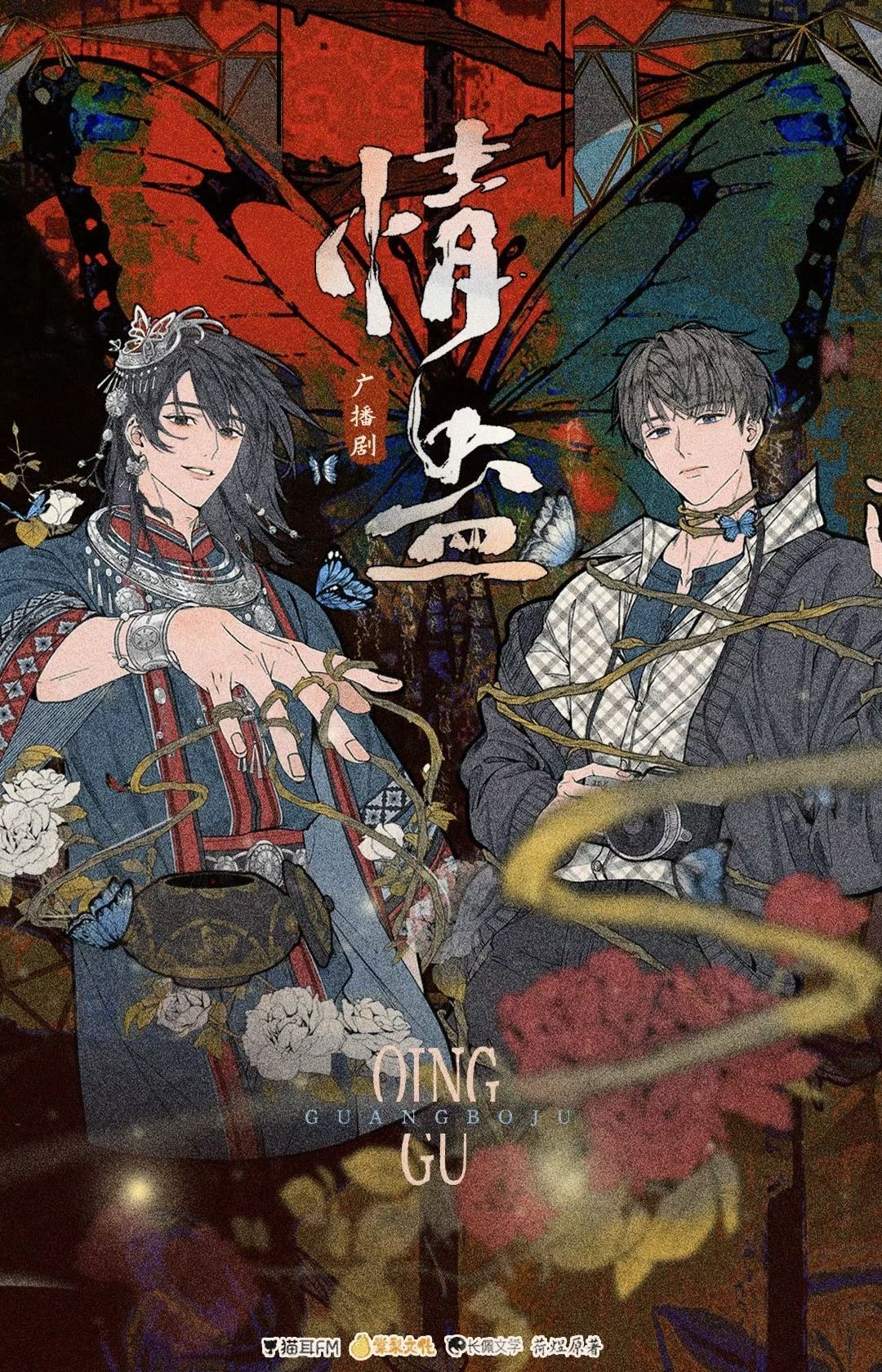
This whole scene is a masterclass in emotional whiplash. Li Yuze goes from wanting to murder Shen Jianqing to being kissed, manipulated, and told he's his forever—all while trying to escape. The romantic tension isn't sweet; it's suffocating, dangerous, and weirdly compelling. I'm torn between hating Shen Jianqing's game and loving how he plays it. The moment Li Yuze whispers “I like you” is heartbreaking. It's not love. It's a transaction, a survival tactic. But Shen Jianqing takes it seriously? Or pretends to? His response—“I liked you from the moment I saw you”—feels genuine, yet we know he's lying too. That double-bluff makes their whole relationship a hall of mirrors. Every touch, every word, is either real or weaponized. What got me was the kiss. It's described like a trap snapping shut: “one hand supporting the back of my neck, the other caressing the side of my face.” Li Yuze freezes. He doesn't push him away. Why? Because part of him wants to stay. Part of him is tired of fighting. And Shen Jianqing knows that. He leans in and murmurs, “I like you too,” like a boy confessing, not a predator trapping prey. But then he adds, “The moment I saw you, I knew I had to be with you this lifetime.” That's not romance. That's possession. He's not offering love; he's offering captivity wrapped in poetry. And Li Yuze? He nods. Haphazardly. Like he's agreeing to everything just to keep moving. I keep thinking about the foot. “You'll definitely have to rely on me for the rest of your life.” He says it casually, like it's a joke. But it's not. It's a plan. A long-term strategy. Shen Jianqing isn't just keeping Li Yuze alive—he's making him dependent. Broken limbs, sure, but also broken will. Every kindness, every touch, every soft word is a thread tying him tighter. And yet. There's something terrifyingly tender here. When Shen Jianqing buries his head in Li Yuze's chest and says, “You couldn't bring yourself to kill me! Is it because you finally like me a little?”—that's not just manipulation. That's longing. He wants to be wanted. He wants to be chosen. He's just too damaged to ask for it directly. So who's really winning? Li Yuze survives another day. Shen Jianqing gets another kiss. But both are losing themselves. Their love story isn't a romance—it's a slow burn toward mutual destruction. And I can't look away. Would you stay with someone who's trying to trap you if they also made you feel seen? Li Yuze might be about to find out.
... Read More
Can we appreciate how well-structured this chapter sequence is? Because I need to talk about pacing, specifically the way the author controls the rhythm here. The chapter opens with an almost explosive emotional moment—Shen Jianqing whispering against Yuze's ear, trembling, asking if he would abandon him. It's immediate intimacy. No warm-up, no setup. Just THUD, you're in it. And then instead of exploding into more drama, the author pulls back. They walk. They talk. They process. The heat of the reunion cools into something steadier, more sustainable. Then comes the confession scene—the bamboo door, the kiss, the firelight—and right after, we get the fireworks. A natural crescendo. The author doesn't overstay this moment. Once Yuze commits, once the words are spoken, the scene pivots to the festival. The bonfire, the music, the crowd. It's like the author is saying: okay, the big emotional beat landed. Now let's breathe. "The dark night sky exploded with fireworks, vibrant colors spreading out, unfolding a dazzling scroll across the air." This line works as both a literal description and a metaphor for everything that's been building. The pacing here is deliberate—the emotional peak hits, then the world opens up around the characters, giving readers space to sit with what just happened instead of immediately slamming them into the next conflict. It's confident writing. The author knows the emotional foundation is solid, so they let it resonate rather than rushing to complicate things again. That's rare.

Leave a comment

You must be logged in to leave comments. or
