Qing Gu - Reviews

Qing Gu
+Add to Custom List
Sort
Add review
... Read More
'Tonight, a full moon hangs in the dark sky, though there are far fewer stars outside than in Shidi Mountain.' — this line alone is enough to make me close my eyes and feel the scene. The contrast between the moonlit quiet and the memory of Shidi Mountain's starry skies immediately establishes two different emotional homes for the narrator. One is current, one is remembered. One is peace, the other is loss. And then there's Hong Hong's world — the cold Gu container, the pot of tender grass Li Yuze set up for it, the sleeve it naps in. These tiny domestic details about an insect's life are somehow more vivid than half the palace descriptions I've read in xianxia novels. You can FEEL the soil, the fabric, the warmth of a human hand. The author doesn't over-explain the Gu insect world; we learn through Hong Hong's casual complaints and observations, and it feels lived-in. The 'spring-like sensation' that fills the air whenever Shen Jianqing gets close to Li Yuze — I've never read that described from an INSECT's perspective before. It's sensual without being explicit, eerie without being horror-adjacent. And then the door clicking shut with that 'bang,' leaving Hong Hong on the floor as the undulating feeling rises again... chills. Absolute chills. The sound design in this text is ridiculous.
... Read More
This is the part where the entire timeline SNAPS and I had to re-read twice. Li Yuze thinks he's been in the mountains for two or three months. It's been five. August turned into September and he didn't even notice. 'These few months in the mountains were like a timeless dream, an unexpected dream in summer. Now that the time had come, the dream was over.' That line hit me like a truck. The way the narrative frames those five months as a dream—something that happened BETWEEN real time—suggests something supernatural or at least deeply disorienting going on in Shidi Mountain. Is it the Gu insects? The Unassimilated Miao? Or just trauma so severe that his perception of time shattered? The hospital room itself is barely described—we get a bed, we get An Pu's entrance at the doorway, we get Ye Wensheng's swollen eyes behind glasses. But the emptiness of that setting is kind of brilliant. Li Yuze just woke up in a place that feels nothing like the mountain. No smell of earth, no sounds of the village, no shadows moving. Just sterile silence and the weight of five missing months. And that transition from 'midsummer' to 'school starts in a couple of days'—the author doesn't announce it dramatically, just drops it into casual dialogue and lets it land. Chef's kiss.
... Read More
The pacing here is a masterclass in slow burn. We go from a jarring personal rejection to a seemingly wholesome class event, then slide into memories that hit like a truck—all without a single chapter break. Look at how Zhang Xu brings up 'insect repellent' and suddenly our protagonist's heart skips two beats; that's not accidental pacing, that's psychological trigger work. The author doesn't rush the revelation. She lets us sit in the discomfort of those memories: 'the moment Shen Jianqing handed me the sachet, the way he gently fastened it around my neck—those images lingered.' It's a beautifully placed quote that acts as a pivot point. Then we cut back to 'Why aren't you talking?' and the cheer ahead—a perfect narrative exhale. The chapter flows like a conversation, not a report. What struck me most is how the author controls reader engagement through these micro-transitions. The rejection scene ends with Zhao Rugu 'disappeared from my sight,' but then we're immediately thrust into class birthday planning. It's disorienting in the best way—it mimics how life actually proceeds, with grief and normalcy coexisting. The mountain climb sequence builds physical tension that parallels emotional tension. When Zhang Xu praises the protagonist's 'survival experience,' the protagonist's internal response is silence; externally, he just says 'It's nothing. Just... just good luck.' That gap between inner turmoil and outer calm is where the real pacing happens. The author doesn't need melodrama; she trusts the subtext. And that final image of the protagonist walking toward the temple, 'feeling lighthearted' yet secretly searching for something? It's a perfect structural pause—a moment of false peace before whatever comes next. The pacing isn't about plot twists; it's about emotional weather patterns. The transition from the tense mountain climb to the relaxed tent-pitching banter feels organic, not forced. Even the gossip about 'someone in his heart' lands with realistic awkwardness, then dissipates quickly. There's no dragging, no artificial cliffhanger—just the steady rhythm of someone trying to function while haunted. Are we ever truly ready to move on, or do we just learn to carry the weight?
... Read More
Okay so this is going to sound random but hear me out—the butterflies on that Miao outfit. "The butterflies were incredibly lifelike, wings poised as if ready to take flight, like living creatures." And then right after this deeply symbolic moment, the narrator spots Honghong, that strange red insect, flailing joyfully in a corner before scurrying away. Two insects. One embroidered in gold thread, one alive and red and hiding. It struck me like a ton of bricks because what are butterflies but symbols of transformation? The narrator is supposed to be wearing this outfit as part of some ritual, some rite of passage, and the butterflies are frozen in that moment of almost-taking-flight. Never quite airborne. Never quite free. And Honghong—whatever it is, whatever it represents—the narrator doesn't even try to understand it. They just note it and move on. These small details are the author planting seeds that might grow later. The lock on the door, the butterflies on the chest, the hidden red insect. Three images of being trapped in different forms—physical, decorative, wild. I'm not saying any of this is accidental, but I also can't prove anything. That's the beauty of reading this kind of book, right?
... Read More
Okay, I read this section in one sitting and I legitimately struggled to exhale afterward. The pacing is engineered to suffocate you, and I'm here for it. The chapter opens at maximum intensity — the confrontation, the revelation, the breakdown of everything Li Yuze thought was true. There's no warm-up, no gentle landing. You're thrown into the emotional wreckage immediately. And then the author does something brilliant: he lets the character hit rock bottom and just… stays there. No rescue. No moment of clarity. Just the long, cold night of processing betrayal while physically broken. The transition to the next morning is where the pacing gets really clever. Everything slows down. The fever breaks, the body feels slightly better, and for a horrifying second you think — maybe things are improving? Maybe there's a chance? Then he limps to the window and discovers the bars. The structure here mirrors hope itself: it rises, and then it's brutally crushed. That moment of seeing the bars is the chapter's fulcrum, and the author positions it perfectly. The food-delivery scene adds another layer of pacing manipulation. We get a new character, a brief moment of false connection ("Hey, hello!" — oh thank god, a friendly face), and then the grab by the neck. The rhythm goes from tentative warmth to violent reversal in three seconds. It's the narrative equivalent of slipping on ice. And then the ending — Li Yuze sliding down the door, burying his face in his hands. No dramatic revelation. No new hope. Just the quiet acknowledgment that "No one could understand my current helplessness and despair." The chapter doesn't build to a climax; it drains to a vacuum. That's unusual pacing for this genre, and it's what makes it so effective. Most thrillers would insert a rescue attempt or a secret discovery here. This author chooses the opposite: pure, undiluted helplessness. The result is a chapter that lingers. It doesn't end; it exhausts itself. And that's exactly what trauma feels like, isn't it? Not a narrative arc, but a condition.
... Read More
The stakes here went from 'maybe I'll get hurt' to 'my friends are being slowly eaten alive inside their own heads' in about three seconds flat. And I just— I need a minute. Shen Jianqing dropping the Miao Gu revelation while casually patting Li Yuze's cheek like he's sharing weather news is one of the most cold-blooded moments I've read. Think about the geometry of the trap: Li Yuze is physically imprisoned, medically weak, and now his three companions are secretly doomed. There's no outside help coming because anyone who tries to expose this place 'won't live.' The Gu insects have already taken root in his friends' minds, turning them into puppets. So Li Yuze isn't just fighting for his own freedom anymore—he's fighting for people who may already be lost. And the author doesn't even let us catch our breath before Shen Jianqing forces the medicine down his throat and drops the Lanmen wine revelation. Every escape route just gets welded shut one by one. What does a person do when the walls literally close in and the person holding the keys has been watching them since the beginning?
... Read More
The structure of these chapters is genuinely brilliant in how it mirrors the MC's own denial. Start with Shen Jianqing making a move. MC panics and retreats. Then the MC spends the entire morning internally convincing themselves this isn't real love — it's dependency, loneliness, misunderstanding. The reader watches the MC build an entire intellectual fortress against their own feelings. Then lunch scene — comic relief with Xu Zirong pretending to be accused, Qiu Lu shushing him with chopsticks. Grounded humor. But also Shen Jianqing NOT LOOKING UP during the accusation. He knows. He saw it. Back to the room. Confrontation. MC tries the older-brother-perspective speech about youth and loneliness. Shen Jianqing doesn't fight it. Just sighs and talks about food. The MC is left trembling, holding a sachet, absolutely defeated by someone who never raised their voice. Then the festival scene — worldbuilding, atmosphere, other characters in play. Wan Ying's obsession with Shen Jianqing as counterpoint to the main romance. The bonfire imagery. The ritual. Building toward whatever the ceremony demands. The narrative never lets us rest. Even the lulls (the MC eating alone, hiding in their room) feel charged with unspoken tension. Nothing is filler. Every scene pushes the emotional needle forward or deepens the world. And that truncated ending line is the kind of thing that makes you open the book immediately.
... Read More
Okay, so let me just... take a breath. Shen Jianqing. What is WRONG with this guy. Like, on the surface he could pass as the caring type—he brings food, he bandages wounds, he talks softly—but then you peel back one layer and there's another layer of straight-up psychopathy underneath. The way he talks about Li Yuze's forehead wound like it's a GIFT he's going to cherish forever? That's not love, that's obsession dressed up in pretty words. And the worst part? He genuinely seems to believe he's doing something tender. He says things like 'I've wanted to do this for a long time already' while force-feeding medicine, and he frames it as romantic tension instead of assault. The relationship between these two is this horrifying power imbalance wrapped in the aesthetic of a romance novel, and that's what makes it so chilling. Li Yuze keeps trying to reason with him, appeal to his humanity, and Shen Jianqing just... laughs. Not even a villainous laugh, a genuine, almost amused sound. That tells you everything.
... Read More
I need to talk about how Shen Jianqing operates as a character in this chapter because he is DECEPTIVE. On the surface he's all warmth—curling up like seaweed, offering to sing, calling Yuze 'Ah-ge' with that sleepy gooiness. But underneath all of that there's this enormous, aching self-awareness. When he says 'I've seen your world, and it truly is as beautiful as a dream,' that's not bitterness. That's him looking at something he knows he can't have and choosing to let go anyway. The most devastating line in this whole chapter is when he tells Yuze 'I won't do those things again. I've understood that if someone truly wants to leave, no method can hold them back.' He's basically saying: I get it now. I will not trap you. And that maturity—earned through what we can only guess was a messy, controlling past—makes him so much more complex than just 'the passionate love interest.' His final look at Yuze before leaving… the text says it felt like 'a piece of my heart had been torn away.' But that look isn't pleading. It's acceptance wrapped in grief. It's the look of a person who loves someone enough to disappear.
... Read More
Can we just take a moment to appreciate how perfectly Xu Zirong sounds in this chapter? "Ah Ze! Xiso Wen! What are you two doing here!" — immediate warmth, immediate joy, immediate use of their old names like nothing happened. Then: "Don't cry! I'm not dead yet, or are you pitying me?" This man is literally struggling to stand, his body shaking, sweat soaking through his thin shirt, and his first instinct is to deflect concern with humor. That's not just good dialogue — that's character construction at its finest. Every line reveals something about who he is without the author ever having to narrate it. And the protagonist's dialogue is equally revealing in its restraint. When Wen Linyu asks about Ah Song, he doesn't lead with the truth. He hesitates. He delays. He offers a partial answer — "He's not doing well. Helping us was considered rebellious in the Miao village, and he was punished." That's it. He gives her the gentlest version of the truth and watches her grab his forearm, trembling. His silence speaks louder than any explanation could. Even the mother's nonverbal communication — just raising a finger to signal quiet — tells us everything about the atmosphere in that ward. And Wen Linyu, who barely speaks beyond asking questions, communicates volumes through her physical reactions: twisting her fingers, flushing, leaning forward almost knocking over coffee, turning away to suppress whimpers. The author trusts us to read what isn't said.
... Read More
"Daylight filtered through the window, casting a fractured golden light onto the floor." — this line hit me like a cinematic wide shot. The worldbuilding here isn't grand castles or sprawling cities. It's a small village, a quiet room, and the weight of unspoken histories. But within that simplicity, the author builds an atmosphere so thick you can taste it. The room itself feels like a character. Cold silence. Two people who've almost killed each other, now tangled in bed, hands trembling, breaths shallow. The golden light fractures everything—mirrors broken honesty, shadows hiding intent. It's a perfect visual metaphor for their relationship: beautiful, fragmented, unstable. Shen Jianqing's appearance is described with almost surreal precision. Semi-long hair fanned on the pillow. Ink-dark strands making his skin fairer, his face “as beautiful as jade.” That red mole on his eyelid seems alive, watching. He looks innocent. Ethereal. Untouched by the mortal world. But he's not. He's a beautifully patterned snake, as the narrator thinks later. Camouflage. Deadly fangs beneath silk. Then there's the Miao man. Arriving with Wan Ying. Old face, yellowish skin, bamboo basket. A man carved by labor, by years of weather and work. He's brought to fix Li Yuze's foot—but the detail isn't medical. It's cultural. This is a village with its own rules, its own healers, its own hierarchy. And Shen Jianqing isn't just some local boy. He “dispatches” people. That word—so official, so powerful—doesn't belong in a village setting. It belongs in palaces, in governments, in worlds of authority. The villagers' earlier stares come back to haunt me. “Awe and apprehension.” Why? Because he's not ordinary. Because he holds power no eighteen-year-old should have. Because the world here is deeper than it seems. Every scene in these chapters feels restrained, intimate, but layered with hidden history. The environment isn't backdrop—it's a silent witness. The light, the silence, the bamboo basket, the red mole—all of it contributes to a world that's breathing, watching, waiting. I keep imagining this place: remote, misty, traditional, with ancient customs hiding modern ruthlessness. It's not just a setting. It's a cage. And we're only beginning to see its walls.
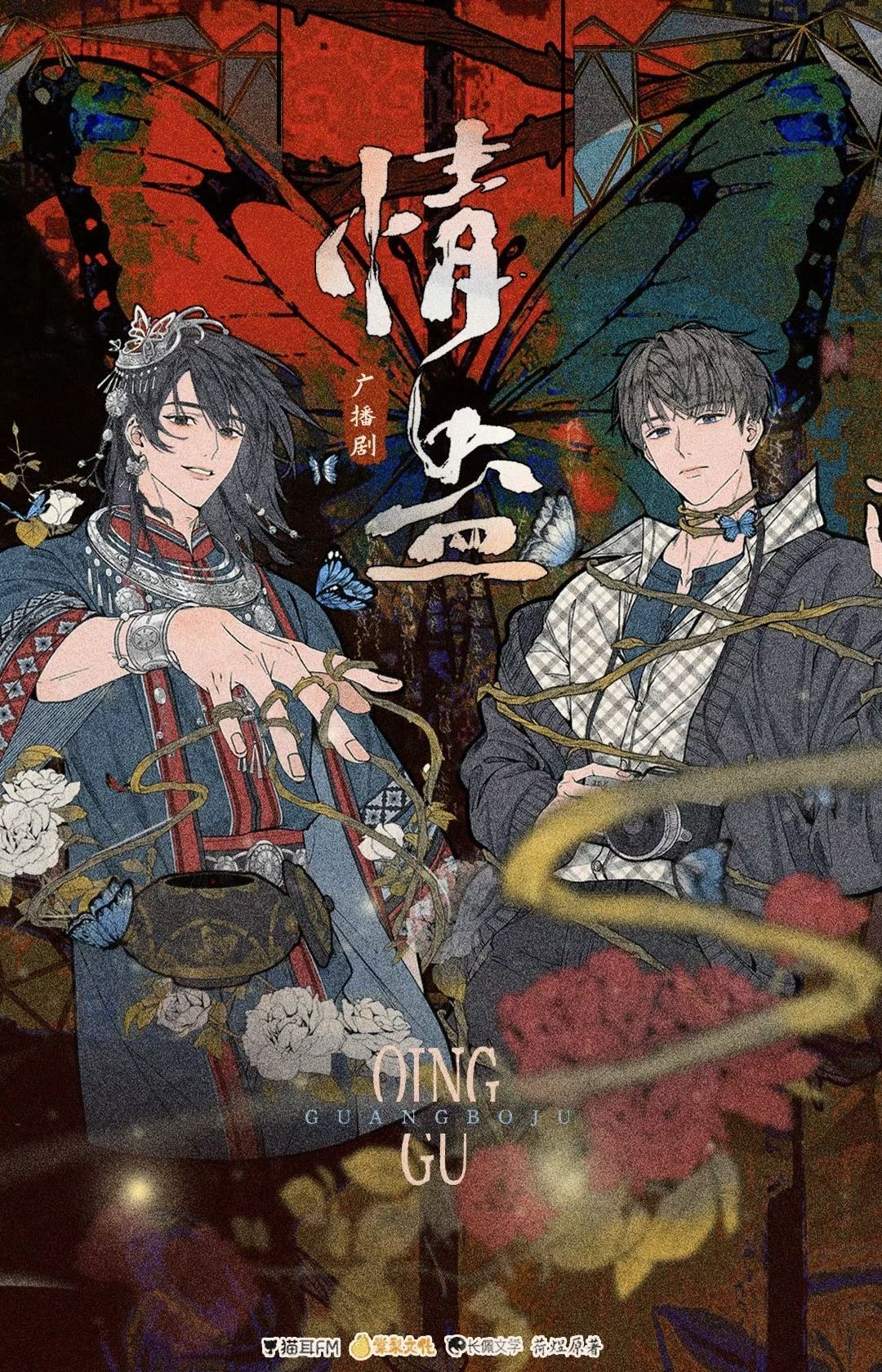
... Read More
Okay so this entire sequence is a masterclass in how to take a seemingly romantic cultural moment and turn it into pure chaos—and honestly I loved every second of it. The author sets this up with the Miao foot-stomping tradition, which they carefully explain as a betrothal ritual, and you can feel the narrative tension building because EVERYONE knows what this means. Li Yuze tries to dodge it, obviously, but then Wen Lingyu stumbles right into his arms and instead of a tender moment, what do we get? She clings to his forearm like a lifeline and he literally walks away mid-embrace. The real plot twist here isn't some big reveal—it's that the scene is built on a series of misdirections and near-misses. First Qiu Lu drags him into the dancing, thinking it'll be fun. Then Ah Li intercepts him with that wine offer, and the narrator internally panics because he remembers An Pu's warning about love debts. He tries to politely bail, only to get swallowed by the crowd and stumble directly into Wen Lingyu's path. The author plays with dramatic irony so well here—we know Wen Lingyu wants him, he knows she wants him, but the entire scene keeps interrupting any possibility of them actually having a moment. And then there's the ending beat with the camera. He hands it to Wen Lingyu casually, but the narrative immediately pivots to his internal question about the mysterious Miao youth in one of his photos. Did he spot someone? Is that person still out there somewhere in the crowd? It's a perfect cliffhanger that doesn't feel forced at all—it just grows naturally out of the chaos of the scene. The pacing here is brilliant. Fast, breathless, like being pushed through a dancing crowd yourself. One thing I have to mention: the structure of this passage is basically a Russian nesting doll of complications. Festival atmosphere → Miao King introduction → foot-stomping setup → Li Yuze avoidance → Ah Li encounter → Wen Lingyu stumble → camera exchange → mysterious photo revelation. Each layer adds a new character or a new question, and none of it feels padded. Every sentence is earning its place. I genuinely couldn't put it down, even though technically nothing 'big' happens plot-wise. Sometimes the best plot moments are the ones where everything almost happens but doesn't, and the tension from that is electric.

Leave a comment

You must be logged in to leave comments. or
