Prey (Lee Seohan) - Reviews

Prey (Lee Seohan)
+Add to Custom List
Sort
Add review
... Read More
I have been rotating around this one detail for hours because it is just so perfectly devastating. A ring. Not a gift of love anymore but a weaponized object that Jeonghan slides into Suhyeon's palm like it is nothing. "You said you didn't like the wedding ring. Wear it. If you don't want to be caught every time I see it." Read that again. He took her rejection of the ring during the marriage and turned it into leverage post-divorce. That is not romance. That is possession dressed up as concern. And Suhyeon knows it. She throws the case on the table like it burned her and buries it in a drawer beneath the old one like she is locking the past away twice over. But then the dream sequence hits and everything cracks open. She wakes up shaking and immediately runs to the bathroom to check if her body betrayed her again. "No. This is just a reflex. That's all it is." She says it like a mantra. Like if she repeats it enough times she can convince herself her own flesh is not still answering to him. That is the most lonely line in the whole passage. Not a tearful confession. Just a woman lying to herself in front of a laundry basket at 3am. And then the elevator scene. His eyes drop to her bare finger and he laughs. Not cruel exactly. Something worse. Amused in a way that says he remembers every detail of what she is hiding from him. She wants to disappear. He wants her visible. Neither of them gets what they want.
... Read More
"You made me this way." Five words. That's it. That's the entire thesis of their relationship compressed into a sentence spoken during one of the most violent intimate scenes I have ever read. Jeonghan says it like it is a fact the same way he says “I won't let you go” or “Look straight at me.” His dialogue is never a question. Never a request. It is commands wrapped in statements wrapped in threats. He doesn't ask her to stay. He tells her she already belongs to him. He doesn't ask why she left. He tells her she made him this way as if her leaving was the cause and his obsession is the effect. Suhyeon's voice is the opposite. She says “I don't need this” and “You're out of your mind” and “What on earth are you trying to do?” But the narrations underneath her dialogue tell a different story. Her body betrays her. Her dreams betray her. Even her thoughts betray her when she catches herself craving the very thing she claims to hate. The gap between what she says and what she feels is where the entire novel lives. And Jeonghan's laugh. He laughs at her empty ring finger. Not a cruel laugh. A surprised one. Like he just discovered something about her he hasn't fully processed yet. That small crack in his composure is the most honest thing he does in these chapters.
... Read More
The opening image of this whole chapter is just GASP worthy. Suhyeon walking past the house covered in foreclosure notices like it's nothing special, like this is the normal backdrop to her life now. You can just feel the weight of it - the family business failing, the property about to be seized, and all of them standing around planning to sell their eldest daughter to some rich family's son. The hospital scene though - that's where the atmosphere really shifts. This quiet suburb hospital with this attached nursing home, Room 708 with no name on the door like it's some kind of secret ward. The way the author describes Suhyeon standing there, trembling, not wanting to open the door even though she ran all the way here. That moment of hesitation before she finally turns the knob - CHILLS. Actual chills. And then the room itself. Dark. Single bed by the window. The foot of the bed visible first, then more and more until you see the face. It's shot like a camera slowly panning across devastation. The oxygen mask, the emaciated face, those sharp cheekbones. No color in her skin. Just - bones and skin and breathing machines keeping this woman alive against her will apparently. The smoking area scene at the end with Seol Hee-nam is also perfectly done. The contrast between his casual cigarette smoking and the absolute monster he's becoming. Blowing smoke in Suhyeon's direction like he's some kind of noir villain while holding her mother hostage. The author really knows how to build atmosphere without saying much at all.
... Read More
Let me just say — the stakes in this chapter are layered like an onion and I'm crying. On the surface level: Suhyeon's mother is being held as collateral. If she doesn't comply with the arranged marriage, her mother dies. Simple, brutal, effective. Seol Hee-nam literally says 'It all depends on you' while patting her shoulder. The banality of the threat makes it worse. But then there's the secondary conflict: Suhyeon vs. her own body and emotions. She wants nothing to do with Jeonghan, yet he's the first person she thinks about when her world falls apart. She hates that she can't control her reaction. That conflict is almost more devastating because there's no villain to fight — it's just her against herself. And the tertiary layer: Hana and Park In-ok. They're poor, desperate, moving into a 20-pyeong box. They think Suhyeon owes them. They don't understand that Suhyeon is also trapped. The family dynamics here are a pressure cooker — everyone is using everyone else, and nobody has any real power. What makes this chapter grip you is that none of these conflicts resolve. The business trip ends, the kiss happens, she goes home, a week passes, and then he shows up at her door again. Nothing is settled. Nothing is safe. The tension doesn't release — it just gets sharper. That's why I couldn't stop reading.
... Read More
I need to talk about Seol Suhyeon because THIS WOMAN. Six months after publicly saying 'this marriage is absolutely dreadful' in front of every reporter in the room—and I mean she SAID it with the same serene smile you'd use to comment on the weather—she sits in a courtroom looking totally unreadable while everyone around her is losing their minds. Not once does she glance at her husband during the trial. Not once. And Lee Hyejin, who's watching her like a hawk from the conglomerate circles, notices that. She notices EVERYTHING. That's how we know Suhyeon isn't just some naive pretty face. She made her play, she walked away, and she's already moved into a new apartment a month later like nothing happened. But here's what gets me—when she looks out the window of her new place and thinks about that smile he gave in court, she doesn't feel relief. She feels UNEASY. Like winning wasn't the happy ending she expected. Like Do Jeonghan wanted this outcome more than she did. And the fact that she's now standing at her own front door, coffee in hand, trying to figure out who sent the flowers? That's not just a plot twist waiting to happen. That's a woman who's been married for five years to a man who can't stop thinking about her even after he just lost her. There's something deeply messed up and fascinating about their dynamic.
... Read More
I'm genuinely impressed by how clearly each character's voice comes through just through their dialogue patterns. Seol Hee-nam? His speech is all aggressive assertions and entitlement — short, punching sentences, rhetorical questions designed to dominate: "what's the problem with that?" "Don't you think so?" He never asks, he DECLARES. Park In-ok's dialogue is manipulative sweetness masking venom — "Dear, you're back?" followed immediately by probing questions. Seol Hana is sharp and impatient. But Suhyeon's voice is where it really shines. Watch how her dialogue becomes INCISIVE the more she asserts herself: "You used my mother, who was neither alive nor dead, as a hostage and sold me off." That's not a cry for help, that's a surgical strike. And Jeonghan — oh my god, Jeonghan's dialogue is almost entirely in SHORT, TERRIFYING fragments. "I asked what you're doing." "He'll come back." "Tell me." "Because it benefits Seol Suhyeon." He says LESS than anyone else but his words carry MORE weight. The author clearly made a deliberate choice to give him sparse dialogue and make every syllable count. Even the flashback dialogue is perfectly calibrated — Jeonghan's cruel line "Does your body have enough value to save both your mother's and Seol Hee-nam's businesses?" is so coldly matter-of-fact that it hits like a physical blow. These characters don't sound interchangeable. Every line belongs to exactly one person.
... Read More
Okay, let me just sit with this for a second. The ring scene. That entire exchange between Jeonghan and Suhyeon hits like a physical blow every time I re-read it. She tells him flat-out: "I threw it away." And his response? A smirk. A crooked, shameless little smile as he says, "Then I'll just have to buy you another one." THE AUDACITY. The man is truly something else. But what gets me is what happens beneath the surface. Suhyeon's reaction isn't anger alone—it's this exhausted, bone-deep weariness. Her heart beats irregularly. She clenches her fist. She thinks, "I should have slapped him." And then she regrets not doing it. That's not the reaction of someone who is over it. That's someone still visibly shaken by this man's presence. And Jeonghan? He watches her flee into the elevator, catches her eye through the closing doors, and stares at her like she's prey. Prey. Not an ex-wife. Not a colleague. Something far more dangerous. His secretary even notes later that he remembered her words—"I threw it away"—and smiled. Not because he believed her. Because he knew she hadn't. He knows her. He knows she kept it somewhere. The flashback to the hospital scene absolutely wrecked me. Suhyeon storming into his study, tears in her eyes, accusing him of moving her mother without permission, and his response: "She's not really alive anymore, is she?" That line. That absolutely cruel, indifferent line. And her calling him "not even human." Five years of marriage and he never once let her see her mother, weaponizing a vegetative parent. And now she's free—but the emotional scars are still fresh. Less than half a year since the divorce. What kills me is that despite everything—the arranged marriage, the manipulation, the humiliation—there's this undeniable current between them. He pursued her deliberately. He chose her company. He appears at her apartment building like he owns the place. And she tells herself she's free, tells herself he has no influence over her anymore, but her body betrays her—freezing in front of him like a herbivore caught in a predator's gaze. "Wherever you go, you'll be entangled with me." That line lives in my head rent-free.
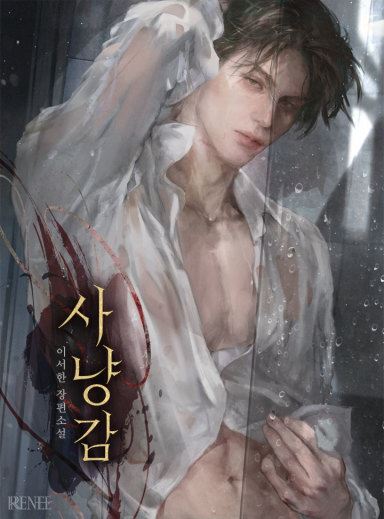
... Read More
I need to talk about Do Jeonghan because my brain is still recovering from this chapter. You know how sometimes a character does something so contradictory it leaves you staring at the wall? That's Jeonghan right there. The way he grabs Suhyeon's face after she throws that ring—his eyes are described as ‘filled with murderous intent,' but then he doesn't let go even when she bites his lip and draws blood. Instead, he kisses her harder, like he's punishing her and trying to erase her all at once. And then, right after pulling away from her body in the hallway, when she's half-naked and trembling, he drapes his jacket over her shoulders without a word. That jacket is everything. It's the only tender thing he does in this entire scene, and it completely undermines the monster he's been acting like five minutes earlier. I'm furious and confused, which I guess is the point. Their relationship is a battlefield where dominance and desperation are wearing the same face. Suhyeon's internal monologue is just as messy: she tells herself it's a ‘conditioned reflex,' that her body's reaction has nothing to do with her feelings. But then she dreams of him afterward and can't stop thinking about how she wanted more. She's trapped in a loop of resentment and physical memory, and I love how the author doesn't give her a clean escape. Meanwhile, Seol Hee-nam stumbles in drunk and drops a bomb: Jeonghan ‘definitely knows' that Hee-nam killed someone. That ‘someone'—I'm guessing it's Jeonghan's past partner—and now Jeonghan's possessive rage over Suhyeon feels even darker. Is he trying to replace someone he lost? Or is he just a broken man lashing out? Either way, I can't look away.
... Read More
Let me be clear about the stakes because this chapter makes them terrifyingly real. On one thread: Park In-ok and Seol Hee-nam. They're not just annoying—they're dangerous. Hee-nam remembers Jeonghan's words: 'if you show up in front of Seol Suhyeon again, be prepared to end up in prison.' Not 'don't bother her.' Not 'leave her alone.' Prison. This man has power, and he's willing to use it. But In-ok doesn't know this. She's nagging him to visit Suhyeon again tomorrow. They think they can extort compensation. They think Suhyeon is vulnerable. They have no idea what they're walking into. Meanwhile, Suhyeon is sitting in her empty office, head throbbing, trying to remember pieces of a marriage she can't recall. She's safe physically, but her mind is the battlefield. Every odd detail she notices pulls at her sanity. Then Woo-rim appears—sweet, careful Woo-rim who asks 'Are you okay?' and gives her space when she deflects. He represents safety, but safety is fragile. If In-ok and Hee-nam find out she's still connected to people from her past, they'll use that. They've already shown they'll track her down. And Jeonghan? He's watching. He followed her home. He saw her dinner. The ring on her finger is both protection and imprisonment. If In-ok discovers Jeonghan is still involved, they might target him instead. Or worse—they might figure out what secret he's protecting. The stakes keep multiplying. Every character has something to lose. Suhyeon has her peace. Jeonghan has his secret. In-ok and Hee-nam have their greed—and possibly their freedom. I'm not sure anyone in this story is safe. Not really. Not until that fog lifts.
... Read More
Okay, I need to sit down. This chapter. My emotions are all over the place. Suhyeon throwing that ring and screaming ‘I'm not your wife anymore'—I felt that. I actually felt it in my chest. Five years of marriage, five years of being treated like property, and she finally draws a line. But then Jeonghan kisses her and her body responds, and she hates herself for it. The line ‘It has nothing to do with my feelings'—I wrote that down because it's so painfully true. She's trying to separate her mind from her body, but her body remembers five years of intimacy, of being touched by him every night, even if it was forced. The author makes you feel that conflict viscerally. You're rooti for her independence, but then her body betrays her and you're like ‘ugh, why?' And then the nightmares—she dreams of him violating her, but in the dream she's clinging to him, desperate for more. That's not consent; that's trauma response. I'm angry on her behalf. But then, when he pulls away and puts the jacket on her, my heart literally skipped. He's a monster, but he's also a man who just realized he might have crossed a line. The tenderness is so small it almost gets lost, but it changes everything. And Suhyeon's internal scream ‘Do I… want him this much?'—that's the real emotional stakes. It's not just about power or abuse; it's about whether she can ever trust her own desires again. I loved this chapter. I hated it. I'm obsessed.
... Read More
That scene in the elevator. I need to talk about it because my hands are still shaking just thinking about it. Suhyeon just had this nice dinner with Woo-rim—someone safe, someone kind, someone who actually cares about her wellbeing without trying to manipulate her—and the second she walks into her building, Do Jeonghan is just... there. Waiting. Like a predator who has been tracking her all evening. And then he puts a ring on her finger. Not asks. Not requests. Puts it on her and says if she takes it off, 'be prepared.' The plot twist here isn't that he's jealous—it's that the author makes us realize this entire 'divorce' arrangement was never what it seemed. Suhyeon herself admits it halfway through this chapter: 'If we're talking about strangeness, it's weird from the very start that this one-sided marriage was even successful.' She thought she was trapped. She thought she was being punished. But Jeonghan was protecting her the entire time, and she didn't know it. Meanwhile, Park In-ok and Seol Hee-nam are over here scheming like they're in some low-stakes soap opera, completely oblivious that Do Jeonghan could send them to prison if he wanted to. The contrast is almost funny if it weren't so terrifying. The narrative structure here is brilliant—two parallel tracks. One is the domestic intrigue of the scammers (In-ok and Hee-nam), which gives uscomic relief and rising suspicion. The other is Suhyeon's emotional unraveling, where she's trying to reconcile 'the man I thought I married' with 'the man who actually protected me.' And that ending? The ring? That's not romantic. That's a leash. But the author is making us complicit—we want Suhyeon to be happy, but we also see Jeonghan's desperation. He followed her. He watched her dinner. He couldn't stay away. That's not love, but it's not purely malicious either. It's complicated. And I'm obsessed.
... Read More
The dialogue in this chapter is raw, jagged, and utterly unforgettable. Jeonghan's lines are mostly commands—‘Don't avoid me. Open your lips,' ‘Go inside. Lock the door,' ‘If I press the doorbell, don't open it.' They're short, blunt, and often interrupted by action. But the most powerful moment isn't a grand speech; it's him muttering ‘You crazy bastard' to himself after he pulls away. That's the first time we hear him voice his own self-disgust, and it shatters the omnipotent villain facade. Suhyeon's dialogue is just as fractured. Her protests are fragmented—‘Ah, wait a minute, wait…,' ‘Are you insane?'—and her internal monologue is a stream of consciousness that mirrors her mental state. The author uses repetition brilliantly: ‘crazy' appears multiple times, both in Jeonghan's self-reproach and Suhyeon's denial. ‘I'm not in my right mind' becomes a mantra she repeats to convince herself her body's response is meaningless. The narrative voice dips close into Suhyeon's thoughts, then pulls back to describe Jeonghan's ‘hoarse voice' or ‘roughened voice.' The contrast between external description and internal panic creates a dizzying effect, like we're trapped in her head. I also love the sound words—the ‘rip' of fabric, the ‘clack' of the ring hitting the floor, the ‘squelch' of her bare skin on the rug. These onomatopoeic details make the scene visceral. The author's voice is unflinching, refusing to aestheticize the abuse or soften the discomfort. It's brutal, but it's honest.

Leave a comment

You must be logged in to leave comments. or
