Prey (Lee Seohan) - Reviews

Prey (Lee Seohan)
+Add to Custom List
Sort
Add review
... Read More
Okay the sheer audacity of this man is what gets me. Three months of peace and Suhyeon finally exhales. She has rebuilt her life, moved, changed companies, done everything right to put distance between herself and Do Jeonghan. And what does he do? He walks into her apartment building with a keycard and moves into the unit next door. Like he owns the place. Like he owns her. "What on earth are you trying to do?" she asks and his answer is the coldest thing I have ever read. "...That seems to be right." He admits it. He doesn't deny tormenting her. He just owns it like it is a transaction. And here is where the stakes go nuclear: she has nothing left to lose but she also has everything to lose because he already holds the power. He is the official head of Cheonkyung now. If she moves, he follows. If she changes jobs, he finds her. The net is closing and she knows it. But the car scene at the end. A car rushes toward her and he pulls her into his arms. Her first instinct is panic. His first instinct is rage. Not relief. Not tenderness. Anger. Because part of him wanted her hurt and the other part would rather burn the world than watch it happen. That contradiction is the whole conflict compressed into one breath.
... Read More
'Throw them all away.' Four words. That's all Do Jeonghan says in the entire flashback and it does more damage than a monologue ever could. The author clearly understands that this character speaks in commands, not conversations. Every line that comes out of his mouth is either an order or something so cold it barely registers as language at all. Compare that to Suhyeon's voice, which is mostly internal. She doesn't actually say much to him in any of these scenes—her power lives in what she DOESN'T say. The moment where she finally speaks up at the conference room: "I've only recently joined the company, so I'm not capable of handling such a large project. I believe it would be more appropriate for Deputy Section Chief Jung Hyunwoo to take it on instead." She's lying. We know she's lying. The narration tells us straight-up that she WAS capable—she'd handled significant projects before. But she's using her professional voice as armor. And the fact that Do Jeonghan sees right through it but lets her have the win anyway? Chilling. "You think you're not qualified?" — that's not even a real question. It's him enjoying the hunt. And then his response when she doubles down: "Excessive modesty doesn't suit you." He's complimenting her. Through an insult. Through manipulation disguised as feedback. This man weaponizes politeness and it makes every interaction between them feel like a battlefield wrapped in silk. Meanwhile, Jung Hyunwoo's dialogue is entirely functional—he's the audience surrogate, the normal person reacting to something不正常. His nervous stammering, his urgent whispers to Suhyeon, his genuine excitement about the project: he exists to ground us in what a normal workplace interaction should feel like, which makes the abnormality of Do Jeonghan's presence even sharper by contrast.
... Read More
Let me just walk through how this chapter plays out because the pacing is absolutely INSANE. It starts with Park Young-hye casually dropping the bomb that Suhyeon needs to help out, and you immediately know something is wrong because Suhyeon's reaction is this quiet mocking laugh. The eldest daughter comment hits different when you realize what they're actually asking. Then Park In-ok pretends to be sick, Hana watches like it's entertainment, and Suhyeon just - she sees through all of it immediately. That's when you know this girl is sharp. The physical confrontation escalates so fast. One minute they're arguing, the next Park In-ok is grabbing her hair and Suhyeon is breaking her arm. SMACK. The violence just erupts and then Suhyeon threatens to sue and walks away. The pace of that fight scene is perfect - it doesn't drag, it explodes and then cuts. Then SEOL HANA drops the mother is alive bomb and the entire chapter pivots. Suhyeon's emotional journey from that moment to the hospital is handled in what feels like seconds but carries so much weight. She runs to the hospital, hesitates at the door, opens it, sees her mother, breaks down. The pacing here is almost too fast like she's running on pure adrenaline and grief. And then the EMPTY ROOM. The door to 708 is open, the bed is vacant, and Seol Hee-nam is waiting for her like a spider who just caught a fly. The cliffhanger ending with him asking her to save their dad first in exchange for her mom - that is a PERFECT chapter ending. I am not prepared for what comes next.
... Read More
There's this one sequence that I keep coming back to because it's so quietly devastating. Suhyeon gets home, grabs her favorite sushi, sets up dinner in front of the TV like she's just having a normal Tuesday—and the very first thing that comes on is Do Jeonghan's face. Standing next to the heads of Korea's four major conglomerates, youngest among them, looking completely untouchable. The author doesn't even describe his expression on screen, just that she freezes, presses the remote, and switches channels. But the way it's written—the way the TV lights up with HIS image the moment she tries to carve out normalcy—hits differently. Then there's the apartment itself. It's small, it's new, it's HER space that she paid for with her own savings because she refused to touch the alimony. The bouquet arrives at the front door, the flower box is placed on the island bar, and she's rummaging through it with this growing sense of dread. The domestic details make it feel so real—like this could be anyone's apartment, anyone's life interrupting someone else's carefully rebuilt routine. And the conference room scene! That contrast is brutal. Suhyeon's new workplace, the fluorescent lighting, the corporate furniture, Jung Hyunwoo fumbling with his business card—all of it establishes this normal world she's built. Then DO JEONGHAN walks in and the entire atmosphere shifts. You can practically feel the temperature drop. Director Han's smile becomes strained, Jung Hyunwoo starts sweating, and Suhyeon? She just sits there, perfectly still, holding someone's gaze who has no business being in her life anymore. "In the man's rough grip, the fabric tore in half." That line from the flashback. Just four words describing the sound and motion of destruction, and it echoes through every scene that follows. The clothing gets torn, the marriage gets torn, but neither of them walks away clean.
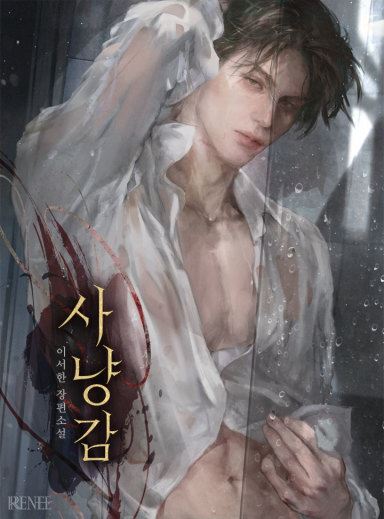
... Read More
The symbolism in these chapters is layered in the most unsettling way. Let me start with the wedding ring—that single object carries so much weight. Suhyeon claims she threw it away, but Jeonghan doesn't believe her, and honestly? Neither do I. That ring is a metaphor for the entire marriage: something she was forced to wear, something she tried to discard, but which he considers property he can simply replace and reclaim. His casual attitude toward buying her another one is almost more chilling than outright cruelty—it reduces their entire relationship to a transaction where nothing is sacred. Then there's the phrase "diamond spoon" used by mockng secretaries. It refers to someone born with unimaginable privilege, and it's thrown at Jeonghan like both an insult and an acknowledgment of his untouchable status. He inherited Cheonkyung Group in his early thirties and sits on a floor where even the oxygen levels are designed for him. The literal remodeled space—four walls of windows, astronomical budget, dozens of secretaries—creates an image of a man who has constructed an entire ecosystem around himself. He doesn't just rule a company; he rules an environment so perfectly calibrated that escape from it seems impossible. The mother storyline is its own kind of symbol. Suhyeon was controlled through her mother—first by her father using the vegetative parent as leverage to sell her into marriage, then by Jeonghan controlling access to her after the wedding. The mother represents the ultimate dangling thread: as long as her mother was alive, Suhyeon had a weakness, a vulnerability that could be exploited. When Jeonghan coldly states "She's not really alive anymore, is she?" he wasn't just being cruel—he was asserting that even her mother's suffering belonged to HIM to manage. Now that the mother has died, that leash is cut. And yet Jeonghan finds new ways to tether her. The business partnership becomes the replacement chain. His appearance at her apartment building transforms from family-control to surveillance—different method, same function. There's also the recurring image of animals: Suhyeon as prey, as a herbivore freezing in front of a predator. The husband-wife dynamic has completely collapsed into predator-prey. That's not a romance trope—that's a horror frame dressed in silk.
... Read More
Okay so can we just take a moment for Seol Suhyeon's absolute delivery of 'This marriage is absolutely dreadful.' Like. She says it to Lee Hyejin's face. In front of reporters. With a smile. And then she just—keeps going. 'I said it's dreadful. My husband, and this marriage.' That is peak fiction energy. The way the reporters immediately start clicking like maniacs and Lee Hyejin's entire worldview short-circuits? Chef's kiss. But what's wild is how the dialogue changes depending on WHO'S speaking. The conglomerate women are all shade and sideways comments—'she must devour men at night,' 'vulgar, really'—their dialogue is sharp and petty and completely transparent in its jealousy. Suhyeon's voice, on the other hand, is calm, measured, almost dreamy. 'Is that how it seems?' she asks Lee Hyejin, and it's delivered so gently that it hits like a punch. Do Jeonghan barely speaks in these chapters but when he does, it's devastating in its brevity. 'I trust no unauthorized photos will be published.' That's it. Three sentences. No yelling, no threats. Just that ice-cold, quiet authority that makes reporters freeze mid-question. And Suhyeon's internal monologue? Pure 'what is happening to my life' energy. 'Could it be... that man?' 'That smile right after the verdict...' The author writes her thoughts in this breathless, uncertain way that contrasts perfectly with how she speaks to others. She's composed out loud, chaotic in her head.
... Read More
Okay so let me just say Park In-ok is literally the most despicable character I have ever encountered and I think my hands are still shaking from writing this. She showed up after Suhyeon's real mom died, moved into the master bedroom, and then had the audacity to grab Suhyeon by the hair and scream at her like SUHYEON was the problem here? The woman stole her husband AND now she's pretending to be a grieving mother figure while keeping Oh Kyung-hee on life support as some kind of hostage? And the way Suhyeon handled it though - I love her so much. When Park In-ok was pulling her hair and screaming about how Suhyeon owes them because her father raised her, Suhyeon just calmly said 'You're the daughter of the wife whose husband you stole in your affair.' CHILL. Just absolutely dropped the truth bomb and walked away. But Seol Hana... that girl is evil in a completely different way. She wasn't even trying to hide it, just standing there with this smug expression telling Suhyeon her mom is alive like it was gossip at a tea party. And then when Suhyeon confronted Park In-ok, Hana was right there screaming 'Let go of my mom's hand!' - her actual biological mom who has been lying to her this whole time. The father Seol Hee-nam is probably the worst human being in this entire story. Moving Oh Kyung-hee to another hospital just to blackmail his own daughter into marriage? That's not a father that's a hostage negotiator for monsters. And he had the nerve to blame Suhyeon for his violence saying 'it's your fault for not listening' - the same manipulation tactics he used when he was physically abusing her as a child. I need a moment.
... Read More
This chapter is a masterclass in rising stakes because the author withholds the very thing the scene seems to be building toward. When Jeonghan tears off Suhyeon's bra and pants, when he lifts her leg and aligns their bodies, when she wraps her arms around his neck and begs for more—I thought they were going to have sex. And then he stops. He pulls away, curses, and puts his jacket on her. The frustration is palpable, and so is the relief. But that release isn't clean; it leaves both characters raw and exposed. The external conflict is simmering beneath every interaction: Hee-nam's drunken confession that Jeonghan ‘knows' he killed someone raises the threat from personal to criminal. Suhyeon's internal conflict is equally high-stakes—her body's response threatens to undermine her resolve to leave him. The author makes us care because the consequences are psychological, not just physical. Will Suhyeon stay trapped? Will Jeonghan cross a line he can't undo? Will Hee-nam's secret come out and destroy everything? The stakes are anchored in character, not plot twists. And the ending—Suhyeon returning the jacket with the ring inside, Jeonghan watching her run away—feels like a truce, but a fragile one. I'm terrified of what comes next, which is exactly what good conflict should do.
... Read More
Let's talk about that opening scene because the way this author writes the charity bazaar is genuinely cinematic. You've got these women from conglomerate families doing their little performances for the cameras, putting on shows of charity work, and then Suhyeon arrives and everything shifts. It's not even about her actually doing anything dramatic—it's about the ENERGY. Do Jeonghan at 'over 190 centimeters' with that cool, model-like aura. Suhyeon beside him looking like Snow White—'her skin so clear that it seemed like her veins might show through.' I swear to god the author wrote that specific description and I immediately typed it into my notes. The contrast between his sharpness and her doll-like fragility is so intentional. And then the camera flashes! Click-click-click! The way the narrative keeps cutting back to the photographers, to the portal sites, to the real-time articles—it builds this whole ecosystem of public perception that surrounds these two characters. Suhyeon's face gets blurred out in photos but 'just her silhouette was enough to reveal she was a beauty.' That detail alone tells you everything about how the world sees her. The courtroom scene is just as vivid—'a man in his late sixties, wearing a tired expression—likely from the immense public attention.' You can practically see the fluorescent lighting, the stale air, the reporters yawning because they've already written their stories. The author doesn't over-describe but when they do, it sticks.
... Read More
'There's something I don't know. Definitely…' This line repeats in Suhyeon's head like a mantra, but it's not just about plot holes. It's about memory itself. The marriage is described as 'shrouded in fog'—faint, sporadic, possibly due to shock. But what if the fog isn't trauma? What if it's deliberate amnesia? What if her mind blocked out not because it was painful, but because the truth was too dangerous to hold? The ring Jeonghan puts on her finger is the central symbol here. On one level, it's imprisonment—a reminder that she's still bound to him. But on another level, it's protection. He's marking her as his, yes, but also warning others to stay away. When Seol Hee-nam showed up, Jeonghan was already there. He anticipated the threat. He was watching over her even after the divorce. Then there's the contrast between Woo-rim and Jeonghan. Woo-rim represents transparency—he asks, he considers, he respects boundaries. Jeonghan represents possession—he watches, he corners, he decides. Both care about her. Both are dangerous in different ways. But here's what haunts me: the oddities Suhyeon lists. 'Even if he just needed a wife he could manipulate at will, wouldn't he be able to find a woman with much better conditions?' Why her? Why a woman with no money, no connections, no power? The answer must be something she's forgetting. Something in that fog. The theme here is knowing vs. surviving. Suhyeon survived her marriage by not knowing. Now she's trying to know, but knowledge might destroy the peace she's built. Is ignorance really bliss, or just temporary relief? The ring says: you belong to me. The fog says: you don't remember why.
... Read More
I need to talk about that vision Suhyeon has of the black sea. It keeps appearing in her mind like a ghost - her mother walking toward the crashing waves, the sound of waves, the pitch-black night. And then she finds out her mother tried to jump. Tried to end it all. The sea represents everything Suhyeon couldn't control. She studied hard, went abroad, got scholarships, did everything she was supposed to do to save her family - and none of it mattered because her mother was drowning right there and Suhyeon wasn't watching. The waves are silent judgment. Then there's the oxygen mask. That mechanical breathing keeping Oh Kyung-hee alive while she's essentially a prisoner in this hospital bed. Is it life or is it punishment? Park In-ok called her a terrifying woman for making them live with guilt, but who actually forced her into this? The woman who stole her husband and then had the audacity to claim moral superiority? The foreclosure notices on the house are also symbolic - the family's moral bankruptcy made visible. They're losing everything because of greed and lies, and now they're willing to sell their daughter to escape the consequences. The house itself is collapsing just like their humanity. And Suhyeon's silence throughout most of this chapter - she barely speaks above a whisper during the confrontation, she swallows her laughter, she doesn't scream back at Park In-ok's accusations. But then she breaks down completely when she holds her mother's hand. That silence is the weight of four years of not being there, of not knowing, of being lied to by everyone who should have protected her.
... Read More
I keep coming back to the elevator scene. Like, everything about it is so quietly devastating. Suhyeon just had her father try to blackmail her, he grabbed her arm, threatened her — she's clearly shaken — and then Do Jeonghan appears like some stoic guardian angel and scares Hee-nam off. And instead of processing that, what does she do? She thanks him politely, asks why she should report to him, and then drops her KEYCARD while trying to walk away from him. The flustered embarrassment! The way she can't even meet his eyes! And then he picks up the keycard, hands it back, and says "if Seol Hee-nam shows up, tell me" — in THAT tone, that low voice, like it's both an order and something almost... protective? And Suhyeon's internal monologue afterwards is just *aching*. She's literally counting up every time he FAILED to protect her over five years of marriage and wondering why NOW he's doing this. The fact that she still can't quite believe it, still defaults to assuming he's plotting something — that tells you SO much about the damage this marriage did to her. She doesn't trust kindness even when it's handed to her. And I swear the image of her standing outside her door holding that keycard, unable to move, is one of the most vulnerable moments in the entire book so far.

Leave a comment

You must be logged in to leave comments. or
