Prey (Lee Seohan) - Reviews

Prey (Lee Seohan)
+Add to Custom List
Sort
Add review
... Read More
I am OBSESSED with the Jeonghan-Suhyeon dynamic and I have so many thoughts. First: Seol Hee-nam. The man is irredeemable. 'That woman' referring to his own wife/mother of Suhyeon with such casual cruelty. He pats her shoulder like he's giving stock advice while holding her mother hostage. This is the kind of villain who genuinely believes his own performance — he acts like he's pleading with her when he's actually issuing threats. Five years he's been doing this and she still hasn't broken free. That tells you everything about both of them. Then Jeonghan. Oh my god. The corridor scene is EVERYTHING. He kisses her with this feral intensity, she slaps him — and then he CARESSES her lips. Not angrily. Not retaliating. Just... touching where she hit him. That detail wrecked me. It shows he's not actually trying to hurt her, but he also has zero respect for her boundaries. Which is somehow worse. But here's what kills me: after all that, he tells her to 'go in' and steps back. He could've pushed further. He chose to stop. And then a full week passes and he just... shows up at her door in a suit like nothing happened. Their entire relationship is this push-pull of him invading and then retreating, and her hating that she can't stop reacting to him.
... Read More
There is a recurring image that won't leave me and it is so simple it hurts. Suhyeon's empty ring finger. Jeonghan notices it immediately in the elevator and his reaction is not sadness or regret but something darker. "So, Seol Suhyeon had a stubborn side." He is reading her refusal to wear the ring as defiance. As a statement. But the real symbol isn't the missing ring. It is the drawer. She buries the new ring case under the old one and closes the drawer without regret. Two rings. Two marriages. One woman trying to lock them both away. And the scent. “It was uniquely Jeonghan's scent, and the memories of the vivid actions from the dreams tangled in her mind.” Smell is the most primal sense and the author uses it like a hook. No matter where she goes, no matter how far she runs, her body remembers him through fragrance alone. That is the theme in a single line: you can divorce the person but you cannot divorce the conditioning. The past lives in the nervous system. Then there is the dream itself and the waking body's betrayal. “This is just a reflex.” But is it? Or is the body telling the truth that the mind is too afraid to speak? The novel keeps asking whether resistance is strength or just another form of engagement.
... Read More
I need to process the elevator scene because it haunts me. Suhyeon is clearly terrified — she's being blackmailed, she's been dragged into a trap, and then Jeonghan looks at her and she's suddenly breathless. The text says: 'She should have pushed him away. After being kissed and even slapping him, she shouldn't have been so helplessly caught.' But she couldn't. And that's the most honest thing about this character. She's been fighting for five years. Five years of surviving, of holding herself together, of pretending she's fine. And one kiss from this man and she's trembling like she's drowning. The irony is almost painful — she ran from Do Jeonghan for five years and now he's the one making her feel most alive, even if it's terrifying. And then the worst part: she gets back to her room and realizes her body is responding to him anyway. The text doesn't even shy away from it — 'feeling her underwear damp like in the morning.' She's furious with herself. Angry that her body betrays her. But that physical honesty is the one thing she can't control or negotiate away. 'I really hate this.' Three words that contain an entire emotional universe. She's not just angry at him — she's angry at herself for still caring, for still reacting, for still being human in a situation where she wishes she could be stone.
... Read More
THE SCENE WHERE SUHYEON FINALLY SEES HER MOTHER ALIVE I AM NOT OKAY. She walks into that hospital room and there's this frail woman on the bed with an oxygen mask and Suhyeon just - she drops to her knees on the hospital floor and sobs like her heart is being carved out. And she's blaming herself the entire time, saying if she had known things were this hard she wouldn't have gone abroad, she wouldn't have studied so hard to get that scholarship because what's the point if her mom is suffering alone? But here's the thing that absolutely destroyed me - Oh Kyung-hee made a choice to jump. To try to end it all. And Suhyeon is standing there holding this paper-thin hand thinking her mother abandoned her. The guilt is already crushing her and we haven't even found out the whole truth yet. I keep imagining what Suhyeon must have felt in that moment - four years of mourning, four years of carrying that grief, and then discovering it was ALL A LIE. Her mother didn't die of COVID, she didn't pass away peacefully, she was kept alive on machines while this parasite family spent her father's money and lied to her face. And then the NEXT DAY Suhyeon comes back ready to take responsibility, ready to spend every penny she has to save her mom, and the room is EMPTY. Seol Hee-nam has moved her. Of course he has. Because this family doesn't love anyone except themselves. I'm actually furious. I can't stop thinking about Suhyeon sitting on that hospital floor crying and I just - I want to shake someone. Maybe all of them.
... Read More
This excerpt is structured like a slow poison. It starts with what should be a happy moment—winning the divorce lawsuit—and immediately undercuts it with something that shouldn't exist: a bouquet with a wedding ring. The pacing here is almost cruel in its efficiency. You get maybe three paragraphs of relief before the trapdoor opens. Then the author does something really smart: instead of continuing the immediate drama, they cut to a time jump—three months later—and spend that section building this fragile sense of normalcy. Suhyeon has a job, an apartment, she's eating sushi alone on a Tuesday. The prose actually slows down a bit, letting the reader breathe. And that's exactly when the TV strikes. Do Jeonghan appears on screen and the breathing stops again. It's like the author knows we've adapted to Suhyeon's new life and deliberately shatters it. The flashback to the clothing scene is inserted at the perfect moment of vulnerability—right after she sees him on TV, right when her defenses are lowest. And then BOOM, next chapter she's sitting across from him in a conference room. The transitions are razor-sharp. There's no filler, no padding, every scene exists to either tighten the noose or reveal another layer of why this relationship is complicated. The only thing that slightly drags is the middle section at the office—the business card exchange, the director's explanation of the project—because honestly at that point I just wanted to see what happens when they're alone. But even that serves a purpose: it establishes that she's no longer powerless, that she has a job, a career, a reason to stay. The stakes have literally multiplied. She's not just fighting for her emotional survival anymore—she's fighting for her livelihood while the person who could destroy both of them sits across the table.
... Read More
This entire passage is basically a thesis statement on the book's central theme — that Suhyeon's body and her personhood were treated as TRANSACTIONAL from the very beginning, and that transaction is STILL ongoing even after the divorce. Hee-nam literally sold her. Park In-ok and Seol Hana are trying to extract more value from her through alimony. Jeonghan's line in the flashback — "Does your body have enough value to save both your mother's and Seol Hee-nam's businesses?" — reduces her ENTIRE existence to a pricing equation. And yet, the text keeps circling back to moments where she RECLAIMS her agency: refusing to meet with anyone without permission (even though she initially resisted, she eventually complied on her own terms), publicly confronting her father, walking away saying 'there won't be a single penny.' The alimony itself is such a rich symbol — it's supposed to be her financial freedom, but her father and stepfamily see it as THEIR money. Even Suhyeon initially felt guilty about it, as if her compensation for five years of commodification was something she should share with the people who orchestrated the sale. And Jeonghan — the man who participated in that commodification by accepting her as a bride — is now positioning himself as her protector. What does THAT mean for the theme? I'm not ready to say but my notes are LONG.
... Read More
There's something haunting about this whole setup that I can't shake. On the surface it's a revenge-marriage-breakup-rebuilding-your-life story, but I keep coming back to the symbolism of SMILES. Do Jeonghan never smiles in five years of marriage. The first time Suhyeon sees him actually smile—genuinely, elegantly, terrifyingly— is the moment he loses the divorce case. His smile arrives only when he's already won whatever game he was playing. And Suhyeon herself? She wears that 'gentle smile like a doll' at the charity bazaar, but behind it she's making the coldest calculation of her life. She's been performing happiness in a gilded cage for five years and the moment she walks out, she doesn't feel free—she feels watched. Tracked. The flowers arriving at her new apartment, from someone she can't identify, suggest that leaving didn't mean escaping. The Snow White imagery keeps coming up too—pale skin, red lips, doll-like beauty. But Snow White was trapped in a glass coffin, wasn't she? There's something dark about being admired without being seen. The reporters blur her face even as they pursue her. The conglomerate women sneer at her from behind their polite smiles. Everyone in this world is performing except it seems like only Suhyeon knows she's performing. What's this story really saying about women who are valued for their appearance? About marriages that look perfect from the outside? I don't have answers yet but I need to keep reading.
... Read More
The dialogue in these chapters is sharp enough to cut glass. Every line Jeonghan speaks is deliberate, economical, and loaded with something unsaid. Let me just list a few of his absolute best zingers because I need to scream about them. "It's my money. Do I need your permission?" — Delivered during the hospital confrontation, and it captures everything about their power dynamic in six words. No apology. No explanation. Just pure, unapologetic ownership. "She's not really alive anymore, is she?" — This line is so cold it should have a temperature warning. He says it while calmly reviewing documents, not even looking up. The emotional abuse is in the delivery as much as the content. "I should have slapped him." — Suhyeon's internal monologue here is peak reader identification. We've ALL had that late-regret thought after a confrontation. The specificity of it makes her feel so real. Jeonghan's voice is consistently terrifying because it never rises. He doesn't need to shout. His power is in the calm certainty of every syllable. Even when he's threatening her career, his tone is conversational. "Don't even think about quitting to get out of this project. Your actions today are already suspicious enough" — said while she's still standing there, wrist被抓,unable to breathe. Suhyeon's dialogue, by contrast, is all fragmentation and reaction. Short bursts. Questions. Explosions that immediately fold inward. She doesn't have the luxury of monologues—she's always responding, always defending, always reacting to his moves. This is a brilliant structural choice by the author: the narrator gives Jeonghan long, controlled statements while Suhyeon gets broken, incomplete sentences that show her psychological state. Jung Hyunwoo's dialogue provides comic relief that barely works as a counterpoint—he's eager, cheerful, completely oblivious. "Thanks to me?" Suhyeon replies with an awkward smile that the text explicitly says goes unnoticed. That's the author winking at us: she's surrounded by people who don't see what she's living through. And Seol Hee-nam's voice is instantly recognizable—the shameless pivoting from aggression to fake vulnerability in two seconds. "Just this once… if you help me, I swear I'll—" The unfinished promise. The man hasn't learned a single thing. The author's narrative voice itself is worth noting. It stays close to Suhyeon's perspective almost entirely, which means we experience Jeonghan through her limited, frightened, angry interpretation. We never get his internal thoughts except in that one brief scene where he remembers the ring. And even that glimpse is cold calculation masked as understanding. It's masterful POV restraint.
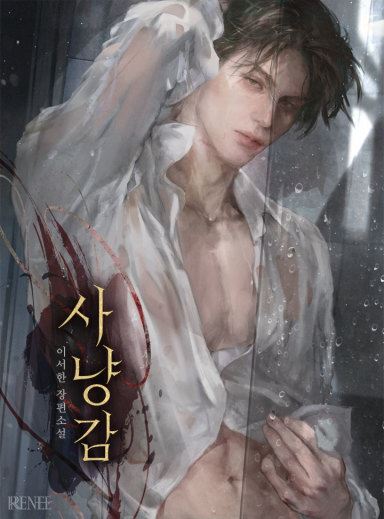
... Read More
Can we talk about how atmospheric this chapter is? Not the grand, sweeping descriptions—you know I love those—but the tiny, brutal details that make everything feel real. Like the sound of Suhyeon's keyboard in the empty office. Tap, tap-tap, tap-tap. That rhythm of someone trying to busy themselves because their thoughts are too loud. The staff member saying 'I'll see you next week' and leaving, and the silence that follows is heavier than any dialogue could be. Then the elevator. The doors opening to reveal Jeonghan leaning against the wall, hands in his pockets, staring. The way the author describes him—'a predator ready to devour her'—but then immediately undercuts it with Suhyeon's physical reaction. Her heart racing. Her legs trembling. The 'fresh, masculine scent of wood' mixing with her dizziness. This is where worldbuilding becomes psychology. The setting isn't just a location—it's an emotional state. The bistro with Woo-rim is warm, well-lit, comfortable. Champagne glasses clinking, easy conversation about college days, his consideration in avoiding uncomfortable topics. It feels like a scene from a different genre entirely—a gentle romance, maybe. And that's the point. The author is showing us what Suhyeon could have had, what she deserves, before brutally taking it away with that elevator confrontation. Even the phone vibrating on the desk—that sudden Drrrr that makes Suhyeon jump—creates this intimate, domestic tension. We're in her space. We feel her startle. And the ring itself. A golden band sliding onto her finger, cold metal against warm skin. The author doesn't describe it as romantic or luxurious—just cold. Just heavy. Just there. Every scene in this chapter serves the mood. Nothing is decorative. Everything is functional. That's skilled writing.
... Read More
This story is funny as hell ? after reading all those other stories with super serious heavy story lines  its a huge change of pace to read this. Hope new chapters come fast.
... Read More
It's got a new format I'm not used to, but when you get to it it's a really fun read.
... Read More
I love your novel! It is a great story! I’m a representative editor from Stary.ltd. If you wanted to see whether you can get paid by distributing the current work or getting financial support by writing new work, you might want to contact adaren06*@*gmail.com(delete *).

Leave a comment

You must be logged in to leave comments. or
