Placid Chang’an - Reviews

Placid Chang’an
+Add to Custom List
Sort
Add review
... Read More
Okay so this scene between Su Cen and Qu Ling'er is literally everything. When Qu Ling'er is out there in the backyard clutching his waist, desperately digging through grass for his hidden weapons—that's not just comic relief, that's character revelation. The guy is SO vulnerable and we get it. He's a street rat trying to survive, and those weapons are HIS life. But then Su Cen just... lets him stay? With conditions? That's a whole relationship arc right there. What got me was Qu Ling'er's moment where he's like 'I can't give them up' and then Su Cen doesn't actually force him to. Instead he says 'You can stay, but hand them over for safekeeping.' That's basically the literary equivalent of a hug wrapped in barbed wire. Su Cen is like 'I don't trust you, but I also don't want you to leave.' And Qu Ling'er? He's already planning to repay him someday like some kind of tragic hero. Man, these two are gonna make me ship them so hard. The pen twirling scene? Chef's kiss. Qu Ling'er literally practicing with weapons while being interrogated shows how much his identity is tied to being an assassin-type figure. And Su Cen just... watches? Doesn't stop him? That's a whole lot of unspoken understanding right there.
... Read More
Let me just say this first: the dialogue in this passage makes every character feel like they have their own fingerprint on it. Su Cen's voice is this calculated, careful thing—he talks his way out of execution like it's second nature. 'Only I can uncover the truth and give the heir justice.' That's not panic talking; that's someone who knows exactly what lever to pull. Even when he's being kicked across the tent floor, his words stay measured. Xiao Yan's dialogue is all short, sharp commands. 'Speak!' 'What do you mean?' 'You said you know where the murderer is?' He's emotional but restrained, and that tension between his rage and his need to control himself comes through in every line. The man in black robes though—his voice is pure contempt. 'This man is slick-tongued, skilled at sowing discord.' 'Of course he'd say that. How else would he stay alive?' Every sentence is a sneer. You can hear the disdain without any stage directions. Li Shi is a completely different animal. His dialogue is minimal but devastating. 'An old friend has arrived; of course, I had to come and see for myself.' 'You wouldn't dare? I think you're quite daring—marching your troops into the capital.' The casual cruelty in that second line, delivered while he's just leaning against a chair like he's at a tea house, is incredible. He doesn't need to raise his voice because his authority does the work for him. And the narrative voice itself—it's this third-person limited that dips into Su Cen's head just enough to show his calculations without over-explaining. We get thoughts like 'If your son had such skill, he wouldn't have been assassinated in prison' and 'He was playing 4D chess' type energy without ever breaking immersion. The tone balances between grim danger and this dry, almost darkly humorous observation of political theater. Dialogue-driven, character-driven, perfectly balanced.
... Read More
I need to talk about the umbrella. Just… the umbrella. Because I re-read that passage three times and I still don't know how to feel. So Su Cen wakes up soaked, hugging this umbrella like a security blanket, and goes back to find those two lines of poetry written on it. And the poem itself — "Clouds cross Qinling, where is my home? Snow blocks the Blue Pass, the horse won't move forward." This is literally a famous Tang dynasty poem about exile and displacement, about being stuck between worlds and not knowing where you belong. And Qi Lin wrote it on an umbrella he GAVE to Su Cen. Let me process this for a second. The man who spends the entire chapter being cold and dismissive and physically aggressive — he takes a pen, he writes something vulnerable, he wraps it in an object of care (an umbrella, no less, something to PROTECT someone from the rain), and then he just… leaves. No explanation. No follow-up. And Su Cen notices but doesn't know what to do with it. The scene where Su Cen is staring at that handwriting under candlelight, wondering "what kind of state of mind makes these lines feel like they were written in blood" — I genuinely got chills. That's not just good writing, that's emotional precision. The fact that Su Cen immediately rationalizes it away because "Prince Ning wouldn't lament where his home is" tells us everything we need to know about how much Su Cen doesn't actually understand the person he's gotten entangled with. And then the next morning he's rushing out hoping to avoid Qi Lin but ends up getting a ride from Zheng Yang instead. The avoidance! The missed connection! I'm suffering and I love it.
... Read More
The atmospheric writing in these chapters is genuinely cinematic. Let me start with the Dali Temple kitchen scene—Su Cen eating plain noodles, regretting not grabbing dumplings and red bean cake from the Eastern Market. It's such a small detail but it grounds the whole story in real physicality. You can TASTE his disappointment. The author doesn't need to tell us he's tired and overworked; we see it in the way he's 'staring blankly at plain noodles, chopsticks in hand and tears in his eyes.' A grown man reduced to tearful noodle regret. I felt that. Then the rain starts—'the rumbling of thunder in the sky, and the daylight suddenly dimmed.' And Su Cen feels RELIEF. Not dread, not annoyance. Relief. That single word does so much character work. The umbrella scene in the alley is where the writing really elevates. 'The rain fell like a curtain from the ribs of the umbrella, and the surroundings seemed shrouded in a light mist, making everything indistinct.' You could film this. Literally frame by frame. Mist, umbrella edges dripping, two figures in grey rain—this is a movie. And then Prince Ning's entrance: 'Although it was raining, the man's body remained spotless. It seemed he had just come down from court and hadn't changed out of his official attire yet. Dressed in black robes with a crimson hem and hair as dark as ink, every strand was clearly visible.' This guy is either supernatural or the universe bends around him. He walks into a violent confrontation like he's strolling through a garden. The world feels lived-in too—the court gate saying 'without money, don't come in,' the stone lions that 'could bite someone and make them bleed,' the different prison systems (Dali Temple vs. Ministry of Justice). This isn't a generic historical setting; there are actual rules and hierarchies here.
... Read More
'These are my lifeline,' Qu Ling'er said. And honestly? That line destroyed me. Like, you're telling me this whole time he's been carryingAround lethal weapons because that's literally ALL he has in the world? No family, no home, just a belt with hidden blades and a tube full of needles he made himself. And then Su Cen slams the table and yells 'You're not even twenty yet, and you're carrying all these deadly weapons into my yard—what exactly do you intend to do?!' and I'm over here like WOW he actually cares. That's not interrogation, that's a worried older brother energy and I am HERE FOR IT. But then the soft part: 'Take care of yourself.' Just three words from this ice king and suddenly I'm emotional. The way Qu Ling'er smiles wryly and says 'I doubt there's anything you need me to repay'—he's already bracing for rejection, already expecting to be alone again. But Su Cen basically says 'Stay anyway.' The crab pastry moment with Ah Fu was the cherry on top though. 'There won't be a next time,' Qu Ling'er says, and I swear to god if this isn't the start of something beautiful I'm gonna scream.
... Read More
The passage about commerce being considered the lowest of all trades stopped me cold. This isn't just worldbuilding detail—it's the entire thematic backbone of Su Lan's tragedy. "All trades are lowly, with commerce being the lowest of the low." Merchants couldn't ride carriages or wear silk. They had wealth but no status. And Su Lan—brilliant, capable Su Lan—voluntarily took on this burden so his younger brother could pursue the scholarly path, the respected path, the PATH. The author contrasts this with Cui Hao, who despite having a blind elderly mother to care for, still chose the scholarly route because officialdom was the only respectable option. Su Lan saw this and made his choice: he would become one of the despised merchants so Su Cen wouldn't have to. That's not just sibling love; that's a complete erasure of self in service of family legacy. Now the question hanging over everything is whether Su Lan's merchant dealings—specifically his connection to He Xiao—represent corruption or exploitation. Was he complicit in the salt conspiracy, or was he, as Su Cen desperately hopes, fooled by someone he trusted? The theme here is crushing: Su Lan already sacrificed his status, his education, his identity. If he's also sacrificed his integrity, then he lost everything and got nothing in return. The salt itself is symbolic too—this essential commodity that's being manipulated, hoarded, weaponized. The people below the smugglers are left without salt. The network collapses. Power flows through something as basic as salt, and everyone in Yangzhou is drowning in it. How many Su Lans are there, giving up everything for people who'll never know the full cost?
... Read More
This is one of those stretches where the author just lets the story breathe and it's glorious. We start on the ship with worldbuilding exposition— canal history, ship specs, cargo details—but it's delivered through Su Cen's observations as he steps outside, not through some info-dump paragraph. That's craft. Then we cut to Qu Ling'er being miserable at the bow, seasick and cross-dressing, which immediately shifts the tone from historical documentary to character comedy. The pacing here is deliberate: serious worldbuilding, then undercut with humor, then a quiet moment where Qi Lin arrives and the romantic tension simmers for exactly two lines before Su Cen deflates it with the captain joke. Then—dock at Bianzhou, Qu Ling'er bolts off ship, returns screaming about a fight, drags Su Cen to a scholarly duel. The energy ramps up from lazy river travel to competitive tension in the space of a few paragraphs. And the chapter ends on a cliffhanger during an actual literary competition, mid-couplet. The author understands that suspension of attention doesn't require explosions—sometimes it just requires "what comes next?" What I appreciate most is how the author controls the tempo. The canal journey sections are slow and atmospheric—you read them like you're gliding. The Bianzhou scene accelerates everything. And the couplet duel, despite being literally just people trading lines of poetry, feels genuinely tense because the author has given us enough context (regional pride, reputation, Su Cen's reluctant involvement) to care about the outcome. No filler. Every beat earns its place.
... Read More
I need to talk about the Yinyue Well and Yinyue Shadow couplet because this is where the symbolism hits hardest. The well reflecting shadow — it's about duality, about how everything has a counterpart beneath the surface. That's basically the thesis of the entire novel if you ask me. Su Cen himself is living a reflection — a top scholar hiding in plain sight, his true identity cast beneath the surface like that shadow in the well. And then the moon-and-river couplets later in the exchange: the moon reflects in the river, the river reflects the moon. Reciprocal. Mutual. Neither exists without the other. It's beautiful and it's deeply connected to how Su Cen's story works — his relationship with Liu Cheng, the way their fates are intertwined, each reflecting and shaping the other. Even the opening couplet about the tower and the river speaks to permanence versus transience. The tower lasts through the ages, the river flows endlessly. But Su Cen? He's the one caught between them — part of both worlds, belonging fully to neither. The poetry in this novel isn't just decoration. It's the actual skeleton holding everything together.
... Read More
Let me be very clear about what just happened in this scene because the stakes have escalated dramatically and I need everyone to understand the gravity. Su Cen walked into an imperial examination. Standard procedure for any scholar hoping to enter officialdom. But the moment Zheng Yang revealed his lineage, the game changed. This isn't a competition among equals—Su Cen is competing against the grand-nephew of the Regent Prince, a man who holds the emperor in his grasp and commands the feudal lords through military achievement. And Su Cen's own 'Healing the Nation' theory—brilliant as it is—directly challenges the very structure of power that holds this dynasty together. The examination hall itself is a pressure cooker. The emperor's voice is described as 'crisp, childlike,' mechanically reading from a prepared script. Someone nearby quietly prompts the reader. This isn't an emperor asking questions—this is an emperor reciting lines written by someone else. And that someone else is Prince Ning, sitting below the throne in those dark robes, those cold eyes, watching Su Cen with what can only be described as predatory interest. The childlike voice trying to interject with 'Royal Uncle, he means...' and then trailing off—this is a boy trapped in a gilded cage, and the man who holds his leash is making sure everyone knows it. Now consider what Su Cen stands to lose. His reputation, his future, his safety—all of it hangs on answering Prince Ning's follow-up question correctly. The Regent Prince has already shown he can be cruel. He deliberately made things difficult. He crafted a question that traps Su Cen between honesty and survival. If Su Cen names the 'chronic illness' of the state too precisely, he risks offending the very powers that would decide his fate. If he evades it, he looks cowardly or ignorant. Either way, he's cornered. But here's what makes this scene truly terrifying: the personal dimension. This isn't just political opposition. Su Cen has already encountered Prince Ning—in that teahouse—and something shifted. Something irreversible. The text tells us Su Cen 'had fallen at the hands of the same person' before, and now he's physically unable to maintain composure in his presence. Chest pain. Difficulty breathing. Eyes stinging. This man doesn't just threaten Su Cen's career; he threatens Su Cen's very sense of self-control. And in a setting where losing composure means losing everything, that personal vulnerability is the deadliest weapon of all. The stakes couldn't be higher, and the author has positioned us perfectly to feel every ounce of that tension. Su Cen is brilliant, principled, and completely outmatched—not just politically, but emotionally. He's walking into a hall where the questioner isn't the emperor, the answer won't satisfy the court, and the man watching him from the shadows has already decided this is personal. I cannot wait to see how he survives this.
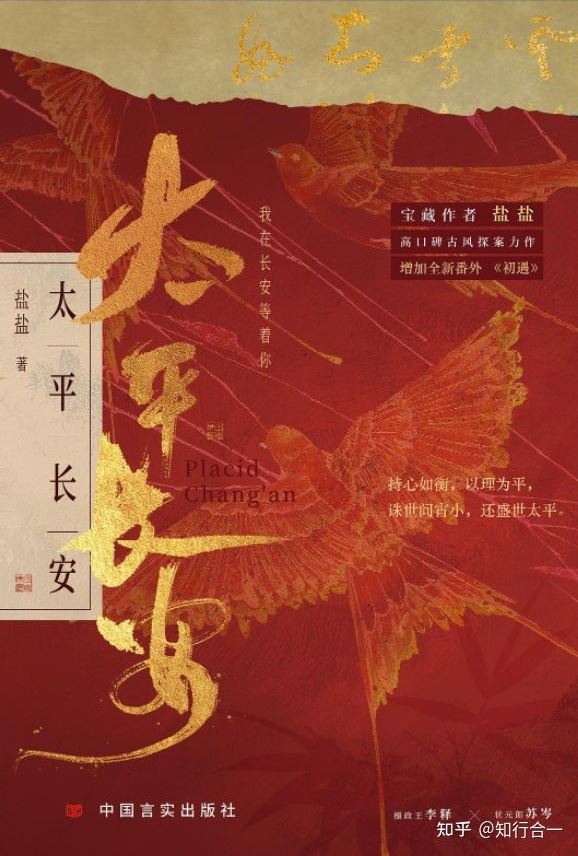
... Read More
Okay so I need to talk about the salt smuggling reveal because THIS is what happens when an author builds up atmosphere and then JUST DROPS a conspiracy on you out of nowhere. Su Cen is basically wandering around Jia Zhen's giant house like a confused tourist after escaping that horrific erotica session (RIP my sanity reading that part), and then BOOM — he stumbles onto the most important economic crime in this entire arc. The setup is so good because it's layered. First we have the He Xiao / Secret Door / Xiao Hong poison thread hanging in the background. Then Jia Zhen's whole comic relief energy distracts you, makes you lower your guard. And THEN you hear it through a window: "The salt from the north of Huai has arrived." "Mix it." "Forty-sixty." The conversation is SO casual, like these guys are discussing lunch orders, not defrauding the entire empire's tax system. What I love is how Su Cen's internal reaction is written — "his palm was already damp, leaving deep finger marks." He's not just observing, he's physically reacting. This isn't background flavor, this is the KIND of crime he cannot tolerate. The text literally says he could forgive their government collusion but NOT this particular deception. That tells us SO much about his moral code without needing a monologue. And then the twig. Of course there's a twig. Classic almost-caught moment. But Jia Zhen's cover story is SO perfectly in character — playing hide and seek, talking about a kiss reward from an "ugly" maid — that his father just explodes in rage and leaves. The plot threads are braiding together so smoothly.
... Read More
Okay so I need to talk about this moment because I literally gasped out loud. Su Cen is convinced Xiao Yuancheng slept in that bed — he even calls out Qi Lin for lying about it — and then Li Shi casually drops that the "red mark" on his neck was just a birthmark the whole time?? Su Cen's internal scream of having lost face must have been audible. This is such a classic move from the author: build up this assumption, let Su Cen fully commit to being wrong, then pull the rug out with maximum comedic cruelty. But also... there's real depth here. Su Cen's jealousy isn't played purely for laughs — you can feel that he actually cares about where Xiao Yuancheng slept, who touched his bed, all of it. The author keeps sliding between comedy and genuine emotion so smoothly it's almost sneaky. And then right after this hilarious scene, we cut to Su Cen finding Li Shi's books and getting caught browsing his personal space — which transitions into the whole "come here" power play. The plot moves forward on multiple tracks simultaneously: the investigation at Dali Temple, the political machinations (Wang Yan opposing land policy, Lang Jie circling Hangzhou), and this simmering romantic tension. Three storylines weaving together without any feeling rushed. That's skillful writing, honestly.
... Read More
I need to talk about Su Cen first because this guy is fascinating. He's clearly intelligent—catching the difference between Mingqian and Yuqian Longjing tea immediately, making that sharp observation about the leaves being two weeks old instead of fresh. But there's something underneath all that composure. When the guard's blade hits his neck, his first thought isn't heroism or defiance. He carefully pushes the blade away with his fingertip and says 'let's talk this out.' This is a guy who measures his words, who stays calm in situations that would make anyone else panic. And yet... he's also the one who ordered tea he wasn't going to drink just to avoid wasting 'his good intentions.' That tells me he's observant in ways that go beyond surface-level cleverness. He notices things. Then there's Ah Fu, who is absolutely losing his mind. His internal monologue about his master potentially becoming gay in Chang'an and the master back home finding out is both hilarious and genuinely alarming. He's served the Su family since he was ten, and you can tell he's terrified—not just of danger, but of failing his young master by not being able to protect him from whatever this lifestyle entices him toward. But the real relationship drama is between Su Cen and the tea attendant. There's this charged energy—the attendant flirts shamelessly, falls bonelessly into strangers' arms, and then runs behind Su Cen when the swordsman appears. 'Please, my lord, save me!' he whines. The way the text describes Su Cen's reaction—just staring, processing, slowly understanding—tells me this isn't over. Whoever this attendant is, he's already marked Su Cen somehow. And that person behind the veil? Something about that silent watcher feels like it's going to matter enormously.

Leave a comment

You must be logged in to leave comments. or
