Placid Chang’an - Reviews

Placid Chang’an
+Add to Custom List
Sort
Add review
... Read More
The cinematic quality of this sequence is insane. Let me paint the scene: Su Cen is alone in an ice cellar. Dark. Cold. Bodies everywhere—preserved in ice, skin turned blue. He's moving slowly, carefully, treating the dead with this reverence that makes the setting feel almost sacred. The wooden comb. The gentle parting of hair. This isn't a coroner's examination; it's a funeral ritual performed by a man who barely has the strength to stand. And then the light. Xiao Sun appears in the doorway, caught 'at the boundary between light and darkness'—literally and metaphorically. He can't bring himself to enter. Su Cen drags himself up, legs numb, and when Xiao Sun finally touches him and SCREAMS because Su Cen's hands are colder than the corpses... that moment is pure visual storytelling. The contrast of warm sunlight outside vs the blue darkness inside. Life vs death. Fear vs duty. Then Xiao Yan enters. 'A sharp crack sounded.' The whip. Armor. Purple beard 'standing like spikes.' The door cracking under his fury. The entire scene shifts from a quiet, mournful investigation to a violent confrontation in the span of seconds. The author moves between these tones so smoothly—I went from feeling like I was watching a somber documentary to a wuxia action scene and I wasn't even prepared for it. The world feels tangible here. I can feel the cold. I can hear the whip crack. I can see Su Cen's pale hand bleeding from that strike. This is how you write atmosphere.
... Read More
I'm still not over the ending of this batch. Like, I genuinely had to sit with it for a minute. Here's what happened: Su Cen wins a small case. A young master named Xiao Yuancheng damages a vendor's goods, refuses to pay, and Su Cen basically holds him hostage at the Dali Temple until the crowd forces him to cough up one silver tael. The mother and child thank him. The child says when he grows up he wants to be a good official like Lord Su. Su Cen pats his head. It's a moment of pure, unfiltered hope. And then—two hours later, maybe three—they're found dead in a drainage ditch outside the city. The boy's tiny hand is still clutching the two coins Su Cen gave him. THE IRONY IS NOT LOST ON ANY OF US. Su Cen could force a young master to pay a single tael for damaged pastries, but he couldn't save a mother and child from whatever happened to them. The gatekeeper saw Xiao Yuancheng LEAVING the city shortly after them. The text cuts off right there, and I am NOT okay with this cliffhanger. The author sets up this whole satisfying victory—public justice, the people on your side, the arrogant young master humiliated—and then just... removes it all. Makes you feel stupid for believing a small case resolution meant anything in the grand scheme of things.
... Read More
'If you can't produce evidence, you and him will both be sent to the Ministry of Justice's prison!' Song Jiancheng's threat hangs over everything like a guillotine. And Su Cen knows it. Think about the stakes he's carrying: Gao Miao's life, his own freedom, the real murderer still out there, and now this whole political web involving Prince Ning and the Empress Dowager. The author builds tension by stripping away every safety net. First Su Cen tries the official route—fails. Then he goes to the palace gates—blocked. Then he learns the Emperor isn't even the real decision-maker. Each obstacle raises the stakes because now there's less time and fewer allies. And the physical toll! His legs go from numb to unresponsive, nails digging into flesh drawing blood. The stakes aren't just political—they're written on his body. That urgency, that ticking clock feeling, is what makes these chapters absolutely unputdownable. I literally flew through them because I needed to know if Su Cen would make it before tomorrow.
... Read More
Every conflict in this passage operates on at least three levels and the stakes keep escalating until I am genuinely sweating for these characters. On the surface level, the stakes are simple: an innocent man faces torture and execution for a murder he did not commit. That is classic life-or-death drama and it works because the threat feels immediate—the wooden plank is literally falling right now. But layer two is institutional. Song Jiancheng is using the court system as a performance venue. The gavel strikes, the public accusation, the theatrical punishment—it is all about reputation and career trajectory. Su Cen's warning about "the higher you climb, the harder you fall" is not just dramatic dialogue; it is a genuine prediction that the system itself will collapse under its own corruption. If Su Cen is right, Song Jiancheng loses everything. Layer three is personal and this is where it gets dangerous for Su Cen. He is walking out of a Dali Temple session—a literal contempt-of-court act—as a scholar with no political protection, chasing a corpse in a plague-adjacent slum, alone. What is he actually risking here? His safety, his standing, possibly his freedom. And he does it without hesitation. The external conflict with Song Jiancheng mirrors an internal conflict too: Su Cen clearly carries guilt or grief about previous cases, about lives he could not save. Every fresh investigation is also a reckoning with whether justice is actually possible or just a beautiful concept people tell themselves to sleep at night. The suspense hooks are brutal. Wu Deshui is dead. The real killer is still out there. Someone pushed the fat man in the rain and Su Cen has not identified who. The next victim has not been named yet but based on the pattern, they are already walking around unaware. My anxiety level is not decreasing.
... Read More
I need to sit down for a second because the Qingchen and Qu Ling'er dynamic just DESTROYED me and I wasn't ready. Look, on paper this is a classic reunion scene. Old flame meets again after presumed death. But the way the author writes it — Qingchen immediately swinging at him, yelling 'How many times have I told you not to call me Xiao Hong!' — that's not anger. That's grief that's been sitting around too long and has nowhere to go. You don't swing at someone you don't care about. You don't insist they stop using a nickname you gave them unless that nickname means something sacred to you. And then her monologue. Oh god, her monologue. 'Look at my eyes—they're almost blind from crying over you.' She says it like an accusation, but it's really a confession. Every word is her saying I loved you and you left and I didn't know if you were dead and I HATED that I didn't know. But she frames it as 'you let us grieve for nothing' — turning her vulnerability into blame because that's safer. Qu Ling'er's reaction is what killed me though. He just sits there, rubbing his nose awkwardly, not daring to admit he caused this. He didn't die — he just... disappeared. And in doing so, he left everyone behind. Han Shu drinking by a cliffside for months. Qingchen crying herself blind. The way she lists off everyone's suffering like receipts — 'You, Han Shu, and Master' — that trailing off at the end, the sentence that cuts off mid-thought, it's like she literally can't finish saying how much he hurt them because she's still processing it. And Su Cen! Poor oblivious Su Cen walking in here thinking he's the clever one, pretending to be a frivolous playboy, grabbing hands, making terrible jokes about concubines, completely missing the fact that he's in a room with two people whose entire emotional history is built on loss and survival and secret missions. Meanwhile he's over here thinking 'if Li Shi found out, he might as well be castrated' like THAT'S the most dangerous thing in this building. The contrast between Su Cen's clumsy romantic posturing and the actual devastating history between Qingchen and Qu Ling'er is both funny and heartbreaking. One guy is trying to buy a courtesan; the other two are trying not to fall apart in each other's presence. That's just... that's just masterful writing.
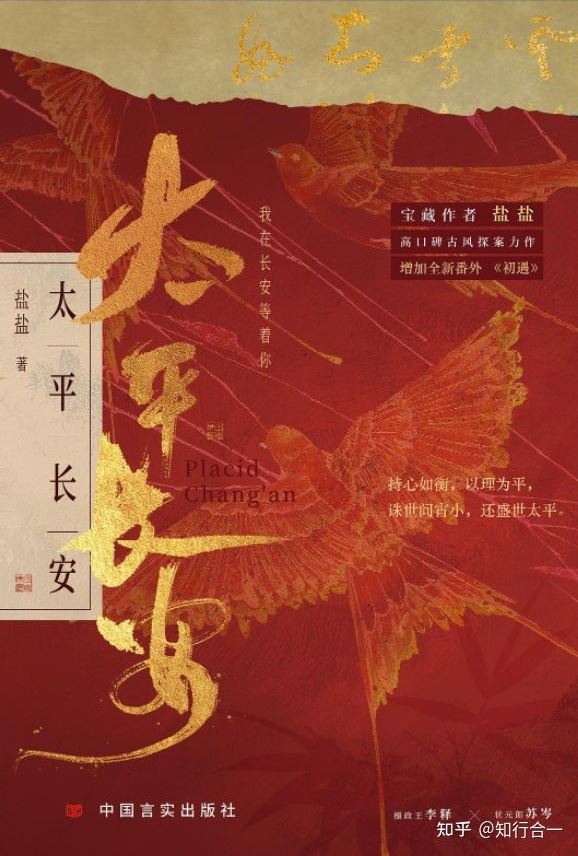
... Read More
Okay so Feng Yiming read this memorial and I literally gasped. It's not just an impeachment, it's a death petition. He's saying either he dies or they all fall—there's no middle ground here. And the wild part? He accused basically EVERYONE in Yangzhou's government. The Governor, the Salt Transport Commissioner, Deputy Governor, the Imperial Censor... sixteen crimes. That's not a power play, that's a nuclear option. But then Li Shi pulls the most chess master move ever and fabricates a counter-memorial to derail the whole thing. The other ministers out there are like "wait, there was no memorial, he made it up to scare us" and I love this dynamic because it shows Li Shi is always three steps ahead. He predicted their move before they even made it. "The truth will come out soon enough"—Li Shi says this so casually after everyone else is panicking. The man doesn't even sweat.
... Read More
Let's talk about this competition structure because it is genuinely brilliant. Three rounds. Passing the Flower with the Drum, Singing and Pitch-Pot, Composing Verses to a Tune. Each round eliminates people, the tension builds, and suddenly you're invested in whether Su Cen can actually pull this off. And then there's the twist—I genuinely did not expect the drum to stop and start again like that. Su Cen catches the ball, the drum stops, then resumes, he tosses it away... the person left holding it has no idea what happened and gets eliminated. That is such a sneaky little moment of drama. The author doesn't tell us whether Miss Qingchen is doing this intentionally or if Su Cen just got lucky, and that ambiguity is Chef's kiss. Also, can we address the second young master? This guy is so shameless I loved him. Miss Qingchen literally says 'the second young master is an esteemed guest' after he fails every single round and still refuses to leave. Like... the corruption and nepotism in this brothel? We are not ready. The final round with the guqin tones is where the plot really delivers. Seven tones—Yu, Shang, Gong, Zhi, Yu, Gong, Shang—and Su Cen is the ONLY one who can handle it. He recites that Wang Wei line and suddenly everything clicks. The morning rain in Weicheng moistens the light dust. A toast to Miss Qingchen. It's poetic AND it wins the contest. Perfect narrative payoff.
... Read More
Can we just appreciate how well-written the dialogue is in this batch? Every character has such a DISTINCT voice and I'm here for it. Xiao Yuancheng's lines are pure entitlement: 'I'm not paying! I won't pay! What can you do about it?' and 'Are you all defying royal orders?!' The escalation from brat to panicked to furious is captured entirely through what he says and how he says it. He never sounds intelligent, never sounds self-aware, and that's the point. But Su Cen? His dialogue is surgical. 'As you can see, the young heir is refusing to cooperate. There's not much I can do.' That's him weaponizing politeness. He's completely trapping Xiao Yuancheng while sounding like the most reasonable person in the room. And Qi Lin's lines are the sparsest but the most loaded: 'I only follow orders.' Four words that basically dismantle Xiao Yuancheng's entire sense of control without raising his voice even once. The narrative voice is also doing heavy lifting here. Lines like 'It's always easier to be fearless when you have someone to rely on, but some people, spoiled by favor, forget their limits'—that's the narrator stepping in to deliver a truth bomb that no character could say out loud. The author knows exactly when to let the dialogue carry the scene and when to pull back and let the narration do the punching.
... Read More
The structural move in these chapters is genuinely brilliant and I want to unpack why it works so well. You start with Su Cen buried in case files, flipping through records month after month, building this slow investigative rhythm. Then — and this is the key turn — he returns HOME. The pacing deliberately DECELERATES here. We get domestic comedy, tea disasters, servant bickering. It's a breather, right? Wrong. Because this calm makes the next transition hit like a truck. The Eunuch arrives before breakfast. Next thing you know he's kneeling in a palace hall. The shift is so abrupt you literally feel the ground drop out. And the author does something even cleverer: Su Cen tells the Emperor a STORY about bandits and a scholar, and then — CHAPTER ENDS. Not on a revelation, not on action, but on a narrative hook within a narrative hook. It's a story about to be told inside a scene where a story is being told, and we are denied the payoff. I re-read that final paragraph six times because I needed to sit with the fact that the female bandit leader had just tied up this scholar and married him, and the text cuts off THERE. The chapter structure itself is doing something interesting though — it mirrors Su Cen's situation. He's the scholar in the story, and he's also the man caught between powerful forces (the Emperor, Liu Cheng, whatever conspiracy he's uncovering). The pacing isn't just controlling reader engagement; it's thematically echoing the plot. Domestic calm → sudden danger → story-within-a-story → cliffhanger. That's four tempo shifts in roughly three chapters and I was gripped the entire time.
... Read More
The stakes in this passage are layered like an onion and I'm crying from the fumes. On the surface: there's an active assassin who just escaped. Su Cen identified him as either connected to the Eastern Market incident or sent by Wu Deshui's backer. That means the mystery is PERSONAL now, not just academic. Su Cen is directly in the crosshairs. But the deeper stakes are what got me. Li Shi's analysis of the case — his insistence that rational actors follow logic, not random rage — implies that whoever is behind these murders is smarter and more dangerous than anyone realized. A vengeful failed exam taker is predictable. Someone who methodically kills newly appointed scholars for a hidden agenda? That's a player on a completely different board. And then there's Qu Ling'er — the comic relief, the guy everyone finds annoying — who gets injured protecting Su Cen and barely escapes being carried by a grumpy bodyguard. The text treats him as vulnerable without making him irrelevant. If anything, his presence raises the stakes: Su Cen now has TWO people he needs to protect, and the assassin is still out there. The cliffhanger with Qi Lin — that unresolved, almost-flirtatious energy cut short — suggests the interpersonal conflicts are escalating right alongside the murder investigation. Everyone's walking a tighter wire now.
... Read More
Okay, first of all, the atmosphere in these chapters is THICK. Like, you can practically feel the damp chill of Chang'an settling over the examination courtyard. The author dropped this detail about the sweetwater stall still operating and that dry ash from paper sacrifices that literally gives you chills — because how does ash stay dry when it rained two days ago? That single detail transforms an ordinary corner into something deeply unsettling. The crime scene itself is rendered with such visceral, clinical precision that it became a character in its own right. The twisted-neck tree, the body hanging less than two feet off the ground, the two ligature marks on the corpse — every physical detail served double duty as both atmosphere and clue. I kept imagining this like a film scene: wide shot of the crowd gathering, then slow push-in toward the body, cut to Su Cen's hands examining the rope. The setting wasn't just background; it was actively whispering secrets to anyone smart enough to listen. And the rumor mill! Someone in the crowd shouting about an evil spirit and the whole scene erupting into chaos — that's such a perfect glimpse into how this world works. Superstition and fear are weaponized here, and the examination courtyard becomes this liminal space where both the living and the dead seem to congregate. Absolutely masterful environmental storytelling.
... Read More
That image of the Examination Hall bathed in sunlight absolutely struck me. You know that moment when Su Cen looks over and sees those large characters Old Man Lin wrote shining brilliantly? It hit me so hard because it captures everything about this world—countless people dedicating their entire lives to having their names inscribed on that Golden List. It's not just a building; it's this towering monument to ambition and fate, and right after Su Cen was inside writing furiously himself, now the gates are shut and everyone's left to speculate. The contrast between the bright, hopeful exterior and the secret deaths happening inside? Chef's kiss. And the Eastern Market description is another gem. The way the author lays out the entire gate system—two gates on each of four sides, opening and closing by drum sound, keys passed from gatekeepers to the city gate officer—that's not just filler worldbuilding, that's functional lore. It makes the investigation feel grounded. There's a whole choreography to the city that I could almost hear. The curfew enforcement, the street patrol catching loiterers—this is a world that breathes with rules and routines. What really sold me though was the sweetwater seller. An old man who still remembers a transaction from over a dozen years ago because someone gave him extra silver and never returned his change. That single detail—a forgotten coins' worth of trust—carries more atmosphere than pages of description. The world feels lived-in because even street vendors have histories embedded in their memory. The gate corridor where the guards lounged, leaning and posturing under the blazing sun while Su Cen questioned them—that visual of authority rubbing against casual defiance was so vividly painted.

Leave a comment

You must be logged in to leave comments. or
