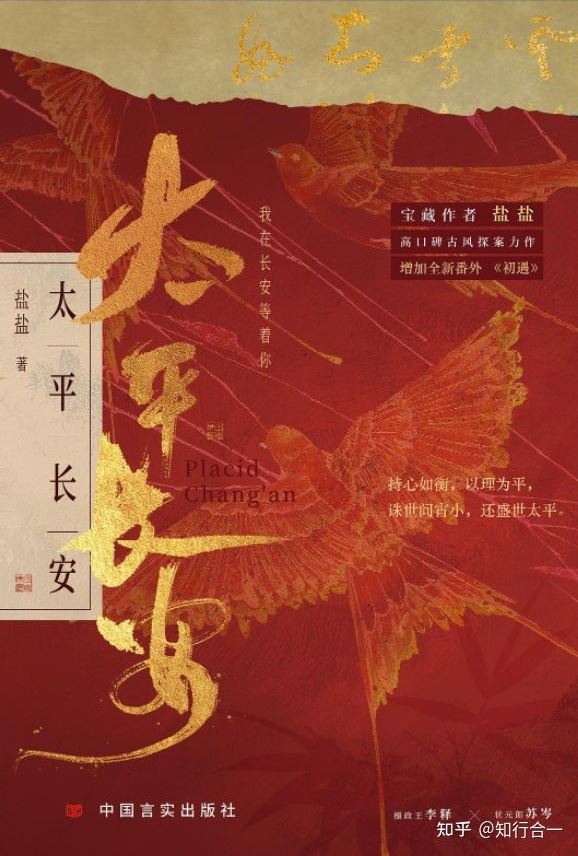
"Have you become addicted to it?!" — Su Cen throwing a book at someone who just climbed through his wall. This is the kind of opening line that tells you everything about a relationship without explaining anything.
The banter between Su Cen and Qu Ling'er is effortlessly natural. It reads exactly like two people who know each other extremely well — the exasperation, the deflections, Qu Ling'er's careful observation of Su Cen's mood before revealing what he's done, the way Su Cen's first concern is whether his wound is healed and his second is whether he's going to bring trouble to his door. No exposition, no "as you know Bob" moments. Just two people talking like actual humans who have history.
But the real dialogue masterpiece here is the confrontation between Su Cen and Xiao Yuancheng. Watch how Su Cen weaponizes politeness:
"Greetings to the Heir and Guard Qi" — formal, restrained, a wall of courtesy.
"I'm not sure who you are referring to, Heir?" — playing dumb when he absolutely knows exactly who.
"Is he from your Xingqing Palace?" — asking Qi Lin directly, forcing the answer that will humiliate Xiao Yuancheng.
Every question is a strike. Every polite address is armor. And Xiao Yuancheng? He's all flare and fury, unable to control his reactions, shouting, sneering, rolling up his sleeves. The contrast between their communication styles IS their conflict. One fights with words and procedure, the other with physical presence and anger.
And Qu Ling'er's "Traitor!" after Qi Lin deflects his darts — three letters, maximum impact, perfect timing. That's dialogue economy at its finest.
The author's voice throughout is wry, observant, never overly sentimental. Even in the most emotionally charged moments, there's a dry humor that keeps things from tipping into melodrama. Su Cen narrating his own situation with the bun shop metaphor? That's the author's voice speaking through him — smart, self-deprecating, finding the absurd in pain.