My Villainous Ex-Husband Turned Into an Obsessive Man - Reviews

My Villainous Ex-Husband Turned Into an Obsessive Man
+Add to Custom List
Sort
Add review
... Read More
Okay so let me just — the PLOT of this thing. It moves like a viper. You blink and suddenly you're remarried, renegotiating your own marriage terms, and brokering a power dynamic with a man who clearly would rather be anywhere else but is equally stuck. The structural brilliance here is how the narrator weaponizes her own knowledge. In the first round of her life, she was a one-dimensional villainess — violent, vicious, probably annoying as hell. Now she's playing 4D chess with the same board. The consent form Seian used as bait all year long? She learned that from living through it once. The honeymoon suite details from her father-in-law's complaints? Also prior-life intel. She's literally building her survival strategy out of spoilers. "The next deliberation date is a month away." "Then I'll be able to cancel the marriage vows on this day next year." The Empire's marriage law is basically the ticking clock in a heist movie, except the treasure is her own life and the vault is a medicinal herb hidden somewhere in Hertus territory. If she doesn't find it, she dies. If she does, she might still die — because apparently there's a whole separate illness she needs curing. So her plan within a plan within a plan is: get inside the castle, find the herb, survive the year, and disappear. But here's where it gets juicy — the contract negotiation scene. Three clauses, three power plays: Clause 1: Attend official events together. Her reasoning? She needs to tag along on his territorial inspection to find the herb. But she frames it as if SHE'S the one doing HIM a favor by lending her name. "Resolve any matters that need the Idebald name within this period." Nice. Smooth. She makes it sound like she's giving him a gift. Clause 2: Business cooperation. His counter? He broadens it to ALL businesses and offers her a percentage of profits. She pushes back — "That's too comprehensive, narrow the scope a bit" — and honestly I love her for trying to keep the negotiation going. Like, she literally lost a bargaining chip and she's not letting it go. Clause 3: Maintain boundaries. The bed situation. This is where the subtext practically screams. She's setting physical boundaries because she learned (from her previous life) that not maintaining them with Iophe was a mistake. "Let's not fall for that face." She's looking at her own past self from across the aisle and yelling silently. The scene with Duke Hertus in the dining room? Absolutely masterful tension. No words exchanged for half the meal. Just the clink of silverware and her internal screaming. Then THE OFFER — tea time in the garden. She almost backs out. "If you're busy, it can't be helped..." And he says fine. She nearly escapes. Then reverses. "Pardon?" Come to the tea room. WHY does she agree? Because she's trapped. Because every door in this story is locked from the outside. And the ending — that maid pulling the cart, the narrator calling out "You there," asking for the maid's name, and then... we cut. Right there. After everything, the most human thing she does is ask a stranger their name. What is THAT about?
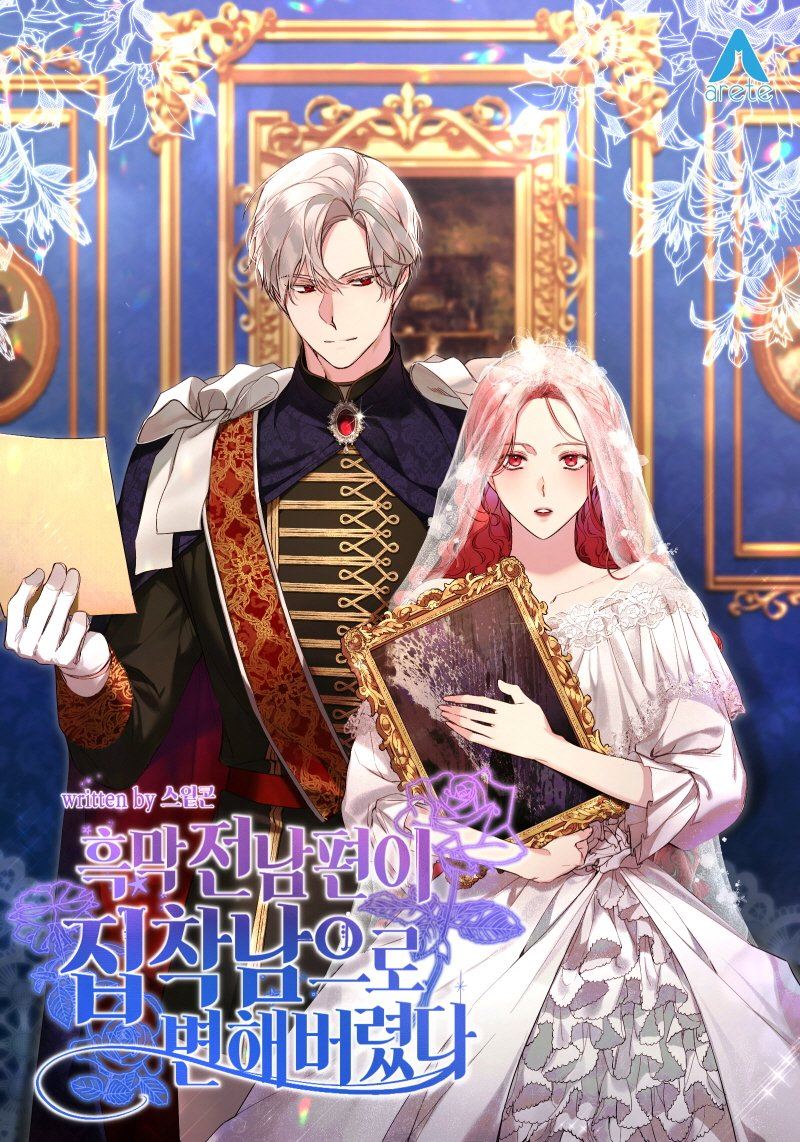
... Read More
The dialogue in this section is so good I had to slow down and re-read entire conversations because every line is carrying double meaning. Start with Yuena and the Duke's exchange about the portrait. She says 'I asked you to paint my father's portrait, right?' after having absolutely NOT asked him that. And Alfi plays along perfectly with this nervous 'Yes……? Ah……' while everyone in the room understands the elaborate fiction they're all participating in. The Duke's response is just '……My portrait, you say?' and that pause, that ellipsis—it says everything. He's suspicious but intrigued, and he's smart enough to see through the surface while choosing to play along anyway. Then there's Serol, and oh my god Serol is such a well-drawn character through dialogue ALONE. 'Oh my! Did something happen when I wasn't there?' The immediate pivot, the practiced concern, the way she 'slyly moved half a step away' when Yuena's tone shifts. You can HEAR her calculating in real time. And then she fakes needing to borrow paper and walks in the completely wrong direction. This woman is a masterpiece of social navigation and the author gives her maybe four paragraphs to establish her entirely. The Duke's dialogue is another case study in subtext. 'Hertus cannot ignore Lakier family matters.' On the surface: duty. Underneath: control. He's dictating her movements while framing it as responsibility. And 'It can't be helped' followed by 'There will often be times when it can't be helped in the future too'—that's not acceptance, that's a promise of continued involvement. He's not letting her out of his orbit. Even the stage directions in the narration have voice. 'I placed my hand on the Duke's extended hand and said. "The uniform suits you so well, Father."' The narration is so deadpan while her internal thoughts are running at maximum velocity. That contrast between what she says and what she thinks IS the voice of this character.
... Read More
Okay so can we talk about how brilliantly calculated everything Yuena does in this section is? She gets caught in this whole messy situation with the Berta studio disturbance and instead of just groveling or making excuses, she pulls this absolutely smooth maneuver where she pivots to 'I was trying to do something nice for my dad actually.' Like... mama? That's not even how that works. But it WORKS. The Duke is visibly pleased by the filial piety angle and suddenly the whole thing deflates. What I love is the nested scheming. She mentions Iophe specifically to use him as a shield and also to plant seeds about the father-son relationship beingstrained. That's layering! She's not just solving one problem, she's trying to improve two relationships at once—her own with the Duke AND the Duke's with Iophe. Her internal monologue about 'when a family is peaceful' hit me different because you can tell she genuinely doesn't have reference points for healthy family dynamics. Then the Lakier invitation drops like a plot bomb and suddenly everything shifts again. The Duke says she can't go alone, she tries to politely decline, he essentially mandates attendance, and she recalculates yet again—this time seeing the political advantage of arriving with the Duke himself. The way she frames it: 'the more choices, the better' because she's already thinking about the paintings and gallery opportunities. Nothing is wasted on her. But here's what keeps me up at night—the ending. She's at the party, evading Serol, grabs champagne to steady her nerves, and then overhears people whispering about 'the young lady coming out soon.' That's Rosie. And the text cuts off right as she flees to the garden. The tension is INTENTIONAL. The author is making us sit in that moment of dread where we KNOW something complicated is about to happen and we can't escape it.
... Read More
I swear to god the author weaponizes the cliffhanger like it's an art form. Let me walk you through my experience: I started reading at 11 PM. I told myself one chapter. Then I told myself two chapters. Then it was 3 AM and I was watching a woman force her ex-husband into a wedding kiss while mentally planning how to steal a rare herb from his family estate. The chapter structure is genius. Each section ends on a note that either reveals something or raises a question that immediately demands an answer. Chapter one ends with the sunset and moon imagery telling her what she needs to do. Then we cut to the wedding, which ends with — wait for it — Actually, I can't even summarize the ending without spoiling it, but let me just say: the moment where Iophe pulls back with an 'annoyed expression' and Yuena thinks 'as if he's enjoying it' is the kind of detail that makes you immediately click to the next chapter because you NEED to know what happens next. The pacing never drags because the author keeps the threat present. Even during the wedding scene — which should be the calmest moment — we keep getting reminders that Yuena is sick, that she almost coughed blood on her dress, that someone poisoned her and she doesn't know who. The tension never releases, it just shifts from one form to another. And the internal monologue? It moves at the speed of actual human thought. Not polished, not linear, jumping from 'I need to find the herb' to 'why did Seian look at me like that' to 'Rosie's going to be the female lead and I bullied her to death.' It's chaotic in the best way — it makes you feel like you're inside someone's head, not reading a summary of it.
... Read More
The structure shift when we cut to Avery and Fayher at the newspaper office was brilliant. Just when you're wrapped up in Yuena's sickbed drama, suddenly we're following these two reporters investigating her. The pacing here is doing double duty - we get exposition about their relationship (they're brothers, they're hiding their identities, running Sunset newspaper from the slums), but more importantly we learn that Seian Idebald's articles used to make sales soar. So there's this whole backstory about Seian that I need to understand. And then the meeting breaking down? Classic cliffhanger placement.
... Read More
There's a painting with a turtle on a spoon that neither of them likes, and I swear this whole novel is built on objects that refuse to be what they appear to be. The turtle on the spoon is described as 'bizarre' and 'strange to my eyes' - and she even admits 'It really was a mistake too.' But she chose it anyway. Why? Because it's hers. Because she's selecting something no one else values, something flawed and odd, and claiming it. That's basically her entire arc in one gesture - she's building a life around things that look like mistakes to everyone else. Then there's her. 'I'm not even a real Idebald.' The whole novel revolves around identity - who she was, who she pretended to be, who she is now. The child who calls her 'big sister' because she resembles the Lakier family's lost daughter - this mirroring theme keeps appearing. People as reflections of other people's losses. Art as prophecy. Every painting she collects becomes a symbol of a future she's trying to control. And the gallery itself - owned by Hertus name but run by her, a space built on someone else's reputation that will eventually become hers. Everything is borrowed, reflected, or disguised. Nothing is what it seems. Including, apparently, her husband's genuine reactions.
... Read More
Okay so let me just say — this opening is *chef's kiss*. We don't even get five pages before the protagonist has already died once, been poisoned like some low-budget romance novel extra, and woken up back in time with all her memories intact. And then on top of that, her adoptive mother — the so-called 'villainess' of the Empire — is dead too? The stakes are established in roughly three paragraphs. No slow burn setup, no 'let me introduce the world' exposition dump. Just: you're dead, you came back, someone tried to kill you, figure out who before it happens again. The pacing is ruthless in the best way. Chapter one is basically a masterclass in how to hook someone — we learn about the past-life poisoning, the book she read called 'Secret,' the marriage contract with Iophe, the hereditary disease, AND the plot to help Rosie find her parents, all while she's standing in her house reading gossip columns. That's insane information density and somehow it never feels cluttered because every detail is tied to her immediate survival. I also loved how the author plays with the wedding scene. In her first life, she ran out screaming. This time? She forces Iophe into the kiss herself because she needs the Hertus family's medicinal herb. The contrast between those two versions of the same scene is everything — it's the same event but completely different emotional outcomes because Yuena's changed. That's smart plotting.
... Read More
INTERNAL CONFLICT: CHECK. EXTERNAL CONFLICT: DOUBLE CHECK. STAKES SO HIGH THEY'RE BASICALLY OUTER SPACE: CHECK CHECK CHECK. Let's start with what the narrator is actually fighting — because on the surface it's a contract marriage story but underneath it's a woman who is TERRIFIED of dying again and has no choice but to pretend she isn't. She's got a disease (unknown, unspecified, probably fatal), an inheritance she needs to secure, and a year-long marriage to a man who thinks she might literally be a vampire. The stakes aren't just "will she survive" — they're "will she survive AND maintain the illusion that she's a normal person getting a second chance at happiness." The Idebald comparison is the sharpest weapon in her arsenal and also her biggest insecurity. "How honored I am to be treated as an Idebald" — said with a smile that probably looks peaceful to everyone else but is internally a scream. She WAS one of them once. She knows what they did. And now she's using that ghost of a reputation like a key to open doors she previously couldn't even see. With Iophe, the conflict is fascinating because it's not enemies-to-lovers in the traditional sense — it's something more like "mutual hostages negotiating the terms of their shared imprisonment." He sees her as dangerous. She sees him as necessary. Both are right. The bed clause alone — she brings up separate rooms knowing full well he won't allow it, and then demands boundaries ON the shared bed — this is tactical intimacy. Every interaction is a chess move. "If I let my guard down, I might be fooled by an Idebald again. This isn't the first or second time." That line from Iophe is EVERYTHING. He's not wrong. She has a track record of manipulation and deception, and he's carrying that evidence like a loaded gun. But here's the thing — is he really any different? He's using her name for business. He's accepting her clauses. He's sitting across from her in a dark room full of cameras and spies pretending this is normal. Who's the bigger fraud here? The Duke Hertus scene is where the external conflict really simmers. A father-in-law who clearly didn't want this marriage either, a daughter-in-law who has no idea how to act around him, and this entire unspoken history between all three of them (her, Iophe, and whoever she was before). The silence during dinner isn't awkward — it's geological. Layers of resentment, duty, and strategic calculation pressed together like sedimentary rock. And then THE CLIFFHANGER. A maid. A cart. A question about a name. After all the political maneuvering and contract negotiations and near-death experiences — she stops to ask a servant her name. What does that mean? Is she lonely? Is she trying to connect with someone who doesn't know her reputation? Or is she setting up some kind of information network the way Iophe has his spies? "She maintained an attitude that didn't lose confidence." That's not just dialogue — that's her life philosophy. Confidence as armor. Confidence as camouflage. Confidence as the only thing standing between her and another death sentence. And honestly? It's working. Barely. But it's working.
... Read More
I need to just sit with this father-daughter dynamic for a moment because the emotional layers here are ridiculous—in the best way. Yuena's whole approach to the Duke is this fascinating mix of genuine strategic calculation and these tiny cracks where you can see she actually wants something real. When she thinks about improving the relationship between the Duke and Iophe, her internal thought is 'When a family is peaceful… what was it again?' That line destroyed me. She doesn't even remember the phrase because she never experienced it. She's trying to engineer warmth into a relationship that's been cold for years, and part of me wonders if she's doing it purely for self-preservation or if somewhere underneath all that scheming she actually hopes this family thing could work. And the Duke! Oh my god the Duke. He sends everyone away to talk to her privately after she's already braced herself for a dressing down. His face is rigid, his voice is stern, and what does he say? 'I hear the Lakier family has found their child.' Not a scolding. Not even close. He's giving her INFORMATION as if this is some kind of normal father-daughter conversation. Then he offers to escort her to the party himself. READ THE ROOM. The scene in the carriage where he asks about the territory book and then actually TELLS her legends like she's a little kid again—'Once cool winds blow, it will happen soon'—this man is trying SO HARD to be a father and he has no idea how. And she notices it. She notices EVERYTHING. When she tells him the uniform suits him, that's not just flattery, that's a girl who has been starved for a father's approval learning to navigate the only language she knows. Meanwhile Iophe is off-screen and I am SCREAMING because the tension between all three of them is palpable and I need to know what's going on with that boy.
... Read More
Okay, so the scene where Yuena tracks down Laude Simeon through a secret passage behind a portrait, then arrives at this absolutely unremarkable shabby house in the outskirts, and THEN discovers it's actually the front for a clandestine information guild run by nobility? This is the kind of worldbuilding that makes you sit up and pay attention. Let me paint the picture for you: windows covered carriage, rough unorganized roads, winding alleys, a coachman who looks surprised because nobody's visited in ages. Then they arrive at this place that's so deliberately boring it becomes suspicious. And the guide? Wearing commoner clothes but moving with "etiquette that didn't match commoner's clothing." Every detail is whispering: this is a front. Then the wall opens. Not a door — a WALL. Laude just walks out from the architecture itself like he owns the building's structural integrity. The man who'd been pretending to be Master can't even finish his sentence before the real power reveals itself. That visual alone — the fake boss frozen mid-denial while the actual guildmaster emerges from the masonry — is cinema-level staging. And the cafe! Cafe Fichero on 1st Street, enclosed structure, popular among nobles conducting secret meetings. The protagonist notes it's also where Rosie works. Of course the girl who keeps appearing everywhere Yuena tries to hide is employed at another one of Yuena's secret spots. The universe has a sense of humor. The lighting descriptions are doing heavy lifting too: "The lamp in her hand dimly illuminated the dark passage." Not bright, not scary — just dim enough to see the path ahead while maintaining that claustrophobic intimacy of underground spaces. You can feel the walls closing in slightly just reading that sentence. Question for anyone else noticing this: how many hidden rooms do these nobles actually have? Portrait passages, secret walls, underground guilds... are they building safe houses or fortresses?
... Read More
Let me just say - the pacing in these chapters is unhinged in the best way. You go from internal monologue about art investment to a child running at your thighs to a full-blown social confrontation to a private negotiation about how many times per month she has to attend events with her husband. That is WIDE range for a single chapter and the author rides it effortlessly. The transition from the gallery to the party flows naturally but the emotional whiplash is real. One moment she's casually dismissing Laude Simeon ('Please turn off that attention from now on') and the next she's being called an orphan at a banquet. The author uses that contrast as fuel - her past-life trauma from being called an orphan resurfaces, and instead of hiding in a dark corner crying like she did before, she goes FULL OFFENSIVE. 'I am the real wife of Iophe Hertus.' That line came out of nowhere and it changed the entire energy of the scene. Then immediately after, the tone drops to a negotiation about party attendance frequency. The chapter doesn't let you catch your breath between emotional peaks and it's working.
... Read More
I need to talk about Iophe because this man is carrying SO MUCH and saying absolutely nothing about it. First of all, the eyebrow crumple moment? The way he looks at Yuena during the kiss like he's trying to read her entire soul and she's just standing there thinking about a medicinal herb? That is peak 'I have complicated feelings I don't know how to process' energy and I am HERE for it. But honestly, the most interesting relationship dynamic isn't even between Yuena and Iophe — it's between Yuena and Seian, and the fact that they're dead apart makes it even more complicated. Yuena barely remembers the moments when Seian actually praised her, except those praises were always for terrible behavior. 'Hitting people, insulting them, having others bully them.' This woman raised a child and rewarded cruelty like it was achievement. And now that Seian is gone, Yuena is suddenly remembering everything — the drunk rants, the strange intense staring, the 'those Lakier bastards cursed me so I made it real' ramblings. There's a whole unresolved thread about Seian looking at Yuena 'as if searching for something in me.' Is she looking for her real daughter? For someone who resembles her enemies? For Yuena herself, the person she accidentally raised into a monster? This is the kind of emotional complexity that makes me want to reread every interaction they had. And Rosie — the 'victim' of Yuena's bullying who becomes the female lead of the book they both read — this dynamic is going to be fascinating to watch unravel. Yuena feels guilty but also still bitter that Rosie got everything she didn't. That's not clean redemption; that's messy, honest human emotion.

Leave a comment

You must be logged in to leave comments. or
