My Villainous Ex-Husband Turned Into an Obsessive Man - Reviews

My Villainous Ex-Husband Turned Into an Obsessive Man
+Add to Custom List
Sort
Add review
... Read More
The structural choices in these chapters are absolutely weaponized against my nervous system. Let me break down why this pacing works so well. We open with Iophe's rejection — immediate emotional damage, zero buildup. Just Cold Words Delivered. That's a bold choice. Most stories would give us a scene of Yuena trying to explain, getting interrupted, the slow burn of miscommunication. Instead, we get the bullet train version: accusation, denial, departure. The pacing here is brutal because the character's pain is immediate and unprocessed. Then — cut to — we're already moving. Yuena calls Tilla, gets a carriage, enters the mansion, finds the secret passage. No transition chapter, no breathing room. The narrative doesn't let us recover from the Iophe beat before launching into the next quest. This is the pace of someone running on adrenaline, and honestly? It matches Yuena's internal state perfectly. She's not sitting around mourning; she's already mobilizing because there's a medicinal herb to obtain and a paternity test to contest. The Laude Simeon reveal comes midway through this stretch, and the pacing shift here is delicious. We go from high-stress travel to this almost domestic confrontation: "Stop with the ridiculous talk. I need to properly complain about this matter." The tonal whiplash from desperate action to frustrated complaint is exactly how I experience panic attacks in real life — one minute I'm catastrophizing, the next I'm annoyed that nobody's helping. Then the cafe scene with Rosie. After ALL that tension, we get this almost comedic physical mishap: hairpin goes in, hair gets pulled out, someone yelps. The pacing drops from thriller to slapstick so quickly you feel the relief in your shoulders. It's a pressure valve, and it's necessary because if we stayed at maximum intensity for three more chapters, I would've closed the book. But here's where the structure gets sneaky: after the comedy, we get Seian's death flashback. That quiet moment of remembering documents burning... the pacing slows to a crawl right when we need it to. The author knows exactly when to rush and when to stop the car and make us look at the view. The chapter ends with Rosie smiling with "a very relieved expression" and Yuena thinking "she'll tell them properly once the paternity..." Wait, WHAT? The sentence cuts off mid-thought. That's not even a proper cliffhanger — it's a cliffhanger that doesn't know if it's a cliffhanger. It just... stops. Like Yuena lost the thread of her own thought. Which is honestly more psychologically realistic than most authors' deliberate hooks.
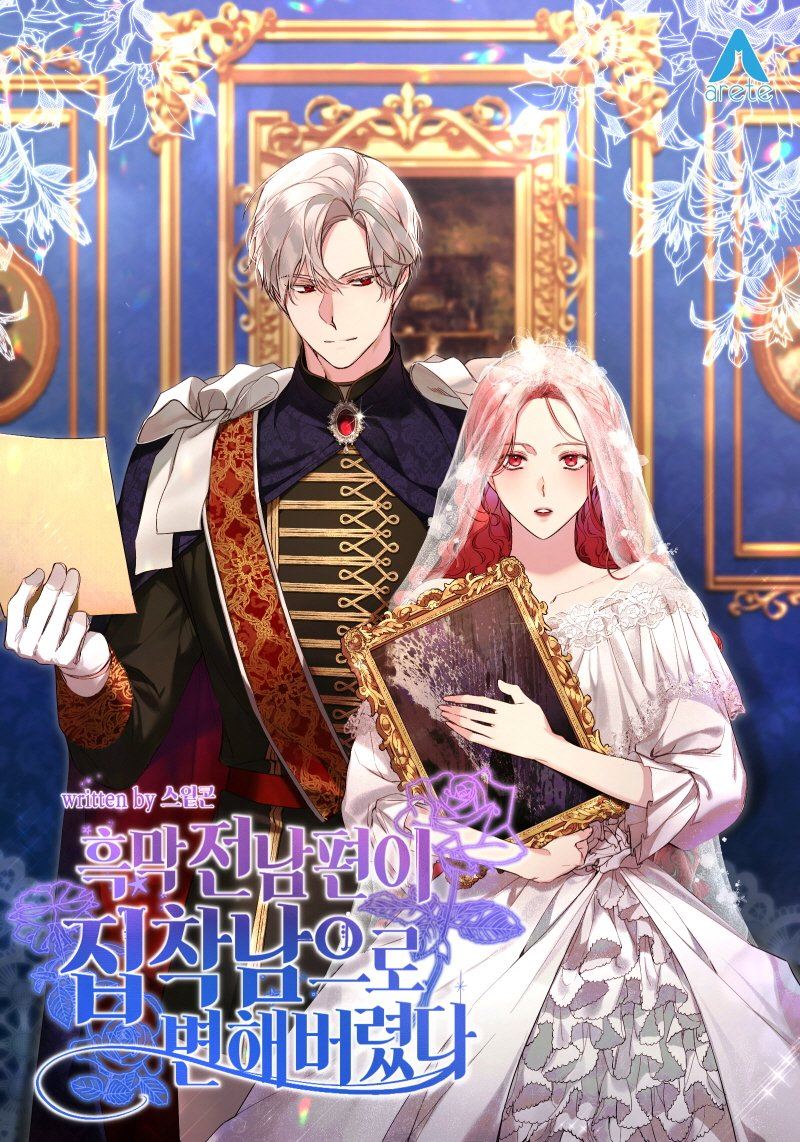
... Read More
I've been turning over the symbolism in this section and I think the author is building this really careful architecture of loss and erasure. The burning documents. That image is searing. Seian watching Yuena's records from the orphanage go up in flames while telling her "You're Idebald now." This isn't just dramatic theater — it's the literal destruction of evidence that Yuena's past ever existed outside this family. The documents weren't just papers; they were potential clues to her origins, and now they're ash. When Rosie asks about childhood memories, Yuena genuinely can't access them. Is that because time erased them, or because the evidence was systematically destroyed? Then the hairpin. Rosie's crude handmade pin breaks on Yuena's head. Someone's hair gets tangled in the broken piece. The image of a broken gift — something made with care that causes pain instead of connection — feels loaded. Rosie approaches with this token of apology, and it physically hurts. Not metaphorically, literally. The pin stabs, hair pulls out, and Yuena takes it with clenched teeth because she's already been stabbed emotionally by Iophe ten minutes ago. The orphanage connection is the third symbolic thread. Both Rosie and Yuena came from the same place, but their paths diverged so drastically that they're essentially strangers now. Rosie remembers a closeness that Yuena can't recall. There's something deeply unsettling about having someone claim you were close when you have zero memory of it. It's like being accused of a crime you don't remember committing, except the crime is emotional intimacy. And then there's the secret passage itself. Behind a portrait, down stairs, into darkness. This is literally how Yuena accesses truth — through hidden corridors behind art that represents dead people. Seian's portrait hides the way to Laude's guild, which hides the truth about paternity, which might connect to the medicine Yuena needs. Every revelation requires navigating someone else's architecture of secrets. The recurring motif of appearances: Rosie appears everywhere. In the carriage, at the cafe, as a maid, now as a suspected biological relative. Is she really appearing everywhere, or is Yuena noticing her more because she's looking for connections? The narrator says "She appeared everywhere. As if waiting for me..." but then immediately undercuts it with practical concerns about the medicinal herbs. The romantic interpretation keeps getting interrupted by survival instincts.
... Read More
"I'm unbearably pathetic for thinking I could get along with you even briefly." Just... I need a minute. Iophe dropped that line on Yuena like it was nothing, walking away without even caring what the answer was. And honestly? That's the most devastating thing in this entire arc. Not some grand betrayal or dramatic confrontation — just cold dismissal from someone who supposedly trusted her. What strikes me is how completely Iophe shut down. He didn't yell, he didn't demand explanations. He just... gave up. That's somehow worse. When someone stops fighting for you, it means they've already written you off internally. And then there's Rosie. Oh god, the Rosie dynamic. This girl shows up with this handmade pin, apologizing profusely, tears in her eyes, and Yuena — who just got emotionally murdered by Iophe five minutes prior — has to somehow be the adult in the room. She actually apologizes to ROSIE for being careless. Who does that? That's some next-level emotional labor right there. But here's what I can't shake: Rosie keeping approaching even when Yuena explicitly says "don't come near me when I look like this." In literally every other story, the character would respect that boundary. Rosie just keeps leaning in,apologizing harder, getting closer. It's almost like she's trying to earn forgiveness for something she hasn't even fully explained yet. The orphanage connection between them... Yuena barely remembers their childhood together, but Rosie is clinging to those fragments. She lost something of Yuena's, broke a pin on them, and seems genuinely terrified Yuena resents her. Meanwhile, Yuena just wants to be left alone with her problems and somehow everyone keeps showing up demanding emotional availability. I keep wondering: did Yuena ever actually let anyone in, or is this just the pattern? Run to the secret passage, hide behind portraits, apologize to people who are trying to help. It's exhausting to watch.
... Read More
'We might actually make decent business partners.' Iophe says this about a turtle on a spoon painting and somehow it hits harder than any love confession would. Let me explain. This whole sequence - the gallery business transfer, the contract negotiations, the 'I'll give you ownership when the contract ends' - it's the most mundane transaction happening between two people who are simultaneously the most charged couple in the story. She's using the gallery as her own power base, and he's handing it to her like it's nothing. 'Hertus will provide the initial capital too.' He's investing in HER vision without making it about romance or control. And her reaction? '...Why?' Simple. That's it. Not flustered, not suspicious, just genuinely caught off guard. For someone who has spent her entire existence being used and manipulated, someone offering her something with no visible strings attached probably short-circuits her completely. Then she gets dragged to parties every single day and shows up with dark circles under her eyes and immediately negotiates limits. Four times a month. That's not a romantic negotiation - that's two people figuring out how to exist near each other without burning out. It's weirdly tender in the most deadpan way imaginable.
... Read More
Let me just say—the atmosphere in this excerpt is Chef's Kiss. The author knows how to set a scene and make it work on multiple levels. The garden with pink flowers opening the chapter is such an intentional choice. It's beautiful, it's serene, and then the Duke walks in with his voice 'utterly rigid' and suddenly that beauty becomes almost ironic. The contrast between the gentle setting and the tense confrontation is exactly the kind of thing that makes you feel like you're watching a film. And later when she describes the dress—'dark-toned purple with black lace overlay creating a mysterious atmosphere'—she's not just telling us what she's wearing, she's telling us what she WANTS to communicate. Moderately present yet absent. A wall when standing by a wall. These aren't fashion choices, they're survival tactics dressed up as aesthetics. But the party scene? That's where the worldbuilding really hits you in the gut. 'The moment the suffocating gazes I'd anticipated clung to me, I could no longer hear even the faint noise the orchestra created. That space was replaced by a screeching, tearing roar.' This is genius sensory writing. The physical world doesn't change but her perception of it does, and the author shows us her social anxiety through sound itself distorting. The contrast between the Hertus household (cold, formal, guarded) and the Lakier celebration (splendid but suffocating, full of whispering guests and judging eyes) creates this entire social ecosystem that feels alive. We're not just told about noble society—we feel its weight pressing down on Yuena with every entrance she makes. And the servant reactions! Those bright-eyed Hertus servants who treat her dress-up moments like events because there's 'been no mistress to dress up until now'—one detail, three sentences, and you understand the entire history of this household.
... Read More
Okay so this moment where Iophe says 'Stop it now. I know you're not crying.' I literally screamed at my screen. Think about it - throughout the entire party scene, Yuena is performing the perfect victim, hiding her face in his arms, and he immediately sees through it. Does that make him colder? Maybe. But it also means he's been paying attention to her the whole time. He knows her tells. And then when he defends her at the party - 'You'd better prepare to stand in court for defamation' - that's not script-reading husband energy. That's someone who actually cares whether she's disrespected. The way he wraps her in his coat so no one can see her face... possessive? Yes. But also protective in a way that doesn't demand gratitude. Their dynamic keeps shifting. She's trying to use him as a shield, and he's letting her, but also quietly undermining her attempts at manipulation because he knows exactly what she's doing. When they negotiate the 'four times a month' thing afterward like it's a business deal - 'Can't be helped. Fine. Four times.' - it's almost domestic in its absurdity. These two are stuck in this weird limbo where neither believes the other's act, but they keep playing along anyway.
... Read More
Let's talk about what Yuena has actually wagered here, because the stakes are getting terrifyingly clear. She married Iophe. She entered the Hertus estate. She put herself in position to access the medicinal herb she desperately needs — presumably for herself or someone she cares about. All of this was strategic positioning for a single objective: obtain the medicine. And now that objective is threatened because a woman named Rosie claimed her name during a paternity test, and the negative result has caused the Lakier family head to collapse and potentially abandon his search for his biological child forever. Here's the thing that makes my blood run cold: Yuena says "That child is Lakier's biological child" with absolute certainty. She doesn't know WHY she's certain. She just IS certain. And she's betting that her certainty is worth pursuing despite Laude's professional assessment that the test has less than one percent error rate. The external conflict is obvious: Rosie's mistake is disrupting everything. But the internal conflict is where this gets genuinely painful. Yuena is trapped between: 1. Wanting to clear her name (hence the retest request) 2. Needing to avoid her name being mentioned again (hence "just deliver the results secretly") 3. Having zero backup plan if the retest also comes back negative And underneath all of that: if the test is correct, then Rosie IS Lakier's child, which means... what? What does that mean for Yuena's own search for origins? For her childhood memories? For the burning documents? Laude mentions that rumors say the Lakier head will "give up searching for his child forever now." This isn't just bureaucratic damage — it's emotional devastation on a massive scale. And Yuena is standing in the middle of it, holding a document envelope, barely in her right mind, thinking only: I need to meet Rosie. The stakes keep escalating because every answer creates three new questions. Paternity test wrong? Okay, do a retest. What if that's wrong too? Then what? Who can she trust? Iophe won't talk, Laude is information-brokering, Rosie is crying and apologizing and pulling out her hair... there's nobody to catch her if this falls apart. And yet she goes anyway. She always goes anyway. That's the real conflict — not whether she'll succeed, but whether she'll survive continuing to bet on impossible odds.
... Read More
I need to talk about the pacing in these chapters because — and I'm being very intentional with this word — it is absolutely IMMACULATE. We open with a wedding. Not a slow, romantic, candlelit wedding. A wedding that reads like a eulogy. The narrator's internal voice from the very first line establishes the tone: this is not a love story, this is a survival strategy dressed in a wedding gown. And the author doesn't waste a single moment on exposition or worldbuilding filler. We're dropped into the reception hall and within three paragraphs we've learned the political context, the financial motive, the legal constraints, and the romantic impossibility of the situation. That is efficient storytelling. Then we cut to the carriage ride — short, sharp, almost comedic with her sprawled out like a starfish and Iophe looking down at her like he's questioning every life choice that led to this moment. The transition from the formal reception to the private suite works because it mirrors the narrator's own shift from performative bride to calculated negotiator. She goes from smiling politely at guests to actively drafting contract terms, and the pacing matches that energy perfectly. The scenes get tighter, sharper, more intense — just like her mindset. The contract negotiation itself is structured like a three-act play within a scene. Each clause is its own beat, its own escalation. Clause 1: she makes a demand. Clause 2: he counters with money. Clause 3: she sets a boundary and he... accepts it? The rhythm of give-and-take creates natural momentum. You can feel the scene building because each exchange raises the stakes slightly higher. By the time she's lying on the bed wondering if she should have added a "don't kill me" clause, you're invested in the outcome. The dining room scene with Duke Hertus is the masterclass moment. The author could have info-dumped backstory about their relationship, or created dramatic dialogue, or escalated into a confrontation. Instead — silence. Food being served. Plates being changed. One consistent thought: "I don't know what to say." The pacing SLOWS here deliberately, and it's brilliant because it forces you to sit in the same suffocating discomfort the narrator feels. Every sentence is shorter. Every paragraph is tighter. The silence between lines becomes its own kind of dialogue. And then — the garden. The peonies. The maid. The cart. And the cut. RIGHT THERE. After a chapter that started with a marriage and ended with a question about a stranger's name, the pacing does this incredible full-circle thing. It starts with institutional ceremony and ends with individual human curiosity. The story compresses an entire emotional arc into seventeen thousand words and somehow makes you feel like you've lived a whole year. The only complaint I have is that it makes everything else I read feel sluggish by comparison. This is how you pace a chapter. This is how you make readers stay up until 2 AM questioning their life choices because they need to know what happens next.
... Read More
'The ceremony hall where the only guests were a few people from the Hertus family.' I kept coming back to this image — a wedding that looks exactly like Seian's funeral. Same small crowd, same hollow atmosphere, same sense that everyone present is going through the motions because they have to, not because they want to. The author really understands how architecture and setting can reflect emotional states. That empty wedding hall, the way it 'somehow looks empty' even filled with people — it's the same emptiness as Yuena's life. She's married to a man she's only seen twice, in a ceremony no one celebrates, about to live in a house that belonged to a woman who raised her but never truly saw her. But then there's the visual contrast of Iophe himself — 'fine silver hair, smooth and transparent skin, the trio of ruby-like pale red glowing eyes harmonized in a truly chilling way.' This description is so specific it's almost sculptural. You can picture him standing there in white ceremonial dress like some kind of frozen statue, beautiful and completely unreadable. The red handkerchief tucked in is the only splash of color, the only hint that he's alive underneath all that porcelain perfection. The chapel scene with the ten-page marriage vows and Yuena's legs going numb — this is such a grounded, physical detail. The boredom and the discomfort make the supernatural premise feel real. And then the contrast between her past-life self (running away) and her current self (grabbing Iophe by the face) within the same sacred space... the setting becomes a timeline, a mirror of how far she's come
... Read More
The stakes in this section are built on a foundation of landmines. Every conversation Yuena has is potentially fatal. Laude Simeon approaches her with a smile and she immediately recognizes it as information extraction. The gossiping women behind her? She feels them and deliberately ignores them - but what if ignoring isn't enough? What if they report back to someone who decides 'villainess poisoning' is still a viable strategy? And then Bernard shows up and says the orphan line. In any other novel, this would be background noise. Here it triggers a full flashback to her first retaliation - the memory of hiding in a dark corner crying because someone said something cruel. The author makes it CLEAR that this moment is a test. Will she repeat her past self's weakness or forge a new response? She chooses violence. Not physical - verbal. 'Should I call my husband over to confirm whether I'm his real wife or not for you to believe me?' That line alone shifts the entire power dynamic. But then she escalates further by hiding in Iophe's arms and performing tears. She weaponizes his protectiveness while simultaneously using him as a shield. And his response? 'Stop it now. I know you're not crying.' He sees through the performance but doesn't expose her. That's the real conflict here - two people constantly calculating whether the other will betray them, and neither finding definitive proof either way. The tension never resolves and honestly I wouldn't want it to.

Leave a comment

You must be logged in to leave comments. or
