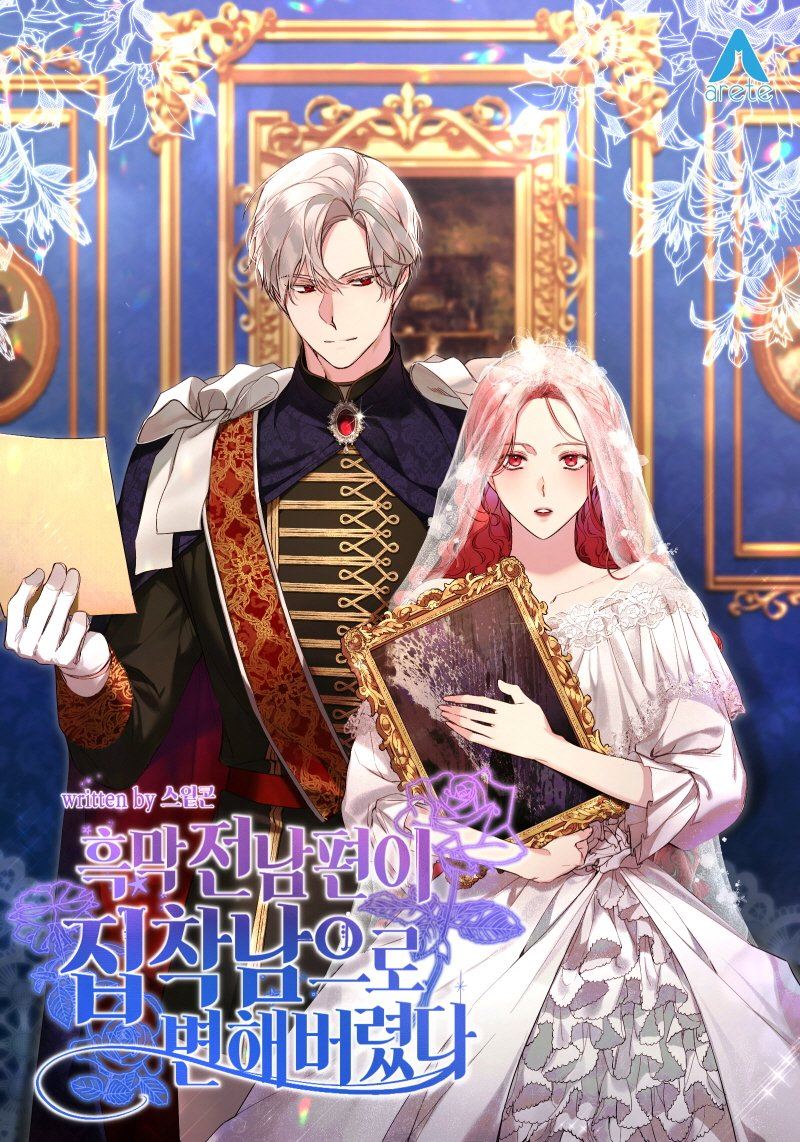
"While I deliberately made the same expression at him, the priest finished the marriage vows." I hereby declare that the two of you are now husband and wife. That's how I remarried Iophe.
The very first line hits you like a ton of bricks — or rather, like a funeral director who's also a wedding planner. Because honestly, isn't that exactly what this whole chapter is? A wedding that smells like lilies from a funeral home. The narrator literally says it herself: she felt "halfway at a funeral" at her own reception, watching vassals toss out empty condolences that were basically the same script they used at Seian's memorial. Two ceremonies, one emotional palette, and the protagonist is just trying to survive the logistics of being married off twice in as many weeks.
And then there's the garden scene near the end — pale pink peonies everywhere, and she notes, "It really is similar to Rosie's hair color." ROSIE. The name that's apparently been following her since before she even arrived in this world. A ghost in a petal's worth of color. Meanwhile she's standing in someone else's garden, about to have tea with her father-in-law, wearing a dress she didn't choose, next to a man she barely knows, while some maid pulls a cart that looks suspiciously like the ones that delivered her last husband's corpse. Symbolism isn't hiding here — it's waving at you from behind a bush.
The recurring motif of contracts and boundaries is another one that won't let go. The marriage contract, the business agreement, the clause about separate beds, the mental boundaries she keeps reinforcing — she's building a fortress out of clauses and conditions because the alternative is letting someone in. And Iophe? He's just as locked in his own walls. Both of them are using paperwork as emotional armor. "We have many spies in our house," he says, and you realize that sentence isn't just about surveillance — it's about a whole family where trust has been replaced by monitoring.
The blood-drinking question is also weirdly symbolic when you sit with it. "Did you drink blood or something?" Iophe asks her eyes after she sharpens them. She's being treated like a witch, like something supernatural and threatening, and what does that tell you about how women in this world are perceived when they're smart, cold, and calculating? It's not the first time someone's accused her of being inhuman — Idebald, Seian, now Iophe. The pattern itself is the point.
This story isn't really about romance. It's about a woman who has died once already and come back to negotiate every single human connection like a hostage situation where she holds exactly one card: the fact that she knows how this ends.