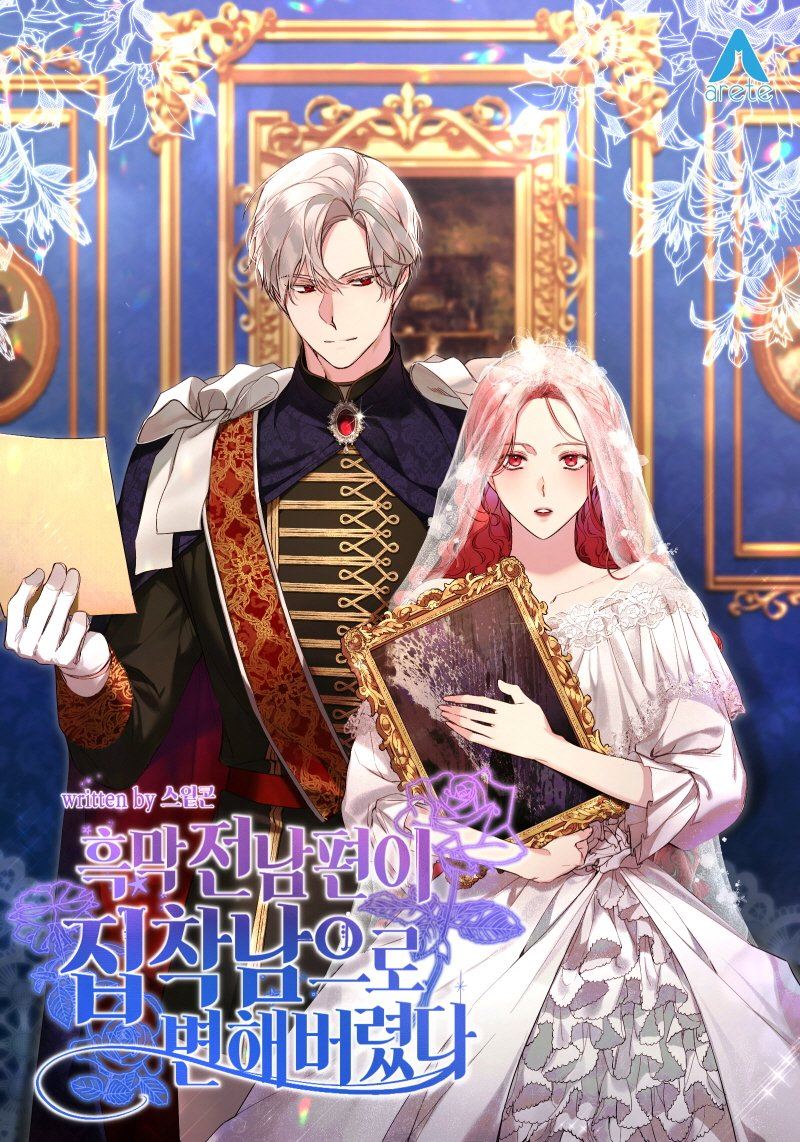
My Villainous Ex-Husband Turned Into an Obsessive Man
Novel Info
  • Author:
  • Status:Ongoing

Summary

... Read More

Yuena Idebald, the adopted daughter of the infamous Seian Idebald, reads a gossip article announcing her mother's death. Shortly before this revelation, Yuena experienced a traumatic poisoning that killed her, only to awake in her past body days earlier. Having regained memories of a previous life and knowledge of a novel titled Secret, she realizes she is living as the novel's villainess, destined to die by poison and torment the female protagonist, Rosie. Determined to alter her fate, Yuena resolves to change her behavior and uncover the identity of her assassin while managing her dire health condition—a hereditary disease that she learns can be cured with a specific medicinal herb located in Hertus territory.

With Seian dead, the Idebald family lacks a male head, creating a political vacuum. The Hertus family, led by Duke Hertus and his son Iophe, had long sought a business consent form that requires an Idebald signature. To secure this advantage and inherit her mother's assets without paying excessive taxes, Yuena agrees to remarry Iophe, her ex-husband from her previous life. The wedding is a austere affair, marked by the cold detachment of the Hertus family. During the ceremony, Yuena maintains composure, unlike her past self who fled in shame, and successfully negotiates a one-year contract marriage with Iophe, stipulating mutual benefits and emotional distance.

Yuena’s primary objective within the Hertus estate is to locate the medicinal herb. She attempts to ingratiate herself with Duke Hertus, gifting him poison-detecting tableware and seeking his favor through polite, albeit awkward, interactions. Simultaneously, she manages to secure a position overseeing the Hertus family’s new art gallery, leveraging her knowledge of future art trends to acquire valuable pieces, such as works by the painter Suave and jewels by the designer Aerdi. This role allows her to navigate high society while slowly rebuilding her public image from that of a vicious bully to a shrewd businesswoman.

Throughout this period, Yuena faces constant suspicion and multiple assassination attempts. She discovers that Dana, a maid formerly employed by the Idebald household, was responsible for serving the poisoned tea in her past life. Yuena forces Dana to taste her food as a security measure, exposing the ongoing conspiracy. She also encounters Laude Simeon, a member of a powerful knightly family, and Dusel Ebot, a manipulative socialite, navigating their advances with calculated indifference rather than the aggression her past self would have displayed.

The narrative follows Yuena as she balances her precarious health, her strategic marriage, and her hunt for the cure. Her efforts to change her destiny attract the attention of various political factions, including the Simeon and Lakier families, whose histories are intertwined with the central conflict. As the year of the contract marriage progresses, Yuena must continue to outmaneuver her enemies, secure the ingredients for her cure, and determine whether she can truly escape the tragic fate outlined in the novel Secret.

Latest Release
DateGroupRelease
2026-10-03dusk blossoms c86
2026-10-03dusk blossoms c85
2026-10-03dusk blossoms c84
2026-10-03dusk blossoms c83
2026-10-03dusk blossoms c82
2026-10-03dusk blossoms c81
2026-10-03dusk blossoms c80
2026-10-03dusk blossoms c79
2026-10-03dusk blossoms c78
2026-10-03dusk blossoms c77
2026-10-03dusk blossoms c76
2026-10-03dusk blossoms c75

Community Reviews

Rating(0 / 5.0, 34votes)
5 stars
0(0%)
4 stars
0(0%)
3 stars
0(0%)
2 stars
0(0%)
1 stars
0(0%)

Popular reviews

... Read More
Okay so let me just — the PLOT of this thing. It moves like a viper. You blink and suddenly you're remarried, renegotiating your own marriage terms, and brokering a power dynamic with a man who clearly would rather be anywhere else but is equally stuck. The structural brilliance here is how the narrator weaponizes her own knowledge. In the first round of her life, she was a one-dimensional villainess — violent, vicious, probably annoying as hell. Now she's playing 4D chess with the same board. The consent form Seian used as bait all year long? She learned that from living through it once. The honeymoon suite details from her father-in-law's complaints? Also prior-life intel. She's literally building her survival strategy out of spoilers. "The next deliberation date is a month away." "Then I'll be able to cancel the marriage vows on this day next year." The Empire's marriage law is basically the ticking clock in a heist movie, except the treasure is her own life and the vault is a medicinal herb hidden somewhere in Hertus territory. If she doesn't find it, she dies. If she does, she might still die — because apparently there's a whole separate illness she needs curing. So her plan within a plan within a plan is: get inside the castle, find the herb, survive the year, and disappear. But here's where it gets juicy — the contract negotiation scene. Three clauses, three power plays: Clause 1: Attend official events together. Her reasoning? She needs to tag along on his territorial inspection to find the herb. But she frames it as if SHE'S the one doing HIM a favor by lending her name. "Resolve any matters that need the Idebald name within this period." Nice. Smooth. She makes it sound like she's giving him a gift. Clause 2: Business cooperation. His counter? He broadens it to ALL businesses and offers her a percentage of profits. She pushes back — "That's too comprehensive, narrow the scope a bit" — and honestly I love her for trying to keep the negotiation going. Like, she literally lost a bargaining chip and she's not letting it go. Clause 3: Maintain boundaries. The bed situation. This is where the subtext practically screams. She's setting physical boundaries because she learned (from her previous life) that not maintaining them with Iophe was a mistake. "Let's not fall for that face." She's looking at her own past self from across the aisle and yelling silently. The scene with Duke Hertus in the dining room? Absolutely masterful tension. No words exchanged for half the meal. Just the clink of silverware and her internal screaming. Then THE OFFER — tea time in the garden. She almost backs out. "If you're busy, it can't be helped..." And he says fine. She nearly escapes. Then reverses. "Pardon?" Come to the tea room. WHY does she agree? Because she's trapped. Because every door in this story is locked from the outside. And the ending — that maid pulling the cart, the narrator calling out "You there," asking for the maid's name, and then... we cut. Right there. After everything, the most human thing she does is ask a stranger their name. What is THAT about?
... Read More
The dialogue in this section is so good I had to slow down and re-read entire conversations because every line is carrying double meaning. Start with Yuena and the Duke's exchange about the portrait. She says 'I asked you to paint my father's portrait, right?' after having absolutely NOT asked him that. And Alfi plays along perfectly with this nervous 'Yes……? Ah……' while everyone in the room understands the elaborate fiction they're all participating in. The Duke's response is just '……My portrait, you say?' and that pause, that ellipsis—it says everything. He's suspicious but intrigued, and he's smart enough to see through the surface while choosing to play along anyway. Then there's Serol, and oh my god Serol is such a well-drawn character through dialogue ALONE. 'Oh my! Did something happen when I wasn't there?' The immediate pivot, the practiced concern, the way she 'slyly moved half a step away' when Yuena's tone shifts. You can HEAR her calculating in real time. And then she fakes needing to borrow paper and walks in the completely wrong direction. This woman is a masterpiece of social navigation and the author gives her maybe four paragraphs to establish her entirely. The Duke's dialogue is another case study in subtext. 'Hertus cannot ignore Lakier family matters.' On the surface: duty. Underneath: control. He's dictating her movements while framing it as responsibility. And 'It can't be helped' followed by 'There will often be times when it can't be helped in the future too'—that's not acceptance, that's a promise of continued involvement. He's not letting her out of his orbit. Even the stage directions in the narration have voice. 'I placed my hand on the Duke's extended hand and said. "The uniform suits you so well, Father."' The narration is so deadpan while her internal thoughts are running at maximum velocity. That contrast between what she says and what she thinks IS the voice of this character.
... Read More
Okay so can we talk about how brilliantly calculated everything Yuena does in this section is? She gets caught in this whole messy situation with the Berta studio disturbance and instead of just groveling or making excuses, she pulls this absolutely smooth maneuver where she pivots to 'I was trying to do something nice for my dad actually.' Like... mama? That's not even how that works. But it WORKS. The Duke is visibly pleased by the filial piety angle and suddenly the whole thing deflates. What I love is the nested scheming. She mentions Iophe specifically to use him as a shield and also to plant seeds about the father-son relationship beingstrained. That's layering! She's not just solving one problem, she's trying to improve two relationships at once—her own with the Duke AND the Duke's with Iophe. Her internal monologue about 'when a family is peaceful' hit me different because you can tell she genuinely doesn't have reference points for healthy family dynamics. Then the Lakier invitation drops like a plot bomb and suddenly everything shifts again. The Duke says she can't go alone, she tries to politely decline, he essentially mandates attendance, and she recalculates yet again—this time seeing the political advantage of arriving with the Duke himself. The way she frames it: 'the more choices, the better' because she's already thinking about the paintings and gallery opportunities. Nothing is wasted on her. But here's what keeps me up at night—the ending. She's at the party, evading Serol, grabs champagne to steady her nerves, and then overhears people whispering about 'the young lady coming out soon.' That's Rosie. And the text cuts off right as she flees to the garden. The tension is INTENTIONAL. The author is making us sit in that moment of dread where we KNOW something complicated is about to happen and we can't escape it.
... Read More
I swear to god the author weaponizes the cliffhanger like it's an art form. Let me walk you through my experience: I started reading at 11 PM. I told myself one chapter. Then I told myself two chapters. Then it was 3 AM and I was watching a woman force her ex-husband into a wedding kiss while mentally planning how to steal a rare herb from his family estate. The chapter structure is genius. Each section ends on a note that either reveals something or raises a question that immediately demands an answer. Chapter one ends with the sunset and moon imagery telling her what she needs to do. Then we cut to the wedding, which ends with — wait for it — Actually, I can't even summarize the ending without spoiling it, but let me just say: the moment where Iophe pulls back with an 'annoyed expression' and Yuena thinks 'as if he's enjoying it' is the kind of detail that makes you immediately click to the next chapter because you NEED to know what happens next. The pacing never drags because the author keeps the threat present. Even during the wedding scene — which should be the calmest moment — we keep getting reminders that Yuena is sick, that she almost coughed blood on her dress, that someone poisoned her and she doesn't know who. The tension never releases, it just shifts from one form to another. And the internal monologue? It moves at the speed of actual human thought. Not polished, not linear, jumping from 'I need to find the herb' to 'why did Seian look at me like that' to 'Rosie's going to be the female lead and I bullied her to death.' It's chaotic in the best way — it makes you feel like you're inside someone's head, not reading a summary of it.
... Read More
The structure shift when we cut to Avery and Fayher at the newspaper office was brilliant. Just when you're wrapped up in Yuena's sickbed drama, suddenly we're following these two reporters investigating her. The pacing here is doing double duty - we get exposition about their relationship (they're brothers, they're hiding their identities, running Sunset newspaper from the slums), but more importantly we learn that Seian Idebald's articles used to make sales soar. So there's this whole backstory about Seian that I need to understand. And then the meeting breaking down? Classic cliffhanger placement.
... Read More
There's a painting with a turtle on a spoon that neither of them likes, and I swear this whole novel is built on objects that refuse to be what they appear to be. The turtle on the spoon is described as 'bizarre' and 'strange to my eyes' - and she even admits 'It really was a mistake too.' But she chose it anyway. Why? Because it's hers. Because she's selecting something no one else values, something flawed and odd, and claiming it. That's basically her entire arc in one gesture - she's building a life around things that look like mistakes to everyone else. Then there's her. 'I'm not even a real Idebald.' The whole novel revolves around identity - who she was, who she pretended to be, who she is now. The child who calls her 'big sister' because she resembles the Lakier family's lost daughter - this mirroring theme keeps appearing. People as reflections of other people's losses. Art as prophecy. Every painting she collects becomes a symbol of a future she's trying to control. And the gallery itself - owned by Hertus name but run by her, a space built on someone else's reputation that will eventually become hers. Everything is borrowed, reflected, or disguised. Nothing is what it seems. Including, apparently, her husband's genuine reactions.
See all reviews

Custom lists

See all custom Lists