Miserere Mei: Have Mercy Upon Me - Reviews

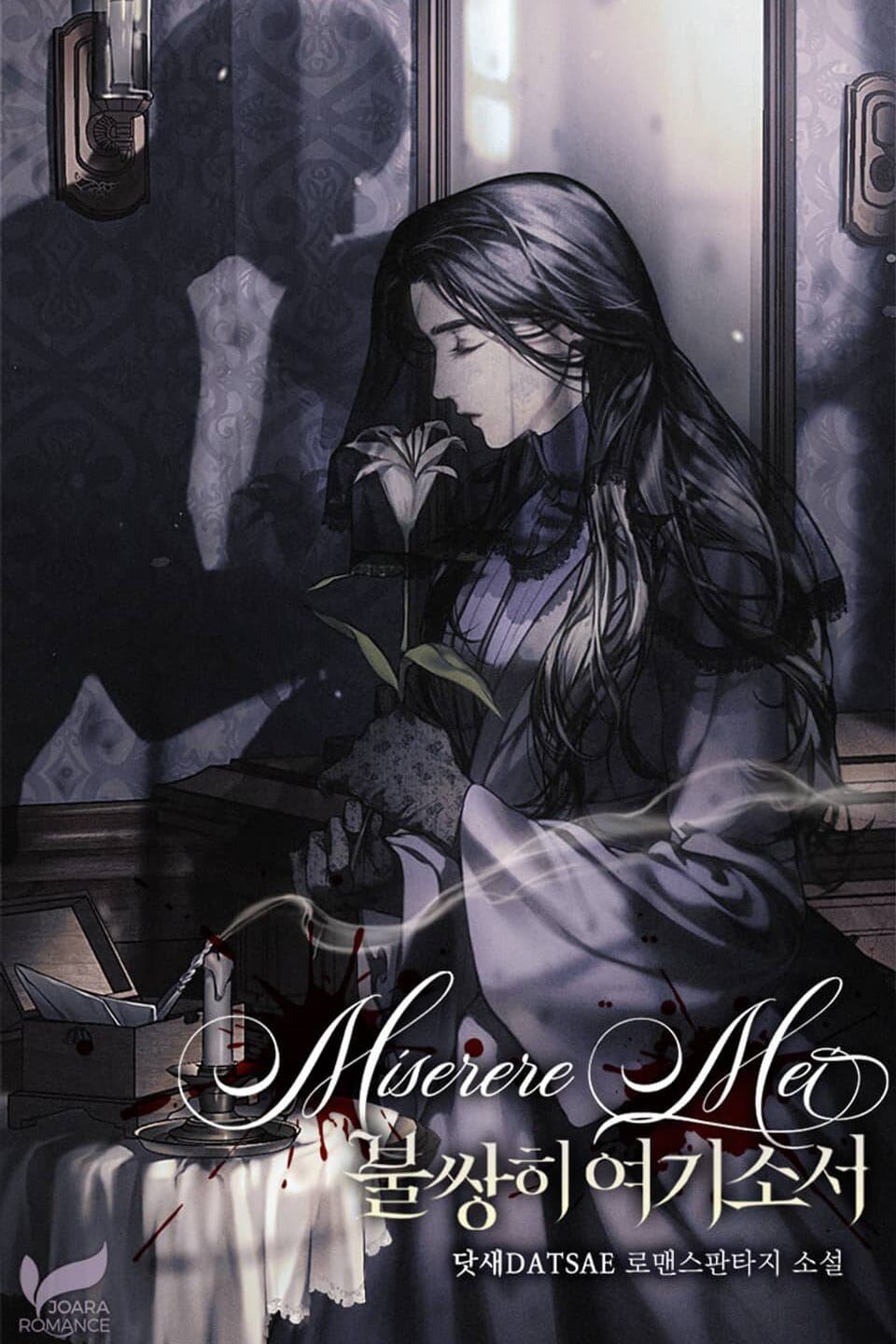
Miserere Mei: Have Mercy Upon Me
+Add to Custom List
Sort
Add review
... Read More
Okay so I need to talk about this gamekeeper scene because OH MY GOD. Catherine goes to the servant quarters, right? She's already suspicious of David, already feeling like the whole estate is plotting against her, and she finds this old guy who supposedly lived there when the brothers were kids. And then he drops this bombshell: he says Saul (the first young master) was actually HEALTHY as a child. Ran around, climbed trees, robust. Catherine is sitting there going WHAT because she's spent her entire marriage thinking her husband was frail since childhood. But here's the thing that wrecked me—when she presses him, he looks genuinely baffled. Like he doesn't understand why she'd think otherwise. Which means everyone has been lying to Catherine about this, or Saul himself has been curating this image of weakness. That's a plot twist that recontextualizes EVERYTHING. Then there's David's behavior. He literally disappears after Saul opens his eyes, and earlier at the cemetery he warned Catherine: "When he wakes, you will be unhappy." But now he's gone. Vanished. No one knows where. Meanwhile servants are gossiping about Catherine and David being seen together in the master's bedroom—rumors that could destroy her reputation if they spread. "When he wakes, you will be unhappy." Those words are echoing through my head like a countdown clock. What did David know that she didn't? What is he hiding? The narrative is weaving SO many threads here—Saul's silence, David's disappearance, the estate's deteriorating atmosphere, and this revelation about the brothers' childhood. It's building this slow-burn mystery that keeps pulling me forward. Every chapter raises three new questions.
... Read More
I can't stop thinking about the ring. The chapter opens with Catherine rubbing the edge of a ring on her right ring finger — and then immediately triggers a sense of déjà vu. A voice speaking like this before. Two voices overlapping. The ring is clearly symbolic of a promise, a bond, a commitment to someone who is gone. Saul. And the déjà vu suggests Catherine has heard these same threats, these same propositions, from someone else before. Or perhaps from Saul himself, in a different context. The ring connects past to present, dead to living, and David's words vibrate against that memory like a tuning fork. The door is the second symbol and it's doing incredible work. David blocks it. Catherine wants to leave. He lets her go when she mentions Saul's name. The door represents choice — or the illusion of it. Catherine thinks she can walk away, but David's hand on her shoulder makes that impossible. Only the ghost of Saul can free her. That's a devastating image: the dead man's name as the only key to the lock. And the razor. Oh god, the razor. Catherine uses it to care for Saul — gentle, daily, devoted. She then uses the same blade on David's neck. The instrument of maintenance becomes the instrument of threat, and back again. When she threatens him with it, he releases her immediately. But the razor isn't really about violence — it's about proximity. It's about being close enough to cut someone and choosing not to. That's the entire Catherine-David-Saul triangle in one object. The warm water is another symbol I keep coming back to. It starts warm, David wrings it out, it goes cold while Catherine works. Fresh water must be fetched. The cycle of warming and cooling mirrors the emotional temperature of the scene — heated confrontation, cooling routine, reheated tension. Water is life (Saul is barely alive), water is care (Catherine's daily ritual), water is also danger (drowning, suffocation, the fluid boundary between living and dead). And finally, Saul's red eyes. Not brown. Not blue. Red. Like blood. Like fire. Like he's been preserved in something that isn't quite water and isn't quite air. What wakes him? The almost-kiss? The violation of his space? Or has he simply reached the threshold on his own terms?
... Read More
Okay so this whole chapter really hinges on that little glass vial Catherine finds in David's coat, and honestly the author plays with misdirection so well here. David gives her the powder the night before, she nearly chokes on the smell, he says it's fine, then later when she's walking back she literally pockets it again? That's not something you do unless you're already planning to investigate. And then she calls Samuel—a servant who happens to examine the powder and acts weird about it—and she lies about where she found it. Every single action Catherine takes here is deliberate, calculated. This isn't a romance protagonist blindly following her heart, this is someone running an investigation while smiling politely. The way the chapter cuts off with David looking at her all bright and sunny after she's literally pocketed evidence from his coat? Chef's kiss. Also the 'accident' comment—that's a dangling plot thread we haven't resolved yet, and David clearly regrets letting it slip. I need to know what happened between the Cavendish brothers.
... Read More
"The blossoms, reminiscent of midday sunlight, slowly unfurled their petals beneath the stream of hot water." I need to talk about this scene. Not the dialogue—though the dialogue is incredible—but the atmosphere. The author builds this entire world around small sensory details that make you feel like you're actually in the room. The teacups. The glass jar containing delicately dried marigolds with a faint reddish tint. The butler placing baked treats attractively on the table. The door closing with a soft thud. The warmth lingering in the air after everyone has left. Catherine watching the unseasonable flowers bloom until the room is just her and David in silence. This is a room that feels alive. You can smell the tea. You can feel the warmth on your nose. The lamp light catches David's scattered golden hair and makes it resemble the flower in the teacup. I paused reading just to process that comparison—the brother's hair mirroring the dried marigold. The author is weaving visual poetry into a scene that's already emotionally explosive. And the silence. The author keeps returning to silence as a character itself. "Even after that, the room remained wrapped in silence, permeated only by a gentle warmth." Then: "the shallow silence began to touch their feet." Silence isn't empty here—it's heavy, textured, almost physical. It presses down on Catherine and David as they sit across from each other, separated by a table and by everything they're not saying. The window outside is pitch black. No stars visible. Catherine knows continuing this conversation would be pointless. She blinks once, exhales softly, and whispers her response. The darkness outside mirrors what's happening inside—the absence of guidance, the uncertainty, the void where answers should be. When David tilts his completely cooled teacup, the flower slides along the surface, taps her lips, and drifts away. This image repeats like a motif. First it appears when David mentions apologizing. Then it happens again during the confessional moment. Each time, it marks a shift—a transition from one emotional state to another. The marigold is a silent narrator, present at every turning point. This scene is a masterclass in atmospheric writing. The world feels tangible, the emotions feel earned, and every detail serves the mood. I can picture this as a film—the warm amber light, the steam rising from teacups, the black window, the flower drifting away. Absolutely cinematic.
... Read More
I keep thinking about how confined this entire chapter is. We're in one room. Maybe two if you count the doorway. The lamp, the bed, the window, the basin of water — that's basically the entire universe of this scene. And the author makes it feel suffocating in the best way possible. Let me paint this picture for you because it's gorgeous: David wringing out a warm cloth over a basin. The sound of water dripping — SPLISH. That single onomatopoeia doing so much work. The warm water cooling while Catherine shaves Saul, creating this whole logistical dance between her and David that says more about their被迫 coexistence than any dialogue could. The lighting matters enormously too. David stands with his back to the lamp, casting Catherine in shadow. She's "buried in the shadow he casts" — that's not just physical description, that's thematic. He controls the light. He controls what she can and cannot see clearly. And when Saul's eyes open, the first thing we get is visual: "red eyes staring at them from the bed." Blood-red, not brown, not black — red. Like he's been burning alive in that coma and just erupted. There's this recurring sensory detail of warmth and cold that I think is doing heavy lifting. Warm water for the cloths. Catherine's fingertips feeling David's "lukewarm cream" and his pulse. The warm water going cold while she works alone. Then David bringing fresh warm water as if he's been monitoring this exact detail. The body heat of proximity. And contrasting against it: the coldness of David's blue eyes, the chill of the door knob, the clinical nature of Samuel the physician's visits. The door itself becomes this recurring motif — David blocking it, Catherine trying to leave, the handle between them. It's the threshold between freedom and entrapment, and neither of them will let it swing. The cemetery commotion three days ago is referenced but never shown. We only know about it through absence — the shadow it cast, the fact that Saul hasn't woken since. That off-page violence lingers in every description of this room.
... Read More
I am NOT okay with how David is written here. Every time I think I understand this character, he does something that completely undermines my reading of him. At the funeral, he's being all sweet—holding the umbrella over Catherine, steadying her arm when she stumbles, whispering that the wind is cold. Feels like the caring companion, right? Wrong. When Saul's coffin starts moving and they haul it back up, Catherine catches David's face through the rain and sees 'an unexpected terror.' Not surprise. Not confusion. TERROR. As if he KNEW this was going to happen and was horrified that it actually did. And then later, when the physician and priests and butler are all arguing outside the bedroom, David is the ONLY one who seems to already know what's going on. Catherine notices it too—she thinks, 'Perhaps not even Saul himself and... Except for David.' This guy is playing 4D chess while everyone else is still trying to figure out if we're watching a resurrection or a nightmare. The way he sits down quietly opposite Catherine with just those two words—'I'll stay with you'—it's so controlled and calculated. Who IS this boy? Is he on Saul's side? Catherine's side? His own?
... Read More
The scene with the coat is everything. Catherine literally has David's coat wrapped around her shoulders, warm from his body heat, and she reaches into the inner pocket and finds THIS. The author uses the coat as such a delicious symbol—intimacy and betrayal at the same time. David just gave her comfort and she immediately starts snooping inside it. But then there's David too, right? He's clearly struggling. We get his internal monologue where he admits his feelings are real but convinces himself she can never love him. And then the 'you're going to my brother's bedroom, aren't you' moment—wait, Saul's dead and David is offering to walk her to Saul's old room? That's either he's trying to prove he's not a threat, or he's genuinely twisted. Catherine's reaction is classic though: she compliments his looks like it's nothing, and David freezes because he's not used to being seen as anything other than 'Saul's brother' or 'the responsible one.' Their dynamic is so messy and I love it.
... Read More
The atmosphere in these chapters is SO thick I could taste it. Rain. It's everywhere. From the moment Catherine wakes up groggy to the funeral scene to Saul collapsing in the rain at the cemetery, water is this constant, almost oppressive presence. But it's not just weather—I think the author is using it deliberately. The 'reddish-black light' filtering through Catherine's eyelids when she first wakes after her doze, the raindrops rolling down David's 'white forehead and straight nose,' the mud squelching under Catherine's feet, the soaked soil sticking to her gloves as she throws dirt on the coffin. Everything is damp, dark, heavy. And then there's the contrast of blood—Catherine stepping over her father's 'bright red blood,' the wound on Saul's palm that looks 'almost gouged out,' his 'red' eyes when he wakes. The visual palette of this story is essentially black, red, and blue, which I'm now convinced is deeply symbolic. The manor itself feels like a character—dim rooms, half-closed doors, the muffled conversations of priests and physicians outside a bedroom where everything hinges on whether a dead man opens his eyes. Cinematic doesn't even cover it.
... Read More
I have to appreciate how economical this writing is. The dialogue here is minimal but each line lands like a hammer blow. Let me start with Saul's proposal line—or rather, his pre-death line: 'I simply wish to purchase your death.' That is such a uniquely Saul thing to say. Cold, transactional, but underneath it there's this bizarre honesty. He's not romanticizing anything. He knows he might not survive the night and he's making a deal anyway. And Catherine's response is equally perfect—she doesn't cry or beg or break down. She just... considers it. Thinks about whether he was right about her living a 'living life.' That's her voice. Someone who has been stripped of everything and now operates purely on calculation and barely concealed grief. Then there's David, who barely speaks at all but when he does—'The wind is cold,' 'Please calm down, Catherine,' 'I'll stay with you'—every word feels weighted with something unsaid. The narrative voice itself is another character. It's restrained, almost clinical in places ('It was definitely Saul. Catherine once again wrapped her hands around his still-cold fingertips'), but those moments of restraint make the emotional explosions hit harder. The author trusts the reader to feel without being told how to feel.
... Read More
Okay so can we talk about the gamekeeper scene? Because I think this might be the single most important piece of exposition in the entire book so far, and the way it's delivered is so quietly devastating. Catherine goes looking for answers about the Cavendish brothers and finds out that the dogs started dying around the same time Saul collapsed. And the thing that got me was how casually the gamekeeper mentions it, like this was just... normal. Something odd he noticed but never connected to anything bigger. That's exactly how real people process trauma, you know? You don't immediately link cause and effect. You just notice things happening in sequence and file them away. And then there's this detail that kept bothering me: "he never suffered from any particular illness before that." Saul was a healthy boy who just... collapsed one day and never recovered? What does that mean? Is it supernatural? Poison? Some family secret the previous Count covered up? The text never answers this, and honestly I think that's deliberate. The mystery isn't meant to be solved quickly. The structure here is really clever too. We get the backstory first — warm, nostalgic tales of the brothers playing together — and then it slowly curdles. The dogs dying. The collapse. The changed relationship. It's like watching a sunlit painting slowly get painted over with shadow. And Catherine's realization that she doesn't even know the name of Saul's illness? That hit me hard. How many things has she accepted without questioning? How much of her life is built on things she was never allowed to understand? I also want to flag the structural parallel: Catherine investigating the past while simultaneously being haunted by her own buried memories. Two threads of investigation running in parallel, one external and one internal, converging toward... something. The plot is setting up a collision between Catherine's family history and the Cavendish family history, and I am NOT ready for what happens when those two collide.
... Read More
I need to just talk about David for a second because THIS MAN. The moment Saul opens his eyes and starts staring at Catherine, David wraps his hand around hers and pulls her away. And then—THIS is what got me: "David was glaring at him with eyes as frigid as a frozen winter lake. His lips were pressed together with such force they appeared pale, and his cheeks were rigid. It was markedly different from his attitude when caring for Saul earlier." FROZEN WINTER LAKE. Catherine notices that David seems completely unaware of his own expression. He softens the moment he sees her, asks if she's alright like nothing happened. But we, the readers, SAW what he looked like. That's the kind of detail that makes me sit up straight. And then he just disappears. "The young master left a moment ago." Like he was never even there. Catherine senses something is wrong—a "foreboding sensation crept up her spine"—but she can't pinpoint what. She runs back to check on Saul, finds everything peaceful, and realizes David's gone. What is David protecting her from? Or is he protecting something ELSE? His warning—"When he wakes, you will be unhappy"—keeps circling back like a ghost. He clearly knew this moment was coming and felt powerless to stop it. That's not the behavior of someone who wants Catherine suffering. That's the behavior of someone who's been carrying a secret too heavy to share. Meanwhile, Catherine caught those servants whispering about her and David. She had to swallow a bitter smile and plan her next move carefully. The dynamic between all three of them has shifted into something so much more dangerous and delicate. David isn't just a husband figure or a guardian anymore—he's a player in this game, and I have NO idea what side he's on.
... Read More
There's so much layered symbolism in these chapters that I can't stop thinking about it. First—the eyes. Saul's eyes have CHANGED. They were dark before, now they're red. And they stare at Catherine with something "profoundly alien." Eyes are always windows to the soul in literature, but what happens when the soul has been somewhere else? When the window still exists but what's behind it has fundamentally shifted? That red gaze isn't just a physical detail—it's the central metaphor for Saul's entire condition. He's back, but is he THE SAME? Then the red light flooding the gallery. "Like crushed pomegranates." This imagery is doing double duty—pomegranates reference Persephone and the underworld, the eternal bond between the living and the dead. Crushed implies violence, rupture, something natural torn apart. The light itself is described as clinging like SYRUP, viscous and inescapable. Catherine can't walk through this house without being coated in it. "As long as Saul is here, I suppose that's true," David mutters. His words hang there, half-spoken, almost accidental. But they carry so much weight—Saul's presence is literally reshaping the power dynamics of the entire household. And the shadow Catherine glimpses near the chapel—that's the most subtle symbol of all. Is it Samuel? Is it David? Is it something else? The chapel represents faith, redemption, the sacred. A shadow moving there suggests something profane or forbidden crossing that threshold. The theme of hidden knowledge runs through everything. Catherine is surrounded by people who know things she doesn't—the gamekeeper, David, Samuel, the servants. Everyone has pieces of the puzzle except her. She's the center of this storm, blind to the shapes forming around her. And that's what makes it so terrifying.

Leave a comment

You must be logged in to leave comments. or
