Miserere Mei: Have Mercy Upon Me
+Add to Custom List
Genres:
Novel Info
  • Author:
  • Status:Ongoing

Summary

... Read More

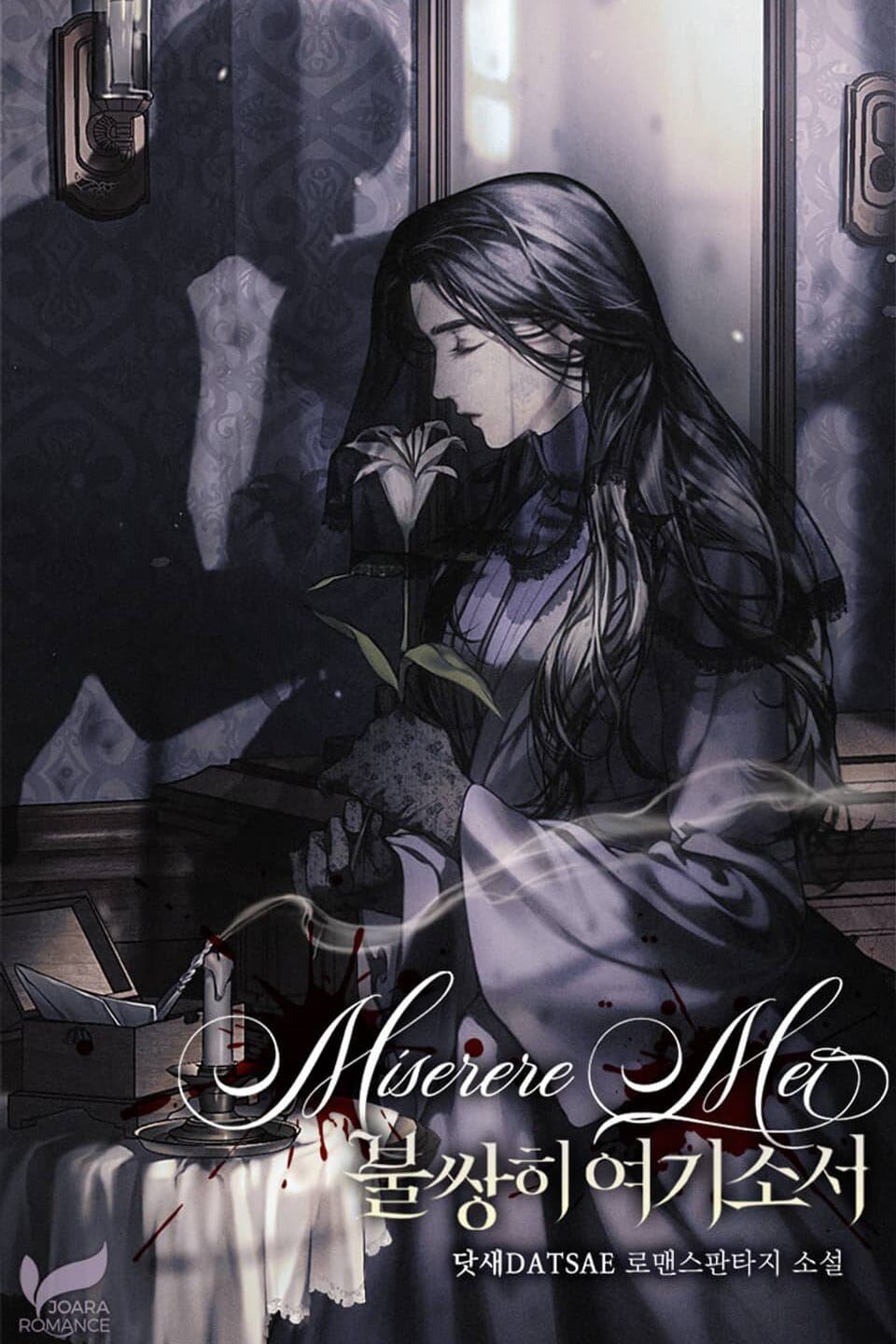
Catherine Linton, an orphaned woman with foreign blood and a tragic past as the daughter of an executioner who raised her, lived a life defined by misfortune and exploitation. Desperate to escape her fate, she encountered Saul Cavendish, a sickly, cold, and detached nobleman dying of a mysterious illness. Saul proposed a transactional marriage: he would provide Catherine with immense wealth and status, and in return, she was to bear him a child to continue the Cavendish bloodline. Despite their emotional distance and the fact that their marriage remained unconsummated due to Saul's deteriorating health and self-harm tendencies, Catherine accepted. Three months after the wedding, Saul died under inexplicable circumstances, leaving Catherine a widow with no heir and a cryptic will insisting she produce a Cavendish child. During the funeral, an intruder named David, a golden-haired man claiming to be Saul's half-brother, appeared. David presented a letter from Saul as proof of his lineage and declared his acceptance of Catherine as his sister-in-law, though Catherine suspected his motives were deceitful given the contradictions in the evidence.

Catherine discovered that the letter David produced did not match Saul's recent handwriting and that Saul had been incapacitated and self-harming during the time David claimed to have received it. Her suspicions deepened when Saul's body, already prepared for burial, suddenly moved inside the coffin. At the gravesite, Saul revived, gasping back to life in front of the stunned congregation. David had exhibited terror at this moment, leading Catherine to believe he knew about the impending resurrection. Saul returned to consciousness but remained weak and bedridden. Catherine, despite her initial cynicism, found herself developing a protective attachment to the fragile man, recognizing that she had fallen in love with him during their brief time together. She resolved to fulfill her promise to Saul, vowing to bear a Cavendish child before he died again.

David moved into Cavendish estate, occupying the guest rooms reserved for close family. His behavior toward Catherine shifted from polite courtesy to unsettling intimacy. He questioned her about her feelings for Saul and warned her that Saul was deceiving her, claiming that Saul could never love her and that her unhappiness would stem from David's own growing obsession. Catherine remained guarded, aware that David's presence threatened her position and her goal. The servants, drawn to David's health and beauty, began favoring him over the still-pale Saul, creating tension within the household. Catherine confronted David about his behavior, but he continued to blur the lines between brotherly concern and romantic pursuit, touching her hand in ways that challenged her boundaries.

As Saul recovered slightly, Catherine spent more time by his bedside, reinforcing her dedication to their unfinished bargain. David, however, became increasingly possessive, telling Catherine that she must leave Cavendish for her own safety. He confessed that he had fallen in love with her the moment he saw her in the chapel, revealing that his return was driven by desire rather than family duty. David warned Catherine that staying would only lead to pain, as he could not bear to watch her with her dying husband. The story concludes with a tense standoff between Catherine and David, as she refuses to leave Saul, and David makes an implicit threat that his obsession will disrupt the remaining time of the Cavendish household.

Latest Release
DateGroupRelease
2026-10-03dusk blossoms c100
2026-10-03dusk blossoms c99
2026-10-03dusk blossoms c98
2026-10-03dusk blossoms c97
2026-10-03dusk blossoms c96
2026-10-03dusk blossoms c95
2026-10-03dusk blossoms c94
2026-10-03dusk blossoms c93
2026-10-03dusk blossoms c92
2026-10-03dusk blossoms c91
2026-10-03dusk blossoms c90
2026-10-03dusk blossoms c89

Community Reviews

Rating(0 / 5.0, 37votes)
5 stars
0(0%)
4 stars
0(0%)
3 stars
0(0%)
2 stars
0(0%)
1 stars
0(0%)

Popular reviews

... Read More
Okay so I need to talk about this gamekeeper scene because OH MY GOD. Catherine goes to the servant quarters, right? She's already suspicious of David, already feeling like the whole estate is plotting against her, and she finds this old guy who supposedly lived there when the brothers were kids. And then he drops this bombshell: he says Saul (the first young master) was actually HEALTHY as a child. Ran around, climbed trees, robust. Catherine is sitting there going WHAT because she's spent her entire marriage thinking her husband was frail since childhood. But here's the thing that wrecked me—when she presses him, he looks genuinely baffled. Like he doesn't understand why she'd think otherwise. Which means everyone has been lying to Catherine about this, or Saul himself has been curating this image of weakness. That's a plot twist that recontextualizes EVERYTHING. Then there's David's behavior. He literally disappears after Saul opens his eyes, and earlier at the cemetery he warned Catherine: "When he wakes, you will be unhappy." But now he's gone. Vanished. No one knows where. Meanwhile servants are gossiping about Catherine and David being seen together in the master's bedroom—rumors that could destroy her reputation if they spread. "When he wakes, you will be unhappy." Those words are echoing through my head like a countdown clock. What did David know that she didn't? What is he hiding? The narrative is weaving SO many threads here—Saul's silence, David's disappearance, the estate's deteriorating atmosphere, and this revelation about the brothers' childhood. It's building this slow-burn mystery that keeps pulling me forward. Every chapter raises three new questions.
... Read More
I can't stop thinking about the ring. The chapter opens with Catherine rubbing the edge of a ring on her right ring finger — and then immediately triggers a sense of déjà vu. A voice speaking like this before. Two voices overlapping. The ring is clearly symbolic of a promise, a bond, a commitment to someone who is gone. Saul. And the déjà vu suggests Catherine has heard these same threats, these same propositions, from someone else before. Or perhaps from Saul himself, in a different context. The ring connects past to present, dead to living, and David's words vibrate against that memory like a tuning fork. The door is the second symbol and it's doing incredible work. David blocks it. Catherine wants to leave. He lets her go when she mentions Saul's name. The door represents choice — or the illusion of it. Catherine thinks she can walk away, but David's hand on her shoulder makes that impossible. Only the ghost of Saul can free her. That's a devastating image: the dead man's name as the only key to the lock. And the razor. Oh god, the razor. Catherine uses it to care for Saul — gentle, daily, devoted. She then uses the same blade on David's neck. The instrument of maintenance becomes the instrument of threat, and back again. When she threatens him with it, he releases her immediately. But the razor isn't really about violence — it's about proximity. It's about being close enough to cut someone and choosing not to. That's the entire Catherine-David-Saul triangle in one object. The warm water is another symbol I keep coming back to. It starts warm, David wrings it out, it goes cold while Catherine works. Fresh water must be fetched. The cycle of warming and cooling mirrors the emotional temperature of the scene — heated confrontation, cooling routine, reheated tension. Water is life (Saul is barely alive), water is care (Catherine's daily ritual), water is also danger (drowning, suffocation, the fluid boundary between living and dead). And finally, Saul's red eyes. Not brown. Not blue. Red. Like blood. Like fire. Like he's been preserved in something that isn't quite water and isn't quite air. What wakes him? The almost-kiss? The violation of his space? Or has he simply reached the threshold on his own terms?
... Read More
Okay so this whole chapter really hinges on that little glass vial Catherine finds in David's coat, and honestly the author plays with misdirection so well here. David gives her the powder the night before, she nearly chokes on the smell, he says it's fine, then later when she's walking back she literally pockets it again? That's not something you do unless you're already planning to investigate. And then she calls Samuel—a servant who happens to examine the powder and acts weird about it—and she lies about where she found it. Every single action Catherine takes here is deliberate, calculated. This isn't a romance protagonist blindly following her heart, this is someone running an investigation while smiling politely. The way the chapter cuts off with David looking at her all bright and sunny after she's literally pocketed evidence from his coat? Chef's kiss. Also the 'accident' comment—that's a dangling plot thread we haven't resolved yet, and David clearly regrets letting it slip. I need to know what happened between the Cavendish brothers.
... Read More
"The blossoms, reminiscent of midday sunlight, slowly unfurled their petals beneath the stream of hot water." I need to talk about this scene. Not the dialogue—though the dialogue is incredible—but the atmosphere. The author builds this entire world around small sensory details that make you feel like you're actually in the room. The teacups. The glass jar containing delicately dried marigolds with a faint reddish tint. The butler placing baked treats attractively on the table. The door closing with a soft thud. The warmth lingering in the air after everyone has left. Catherine watching the unseasonable flowers bloom until the room is just her and David in silence. This is a room that feels alive. You can smell the tea. You can feel the warmth on your nose. The lamp light catches David's scattered golden hair and makes it resemble the flower in the teacup. I paused reading just to process that comparison—the brother's hair mirroring the dried marigold. The author is weaving visual poetry into a scene that's already emotionally explosive. And the silence. The author keeps returning to silence as a character itself. "Even after that, the room remained wrapped in silence, permeated only by a gentle warmth." Then: "the shallow silence began to touch their feet." Silence isn't empty here—it's heavy, textured, almost physical. It presses down on Catherine and David as they sit across from each other, separated by a table and by everything they're not saying. The window outside is pitch black. No stars visible. Catherine knows continuing this conversation would be pointless. She blinks once, exhales softly, and whispers her response. The darkness outside mirrors what's happening inside—the absence of guidance, the uncertainty, the void where answers should be. When David tilts his completely cooled teacup, the flower slides along the surface, taps her lips, and drifts away. This image repeats like a motif. First it appears when David mentions apologizing. Then it happens again during the confessional moment. Each time, it marks a shift—a transition from one emotional state to another. The marigold is a silent narrator, present at every turning point. This scene is a masterclass in atmospheric writing. The world feels tangible, the emotions feel earned, and every detail serves the mood. I can picture this as a film—the warm amber light, the steam rising from teacups, the black window, the flower drifting away. Absolutely cinematic.
... Read More
I keep thinking about how confined this entire chapter is. We're in one room. Maybe two if you count the doorway. The lamp, the bed, the window, the basin of water — that's basically the entire universe of this scene. And the author makes it feel suffocating in the best way possible. Let me paint this picture for you because it's gorgeous: David wringing out a warm cloth over a basin. The sound of water dripping — SPLISH. That single onomatopoeia doing so much work. The warm water cooling while Catherine shaves Saul, creating this whole logistical dance between her and David that says more about their被迫 coexistence than any dialogue could. The lighting matters enormously too. David stands with his back to the lamp, casting Catherine in shadow. She's "buried in the shadow he casts" — that's not just physical description, that's thematic. He controls the light. He controls what she can and cannot see clearly. And when Saul's eyes open, the first thing we get is visual: "red eyes staring at them from the bed." Blood-red, not brown, not black — red. Like he's been burning alive in that coma and just erupted. There's this recurring sensory detail of warmth and cold that I think is doing heavy lifting. Warm water for the cloths. Catherine's fingertips feeling David's "lukewarm cream" and his pulse. The warm water going cold while she works alone. Then David bringing fresh warm water as if he's been monitoring this exact detail. The body heat of proximity. And contrasting against it: the coldness of David's blue eyes, the chill of the door knob, the clinical nature of Samuel the physician's visits. The door itself becomes this recurring motif — David blocking it, Catherine trying to leave, the handle between them. It's the threshold between freedom and entrapment, and neither of them will let it swing. The cemetery commotion three days ago is referenced but never shown. We only know about it through absence — the shadow it cast, the fact that Saul hasn't woken since. That off-page violence lingers in every description of this room.
... Read More
I am NOT okay with how David is written here. Every time I think I understand this character, he does something that completely undermines my reading of him. At the funeral, he's being all sweet—holding the umbrella over Catherine, steadying her arm when she stumbles, whispering that the wind is cold. Feels like the caring companion, right? Wrong. When Saul's coffin starts moving and they haul it back up, Catherine catches David's face through the rain and sees 'an unexpected terror.' Not surprise. Not confusion. TERROR. As if he KNEW this was going to happen and was horrified that it actually did. And then later, when the physician and priests and butler are all arguing outside the bedroom, David is the ONLY one who seems to already know what's going on. Catherine notices it too—she thinks, 'Perhaps not even Saul himself and... Except for David.' This guy is playing 4D chess while everyone else is still trying to figure out if we're watching a resurrection or a nightmare. The way he sits down quietly opposite Catherine with just those two words—'I'll stay with you'—it's so controlled and calculated. Who IS this boy? Is he on Saul's side? Catherine's side? His own?
See all reviews

Custom lists

See all custom Lists