Miserere Mei: Have Mercy Upon Me - Reviews

Miserere Mei: Have Mercy Upon Me
+Add to Custom List
Sort
Add review
... Read More
What is this story actually about beneath all the blood and rain? I keep coming back to the idea of death as a commodity, something that can be bought and sold and apparently... returned? Catherine literally sold her death to Saul. It's a transaction. But then Saul dies and comes back, which means death itself can't be owned or controlled. The blue blood versus the red blood distinction keeps appearing—Catherine becomes 'Blue-blooded Catherine' by stepping over red blood, and now Saul has red eyes when he returns. Is he still human? Is he still Saul? The wound on his palm, the one that hadn't healed by the time he drew his last breath—that detail is haunting me. It's still there, visible, a physical reminder that death touched him and left a mark. Even resurrection doesn't erase the evidence. And Catherine's entire arc seems to be about people dying and leaving her behind—mother, foolish father, everyone—and then Saul, the one person she made a deal with, the one she's investing in, comes back wrong somehow. The recurring motif of hands is striking too. Cold hands, gripping hands, trembling fingers, the physician's hands examining Saul, David's hand on Catherine's shoulder. Hands are how people connect and hurt and control each other in this story. What happens when death touches you and you come back—is the person who returns still capable of that kind of human connection?
... Read More
"Everything seemed ready. Instead of answering, she removed her hand from Saul's cheek and placed a kiss where it had been. She gazed at him for a moment, as though committing his image to memory, before rising from her seat." I am NOT OKAY. This is the most quietly devastating moment in these chapters and I need to sit with it. Catherine has been through absolute hell—her husband was DEAD, she watched him come back to life with RED EYES that stared at her like he was seeing her for the first time, her own husband's brother is acting increasingly unhinged around them, and now she's sitting beside this bed watching Saul breathe, knowing the world outside is closing in on her. And in this moment of pure vulnerability, she does something so tender it breaks my heart. She doesn't wake him. She doesn't speak. She just kisses the air above his cheek and memorizes him. Like she's saying goodbye before something irreversible happens. The intimacy of it though—the way she touches his face, smooths his disheveled hair, strokes his pale cheek earlier—there's this fierce devotion underneath everything. She's terrified. She's confused. But she hasn't left. Not once. And David's jealousy! When he saw Saul staring at Catherine, his reaction wasn't just protective—it was primal. "His lips were pressed together with such force they appeared pale." He's losing his mind over this, and he won't tell her why. Meanwhile Catherine is trying to hold her own life together, managing rumors, playing social games, and still finding moments of genuine tenderness with a man who can barely look at her without those alien red eyes. The love triangle here isn't romantic in the traditional sense—it's layered with duty, fear, devotion, and something neither Catherine nor David fully understands yet. And I am OBSESSED.
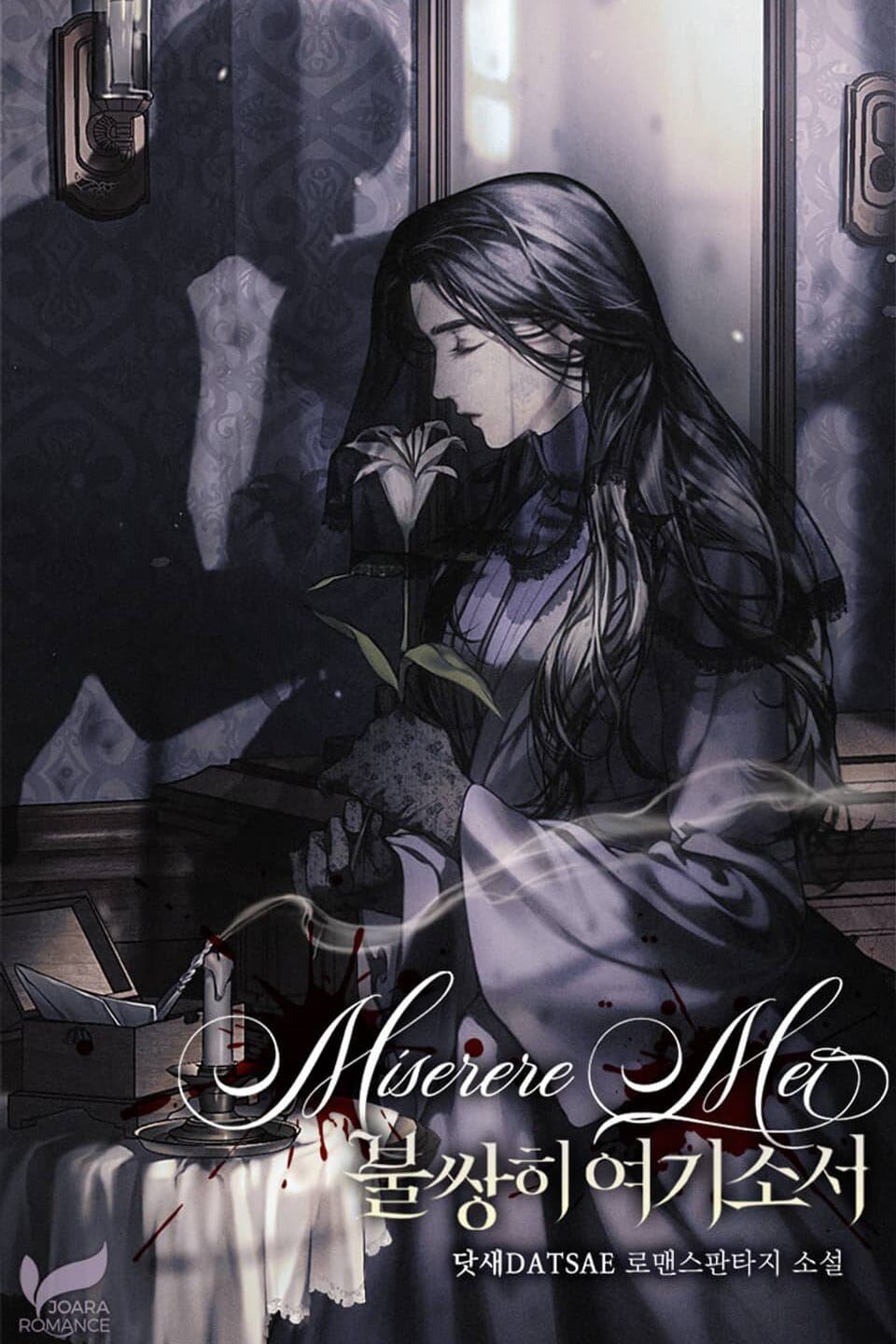
... Read More
Okay so let me just say—this chapter is a masterclass in dramatic irony and tension-building, and I need to sit down after reading it. Here's the thing: Saul is supposed to be dead. He WAS dead. And yet here he is, breathing, weak, barely alive, while David—the "Count's brother" (who by the way the gamekeeper literally just confirmed—is the one standing vigil, the one who carried Catherine, the one who hasn't slept or eaten. Meanwhile, the servants are gossiping about switching their allegiances because Saul looks like he might keel over at any second and David is handsome and alive. But the REAL plot twist that hit me like a truck? Catherine's own realization. She touches Saul's hand—"thin and damaged beyond repair"—and immediately reaches for it, chooses it over David's. That's not just plot development, that's a character turning point. She's accepting her fate, accepting that she loves Saul despite everything, and accepting that her life is now tied to a man who's literally a ghost walking. And the author doesn't rush any of this. The pacing is deliberately glacial in the best way—Catherine waking up, the revelation about the gamekeeper, the whispered conversation with her maid, the climb upstairs, the discovery of David praying beside Saul's bed. Each beat lands before the next one hits. The servants' gossip about David is introduced almost casually, then paid off when Catherine actually sees him there. The priest's hasty departure gets mentioned in passing but creates this background sense of "something big is happening and the church knows." I also love how the mystery around Saul's revival isn't explained at all. The priest was "on fire" to spread the news. The gamekeeper confirmed David's identity. None of these threads are resolved—they're just layered on top of each other like the author is building a pressure cooker. What happens when these things collide? I'm not ready for this book to end and also I can't stop reading.
... Read More
Let me just say: the clapping hands. That image. That sound. It's everywhere in this passage and it means something. In Catherine's memory, the clapping precedes the executions — the guard post where children were left while the adult world dealt in death. But it's also present in the Cavendish story, where the brothers and their hunting dog represent a different kind of order: the civilized manipulation of nature, the taming of wild things for human purposes. The hunting dog is the key symbol here. It obeys the brothers' commands. It dies mysteriously alongside Saul's collapse. And then it attacks Catherine. The same animal that once represented harmony between the brothers now represents pure predatory threat. What changed? The dog didn't. Something about the world around it changed, and the dog adapted. Catherine's nightmare is structured like a ritual. Clap. Clap-clap. Clap-clap-clap. The acceleration of the sound mirrors the acceleration of her panic, but it also feels liturgical — like a ceremony she's trapped inside, forced to repeat the role she played as a child: witness, then victim. The text says "the nightmare that had gnawed at her for so long seized her shoulders and pulled." Gnawed. That's a animal verb. The boundary between human trauma and animal instinct keeps breaking down. And the wind. The cold. The darkness. These aren't just atmosphere. Catherine walks through a world that literally turns against her senses — sounds come from everywhere and nowhere, visibility shrinks to the diameter of a candle flame, the wind blocks her path. The estate itself seems to be participating in her psychological unraveling. Is Cavendish Castle haunted? Or is it simply that trauma makes environment feel hostile? The text refuses to answer, and that refusal is the point. Some questions don't have answers, only experiences.
... Read More
The pacing here is tight but it works because each beat escalates differently. First we have the emotional beat—David sitting on cold ground, realizing he's been an idiot, Catherine walking away with his coat. Then the discovery beat—she finds the vial, examines it, recognizes the powder from the chapel night. Then the investigation beat with Samuel, which is shorter but adds mystery. Then the走廊 scene that feels almost deceptively light, like the chapter is gonna end on a sweet note, but we KNOW Catherine just pocketed evidence from David's coat and called a servant to test a mysterious powder. The author could've ended on the Samuel scene but chose to follow up with David being charming, which creates this ironic gap between what we know and what the characters are performing. That dissonance is what keeps me reading.
... Read More
Okay so can we just talk about how David's entire character in these chapters operates through PHYSICAL SPACE and touch? Like, the guy doesn't know how to communicate anything except through proximity violations. He blocks doors. He grabs shoulders. His fingers literally 'climb up Catherine's shoulder like a spider' — that imagery is NOT accidental, author. He's predatory and he knows it. But here's the thing that actually got me: the shaving scene. That's when I really understood David. All this time I was reading him as some straight-up villain who's about to hurt Saul, and sure, he absolutely IS that threat. But then you see him gently wiping Saul's body, helping Catherine with warm water, learning her routine like he's been watching her do this for weeks just to fit in. That's not just scheming — that's someone who has never been allowed to care for anyone and is desperately trying to learn the language of tenderness through observation. His question 'May I kiss you?' while she's holding a razor to his neck? That's not flirtation. That's a kid testing whether he's allowed to be close to things. And when Catherine calls him out on lying — he doesn't even deny it anymore. He just says if it makes her uncomfortable, he won't stop. That's not confidence. That's someone who has decided that honesty is a luxury he can't afford. The brother dynamic is fascinating because Saul never seems to have spoken about David at all. That absence of history between them is louder than any backstory could be. Who raised them? Who loved whom? Why did Saul never mention his brother on his deathbed? David's fixation on Catherine feels connected to something deeper — maybe she's the only person Saul chose to be close to, and David is trying to insert himself into that space. And that ending. Saul's eyes opening while Catherine and David are literally touching — trapped in an awkward intimate moment — and suddenly the whole power dynamic shatters. David bolts out of the room. Catherine is already beside Saul before anyone else. He's not the one who catches Saul first. He's not even the one who called for the doctor first. In that moment of crisis, he's irrelevant again. That's going to haunt him.
... Read More
"This was the hand Catherine should be holding—not the hot, firmly-boned hand from before, but this one." That sentence destroyed me. I had to put the book down and stare at the wall for a full five minutes. Because Catherine DOES choose Saul. She physically reaches for his hand after David's touch, and in that gesture she's making a decision that will define the rest of this story. But here's what makes it so emotionally complex: she doesn't choose him proudly or passionately. She chooses him with a wry smile and the thought "Foolish Catherine... you will never escape misfortune." This isn't a romantic declaration. It's a resignation. It's a woman who knows her fate and accepts it anyway. And that's what makes the emotional core of this book so achingly real. Catherine isn't torn between two lovers in some sort of fantasy romance. She's torn between duty and desire, between the man she married and the man who has shown up at the worst moment of her life and refused to leave. The warmth she feels when David touches her isn't just romantic—it's the warmth of being seen, being cared for, being the center of someone's universe when she feels like she's barely holding her own together. The scene where she strokes Saul's cheek with her lips pressed together is one of the most intimate moments I've read in this book. It's not sexual. It's not even really romantic in the conventional sense. It's grief and love and guilt and commitment all compressed into one gesture. She's mourning him while he's still alive, and she's grateful he's back, and she's terrified he'll die again, and she's wondering what the hell she's supposed to do with a man she married briefly and loved maybe a little. Meanwhile David is just... there. Praying beside his dead brother's bed. Caring when no one asked him to. And when Catherine finally looks up and meets his eyes, she blinks and looks away. She CAN'T face what's happening between them, not when Saul is lying right there. The emotional whiplash in these pages is intentional and brutal, and I am here for every second of it.
... Read More
I need to process what just happened in this chapter because the shaving scene alone wrecked me and I'm not okay. On the surface it's ridiculous — David sitting on a windowsill so Catherine can shave him, them bending and adjusting heights like they're solving a geometry problem. There's genuine humor here. Catherine literally thinks he's about to pull some prank and she's SO DONE. And then: "David wrapped both hands around Catherine's waist and pulled her forward. Before she could react, Catherine found herself practically falling into his embrace." My heart stopped. This is the moment where everything could have gone differently. She's holding a RAZOR. He's asking to be kissed. The tension is so thick you could cut it with — well, with the razor she's holding. And he KNOWS she's holding a razor. That's not recklessness, that's him saying "I want you to choose me even when it's dangerous." But Catherine's reaction is everything. Her first instinct isn't romance — it's "You'd better not forget what I'm holding in my hand." She grounds herself in the danger, in the reality of the situation, and pulls away. She doesn't fall for it. She doesn't soften. And I respect that so much. What kills me is David's response: "Oh my." Just two words. An exaggerated look of surprise. He releases her immediately. Not angry. Not pushy. Just... disappointed in himself? Like he knew she'd say no and he did it anyway just to feel something. And then Saul's eyes open. The entire romantic tension of the scene evaporates instantly, replaced by pure terror and relief. It's the most perfect subversion I've ever read. The author set up this almost-kiss, this moment of forbidden attraction between Catherine and David, and then yanked the rug out by having Saul wake up. Not only does it save Catherine from a moment she clearly didn't want, it makes David's entire pursuit feel dangerously irresponsible. The emotional whiplash from comedic awkwardness → romantic tension → full-blown panic is brutal and I love it. My pulse was actually racing.
... Read More
"Remember, Catherine." "You are now the mistress of Cavendish." This flashback hit me like a truck. I kept reading it over and over. Saul placing that ring on Catherine's finger—his fingertips tracing the edge of it, whispering those words with such solemnity. It's the most powerful moment in the entire book, and I'm still not over it. Catherine thought at the time she understood what the promise meant. One child for Cavendish. That was it. But looking back, she realizes maybe Saul was giving her a way out. A subtle invitation to run. And she chose to stay anyway. What kills me is the line: "Perhaps at that moment, Catherine instinctively realized she couldn't keep that promise." She knew she'd come to love him. She couldn't help it. And yet she still made only one promise—one condition—because she wanted to protect herself from something she couldn't name. Then compare this to David. David who touches her openly, grabs her hand without asking, blocks her path at the doorway. David who says "Since I've behaved poorly, please at least allow me to escort you" while gripping her arm. Catherine wants Saul's cold politeness right now. She wishes it were Saul's hand instead. But David's hands are warm. His eyes are blue like Saul's. Their habits are identical—the way they fold napkins. They're the same man and completely different men. And then David breaks. He buries his face in his hands and whispers that he loves Catherine. Not just any love—love from the moment he saw her in the chapel. Catherine doesn't correct him when he says "you loved him." She just lets it hang there. I'm sitting here with so many feelings about these three people. Catherine is caught between a man who gave her everything but never said he loved her, and a man who is confessing love in the worst possible moment. The Cavendish brothers are two halves of the same coin—one restrained, one reckless—and Catherine is standing right between them. God help us all. How long can this triangle hold before something snaps?
... Read More
The dialogue in this chapter is basically a study in two people who refuse to actually communicate with each other. Take the opening exchange: "Are you going to be a scoundrel?" / "Am I not allowed to love you?" These lines literally cut across each other. They're not responding to each other — they're performing at each other. Catherine is setting a boundary and David is treating it as romance. Neither is listening. And then: "What are you doing…" / "If Saul hadn't come back to life." Catherine starts to ask about his behavior, and David pivots to Saul. He won't even finish her question. He answers a question she didn't ask. This is their entire dynamic — David talks PAST Catherine, around her, through her, but never TO her. But the most interesting dialogue happens when they stop arguing and start doing things. The shaving scene is almost entirely action — gestures, positions, the rustle of towels, the scraping of the razor. When David asks "Would you do it for me too?" it's casual, almost childlike. And Catherine's response — just nodding, saying "All right, sit down" — is so dry and practical that it contrasts hilariously with whatever he was expecting. The line that stuck with me most is David's: "If that makes you uncomfortable, I won't stop." He's not apologizing. He's not explaining. He's stating it as a fact, almost proudly. This is someone who has weaponized his own discomfort and made it Catherine's problem. And Catherine's line — "You seem more dangerous now" — delivered with such flat resignation. She's not frightened anymore. She's annotated him. She's catalogued him. That's more alarming than any scream would be. The dialogue overall has this sharp, clipped quality. Short sentences. Interrupted thoughts. Things left unsaid that weigh more than what's spoken. The author clearly trusts the reader to understand what characters aren't saying, and I think that's why the conversations feel so real — because real people rarely say exactly what they mean.
... Read More
The stakes in these chapters are layered in a way that keeps escalating, and I want to unpack how the author builds this suffocating sense of tension. On the surface level, the stake is simple: is Saul alive or dead? He was pronounced dead, he was buried, and now he's... breathing? The novel refuses to explain this, and that refusal IS the tension. Every character reacts differently to this impossibility. The priest wants to spread the news. The servants want to survive it. David wants to protect it. Catherine just wants to understand it. But the real stakes are emotional and relational, and they're far more dangerous. Catherine's marriage to Saul is already established as fragile—brief, possibly loveless, certainly complicated. Now Saul has returned from death, and Catherine finds herself feeling something for another man who has been faithful to her in ways Saul apparently wasn't. The conflict isn't just external (will Saul die again? who will inherit Cavendish?)—it's internal (what does Catherine owe to a man she's not sure she loves, vs. what she's starting to feel for a man who shouldn't exist in her life at all?). The servants' gossip adds a third layer of stakes. They're not just observing—they're calculating. If Saul dies, David becomes master. Their loyalty will follow power, not marriage. This means Catherine's position is precarious not just emotionally but socially. She's a widow by all appearances, married to a man who may or may not survive, watched by people who are already planning for her replacement. And David himself is stakes. He's the Count's brother—confirmed by the gamekeeper. He's been caring for Saul not because he has to but because he chose to. But his choice has consequences. When he touches Catherine's ring finger, he's not just expressing desire—he's making a move in a game where the board is a dying man's bedroom and the prize is a woman who belongs to someone else. The author maintains suspense by never letting any of these threads resolve. Saul remains unconscious. David remains ambiguous. Catherine remains conflicted. And we're left gripping the edges of our seats, waiting for the next page to tell us whether anyone in this story is going to survive intact.
... Read More
Okay so I NEED to talk about the funeral scene because my jaw is still on the floor. We just read through all this buildup about Saul dying—Catherine literally says she expected him to die like everyone else around her—and then at the cemetery when she's throwing dirt onto his coffin, THUMP. Something knocks from INSIDE. And I swear the author had me on the edge of my seat through this entire passage. The pacing is absolutely vicious in the best way. First you have the quiet, almost ritualistic burial, the priest reciting prayers, Catherine and David standing behind him in proper bereaved positions. Then it all shatters. People shouting, the coffin being pulled back up, Catherine pushing through everyone to get to him. And then—Saul is ALIVE. Gasping. Coughing. His eyes red for some reason nobody explains yet. What got me was that single line: 'He had definitely drawn his last breath.' The physician confirmed it. Everyone confirmed it. And yet here he is, alive, grabbing Catherine's neck with cold fingers before collapsing again. The cliffhanger nature of this whole sequence is chef's kiss. I flipped straight to the next chapter without even processing what I'd just read.

Leave a comment

You must be logged in to leave comments. or
