Like Fire Meets Gunpowder - Reviews

Like Fire Meets Gunpowder
+Add to Custom List
Sort
Add review
... Read More
There's this whole backstory about Jade Camelot that the narrative slips in organically, and it does so much work. He was once celebrated as the most handsome man in Hailion — Holy Knight, the title given because of Jade Camelot itself. His face alone made gifts pour in until Camelot Castle's storerooms ran out of space. The Ordo servants got mocked by Camelot lackeys for having no handsome heir, and you can feel Rose's bitter memory of that. Then the reversal hits hard. Jade's behavior during marriage meetings became so atrocious that proposals stopped entirely. 'The horse dung smell is something else. I've developed a horse dung aversion lately, so I walk most distances.' This man deliberately destroyed his own reputation. And now he's here, at sixteen or so years old, wandering back into Rose's life like nothing happened. Meanwhile Rose has her own world — she's known as a woman who can handle a sword, which gives her freedom from scrutiny. The plot here isn't about big battles or political intrigue in this passage. It's about two people whose families were once enemies sitting together in warm water, trading candy and rings, pretending everything is normal between them. But nothing is normal. Why is he really back? What was he running from? Those questions are simmering under every calm sentence.
... Read More
The structural arc of these chapters is something I can't stop thinking about. It starts at maximum voltage — Resias scandal, Piar ready to kill someone, diplomatic incident brewing — and then systematically deflates every tension point until it lands on something painfully quiet. Chapter 27 opens with Shurelli's toothless pride about attending a Resias meeting. Within three paragraphs, Piar's neck is cracking and Rose is dodging feudal-level offense. This is the story telling us: EVERYTHING matters here. A children's game can start a war. Then Rose smoothly handles the diplomatic crisis with Benyamin. The tension releases. We get Anne's matchmaking scheme. We get Rose's internal monologue about the impossible qualities she needs in a husband. The pacing slows down to domestic scale. Good, right? Comfortable? No — because Rose just told us herself that she couldn't picture 'a future where reckless Piar, or even Rose herself, married a wonderful partner and raised a beloved child.' The calm isn't calm. It's the eye of a storm that hasn't finished forming yet. And then the handkerchief scene. Nineteen proposals. Nineteen failures. The author could have made this melancholic, but instead it's practical — Rose is using embroidery as a way to pass time while the political world spins around her. It's almost boring on purpose. Let the reader settle. Let them forget they're being set up. Then Shurelli asks about the ring. And suddenly the pacing pivots again — from domestic quiet back to the mysterious figure in the fog forest. The chapter ends not with a bang but with a child's whispered fantasy about princes and monsters, and Rose playing along. The structure is brilliant because it mirrors Rose's own life: political crisis, domestic performance, and then private longing that she can never quite name out loud. The final image — Rose picturing herself bringing a 'gorilla prince' to meet Shurelli and wanting to 'burst out laughing' — that's the structural key. Laughter as defense mechanism. The chapter ends on humor because that's the only emotion Rose allows herself to feel privately.
... Read More
Let's talk about pacing because this author clearly knows what they're doing. Chapter 1 starts at MAXIMUM VOLUME with Sir J's speech. It's loud, dramatic, almost theatrical—a man standing in a square screaming his heart out. And then? Immediate cut to the quieter, more intimate space of Rose's room. The contrast is jarring in the best way. You go from a public declaration to a girl trying on earrings while her mother and maid hyperventilate behind her. The shift in energy is like someone opening a window after a thunderstorm. But here's what's clever—the pacing doesn't just slow down, it changes texture. The earlier part is all external conflict: duels, rival houses, political marriage proposals, an empress who hates your family. Then it pivots to something more personal and claustrophobic: the domestic chaos of the Ordo household, the suffocating expectations, Rose's quiet desperation. And then BOOM—another shift when Terra bursts in about her brothers drawing swords in the palace. Just when you think the story is settling into a character study, it slingshots back into action. The ending of this batch—Rose running through the garden and hearing THAT voice—lands like a slap. The pacing builds and releases and builds again so naturally that I didn't even notice I was flipping pages until three hours had passed. The author doesn't waste a single scene. Even the seemingly quiet moments (Vivi reading stars, Anne fixing Rose's blush) carry underlying tension about what's about to explode.
... Read More
The ring exchange between Jade and Rose is carrying so much more weight than a simple trade. Rose choosing the ring with the rose-colored gemstone that resembles a rose diamond — the very stone associated with empresses and impossible wealth — feels symbolic on multiple levels. She names it after herself, essentially, and it fits her perfectly. Meanwhile the Karshi candy is described as luxury confectionery made from Ordo's closely guarded recipe, rumored to boost stamina. These are the currencies of two houses that used to be at each other's throats. The hot spring itself operates as neutral ground, sacred space where 'sacred forces hold sway' and territorial disputes between human and beast would be absurd. Rose explicitly frames her interaction with Jade as encountering a wild animal — neither human nor beast would seriously dispute territory here. Names matter enormously in this text. 'Holy Knight' was originally tied to Jade Camelot's beauty before becoming slang. 'Jade Camelot' became a forbidden word among Hailion's women. Rosemaria Ordo is introduced in full, almost ceremonial form before Jade drawls 'Roooosemariaaaa' and destroys all dignity. The ring gleams in the sunset light, and Rose curls her fingers carefully to keep it from slipping off — as if holding onto something fragile. This isn't just romance brewing. It's two heirs from rival houses negotiating a new kind of territory, one candy and one ring at a time.
... Read More
What struck me most here is how every single interaction between these characters is a loaded gun disguised as courtesy. Take Anne and Benyamin — on the surface it's just a sweet aunt playing matchmaker, right? Wrong. The second Eva drops that line about considering Benyamin for Rose, Anne and Vivi let out a shriek. A SHRIEK. Like they'd been waiting in the wings for exactly that opening. And then Anne's internal monologue about Benyamin being a 'rival among the ten great vassal houses' and the risk of him becoming an 'obstacle in Ordo's path' — that's when you realize this whole matchmaking moment was political theater from start to finish. But the real character depth comes from Rose. Her refusal of Benyamin isn't just about not being ready. Listen to what she actually thinks: 'She needed a man who could hold his ground without being swept up in the united chaos of the Ordo household. A man who would stand unflinchingly on her wife's side even when she was up against her own family's enemies within.' This is a woman who has studied her own family like a battlefield map and knows exactly what weapon she needs — or rather, what kind of person could survive them. That's not romantic hesitation. That's tactical survival instinct. And then there's the relationship between Rose and Shurelli. The child who 'could see both parents at once' only during the spring and autumn visits is basically the glue holding two formerly-warring houses together. Rose calling her 'a miracle' and thinking 'Maybe that's why I can't give up on Ordo, even as it drives itself to the edge of a cliff' — this is the emotional core of everything. Shurelli isn't just a cute niece; she's the entire reason Rose is still fighting. The Jade situation at the end is fascinating too. Rose tells Shurelli a fairy tale about a 'monster' in the forest, but we know it's Jacques — or rather, the Camelot heir. The fact that Rose literally pictures herself bringing a 'savage gorilla' prince into House Ordo and laughing at how absurd that would be tells us everything about how she sees her own world: as something so toxic that even romance would be a joke.
... Read More
Let's talk about the ring. A rose diamond. Given by a 'monster' from the fog forest to a woman who is clearly being courted by the heir of Camelot — the very house her family considers lower than monsters. The symbol writes itself almost too perfectly, and that's what makes it dangerous. The Resias assembly itself is the central metaphor of these chapters. It was a gathering of equals — Ordo, Biella, Camelot as 'twin pillars' — that shattered after the founding emperor died. The text is clear: when Ordo and Camelot's relationship broke, 'both families' standing collapsed alongside it.' They fell together. They were always meant to fall together. And now the eastern families are holding their own version of Resias without inviting either of them. The assembly that was supposed to unite the great houses is being rewritten by those who were excluded. That's not just plot — that's a statement about who gets to define history. Shurelli is a walking symbol. She is the living proof that Ordo and Basil — two houses that 'nearly became mortal enemies' — can coexist. She is the child who 'could see both parents at once' only twice a year. She represents everything the Ordos are fighting for (family unity) and everything they're failing at (peace). When Rose thinks 'Maybe that's why I can't give up on Ordo, even as it drives itself to the edge of a cliff,' she's really saying: Shurelli is the only innocent thing in a world where innocence gets used as leverage. The 'Hippity-Hop Miss Pink Bunny' picture book is another layer I can't let go of. Rose and Shurelli reading the same worn book for the sixth year running — six years of the same story, the same gifts, the same 'prince' giving presents to the bunny princess. And Rose is literally inventing a new fairy tale about a monster-prince who gives HER a rose diamond. The book-within-the-book structure is the author's way of saying: we are all living stories we didn't choose, and the only question is whether we'll let the ending be ours. And that ending Shurelli imagines — 'the prince who was turned into a monster came to find Aunt Rose. Because she's his destiny' — is the most dangerous idea in these chapters. Not because it's true, but because Rose is letting a child believe it. Because maybe, just maybe, she wants to believe it too.
... Read More
The stakes in this opening are layered in a way that made me sit up straighter than I expected. On the surface it's a romance: girl meets boy, families hate each other, classic setup. But the author keeps raising the price tag. First layer: Rose's personal stake. She's being asked to abandon her family to marry a prince. 'Sever your ties with House Ordo'—that's not a negotiation, that's an ultimatum from the Empress herself, who openly contemptuous of Rose's house. The conflict here is intimate and brutal: do you choose love and lose your family, or keep your family and deny yourself? Rose says no to both, which is somehow the hardest choice of all. Second layer: the political stakes. House Ordo is already on life support. The text says they're 'one of the top three causes of the Emperor's hair loss' and their reputation is absolutetrash. A marriage to a prince could save them—or it could be the nail in the coffin if the Empress's condition forces Rose to disown her own blood. Third layer: the duel threat. Sir J has publicly declared that anyone who opposes his love should 'step forward with honor and challenge me to a duel.' This isn't just romantic bravado—it's a political statement. He's basically declaring war on the social order that keeps his house and hers apart. And the fact that his own house is asking 'why do you love her instead of fighting?' tells you the feud is still very much alive. Then there's House Camelot showing up at the palace with swords drawn. Five years of absence and they return at the worst possible moment. The stakes keep compounding and by the time Rose runs into that garden and hears a voice she thought was gone forever, I was genuinely worried for everyone involved.
... Read More
Let me just say this: the author's control of pacing in this chapter is absolutely ruthless and I respect it so much. It opens slow and intimate—two characters in a hot spring, unhurried conversation, the kind of scene that makes you want to lean back and savor it. Then the hoofbeats interrupt and suddenly everything accelerates. The family scramble, the comedic chaos of Anton and Piar, the little father-daughter moment with Shurelli that somehow makes you love them more. Rose watching her brothers train, realizing this is the first time in twenty-two years House Ordo has looked like a proper knightly family, contemplating whether war might actually be the answer—then immediately shooting that thought down. And just when you think the chapter is going to settle into this warm family moment, BOOM. The newspaper headline. Grafa Bank's new deputy director appointment. Robert running in trembling. Anton and Piar dropping everything. "The Vitali Grand Duc"—and then it cuts off. The structural genius here is how it moves from personal (Rose and Jade's promise) to familial (the Ordo household coming together) to political (the Empire's financial powers shifting) all in one chapter. Each section escalates the stakes without feeling rushed, and that ending? A cliffhanger that connects personal drama to empire-level consequences. The author doesn't just dangle a secret—they connect it to everything Rose cares about.
... Read More
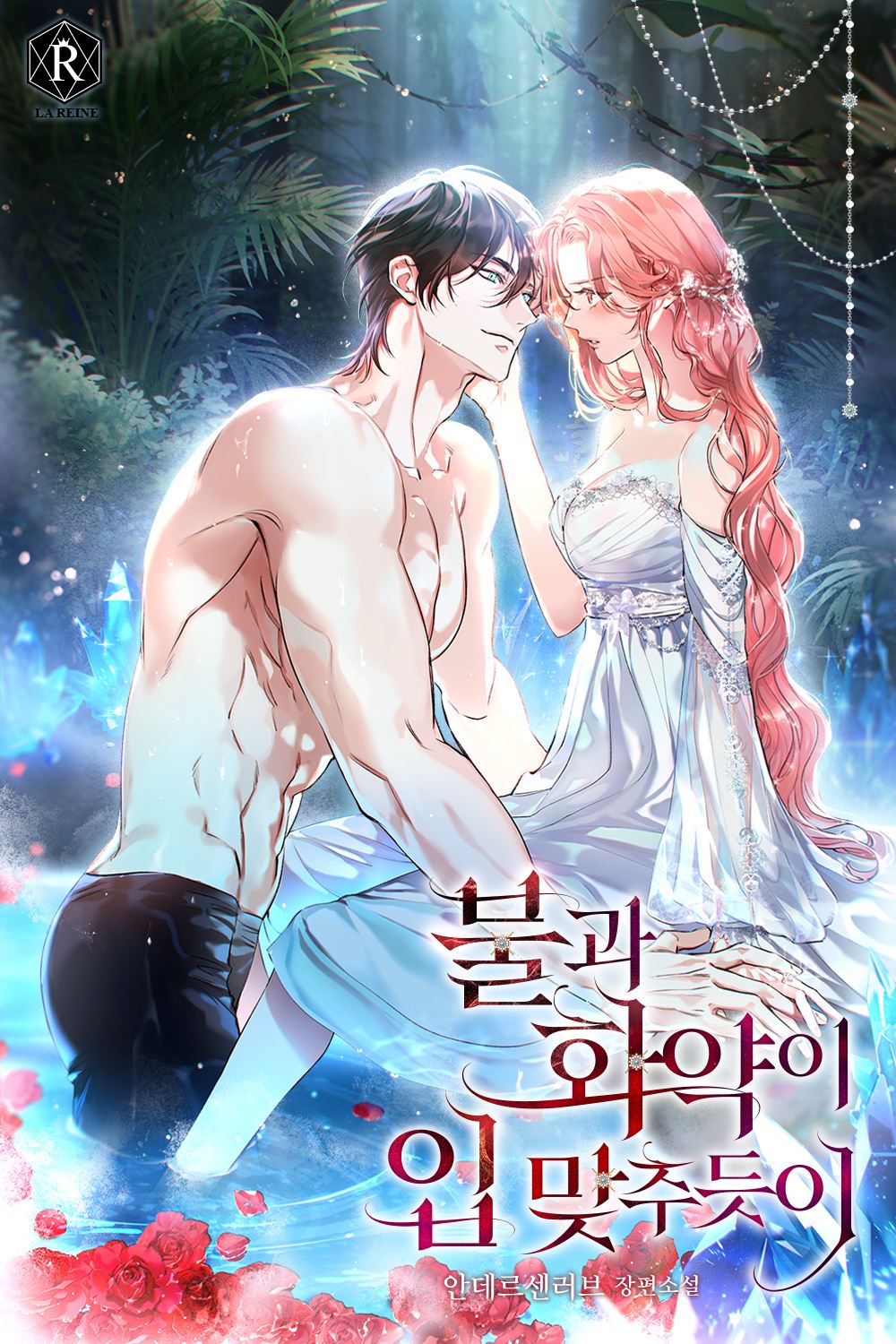
"You tormented a poor wolf over a bag of candy? The only thing that's grown in five years is your body, Jade Camelot." Rose, you absolute unit. This is my favorite line in the entire chapter and I will die on this hill. The dialogue between these two is just... impeccable. Every exchange feels like they're speaking a language only they understand, packed with references and history that the reader gets to eavesdrop on. Terra is there making sound effects but she's basically a commentary track, and Rose and Jade are having an entire conversation in glances and half-finished sentences. Jade's voice is distinct—sharp when he's cornered, evasive when he's uncomfortable, and devastatingly honest in those rare moments when the armor cracks. "Today all I have is my body." The delivery here is everything. He says it flatly, like it's a genuine offer, and Rose just shuts it down without missing a beat. That's comedy gold. But the real brilliance is how the dialogue reveals character without any narration needed. When Rose says "I suppose I will [get married]," we hear everything she doesn't say. The hesitation, the calculation, the faint desperation beneath the practical answer. And Jade's response—"You will?" repeated with that meaningful look—tells us he's not asking for information, he's asking for reassurance. The Alberty Berna exchange is a masterpiece of misdirection. Rose throws the name out casually, but Terra volunteers ALL the details like she's reading from a dossier. "Twenty-one years old, 185 centimeters tall, hobby is playing the violin." Who needs this level of intel? Terra is basically the hype woman nobody asked for. And Jade's defense mechanism kicking in—attacking the violist, comparing him to Rose—while simultaneously revealing he's been monitoring marriage prospects for her? The subtext is doing overtime here. The dialogue never feels written. It feels overheard. And that's incredibly difficult to achieve.
... Read More
I'm still recovering from the candy scene. Let me just say it again: ROSE PUT CANDY ON HER LIPS AND JADE MADE A GROWLING SOUND LIKE A STARVING WOLF. Not metaphorically. Actually grrrr'd. Like the actual wolves outside. The parallel is not subtle and I am HERE for it. "Jade's eyes snapped open at once, drawn by the scent of something sweet, and his gleaming gaze fixed on her lips just as she was about to put the candy in her mouth." I literally gasped. This is the most tension you can build from two people sitting in a hot spring eating mints. How is this possible? The author is a monster. And then Rose doing it deliberately? Parting her lips slowly? That's not innocent. That's weaponized. She KNOWS what she's doing. She sees exactly what he does and then teases him with the exact thing he wants while maintaining complete composure. The power dynamic in that moment? She owns the room. But what kills me is how vulnerable he looks afterward. All that posturing and sharp edges deflating into this quiet question: "Are you going to get married?" Not jealous. Not aggressive. Just... quietly desperate, wrapped in casual language so he doesn't have to own it. And Rose immediately playing along, throwing Alberty Berna's name at him like a grenade. Watch him squirm. Watch him try to pretend he doesn't care. "I don't really know who that is." The lie is so transparent and Jade almost believes it. Almost. Because part of him knows she's exactly the kind of woman who could have any of them and chooses none of them until she chooses one. The sweetness here isn't in grand romantic declarations. It's in two people who've known each other forever finally being honest with each other through the only language they both understand—which is fighting. Every glance, every barb, every loaded silence is them saying things they'd never say directly. This is what slow burn should feel like. God, I love them.
... Read More
Let me be clear about what happened in this chapter: a marriage proposal was weaponized like a sword and I am not okay. On the surface, this is a lighthearted scene. Two people in a hot spring, bickering about candy and monsters, surrounded by sleepy wolves. The external conflict is minimal—Jade already defeated the wolf that stole his sweets, the pack has lost aggression in the sacred zone, Terra is harmless noise in the background. Everything seems resolved, peaceful, domestic. And then Rose says "I suppose I will" and the entire atmosphere fractures. The stakes here are deceptively high. This isn't just about romance—it's about power, territory, alliance, and survival in a world where House Ordo's daughter is a political asset. Every marriage proposal is a potential treaty. Every suitor is a strategic variable. Alberty Berna isn't just a man with a violin—he's a businessman, the second son of a lord, willing to become a live-in son-in-law. That means access. That means influence. Jade's reaction is where the real conflict emerges. It's not violent or dramatic. It's quiet and cold and devastating. The sneer, the sharp contempt, the sudden interest in this stranger's hobbies—all of it betrays how personally he takes this. He's not just competitive; he's threatened. Not by Alberty Berna specifically, but by the possibility that Rose will choose someone else, someone who fits the Ordo narrative better. "A man who strums an instrument with delicate fingers couldn't possibly handle Ordo's rats." On the surface it's an insult to Alberty. But beneath it? Jade is testing himself against an imaginary opponent and coming up short. He can fight wolves. He can't play the violin. What does that make him in a competition for Rose's hand? The final line—"It's not as though I'll ever get married anyway"—is the most honest thing Jade has said all chapter. He's admitting defeat before the battle begins, which means he's already decided the outcome. But Rose's response, her quiet discomfort, her refusal to let him dismiss himself so easily—that's the conflict continuing beneath the surface. Nobody won this exchange. Nobody lost either. But something shifted, and I can feel it in the air like static before a storm.
... Read More
The pacing here is tight enough to snap. You've got the reunion scene with Jade, which is relatively contained and intimate, and then BAM - immediate cut to Anton and Piar's wild shrieks shattering the palace silence. The transition is so abrupt it's almost jarring, and that's exactly the point. One moment Rose is dealing with complicated feelings about her rival, the next she's sprinting toward chaos because her family can't exist without it. What I find really clever is how the author controls the rhythm through scene length and intensity. The brothers' complaint scene drags deliberately - they whine, they tattle, they argue, and Rose sits there silently judging them. It's meant to be frustrating, and it is. Then Anne shuts it down with efficiency, and suddenly we're moving again. The pacing mirrors Rose's internal experience: her brothers are exhausting slowdowns in an otherwise driven narrative, and she's just trying to get to wherever she's going. The hot springs scene at the end provides this perfect release valve. After all the noise and political tension and family drama, we get quiet water and stillness - except Jade is there, and the calm is immediately contaminated. The author keeps denying Rose (and the reader) the relief we're hoping for, and that sustained denial is what creates the underlying tension. Chapter structure feels intentional too. The three distinct beats - reunion, family crisis, attempted sanctuary - each serve a different function and build on each other without repeating. Nothing feels padded.

Leave a comment

You must be logged in to leave comments. or
