Like Fire Meets Gunpowder
+Add to Custom List
Genres:
Novel Info
  • Author:
  • Status:Ongoing

Summary

... Read More

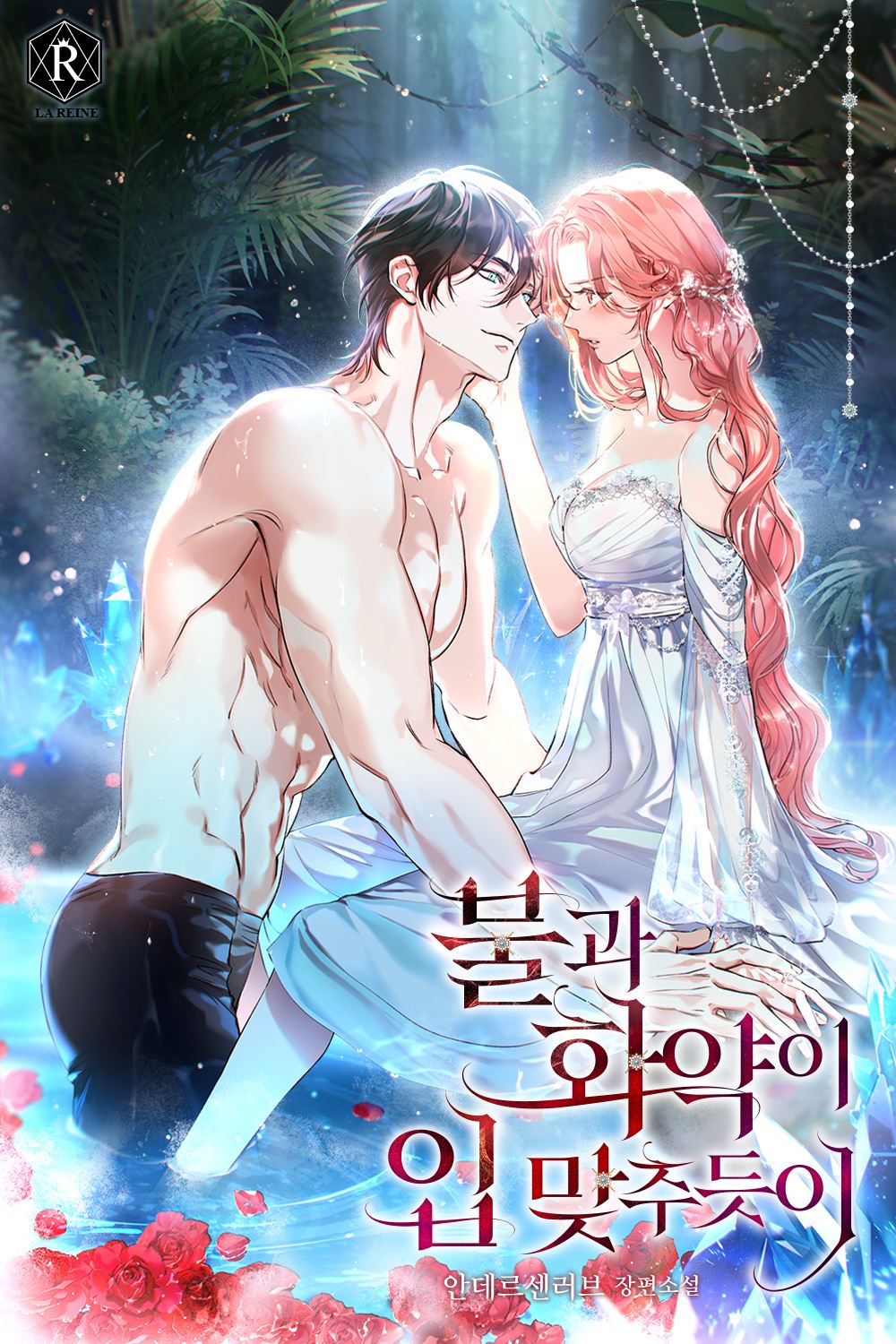
In the Hailion Empire during the age of abundance, two great vassal houses, Ordo and Camelot, have long been locked in a bitter feud that has dragged both families into disgrace. House Ordo is known for its violent and chaotic behavior, while House Camelot is viewed as brutish savages. The heir of Ordo, Rosemaria Ordo, is a woman of extraordinary beauty, talent, and strength who has reached the age of twenty-two without marrying. Despite receiving numerous proposals from noble suitors, including Prince Julius, she remains indifferent to romance and refuses to sever ties with her flawed family to marry into the imperial line.

House Camelot’s heir, Jade Camelot, is a man of immense physical power and striking appearance, once celebrated as the most handsome man in the empire. However, his rude and disdainful behavior drove away all prospective brides, leading him to wander foreign lands for five years. Unbeknownst to the public, Rose and Jade share a secret, gentle bond forged in childhood. They have been exchanging small gifts at a secluded hot spring called Hilude, a sanctuary where their families' hatred does not reach. Their interactions are marked by playful banter and a deep, unspoken understanding that transcends the enmity between their houses.

The story begins to shift when Jade returns to Hailion after five years of wandering. His reappearance stirs up rumors and excitement across the empire, threatening to overshadow Rose’s own prospects. Meanwhile, Rose’s brothers, Anton and Piar, provoke a fight with Camelot lackeys inside the imperial palace, causing a scandal that forces the Ordo family to return home prematurely. Rose confronts Jade in the palace gardens, where he reveals he witnessed the incident but chose not to intervene. Their reunion is tense yet familiar, highlighting the complex dynamic between them.

Back at the Ordo estate, the household chaos continues. Rose’s mother, Anne, desperately pushes for Rose to marry well to restore the family’s honor, specifically hoping for a union with Prince Julius or Benyamin Basil, a wealthy and kind suitor. Rose politely declines these matches, asserting her independence and her desire to find a partner who can withstand the turmoil of her family. She values her family deeply, even their flaws, and refuses to abandon them for a pristine noble life.

A key turning point occurs when Rose visits Hilude hot springs again and encounters Jade. They engage in their traditional exchange, but this time Jade offers Rose a choice of valuable rings. Rose selects a ring set with a rare rose diamond, a gift of significant worth. In a moment of bold intimacy, Jade removes the ring himself while standing in the spring, revealing his nudity with complete nonchalance. Rose, though flustered, accepts the gift with grace, and they share a quiet, meaningful exchange before he departs as suddenly as he appeared. This encounter reinforces the unique connection they share, one that exists outside the constraints of societal expectations and family feuds.

The narrative explores the contrast between the public personas of the Ordo and Camelot heirs and their private selves. While the world sees only rivals and disasters, Rose and Jade see each other as confidants and equals. Rose’s nephew, Shurelli, serves as a symbol of hope and purity, bridging the gap between the two feuding families through her innocent love for both her Ordo and Basil relatives. Her presence reminds Rose of what could be lost if the cycle of hatred continues.

As the story progresses, political tensions rise. A meeting of the Resias assembly, historically including Ordo and Camelot, is held without inviting House Ordo, signaling a further erosion of their status. Rose navigates these diplomatic challenges with grace, offering to help reconcile the eastern and western families, though her heart remains divided between her duty to Ordo and her growing feelings for Jade.

The central conflict remains unresolved: can Rose and Jade’s secret bond survive the weight of their families’ histories? Will they choose love over loyalty to their houses, or will the external pressures of empire politics and internal family discord tear them apart? The story sets the stage for a romantic destiny that challenges the very foundations of the hitherto cursed rivalry between House Ordo and House Camelot.

Latest Release
DateGroupRelease
2026-10-03dusk blossoms c36
2026-10-03dusk blossoms c35
2026-10-03dusk blossoms c34
2026-10-03dusk blossoms c33
2026-10-03dusk blossoms c32
2026-10-03dusk blossoms c31
2026-10-03dusk blossoms c30
2026-10-03dusk blossoms c29
2026-10-03dusk blossoms c28
2026-10-03dusk blossoms c27
2026-10-03dusk blossoms c26
2026-10-03dusk blossoms c25

Community Reviews

Rating(0 / 5.0, 41votes)
5 stars
0(0%)
4 stars
0(0%)
3 stars
0(0%)
2 stars
0(0%)
1 stars
0(0%)

Popular reviews

... Read More
There's this whole backstory about Jade Camelot that the narrative slips in organically, and it does so much work. He was once celebrated as the most handsome man in Hailion — Holy Knight, the title given because of Jade Camelot itself. His face alone made gifts pour in until Camelot Castle's storerooms ran out of space. The Ordo servants got mocked by Camelot lackeys for having no handsome heir, and you can feel Rose's bitter memory of that. Then the reversal hits hard. Jade's behavior during marriage meetings became so atrocious that proposals stopped entirely. 'The horse dung smell is something else. I've developed a horse dung aversion lately, so I walk most distances.' This man deliberately destroyed his own reputation. And now he's here, at sixteen or so years old, wandering back into Rose's life like nothing happened. Meanwhile Rose has her own world — she's known as a woman who can handle a sword, which gives her freedom from scrutiny. The plot here isn't about big battles or political intrigue in this passage. It's about two people whose families were once enemies sitting together in warm water, trading candy and rings, pretending everything is normal between them. But nothing is normal. Why is he really back? What was he running from? Those questions are simmering under every calm sentence.
... Read More
The structural arc of these chapters is something I can't stop thinking about. It starts at maximum voltage — Resias scandal, Piar ready to kill someone, diplomatic incident brewing — and then systematically deflates every tension point until it lands on something painfully quiet. Chapter 27 opens with Shurelli's toothless pride about attending a Resias meeting. Within three paragraphs, Piar's neck is cracking and Rose is dodging feudal-level offense. This is the story telling us: EVERYTHING matters here. A children's game can start a war. Then Rose smoothly handles the diplomatic crisis with Benyamin. The tension releases. We get Anne's matchmaking scheme. We get Rose's internal monologue about the impossible qualities she needs in a husband. The pacing slows down to domestic scale. Good, right? Comfortable? No — because Rose just told us herself that she couldn't picture 'a future where reckless Piar, or even Rose herself, married a wonderful partner and raised a beloved child.' The calm isn't calm. It's the eye of a storm that hasn't finished forming yet. And then the handkerchief scene. Nineteen proposals. Nineteen failures. The author could have made this melancholic, but instead it's practical — Rose is using embroidery as a way to pass time while the political world spins around her. It's almost boring on purpose. Let the reader settle. Let them forget they're being set up. Then Shurelli asks about the ring. And suddenly the pacing pivots again — from domestic quiet back to the mysterious figure in the fog forest. The chapter ends not with a bang but with a child's whispered fantasy about princes and monsters, and Rose playing along. The structure is brilliant because it mirrors Rose's own life: political crisis, domestic performance, and then private longing that she can never quite name out loud. The final image — Rose picturing herself bringing a 'gorilla prince' to meet Shurelli and wanting to 'burst out laughing' — that's the structural key. Laughter as defense mechanism. The chapter ends on humor because that's the only emotion Rose allows herself to feel privately.
... Read More
Let's talk about pacing because this author clearly knows what they're doing. Chapter 1 starts at MAXIMUM VOLUME with Sir J's speech. It's loud, dramatic, almost theatrical—a man standing in a square screaming his heart out. And then? Immediate cut to the quieter, more intimate space of Rose's room. The contrast is jarring in the best way. You go from a public declaration to a girl trying on earrings while her mother and maid hyperventilate behind her. The shift in energy is like someone opening a window after a thunderstorm. But here's what's clever—the pacing doesn't just slow down, it changes texture. The earlier part is all external conflict: duels, rival houses, political marriage proposals, an empress who hates your family. Then it pivots to something more personal and claustrophobic: the domestic chaos of the Ordo household, the suffocating expectations, Rose's quiet desperation. And then BOOM—another shift when Terra bursts in about her brothers drawing swords in the palace. Just when you think the story is settling into a character study, it slingshots back into action. The ending of this batch—Rose running through the garden and hearing THAT voice—lands like a slap. The pacing builds and releases and builds again so naturally that I didn't even notice I was flipping pages until three hours had passed. The author doesn't waste a single scene. Even the seemingly quiet moments (Vivi reading stars, Anne fixing Rose's blush) carry underlying tension about what's about to explode.
... Read More
The ring exchange between Jade and Rose is carrying so much more weight than a simple trade. Rose choosing the ring with the rose-colored gemstone that resembles a rose diamond — the very stone associated with empresses and impossible wealth — feels symbolic on multiple levels. She names it after herself, essentially, and it fits her perfectly. Meanwhile the Karshi candy is described as luxury confectionery made from Ordo's closely guarded recipe, rumored to boost stamina. These are the currencies of two houses that used to be at each other's throats. The hot spring itself operates as neutral ground, sacred space where 'sacred forces hold sway' and territorial disputes between human and beast would be absurd. Rose explicitly frames her interaction with Jade as encountering a wild animal — neither human nor beast would seriously dispute territory here. Names matter enormously in this text. 'Holy Knight' was originally tied to Jade Camelot's beauty before becoming slang. 'Jade Camelot' became a forbidden word among Hailion's women. Rosemaria Ordo is introduced in full, almost ceremonial form before Jade drawls 'Roooosemariaaaa' and destroys all dignity. The ring gleams in the sunset light, and Rose curls her fingers carefully to keep it from slipping off — as if holding onto something fragile. This isn't just romance brewing. It's two heirs from rival houses negotiating a new kind of territory, one candy and one ring at a time.
... Read More
What struck me most here is how every single interaction between these characters is a loaded gun disguised as courtesy. Take Anne and Benyamin — on the surface it's just a sweet aunt playing matchmaker, right? Wrong. The second Eva drops that line about considering Benyamin for Rose, Anne and Vivi let out a shriek. A SHRIEK. Like they'd been waiting in the wings for exactly that opening. And then Anne's internal monologue about Benyamin being a 'rival among the ten great vassal houses' and the risk of him becoming an 'obstacle in Ordo's path' — that's when you realize this whole matchmaking moment was political theater from start to finish. But the real character depth comes from Rose. Her refusal of Benyamin isn't just about not being ready. Listen to what she actually thinks: 'She needed a man who could hold his ground without being swept up in the united chaos of the Ordo household. A man who would stand unflinchingly on her wife's side even when she was up against her own family's enemies within.' This is a woman who has studied her own family like a battlefield map and knows exactly what weapon she needs — or rather, what kind of person could survive them. That's not romantic hesitation. That's tactical survival instinct. And then there's the relationship between Rose and Shurelli. The child who 'could see both parents at once' only during the spring and autumn visits is basically the glue holding two formerly-warring houses together. Rose calling her 'a miracle' and thinking 'Maybe that's why I can't give up on Ordo, even as it drives itself to the edge of a cliff' — this is the emotional core of everything. Shurelli isn't just a cute niece; she's the entire reason Rose is still fighting. The Jade situation at the end is fascinating too. Rose tells Shurelli a fairy tale about a 'monster' in the forest, but we know it's Jacques — or rather, the Camelot heir. The fact that Rose literally pictures herself bringing a 'savage gorilla' prince into House Ordo and laughing at how absurd that would be tells us everything about how she sees her own world: as something so toxic that even romance would be a joke.
... Read More
Let's talk about the ring. A rose diamond. Given by a 'monster' from the fog forest to a woman who is clearly being courted by the heir of Camelot — the very house her family considers lower than monsters. The symbol writes itself almost too perfectly, and that's what makes it dangerous. The Resias assembly itself is the central metaphor of these chapters. It was a gathering of equals — Ordo, Biella, Camelot as 'twin pillars' — that shattered after the founding emperor died. The text is clear: when Ordo and Camelot's relationship broke, 'both families' standing collapsed alongside it.' They fell together. They were always meant to fall together. And now the eastern families are holding their own version of Resias without inviting either of them. The assembly that was supposed to unite the great houses is being rewritten by those who were excluded. That's not just plot — that's a statement about who gets to define history. Shurelli is a walking symbol. She is the living proof that Ordo and Basil — two houses that 'nearly became mortal enemies' — can coexist. She is the child who 'could see both parents at once' only twice a year. She represents everything the Ordos are fighting for (family unity) and everything they're failing at (peace). When Rose thinks 'Maybe that's why I can't give up on Ordo, even as it drives itself to the edge of a cliff,' she's really saying: Shurelli is the only innocent thing in a world where innocence gets used as leverage. The 'Hippity-Hop Miss Pink Bunny' picture book is another layer I can't let go of. Rose and Shurelli reading the same worn book for the sixth year running — six years of the same story, the same gifts, the same 'prince' giving presents to the bunny princess. And Rose is literally inventing a new fairy tale about a monster-prince who gives HER a rose diamond. The book-within-the-book structure is the author's way of saying: we are all living stories we didn't choose, and the only question is whether we'll let the ending be ours. And that ending Shurelli imagines — 'the prince who was turned into a monster came to find Aunt Rose. Because she's his destiny' — is the most dangerous idea in these chapters. Not because it's true, but because Rose is letting a child believe it. Because maybe, just maybe, she wants to believe it too.
See all reviews

Custom lists

See all custom Lists