Legal Violation - Reviews

Legal Violation
+Add to Custom List
Sort
Add review
... Read More
The structure of these chapters is quietly brilliant and I need to appreciate it before I forget. Chapter 84-86 (the car scene) is written in this rapid-fire, breathless style — short sentences, fragmented thoughts, actions stacking on top of each other like dominoes. You feel the rush. You can't breathe reading it and that's the point. The pacing mirrors Feng Tang's heartbeat. Then Chapter 14 — 'The Peacock Spreads Its Tail' — and everything just... stops. The tempo drops to a near-standstill. Bean-green curtains. Morning tea. Cold feet. Folding pajamas. Each action is small, deliberate, domestic. The contrast between the chaos of the night before and the stillness of the morning after is masterful. It's like the author took a sprint and then held your face in cold water. And the chapter title itself — peacock spreading its tail. Is Feng Tang showing off? Is he baring his vulnerability? Is he being seen for the first time? The title lands perfectly because it's neither triumphant nor defeated. It's exposed. I also want to talk about the Xia Yitiao interlude as a pacing device. It's a tiny moment, almost comic relief, but it serves as a pressure valve. After the intensity of the car scene, we get a mundane conversation about phone batteries and which bar to go to next. It lets the reader exhale before the emotional bomb drops in the morning-after section. The author doesn't rush to resolve anything. They let the silence sit. That's confidence. That's craft.
... Read More
Okay, the stakes in this chapter went from professional danger to actual life-threatening violence, and I need to process this. A suspect who already had a record of intentional injury reversed his vehicle and pinned a team member between his car and the police cruiser. The team member passed out. Feng Lulin has a five to six centimeter cut on his leg. This isn't traffic violations anymore, this is survival. What gets me is how casually the narrative treats the aftermath. Society's tides rise and fall daily, reality shatters countless similar cases, and time quickly erases some of the crimes. The pain that remains belongs solely to the victims. That's one sentence and it contains the entire weight of their profession. These people chase suspects who floor the gas pedal and reverse toward them, and then they come home to bandages and itchy wounds and nobody really understands why they can't just move on. Feng Lulin feels it's his negligence. He taped the bandage himself before Feng Tang arrived because he was afraid of looking gruesome. That's pride masking as consideration, and it's also exhaustion. He's injured, another colleague is in surgery, and he's worrying about whether his wound looks scary. The stakes aren't just physical anymore—they're emotional, psychological, moral. Feng Tang's anger about the suspect facing consequences isn't just protective, it's professional fury mixed with personal terror. He knows what prisons do to people now. He's seen the cell boss, the shackled inmates, the chicken soup dinners that establish hierarchy. If that suspect ends up inside, he becomes part of that ecosystem, and Feng Tang knows exactly how brutal that world can be. The tension here is multi-layered: will the injured team member survive? Will Feng Lulin's wound heal properly? Will the suspect get what's coming? And underneath all of it, will either of these men be able to sleep without imagining the worst-case scenario? That's the real stakes—they're not just doing a job, they're gambling with their nervous systems every single shift.
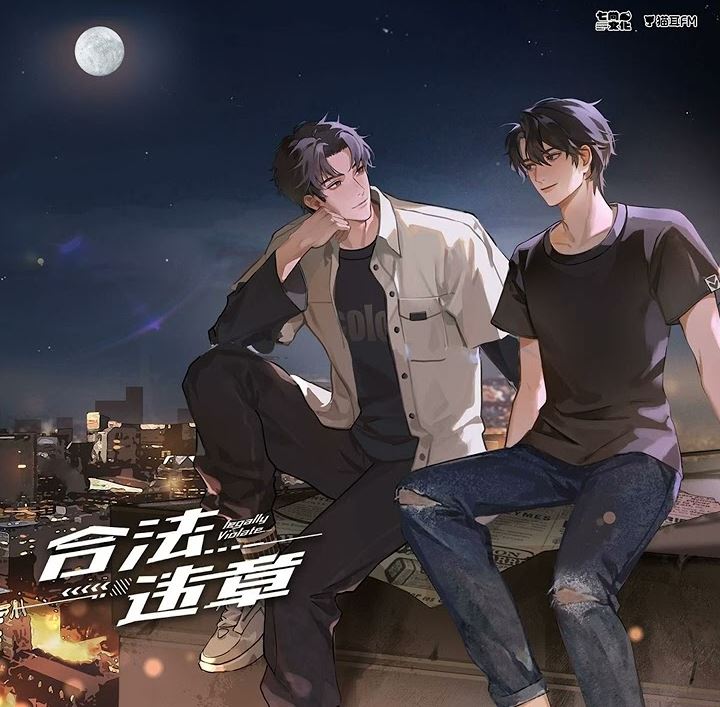
... Read More
'Call 122.' That is ALL Feng Lulin says to the advertising company boss who's trying to bribe him into dropping a violation charge on a men's hospital ad wrapped around a traffic cone. Twenty-six characters and he has absolutely zero interest in this man's existence. I laughed out loud. And then immediately felt guilty because this man is clearly corrupt and Feng Lulin's refusal is the most satisfying thing I've read in weeks. But the dialogue throughout this chapter is just so… economical. These characters don't waste words. 'Cut it.' 'Follow me.' 'Stop! Don't follow! Block ahead! Trap him!' Every line is action-driven, urgent, stripped down to what's needed in the moment. Even the narration matches that energy—it's not flowery or overwrought, it's tight and purposeful. Look at how the witness is described: 'trembling and a bit faint at the sight of blood, pointed shakily.' We don't need a paragraph of internal monologue. The physical description tells us everything. And Feng Tang's voice at the end—'Ah…' when he hears the exhaustion. That single syllable carries so much. He doesn't ask questions, he doesn't push. He just senses it and responds. Which is why his offer to come see Feng Lulin lands so well. He knows his son well enough to understand that a simple presence matters more than words. The author's narrative voice is interesting too—it has this documentary quality sometimes, like it's reporting facts, but then it sneaks in these deeply intimate moments. 'His phone, in the innermost pocket of his trousers, started vibrating.' The specificity of where the phone is tells you how carefully Feng Lulin carries everything he owns. That's not exposition, that's characterization through mundane detail. And 'he couldn't answer the phone during the mission'—that simple statement about professional duty cutting off personal connection is the emotional core of the entire chapter wrapped into one sentence. The author trusts the reader to feel it without spelling it out.
... Read More
Okay so let me just say this opening sequence is absolutely masterful pacing and I need everyone to understand how I nearly spit out my tea during the parking ticket scene. The whole thing starts so casually — just a bunch of rich kids playing cards on New Year's Eve, right? Feels like background noise. Then suddenly Xiao Nanhe appears at the door whispering something about a car and EVERYTHING shifts. The transition from warm stuffy room to cold dark street is so sharp you can feel the temperature drop. And then — oh god — he reaches his car, the key fob clicks, the interior light comes on, and there SHE is. "The fluorescent yellow traffic officer stood before his car." Not a dramatic reveal, not some cinematic slow zoom. Just... there. Like fate itself decided to show up in a reflective vest. The author doesn't waste a single word here. No description of her face, no internal monologue from Feng Tang about who she might be. Just the fluorescent yellow, the police baton, the hat pulled low. We're kept in the dark just like he is, which is genius because we're literally watching through his视角. And the dialogue! "First, I only enforce violations, not give friendly reminders." What a line. It hits like a slap. She doesn't care who his father was. She doesn't care that it's New Year's Eve. The pacing of her being so clipped and professional while he's already sweating internally — the contrast creates this electric tension that I literally couldn't skip ahead through. The structure here is doing SO much work. We get the card game (chaos), the warning (dread), the walk to the car (build-up), the encounter (collision), and then — just as it's peaking — we're left hanging. Not even a hint of whether she recognizes him or if it's just bad timing. The author is playing 4D chess with reader emotions and I am HERE for it.
... Read More
I need to talk about how brilliantly this chapter sets up its central conflict using something as mundane as a parking ticket. Like, a TRAFFIC TICKET. That's it. That's the inciting incident. And somehow the author makes it feel like the ground is shifting beneath Feng Tang's feet. The plot structure here is deceptively simple. We open with a casual teahouse scene — two rich kids eating, bantering, complaining about life. Very low stakes. Then we introduce the mystery man through a photograph and suddenly everything changes. Feng Tang's entire attitude toward authority, toward rules, toward himself gets reframed. He's spent his whole life being told he can do whatever he wants, and now someone looked at him like he was prey. Then — BAM — the overloaded truck incident. The second half of the chapter pivots hard from romantic tension to life-and-death action, and it works because the author earned it. We spent time understanding who Feng Lulin is before we watched him risk his life, so when he swerves his motorcycle under a sixty-ton truck, we actually CARE. The transition between these two plot threads isn't accidental. Both revolve around the same man, the same themes of control and consequences, and both test what Feng Tang thinks he knows about the world. By the end, the reader is left with two completely different images of Feng Lulin — the one in the ID photo (cold, proper, handsome) and the one rolling out from under a truck (brave, reckless, alive). That contrast IS the plot. That's the whole engine of this story right there.
... Read More
The structure of this section is really clever if you think about it. You've got this intimate, almost dreamy balcony scene, all soft lighting and rain and whispered promises, and then — cut to — a jarring news broadcast about a car accident. The shift is brutal and intentional. The author drops us into mundane details first: the changed radio announcer, dried mangoes, sleepy eyes. It feels like a normal morning until you realize it's been almost a day since Feng Tang last heard from Feng Lulin. That's when the anxiety creeps in. The four-minute rescue video becomes the narrative pivot — it's the first time we (and Feng Tang) see Feng Lulin in his element, and it's terrifying because it makes real how much danger exists outside their bubble. The subplot about Feng Tang trying to 'make a simple friend' among traffic cops after seeing that video — it's a small moment that reveals everything about his emotional state. He wants to understand the world his partner inhabits, and he has no idea how to ask for it.
... Read More
Let's talk rhythm. This sequence starts slow—Feng Tang in bed, complaining about the cold, listening to the radio, his phone vibrating away. It's domestic, almost mundane. Then Feng Lulin calls and says "come to the balcony" and suddenly everything spikes. The pacing goes from sleepy to frantic in two lines. And then the fake fall happens—your heart stops, you think someone's actually hurt, and then you realize it's a trick and you're left breathless. But here's what I loved: after the adrenaline hit, the author doesn't let you recover. They drop you straight into physical entanglement. Two men on a balcony floor, limbs locked, breath mixing, tension so thick you could cut it with a knife. And then—stillness. They just lie there. The storm outside contrasts with the quiet between them. The pacing here is genius because it mimics real emotional escalation. You go from worried → shocked → flustered → breathless → awkward silence → vulnerable confession. Each beat gets shorter as the scene intensifies, then suddenly stretches out when the action stops. The transition from the earlier phone argument to this balcony confrontation also feels earned. We saw Feng Tang getting angrier with each text, then hanging up and burying his phone, then immediately searching for it when it vibrates again. That contradiction tells us everything. The structure doesn't drag because there's constant forward motion, even in stillness. And that cliffhanger ending—Feng Lulin propping himself up on his elbows, watching Feng Tang fall asleep—leaves you wanting more but satisfied. It's a perfect mini-arc.
... Read More
I need to talk about how this text moves between scenes because the tonal whiplash is absolutely intentional and I'm here for it. We open at a traffic intersection — hot, public, humiliating. Feng Tang is stuck on his phone, blocking contacts, watching a like counter like his freedom depends on it (because it does). The imagery is so specific: the two of them standing there, Feng Lu Lin perfectly composed with his directing stick, Feng Tang internally plotting eight hundred spike piercings. You can FEEL the sweat and the frustration. It's almost slapstick at times — the absurdity of a city making you collect social media likes as punishment. Then we cut to the WeChat aftermath. Dark screen, notification lighting up in an armrest compartment. The contrast between the bright outdoor intersection and the dim privacy of a car interior is subtle but effective. Feng Tang alone with his thoughts, his fury, his confusion. Then BAM — dinner party. Glass table, teacups, cards being dealt, smoke filling the air. "Young Master Tang" being addressed with that mix of deference and mockery that rich people do when they're trying to assert dominance politely. And then Lan Zhou's teacup falls. I love how the author uses that small physical action as a pivot point — the waiter comes to clean up broken porcelain while Lan Zhou doesn't even look at it, because the real shattering is happening elsewhere. The glass table is such a great visual metaphor here: everything looks transparent and clean on the surface but one wrong move and it all comes crashing down. The source text also gives us glimpses of the police station environment — Qiao Ce handling surveillance, Feng Lu Lin unbuttoning his uniform after being drenched in sweat, the pager buzzing. It's a behind-the-scenes glimpse that makes the world feel lived-in and bureaucratic rather than just a backdrop.
... Read More
There's a scene in the opening where Feng Tang and Shao Jincheng are both standing in a stairwell smoking, both exhausted by the same kind of social performance, and it hits like a film noir establishing shot. Two men who grew up with certain expectations weighing on them, hiding in a stairwell like fugitives from their own lives, exchanging polite greetings before returning to their separate cages. But the scene that lives in my head now is the one at the intersection. Spring heat turning into summer too fast, the southern weather pressing down like a blanket, elementary school kids waiting obediently at crosswalks — and then this little girl frozen mid-road by a suddenly appearing car. The chaos of it, the way Feng Tang didn't even lock his car before bolting out, Feng Lulin across the way using his illuminated baton to stop traffic while holding that moment together. The visual of it is so cinematic. Spring turning to summer, the stifling heat at evening intersections, the little girl's fear, Feng Lulin's baton cutting through the chaos — you can see this. Every frame. The author writes environment the way some writers write emotion, the weather always mirroring what's happening inside people. I also can't stop thinking about Feng Tang's bedroom. That moment when he reaches the bedroom half-naked, flops onto the bed, and the mattress comfort "washes over him like a tide" — it's domestic intimacy at its most visceral. He's alone but he's not lonely because the memory of Feng Lulin is already there, filling the space. The apartment is small but it's all his. That line about the second floor being wide but entirely his own says something about a man who has curated every inch of his world because he couldn't control anything else.
... Read More
'Your skin is peeling off!' This line—Bai Yangyue saying it—still replays in my head like a broken record. Because on the surface it's just a medical observation but emotionally it's devastating. Here's this guy who's been running alongside Feng Lulin through a ditches and cornfields and police blockades for hours, and the moment they finally get a breather, the first thing he notices is the extent of Feng Lulin's wounds. And he's nearly in tears. Not dramatic crying, just that quiet shake in your voice when you're too overwhelmed to produce actual sobs. And Feng Lulin's reaction? 'Cut it.' Two words. Gritted teeth. He's more focused on getting his leg functional again so he can finish the job than on the pain itself. That contrast between them—Feng Lulin pushing through and Bai Yangyue crumbling at the sight of his friend's suffering—this is the kind of emotional detail that makes me actually sit with a scene for a while. The whole chapter is drenched in grief actually. Not just the big tragedy of the dead kid and injured parents, but the smaller, quieter griefs: villagers rushing to help with no money and no training, the emergency lane blocked by civilian curiosity delaying rescue, Feng Lulin leaning on Bai Yangyue just to stand up after wrapping a tourniquet. There's this scene where he finally collapses into his seat post-arrest and is just 'exhausted and speechless.' No dramatic monologue, no victory lap. Just silence. And then the phone buzzes. And we get that phone call. I felt so many things layered on top of each other in that moment. Relief that he caught the guy. Anger at the driver. Sadness for that dead kid. Worry for Feng Lulin's leg. And this weird tender ache for whatever it is between him and Bai Yangyue. The text never tells us it's romance but it never denies it either. It just exists, like breath.
... Read More
What strikes me first is how the author engineered this entire incident from something as mundane as a taxi ride turning into a full-blown street brawl. The plot structure here is fascinating because it operates on escalating cause-and-effect — one accidental touch during gear shifting spirals into three separate confrontations, a mob of resentful drivers, and two officers nearly getting pummeled. It reminds me of those scenes in crime procedurals where you know the system should handle it, but human anger moves faster than protocol ever could. The main storyline tracks Feng Lulin and Feng Tang responding to what seems like a minor dispute, but the author keeps injecting new complications: the male passenger nearly hitting his wife with a suitcase, the crowd growing denser, the other taxi drivers arriving from all directions like reinforcements in some underground war. Each escalation feels earned rather than forced — the author doesn't pull a deus ex machina, they just let human nature do its work. One subplot that stood out was the female passenger's reaction and how her fear drove much of the initial conflict. The male passenger's protective rage, while misguided, felt psychologically real — he wasn't violent for the sake of being violent, he was performing masculinity under pressure, and it got him into trouble. The resolution with Qiao Ce arriving was clever because it didn't solve everything; it just shifted the scene into a different jurisdiction, implying these incidents are routine enough that another squad already knows what's coming. The author built the tension through spatial compression — the road becoming more blocked, the crowd more packed, the options fewer — until the only way out was physical force.
... Read More
The stakes in this passage are deceptively low-surface but terrifying underneath. On paper, nothing 'important' happens—two guys talk at a traffic intersection. But the internal conflict is ferocious. Feng Tang has spent his whole life navigating situations where he feels vulnerable, and Feng Lulin represents both danger and safety simultaneously. He's attracted to him but also intimidated—'If you find me annoying, just say so, and I'll move away' sounds dismissive but it's actually a test. He wants to be chosen. Feng Lulin's conflict is equally intense but inverted: he's the one with power in every visible way—uniform, authority, physical dominance—but he surrenders it completely when he apologizes. The risk here is mutual exposure. Both men are used to wearing armor. Feng Tang's armor is sarcasm and flight ('faster than a rabbit'). Feng Lulin's is aggression and control. When those armor pieces crack, everything is on the line. The text makes this explicit: 'Without their claws and shields, they were just two lowly animals.' The stakes aren't about whether they'll end up together—that's guaranteed. The stakes are whether they can survive being truly seen. And that final moment, where Feng Tang stops pulling away and lets Feng Lulin's fingers tremble against his earlobe, is the first time either of them has actually lost control willingly. That's the real tension. Not will they/won't they—but can they survive letting go?

Leave a comment

You must be logged in to leave comments. or
