Legal Violation - Reviews

Legal Violation
+Add to Custom List
Sort
Add review
... Read More
Okay so can we just talk about how well-written the dynamic between Feng Tang and Feng Lulin is here? Like, everyone always says slow burn is good but most authors mess it up by making the characters dumb long enough to sustain the trope. Here? They're NOT being dumb, they're being human and scared and into each other at the same time. Feng Tang's whole arc in these chapters is fascinating. On the surface he's this confident, almost reckless guy who initiates the whole car scene like he's in control. But then flip to the morning after and he's folding his pajamas like a man possessed, heart pounding over a five-word text message. The contrast is everything. And Feng Lulin — don't even get me started. The man says 'We're already in the car. This isn't for you to decide.' which is simultaneously the most domineering and most vulnerable thing ever written because you can tell he's just as lost as Feng Tang, he just has the social confidence to mask it. Their power dynamic shifts in every paragraph. One moment Feng Tang is provoking, the next he's the one begging. Who's leading? Who's following? Does it even matter? The fact that the author never resolves this tension — that's what makes it real. Real relationships aren't about who submits, they're about two people orbiting each other and hoping not to crash. Also side note: Xia Yitiao being there as a witness but also completely invisible, just playing on his phone, eating up the drama from the background — it's such a grounded detail. Makes the whole thing feel lived-in, not staged.
... Read More
I need to talk about this balcony scene because it literally made me stop reading and just sit with it for a minute. The way Feng Tang says 'I'll just jump with you' — that's not defiance, that's surrender, and it's so much more vulnerable than either of them would probably admit out loud. And then Feng Lulin's reaction? His throat tightening, that lump in his throat and heat in his eyes? The author doesn't even say he cries but you KNOW he's close to it. The promise and all those words trapped inside — god. This is the kind of moment where the subtext is doing ALL the work. They're lying on a dark balcony like two castaways on a deserted island, wrapped in this velvet blanket like pork rolls honestly, and they feel the storm coming but they're just… there. Together. The romance here isn't in grand declarations, it's in the silence between them, in the fact that Feng Tang stops fighting and just lets himself be held.
... Read More
'I'm sorry.' Two words. That's it. And yet this moment absolutely destroyed me. Feng Lulin is introduced as this sharp, commanding figure—someone people call 'Officer Feng' with respect, someone who flicks foreheads and uses his height advantage to dominate conversations. He's all claws and shields. But when Feng Tang mutters 'You've been too fierce lately' with just a hint of grievance, this man who could probably give him a ticket for existing drops everything. He runs his fingers through his own sweaty hair and quietly says sorry. Not performative. Not groveling. Just genuinely softening because Feng Tang asked him to. And then he touches his earlobe. The text says his fingers trembled slightly. Trembled. This is a man who usually controls every interaction, and Feng Tang's barely-complaining tone unravels him completely. Their dynamic throughout is this incredible push-pull where they're constantly testing each other—Feng Tang tries to flip the power dynamic with wordplay ('little Feng') and loses, Feng Lulin leans in aggressively and gets called out. But underneath all that sparring, they're both desperately seeking acknowledgment from each other. Feng Lulin noticing the Audi and immediately knowing it's him says everything. These two see each other in a way nobody else does.
... Read More
I need to talk about Feng Tang because THIS boy is a whole mood and also I think he's in trouble. On the surface, he's your classic spoiled rich kid who got reformed slightly after his dad died. Plays cards, smokes too much, parks illegally, causes minor inconveniences for his peers. The narrator even gives us the gossip from his friends: "Outwardly flamboyant and caustic, but actually transparent, kind, and carefree." Classic misdirection, am I right? But then here's the thing that got me — he's NOT fooling anyone. Not really. He's clearly anxious about this parking situation. He's worried about losing points. He's pretending to be confident at the card table but his friends are "dumbfounded" by his false bravado. He left a note with his phone number like that's going to save him from a ticket. And then Feng Lu Lin shows up. "Feng Lu Lin" — the name on the ID. That's her name. Not "officer" or "cop" — her actual NAME. And Feng Tang apparently doesn't even notice it in that moment because he's too busy panicking about his points. Which tells me something: she's not just some random authority figure to him. There's something there. A recognition. A history. The dynamic between them is already shifting权力的平衡 in a way that made me sit up straight. She's not impressed by his family name. She's not softening because it's New Year's Eve. And he's clearly flustered in a way that goes beyond just getting a ticket. This isn't just a parking violation — this is someone from his past or his world colliding with his present, and neither of them is prepared. I'm already theorizing that their relationship is going to be the core of this entire novel. She represents everything he can't control, and he represents everything she probably shouldn't find herself drawn to.
... Read More
"Love has taken over his heart completely, yet he hesitated to move forward, needing a lot of courage just to press the gas pedal." This line hit me so hard I had to re-read it three times. Because honestly — that IS the stakes here. Not some epic war or life-or-death situation. The stakes are emotional. And that's what makes it feel more dangerous than any action scene. Feng Tang is sitting in this bed, surrounded by bean-green curtains, trying to remember what happened last night, and realizing he's genuinely in love with someone. And the terror of that realization is the conflict. He's a guy who's never been passive, who fights back with reason and sharp words, and suddenly he has no defense against this feeling. What do you do when your opponent is your own heart? The car scene itself is literally full of physical stakes — cramped space, sweat, bodies pressed together, the constant threat of being discovered. But the emotional stakes beneath it are what actually keep you turning pages. Will Feng Tang admit this to himself? Will Feng Lulin let him? What happens when the games stop being games? I also love how the chapter ends on this unresolved note. No grand confession, no dramatic confrontation. Just a guy folding laundry while his chest is on fire. That's the tension right there — the everyday objects carrying apocalyptic feelings. The stakes aren't announced, they're accumulated.
... Read More
Okay, can we talk about how this chapter is basically a masterclass in low-key storytelling? It starts with the funniest little detail—Feng Tang orders fish, waiter says it just died, and Feng Tang is like... 'fine, the freshly deceased one will do.' I literally snorted out loud. But then the whole thing pivots so smoothly into this deeply personal conversation where Feng Lulin just asks 'tell me about your childhood' and suddenly we're getting ALL of this. The plot isn't moving forward in the traditional sense—there's no big revelation, no action sequence—but it's moving inward, and honestly that's more satisfying. The way the author uses food as a trigger for memory is genius. Every dish seems to unlock another layer: the abalone leads to Lan Zhou's name confusion, the scratch cards bring out the trio's dynamic, and somehow the pig tail anecdote becomes this heart-wrenching meditation on time and loss. And then—BAM—at the very end, we get this sharp cut to Feng Lulin's POV, his father's public safety talk, the clenched fists, the defiance. The chapter bookends a warm childhood nostalgia with cold family tension. It's a complete emotional arc disguised as a dinner scene.
... Read More
Let me just be honest with you — the stakes in these chapters are surprisingly high for what seems like a simple parking ticket story. On the surface level: Feng Tang has 6 points left on his license and he just got caught parking illegally on New Year's Eve. If he gets additional points, he loses his ability to drive. For a guy whose identity seems partially tied to his car and his freedom to go wherever he wants, that's genuinely stressful. But the REAL stakes are so much juicier. Think about it: - He's in a room full of people who aren't trustworthy. "All appeared harmless but harboured unknown thoughts." Who knows what kind of gossip will spread if he gets a ticket on New Year's Eve? - He's the son of a deceased top official. Any incident could become political ammunition. - He's already feeling sick — "a slight headache building up" — and now he has to deal with this confrontation when he's at his lowest. - And the person handing him the ticket — she knows him. Or she will. The tension of that unspoken recognition is making my stomach do flips. The author is layering conflicts like an onion and I am NOT okay with how much I'm caring about a parking ticket. "Repeat offender, huh?" — that line from Feng Lu Lin is delivered with what sounds like amusement, which makes it infinitely worse. She's not just enforcing the law; she's teasing him, and somehow that's more threatening than any scolding could be. What I love is that every conflict here feels genuine. It's not overblown drama — it's the real anxiety of someone who's been careless and is now facing consequences, mixed with the completely different anxiety of potentially running into someone from your past at the worst possible moment.
... Read More
Okay can we just pause and appreciate what happened between Yu Fengtang and Qingyan? I am NOT okay. This man had been absent his entire life, sold Qingyan off like goods, basically treated him as a commodity—and yet here he is, on his deathbed, trying to perform one last emotional gesture. The description of him lifting that withered hand like he's calling Qingyan's name broke something in me. Not because it was redeeming—he didn't deserve redemption—but because it felt so tragically human. A father who never showed love finally wanting to say something before he dies. And Qingyan's response? Cold as ice: "Now that you're dying, you remember that you owe it to Yu Qingxi." Chilling. Perfect. I almost applauded. But then—the deathbed realization! The father looks at Qingyan and actually sees him for the first time. Not the son he sold away, not the boy he abused, but THIS person standing in front of him. And it terrifies him so much he drops dead. Is that karma? Is that poetic justice? Or is it just the universe finally catching up? I keep thinking about Qingyan's line after closing his father's eyes: "Yu Qingyan, in this household, finally someone could recognize that I'm not you." Tears. Actual tears. This story does not play fair.
... Read More
I need a minute. So Feng Lulin says "We can take it slow" and then absolutely does the opposite, and I am NOT okay with this man. But that's literally the entire emotional thesis of their relationship, isn't it? Feng Tang spends half this chapter trying to establish boundaries—"you and I are not the same kind of people," "stop joking around," "don't go lower"—and the other half completely abandoning those boundaries because he wants the same thing. The most powerful moment for me was when Feng Tang decides to fight fire with fire: he wraps his arms around Feng Lulin's neck, bites his lips to stay quiet, and starts grinding against him. After all that posturing about being the more experienced one, the more in control one—he just completely loses his composure and becomes this trembling, desperate thing. And Feng Lulin notices. He CHUCKLES. He says "Why use rose? Next time, use pepper. Or it won't match your vigor." That line is so devastatingly affectionate wrapped in pure teasing. The emotional push-pull here isn't some manufactured conflict—they're both clearly capable of wanting each other but neither will admit it directly, so everything has to come out through physicality and half-finished sentences. The scene where Feng Tang finally gives in and just holds on, whispering "I really want to bite you" while staring at the emergency light—that's the moment I felt something real. It's not about who's winning the argument, it's about two people who've been circling each other finally just crashing together.
... Read More
There's this symbol that keeps appearing and I can't stop thinking about it. The silver stripe and silver four-pointed star on Feng Lulin's shoulder. Official insignia, decoration, proof of rank and dedication. And then immediately the text mentions his monthly salary—just over three thousand yuan, sometimes not even enough to cover extra medical expenses. The juxtaposition is deliberate and devastating. You wear your dedication on your shoulder while your pocket can't handle the cost of protecting yourself. This isn't accidental symbolism, this is the author showing us that honor has a price tag that doesn't match the prestige. The hospital itself functions as a symbol—these people get hurt doing their jobs, they end up in a place designed to fix them, and they leave only to potentially get hurt again. Feng Tang crouching until his legs go numb mirrors Feng Lulin taping his own bandage to hide the wound. Both men doing physical discomfort in service of something smaller than themselves. One wants to shield the other from seeing damage; the other wants to help without being asked. The dim hospital lights at the end create this liminal space where neither can fully see the other's expression, which feels like the perfect visual metaphor for their relationship—close enough to touch, but operating in shadows, unable to fully read what the other is feeling. Even the car wash business Feng Tang runs with He Qing serves as commentary. He sees happy couples helping each other and leaves without saying hello. He's learned that observation without participation is safer. But with Feng Lulin, he can't maintain that distance. The scar on Feng Lulin's eyelid mentioned during the examination scene—that's another mark of service, another symbol of costs paid in flesh. Every injury becomes text on the body, and the body becomes the true archive of what this life extracts.
... Read More
Okay so I just finished this chunk and I'm still processing Feng Tang's internal monologue after Feng Lulin called him husband. Let me just... sit with this for a moment. This character, Feng Tang, he's built such a fortress around himself. The text literally says something like: "For the first time, he felt that loving someone was so difficult, like trying to catch fireflies on a winter night." CAN WE JUST STOP AND APPRECIATE THAT LINE FOR A SECOND? That's not just a nice metaphor, that's the entire thesis of his emotional arc right there. He's spent his whole life people treating him as untouchable, someone who plays and leaves, and now he's genuinely afraid that if he lets someone in, they'll just do what everyone else does—play around until the waters calm and leave without a trace. But Feng Lulin? This guy holds an umbrella over him in broad daylight like it's the most natural thing in the world, and then casually drops "husband" and moves on. That's the energy I'm living for. Feng Tang says something that wrecked me: "But this time, Feng Tang felt a warm sensation in his heart, as if he was the one taking advantage of Feng Lulin." Think about that role reversal. The man who's always been the one people run from suddenly realizes HE'S the one who's captivated. And then later he's telling Chi Ren Qing about this traffic cop with such palpable excitement—"his excitement palpable" is literally what the narration says—that I wanted to grab him and shake him and also just hug him because he's finally allowing himself to want something. The contrast with Feng Jun is brutal too. Feng Jun who cried at his father's death but kept nodding saying how people forget the deceased. Heartless generation of the Feng family, that's what Chi Ren Qing calls them. But Feng Tang isn't heartless—he's just terrified. And that scene where he realizes the drink is sparkling water instead of alcohol? I swear to god that detail tells you everything about his emotional state. Someone around him noticed he's under pressure and planned no alcohol. He Qing saw him. That's the friend group he has. I just... I need to process. Feng Tang is finally letting himself want something and it's making him both exhilarated and terrified. The CP energy between him and Feng Lulin is BUILDING and I am HERE FOR IT.
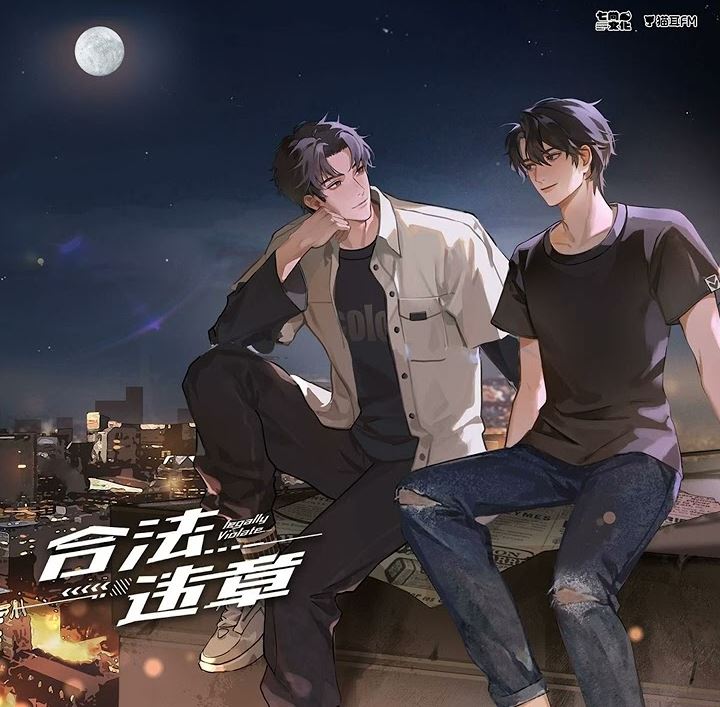
... Read More
That canteen scene is SO vivid. You can see everything—the red certificate with gold letters, the velvet flag hanging beside it, the fluorescent lights probably buzzing overhead, Feng Tang grabbing a stool to watch because he's starving and hasn't eaten. The sensory details make it feel like I was there. The contrast between the brightness of the awards ceremony (red, gold, velvet, cheering) and the coldness of Feng Lu Lin sliding into the seat across from him with his bottle of cola is perfect. Like the warmth of the ceremony is already dead by the time he gets there. Then Liu Lizhu at the theater—'older ladies started coming out in pairs, sometimes followed by uncles twirling jade stone balls and mumbling to themselves.' This line alone tells me so much about the world. It's not just a setting; it's a lived-in place where people have routines and habits. The opera reference ('Meeting in the Mulberry Garden') and that classical quote about willows and trees—these details make the world feel real and textured. The traffic control plan mention at the end adds this layer of surveillance and restriction. The world outside is tightening, and somehow that makes the personal freedom these two are chasing feel even more impossible.

Leave a comment

You must be logged in to leave comments. or
