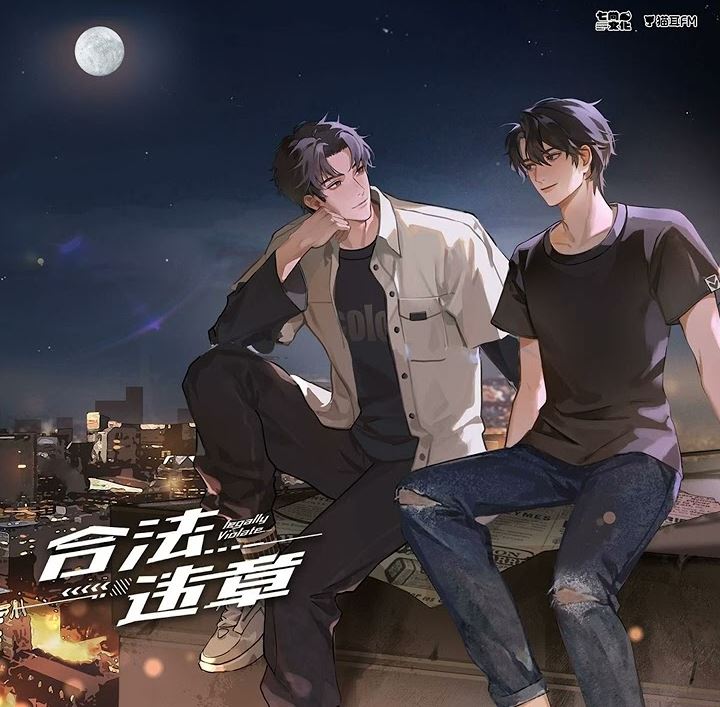
The structural pivots in these chapters are absolutely ruthless and I respect it.
We open with Feng Tang in bed. Restless. Scrolling. A single phone notification breaks the stillness — Feng Lu Lin's post, "Only you can see this." The entire first section is this quiet, domestic tension: a man who can't sleep, replaying images of another man's scarred hand, composing and recommitting impulsive messages, blocking and unblocking like a teenager. It's slow, intimate, almost meditative. The prose lingers on sensory details — ears burning, the warmth under the blanket, the cold wind outside.
Then — WHAM. Lan Zhou's call. "Damn! Cen Qi and the others got busted!" The tempo shifts instantly. Sentence fragments. Short exchanges. Feng Tang is already moving, already dressing, already heading out. The domestic stillness shatters.
What's brilliant is how the author uses the transition itself as a pacing device. Feng Tang drinks the soup He Qing sent, finishes his late snack, lights agarwood on the balcony — these tiny ordinary actions create a breathing room between the bedroom scene and the police scene, but they happen so fast you barely notice the gear shift. It's like a camera panning from a close-up to a wide shot without cutting.
The ring road scene itself is paced like an action sequence — short observations, quick identifications, the mechanical details of the bust rolling past. But then it slows down again when the crowds disperse and it's just Feng Tang and Feng Lu Lin, alone. The final exchange is almost dialog-free, built on body language: a grabbed shoulder, a blocked path, a question about a car color that means something entirely different.
The chapter structure mirrors the emotional arc: stillness → disruption → action → intimacy. Each section gets roughly equal weight despite their different temperatures, which means the quiet moments hit just as hard as the loud ones. That's craft.