Legal Violation - Reviews

Legal Violation
+Add to Custom List
Sort
Add review
... Read More
Okay so I need to talk about the checkpoint incident because honestly the way it's woven in is brilliant. You've got this quiet morning with Feng Tang and Feng Lulin, all warm and nostalgic about childhood and selling CDs, and then BOOM — transition to the hospital, injured officer, a guy ramming through a police checkpoint on a motorcycle. What hits me is how the plot threads are connecting. Qiao Ce mentions a newly registered car, some connection to Mr. Feng (Feng Lulin's dad apparently), and an Audi A6. Feng Lulin's heart skips a beat but he hides it. And then the recovered 200,000 yuan of state property from damaged highway facilities. This isn't just a traffic accident storyline — it's clearly part of some bigger criminal network. The 'Urban Roaring Party' street racing group seems to be a front or cover for something. I love how the author doesn't explain everything outright but drops these breadcrumbs. The fact that someone from the Third Squad got their arm bitten by people refusing to move their cars? That tells me this group isn't just reckless drivers, they're organized and dangerous. And Bai Yangyue getting slapped by a kid — the humor breaks the tension right when it needs breaking. Classic pacing move.
... Read More
The opening scene is SO specific and I keep coming back to it. The red-and-white finch chirping behind a screen, the warm winter sun through the window, Feng Tang humming contentedly while getting scolded — this isn't just a backdrop, this is a mood. The author understands that atmosphere isn't about describing everything, it's about choosing the RIGHT details. Then we shift to the checkpoint scene and the tonal change is everything. Night, rain-slicked roads, the roar of engines from the mountain race track, glowing batons cutting through overlapping headlights. The visual contrast between these two worlds — the warm, quiet teahouse versus the cold, dangerous roadside at midnight — tells you more about this story than any exposition could. What really stands out to me is how the author builds the world through sound. The distant roaring engines, the sharp braking sound that "filled the air, deafening," the officers shouting over the wind. This is a world that operates at volume — cars, engines, sirens, commands. Even the teahouse scene has its own soundscape (the finch, the tea lid scraping). Every environment has its own audio signature. "Human beings are made of flesh and blood, and in emergencies, their hearts can't stay calm." — This line hit me so hard. It's such a simple observation but placed right before the truck chase, it reframes everything. These aren't action heroes. They're people. The checkpoint scene feels real because the author keeps reminding us of that fact.
... Read More
The pacing in this batch is genuinely masterful, and I think the secret is how the author uses tonal whiplash intentionally rather than accidentally. You open with Feng Lulin studying positions and power, memorizing details about an underground club operation. This is heavy, serious, procedural stuff. Then you cut to him driving across a bridge and immediately pivoting to gossip about his romantic life with Xia Yitiao. The transition is so smooth you barely notice the genre shift until you're already in it. And the Bai Yangyue scene? The pacing there is absolutely frantic. Feng Tang spots him, confronts him, demands answers, Bai Yangyue spirals into increasingly absurd improvisations, and then Feng Tang announces he's going to handle it himself. In the span of maybe two pages, you've gone from suspicious glances to a full-blown confrontation setup. The author doesn't give you a single moment to breathe or process before the next beat hits. But here's what I appreciate most: the quiet moments are allowed to exist. The bridge memory sequence, the radio scene, Feng Lulin texting Feng Tang about the rain—these aren't filler. They're breaths between the chaos, and they make the chaotic moments hit harder because you've had space to feel something. The chapter ending with Feng Tang twirling his keys and telling Bai Yangyue to get in the car is a perfect mini-cliffhanger. You know exactly what's coming and you have zero control over not reading the next chapter.
... Read More
The author just flips the script and I am here for it. We're in this warm, slow lane — brick-paved alley, childhood memories of imperial pastries and hookah shops, Feng Tang selling CDs at age five, the whole nostalgic slice-of-life vibe. Feng Lulin pressing his lips, the wind from the river, spring turning to summer. It's so tender and then — 'Upon hearing the incident was related to the Fourth Squad, Feng Lulin went straight to the hospital.' Just like that. No warning. The transition is jarring in the best way. It mirrors how these characters live: one moment you're sharing childhood memories with someone you care about, the next you're in a hospital ward dealing with an injured officer and suspected criminal connections. The pacing within the hospital scene is also interesting — Qiao Ce's complaint about the kid slapping Bai Yangyue lightens the mood before Feng Lulin gets the serious intel about the car connected to his father. The chapter ends on this note of suspended tension: Xia Yitiao asking about the motorcycle, the 'spy game' comment, and that line about 'high-risk occupation. One mistake and the family gets implicated.' It's a perfect cliffhanger that makes you immediately want to read the next chapter. The author trusts the reader to handle tonal shifts without warning signs.
... Read More
The worldbuilding here is remarkable in how it renders a city that feels lived-in without a single exposition dump. We learn everything through sensory detail: the honking that becomes 'incessant,' the way taxis park along the roadside creating a 'sardine can' density of bodies, the heat of a summer afternoon where two tall men become 'flags waving in the wind with flames on their heads.' The author doesn't describe the city; they describe how the city behaves when something goes wrong. The intersection itself becomes a character — it's where different lives collide (the taxi driver, the agitated couple, the waiting mob of resentful workers), where ordinary roads transform into arenas. The gas station nearby isn't just set dressing; it's strategically placed so that 'reinforcements were coming from all directions,' giving the scene the geometry of a siege. What strikes me most is how the author renders sound as atmosphere. The crowd's noise becomes 'buzzing' in Feng's ears, breathing is 'mixed, long and chaotic,' voices overlap until you can't distinguish individual threats from the general roar. This auditory world-building makes the reader experience the panic rather than just observe it. The police car's interior becomes a second world — confined, official, suddenly intimate. The transition from the chaotic roadside to the ordered backseat creates a spatial contrast that mirrors the emotional shift from external violence to internal care. Even the instruction about sitting in the middle of the back seat ('It's the safest') transforms a traffic safety fact into a moment of tenderness. The Fourth Squad's jurisdiction being mentioned at the end implies a whole administrative geography beneath the surface — these incidents are routine enough that another team already knows the pattern, already has officers ready to move.
... Read More
I need to talk about this horseback riding subplot because it is somehow the most wholesome thing in the entire novel and I wasn't expecting that at all So Feng Tang names a horse "Ferrari" because the logo is a horse and He Qing immediately assumes it's some weird flex about actual Ferraris and then gets mad because of course he does. The banter between these two is genuinely hilarious—He Qing threatening to report Feng Tang to the dealership over a miscommunication is peak friend energy. But then right after all that comedy beat, the narration just quietly hits you with: "For the first time, Feng Tang was truly moved... It felt like human tears that couldn't be held back." And it's just THERE. One minute you're laughing at He Qing's nonsense and the next you're like wait, what is this person feeling The Feng Lulin interactions throughout these chapters are so delicately written. That moment where Feng Tang feigns shock to make Feng Lulin turn around, then creates a whole cinematic car window silhouette moment—this is someone who is usually all bravado and sarcasm letting himself be soft. And Feng Lulin's response, lowering his voice to say "With you around, I won't starve" is absolutely devastating in how domestic and tender it is. No grand declaration, just this quiet certainty that he'll always take care of Feng Tang. The 2AM text exchange also wrecked me. Feng Tang waiting all night, seeing a message at two in the morning that just says "Good night" and replying "Good morning" because he stayed up so late he missed the evening. That's not romance novel stuff—that's REAL relationship stuff. The kind of tiny honest moments that mean more than any dramatic confession.
... Read More
There are three modes of transportation in this passage and each one maps onto a different stage of Feng Tang's emotional journey. The Audi — his own car, his own space, following behind like a 'little black tail.' This is where he's been: close enough to touch, but separate, contained within his own four walls, controlling the distance. The motorcycle — shared, exposed, no helmet between them except the one Feng Lulin adjusts on his head. This is where he's going. The bus from his childhood — the vessel of his younger self, drifting through summers, playing video games to avoid paying attention to where he was going. The motorcycle parking spot scene is loaded with symbolic weight too. It's empty, just the two of them, and Feng Tang is red-faced with anger about something that isn't really about the motorcycle. It's about access. About permission. About whether he gets to cross the threshold into Feng Lulin's private world. Then there's the rain. Water as both danger and cleansing. The rain forces them to turn back, yes, but it also strips away the pretense. No more planning, no more carefully staged encounters. Just two people getting wet and laughing about it. The phrase 'I didn't bring rain gear' followed immediately by 'Blame the weather forecast, you idiot!' is basically a masterclass in how intimacy looks in real time — you're slightly terrified and also deeply delighted and you express it as sarcasm. And the house at the end. The Feng family home, which has always represented somewhere Feng Tang came from but never quite felt like his own, becomes the place where he chooses to bring someone else. 'For the first time, Feng Tang bravely brought someone home.' The word brave matters. Going home shouldn't be brave. But for someone who spent his childhood on buses hoping wolves would take him, going home with someone you love might be the bravest thing you've ever done.
... Read More
The flashback sequence where Feng Lujin catches Fengtang trespassing at his family home is honestly one of the most visually stunning scenes I've read in any novel. Let me paint it for you — it's one in the morning, the twenty-ninth of the lunar month, pouring rain. The two red lanterns at the gate are switched OFF. Pitch-black alley entrance. Emergency lights from Fengtang's car still blinking. And behind them, through the walls, you can hear the Feng family reunion dinner — constant laughter and joy. Both of them are backlit, unable to see each other's faces properly. Feng Lujin's wearing a black down jacket, hood brim wide enough to shield Fengtang from the rain, and his throat is wrapped in gauze from some training injury. There's this medicinal scent mixing with the smell of heavy rain, and the fish tank inside the courtyard is nearly frozen. The sound of water is so loud it almost deafens Fengtang, but all he remembers is the breathing of this stranger and the whispers cutting through the noise. I literally felt the cold. I felt the rain. The author's use of sensory detail here is chef's kiss — you've got temperature (the cold night, the warm breath, the frozen fish tank), sound (rain, water, breathing, laughter from inside, the groan of pain), smell (medicine, rain, blood when Fengtang bites), and sight (red emergency lights, black alley, the extinguished red lanterns). Every element is working together to create a scene that feels like it was filmed rather than written. The contrast between the violence of the physical struggle and the strange tenderness of Feng Lujin's hood shielding Fengtang from rain is what makes it unforgettable.
... Read More
I need to appreciate how these two talk to each other because their dialogue is SO distinct. Feng Tang's voice is sharp, defensive, using humor as armor. When he says "None of your business" or threatens to call the mayor's office or Shao Jin Cheng to break them up, he's performing. He's trying to provoke a reaction, to make Feng Lulin chase him. And Feng Lulin? His replies are dry, calm, almost amused. He gives Feng Tang his own phone number and says "He's my future boyfriend, talk to him directly." That's not defensiveness—that's confidence. He knows Feng Tang is bluffing. Their verbal sparring is like a dance where both pretend they're not leading. And the best dialogue comes when the performance drops. When Feng Tang finally says "That's not what I meant," it's soft, genuine. When Feng Lulin apologizes and says "So far, only twice. Both times, it was serious," that's raw. He's counting his apologies like scars. Then there's the proverb exchange! Feng Tang quotes something about gentlemen's words being bonds, about horses that can't catch up. And Feng Lulin responds "What horse? Whatever you say, I'll chase it myself." It's playful but deeply romantic. He's redefining the metaphor—instead of waiting for horses to bring her to him, he'll pursue whatever she says. Their voices are completely separate. Feng Tang is all reactive energy, scrambling, blushing, threatening empty threats. Feng Lulin is steady, deliberate, almost predatory in his patience. The dialogue never feels forced because it's rooted in their power dynamic: Feng Tang thinks he's in control, Feng Lulin knows he's not. But by the end, the tables have subtly shifted. Feng Tang stops fighting. He lies beside Feng Lulin instead. The dialogue carries the whole emotional arc without a single narrator intrusion.
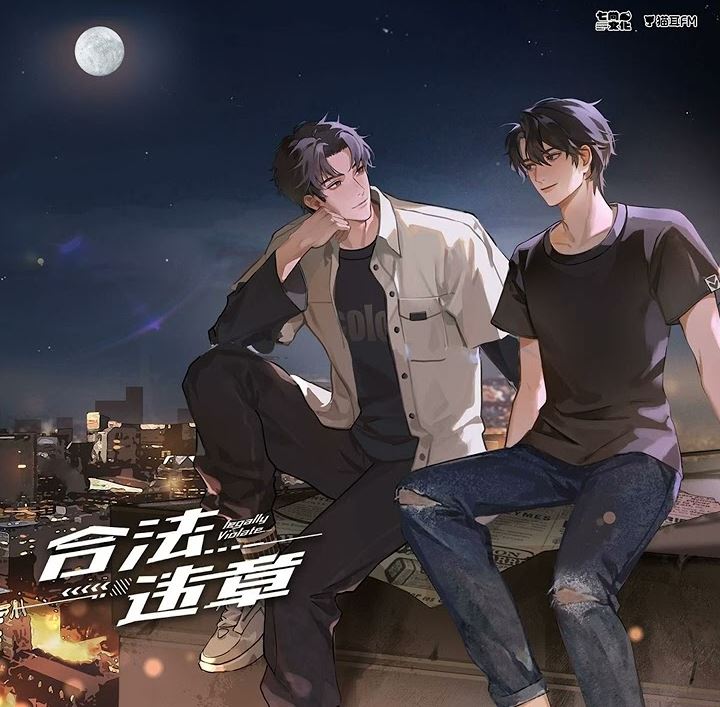
... Read More
The atmosphere in these chapters is unreal. Let me paint you the scene: fog rising over the river, evening showers coming, a temperature drop, cars gridlocked on a thirty-kilometer bridge that Feng Lulin has only visited once or twice since he was seven years old. This isn't backdrop, this is emotional weather. And then the bridge reveals its darker secret. The memory of that horrific accident—five deaths, three injuries, a car breaking through the barrier and hitting maintenance workers—sits under the entire narrative like a loaded gun. His father's words about millions of people living around cars and surviving around roads. There's something almost fateful about Feng Lulin sitting on that same bridge now, trapped in traffic, about to drive into a personal confrontation, while the memory of random violence lingers beneath the surface. The city itself feels like a character. It's not the largest in the region, not a directly governed municipality, yet it has the second highest number of cars in the country. This is a place of contradiction and density, where danger and routine coexist. The airport construction, the state-owned enterprises, the underground clubs—all of it paints a picture of a city that's constantly building and constantly hiding things. Even the radio segment works as worldbuilding. A female broadcaster announcing the weather that Feng Lulin finds less appealing than Feng Tang's voice—that's such a specific, lived-in detail. It makes the world feel like it exists outside the scenes we're reading.
... Read More
So this nightclub scene is everything. Not just because of what happens there but because of HOW the author paints it. Feng Tang drives his white Bentley—which honestly signals that he's someone who could blend in anywhere but chooses to pull a hoodie over his head and keep his head down. He gives the receptionist his name in a voice only she can hear. The whole setup screams reluctant socialite. This is a man who avoids nightclubs like the plague but shows up anyway because He Qing invited everyone and he couldn't refuse. That tension between who he is and what he's willing to do for his people. The description of the private room is so vivid: two hostesses leaning against Chi Ren Qing on a leather sofa, He Qing playing with a watch on the side, smoking a cigarette. Feng Tang takes the watch, immediately notices the luminescent paint on the hour marks and calls the crown second hand ugly. This man cannot even ENTER a room without critiquing luxury objects. I love him. And then Shao Jin Cheng is there. Stern-faced. From an official background, upright and correct. The fact that THIS man and Chi Ren Qing—the worst of the second-generation rich kids, wild and decadent—are somehow sharing a private room in a nightclub owned by Chi Ren Qing tells you everything about how complicated these people's histories are. They met during turbulent teenage years and naturally clashed. Now they're in the same room. The world-building here is doing SO MUCH heavy lifting. The smoke, the alcohol, the perfume mixing together and making Feng Tang's head spin. The author doesn't need grand descriptions of the city or the country—just one sweaty nightclub private room and you understand exactly what kind of world these characters move through. It's dangerous, it's hedonistic, it's layered with history, and Feng Tang is both a product of it and somewhat above it. The contrast between Chi Ren Qing's laid-back hosting energy and Shao Jin Cheng's rigid posture in the same space is pure visual storytelling.
... Read More
I need to talk about the imagery in this chapter because the author is NOT playing around. Let me just start by saying: "the color of the man's lips reminded Feng Lulin of the blood ivory color that elephants exhibit after being killed when their blood infiltrates the ivory due to rapid circulation." I read that sentence three times. THREE TIMES. It's grotesque and beautiful and clinically precise all at once, and it tells us everything about how Feng Lulin sees Feng Tang—not as some romantic ideal but as something wounded, something precious and damaged, something alive and dying simultaneously. Then the jade candy comparison layers in domestic warmth against that clinical violence. One moment he's analyzing elephant anatomy, the next he's thinking about a piece of candy at home. That juxtaposition IS the mood of this entire novel—beauty exists alongside danger, tenderness coexists with brutality. The tunnel scene itself is cinematic gold. Daylight at the exit being so bright it requires protective intervention? The confined space of the police car with the front window open letting wind compete with whispers? The jacket forming this sudden private universe? These aren't just setting details—they're architectural choices. The author builds scenes like stage sets where every prop matters. Even the black Audi arriving by itself (arranged by the Feng family driver, though Feng Tang doesn't know that yet) adds this layer of unspoken wealth and family presence hovering around the edges. There's also this incredible sensory detail about winter making Feng Lulin's lips slightly dry—such a small thing but it grounds the whole scene in physical reality. You can feel the cold, the warmth, the itch, the pain, the tickle. This is worldbuilding through sensation, not description.

Leave a comment

You must be logged in to leave comments. or
