Is this a Zombie? - Reviews

Is this a Zombie?
+Add to Custom List
Sort
Add review
... Read More
Let's talk about stakes for a second because this chapter escalated FAST. We went from a mild mystery about a missing artifact to Ayumu being bitten by an underworld watchdog to a house full of corpses in under thirty pages. And the scariest part? The actual killer is STILL OUT THERE. Cerberus One-Third tried to warn him. "They're—" And then he was dead. Three words. That's all the clue we got and it's agonizing. Whatever attack took out the dog, it was fast enough to bypass his perception entirely. A sword strike from chest to waist, clean and precise. Whoever did that isn't some random murderer. They're hunting. Specifically, they're connected to whatever killed Ayumu before—because Ayumu's immediate instinct wasn't self-preservation, it was recognition. He KNEW this feeling. The physical stakes are clear now: Ayumu can die again. And this time, unlike the Underworld where Eu brought him back, there's no guarantee anyone will救 him. Eu CAN heal him, yes—but the dog made that painfully clear. Every time she uses her power, she takes on the pain. So there's a limit. There has to be. And the moment that limit is reached, Ayumu is on his own. Meanwhile Sera's vampire ninja composure cracked for exactly half a second when a talking dog appeared. Haruna's entire arc about being a genius who failed because nobody could reach her is building toward something I can feel but not yet name. And Eu—stone-faced Eu who heals without hesitation—just became the most dangerous person in every room she enters. The chapter ends with a phone call about tofu. Tofu. After absolute carnage. And I need the next chapter immediately because I cannot process any of this.
... Read More
"In my arms, a warrior cried." That line honestly wrecked me. Like, we've spent so long seeing Haruna as this hyperactive, tsundere comedy relief character who yells about deviants and strikes poses, but right there in that moment she drops the act completely. The fact that without her Magiclad Girl form she can barely handle a little mana attack? That's not just a power gap—that's existential terror for someone whose entire identity is built around being a warrior. And she says it straight to Ayumu, of all people, the guy who's basically the only one who treats her like a normal person instead of a weapon or a joke. There's this one detail I keep coming back to: when she wraps her arms around his waist and says "This way, you can't see my face or my body. I... win." That's not childlike deflection. That's someone who feels exposed and vulnerable and doesn't know how else to ask for comfort without losing face. Ayumu just... accepts it. No teasing, no awkwardness. He rests his hand on her head and says nothing inappropriate. It's the most human moment between any two characters in this entire arc. Meanwhile Sera watches everything with those jade eyes and basically tells Ayumu to back off from Haruna later—protective in her own cold way, I guess. The trio dynamic is getting so much richer.
... Read More
There's a line in this section — probably the most important one in the entire book, and it lands so quietly you might miss it: 'Everyone had something they'd never drag into danger, something they just couldn't afford to lose. Everyone, including a zombie.' That's it. That's the thesis. The protagonist has died once already. He's walking around with a corpse's body, healing from injuries that would kill anyone else, fighting monsters in the sky — and his deepest fear isn't death. It's losing the people who make this absurd life worth living. Haruna. Eu. Sera, apparently, against his will. Orito. Kyouko, whom he's just met and already wants to protect. The imagery throughout these chapters keeps circling back to the body as both weapon and liability. He loses his arm, his legs — his whole lower half — and reassembles them like tools. But then with Kyouko, it's her broken arm in a cast, her cold hand on his forehead, the wooden sword hidden under her hospital bed like a secret. She's physically damaged but emotionally intact, and he's physically restored but exists outside normal human experience. They're mirrors. Sera's leaves are another symbol I keep coming back to. She turns falling leaves into swords, into wings, into weapons — nature itself becoming violence. But when she stops fighting, the leaves shrink and flutter to the ground and her eyes change from red to jade. Violence as performance. Violence as choice. She COULD kill him. She chooses not to. The green swords are beautiful and deadly, and when she lets them go, they're just leaves again. That's the aesthetic of this whole story: pretty things that hurt, hurting things that matter. And the whale — 1,830 meters of it, hanging in the sky like a cloud that forgot to disperse. It's so large it becomes abstract. You can't fight it with normal logic. The protagonist can't fight it with normal logic either. He's a zombie. He's already outside the system. Maybe that's the point — the people who don't belong are the only ones who can save everyone else.
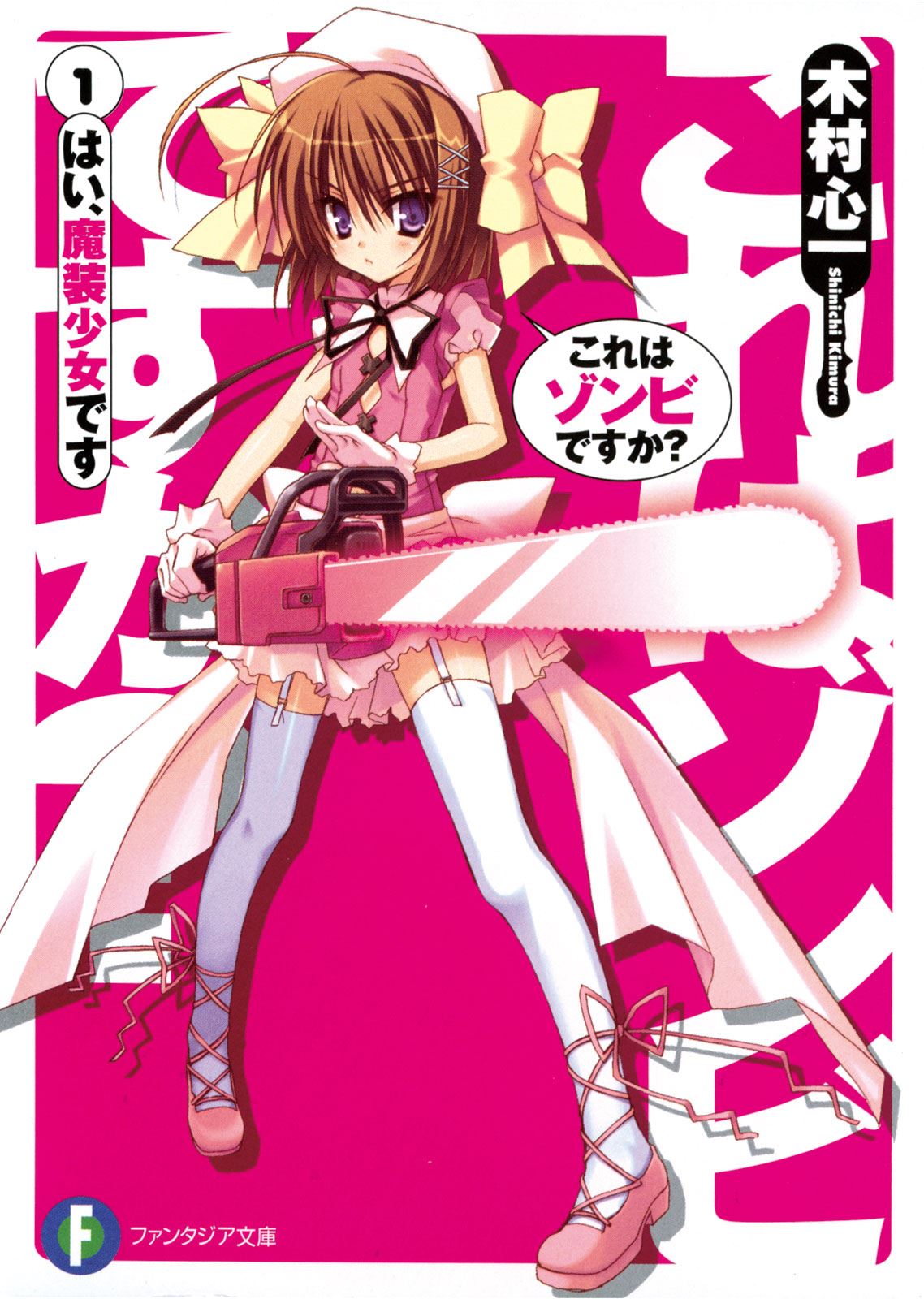
... Read More
There's a strange beauty in how this text uses color and food to explore identity. The entire lunch is YELLOW. Not just yellow—AGGRESSIVELY, overwhelmingly yellow. An entire bento box filled with rolled omelet to the point where it's almost grotesque. And what does yellow represent? Caution. Warning. Something wrong. But also warmth. Nourishment. Care. That's exactly what this story is doing—it's warning you that something is off (zombie protagonist, magic lad girls, creature attacks) while simultaneously feeding you something warm and human. The transformation scene is pure visual symbolism. He shouts this ridiculous incantation—"Htaed fo regnibrah a tub gnimrahc dna ylevol!"—and his clothes EXPLODE. Light gathers around him. A skirt forms. He becomes what he never wanted to be. But here's the thing: the skirt is the SAME one Haruna wears. They're connected. They're the same. The Magiclad Girl uniform isn't just a costume—it's an identity forced upon him, but one he shares with someone who chose it. That tension between forced transformation and chosen belonging runs through everything. And the crawfish. Craw the Mage (or Dastardly Villain—I honestly can't tell which title fits better). A crustacean in a school uniform. It's ridiculous. It's horrifying. It's also deeply symbolic of how the mundane and the monstrous collide in this world. School uniforms, classroom settings, track club running on fields at sunset—these are the most ordinary, safe images. Then a giant lobster dude bursts through the window and everything changes. The text keeps smashing these two worlds together, and I think that's the whole point: there's no escaping the supernatural when it's wearing the face of everyday life.
... Read More
Let's talk about stakes because this book does not play around. Ayumu gets stabbed through the back with a sword-like weapon and we're supposed to believe he's just going to bounce back? The opening chapter establishes clearly that death in this world is not final, but it's still presented as terrifying. His hands are trembling. His heart is pounding. He's running through every possible way this could go wrong before walking into that house. "When in doubt, choose the braver path." That's the line that defines his entire character arc. He's not brave. He's terrified. But he acts anyway. And that's exactly why I care about whether he survives the next encounter. The conflict hierarchy here is fascinating. On the surface, there's the vampire ninja faction war—softliners wanting to recruit Eu versus hardliners wanting to kidnap or kill her. But layered underneath is a much more personal conflict: who is hunting Ayumu specifically? Someone attacked him in that house, and Eu says she's also being hunted. Two people, separate threats, same story. The tension of not knowing who the real enemy is keeps every scene charged—even the breakfast scene where everyone is just eating rice has an undercurrent of "these people could be enemies." The fight between Ayumu and Sera raises the personal stakes too. He's fighting someone who openly admires him mid-combat, someone who says "I underestimated you" with genuine respect. This isn't just a brawl; it's a clash between two undead beings who share more than they'd probably admit. And he lands a 230% strength punch to her face. Who does that? That's the kind of commitment to conflict that makes you invested in the outcome.
... Read More
There's this one moment early on that hit me harder than I expected. Ayumu sitting alone on a gravestone in the cemetery, eating a rice ball, thinking about how being alone proves everything is peaceful. That's not just a quirky character detail—that's a person who has accepted solitude as the only safe option. He became a zombie because he got caught up in murders, he died, and now he just wants nothing more than to exist without being bothered by the sun or people or anything. Then Haruna shows up. A chaotic, shirtless, chainsaw-wielding demon baroness who invades his space and won't leave. And honestly? I think part of him is weirdly relieved. Because for the first time since becoming a zombie, something happens. Something breaks his perfect monotony. His line 'Mom, I finally feel alive again'—coming from a dead guy—is the book telling us exactly what's going on beneath the comedy. I kept re-reading that scene where she tries to grab Mystletainn and gets shocked every time, and then he picks it up with no problem. The book doesn't make a huge deal out of it but it landed for me: she can't touch her own weapon, and this stranger can. She's furious and confused, and there's this vulnerability underneath all her shouting. She called him Big Teach on the phone too, which means she's not the untouchable genius she pretends to be—she has to answer to someone, she has responsibilities, she's not as in control as she acts. The chemistry between them isn't romantic yet, but it's there. It's two lonely people orbiting each other. He wanted a quiet life; she turned it upside down. And the read itself made me smirk the whole time. It's funny but there's something tender underneath all the chaos.
... Read More
Okay so the rooftop scene with Eu, I have literally never read anything quite like this. Let me just say this upfront: the author built this entire emotional slow burn and then DROPS you into a scene where this girl who has NEVER shown any emotion just... breaks. And not in some dramatic anime way with wind blowing her hair or whatever. Just quietly, in the dark, with tears falling onto a notepad page. "You probably hate me now, don't you?" Read that again. She thinks AFTER everything—after he defended her, after he admitted she's kind-hearted, after he literally told her to screw fate and just stay with him—she still expects him to reject her. That is SO emotionally devastating it made me sit there like an absolute fool. And his response isn't some cool superhero speech. He says "knock yourself out" first, then realizes how terrible that sounds, and then just PATS HER HEAD. Like a big idiot with silver hair under his fingers. No more words needed. None. What killed me though was the setup. ALL those scenes leading up to this—the slapping, the argument, the shopping trip where he literally orders Sera to be greedy, where Sera gives him that tiny smile—he was gathering all this emotional pressure and holding it in. Then on the rooftop, it just EVAPORATES. Also don't even get me started on the Sera parallel. This girl who can barely speak, who carries weapons and death in her words, who follows orders like they're god-sent commands—she puts on a CAT-EAR HEADBAND when no one's watching and goes "meow." Then immediately slams it on the floor like she's caught herself being human. That's not comic relief. That's the same wound, different symptom. Sera can't express desire. Eu can't express emotion. Both are trapped in roles, both are terrified of what happens if they slip up. And Aikawa keeps pulling them toward the world instead of letting them hide in it. I'm not okay. I am genuinely not okay.
... Read More
Okay so the rooftop battle is seriously one of the best action sequences I've read in a while. The anteater monster doesn't just show up and go straight to one-shotting everyone—that would've been boring as hell. Instead, Sera gets impaled, Haruna has to hold back her vulnerability, and then the anteater pulls a mega attack that forces Sera to go all out. The way the tension builds is chef's kiss. First the secret art reveal, then the leaf swords transforming into a full-blown army, and when the anteater tries to play dead and ambushes from behind? I actually jumped. That substitution jutsu trick is such a classic ninja move and it genuinely caught me off guard too. Then the Dragon Tail Reversal finish—no warning, just pure speed. The anteater splits cleanly and dissolves like the others before it. Story-wise, this battle does double duty: it shows Sera at her absolute peak combat ability, and it also sets up this weird pattern where these monsters just turn into particles when they die, which apparently matters later. Speaking of which—did anyone else catch that detail? Because I'm pretty sure it's going to come back to bite someone.
... Read More
"Oh. It had been exactly one month since I met Eu. And also, since I became a zombie." That sentence hit me like a truck. Just sitting there at the end of the chapter, completely understated, and I had to put the book down for a second. One month. Thirty days of waking up not-quite-dead, living with a vampire ninja who watches TV shopping channels, eating tiny portions of food that Haruna somehow conjures from nowhere, going to school like a normal person while the world around you is full of monsters and magic and secrets. And the Haruna moment broke me a little. She says she's fine staying like this — unable to transform, stuck being a burden — because "no one's waiting for me back home." Just for a second. That flash of loneliness before she masks it with the bright smile and "I made something amazing today!" And the protagonist's response isn't some grand speech. It's "Staying here means you'll have to keep making me lunch, you know?" That's it. That's the entire comfort strategy. And it works. Of course it works. There's also something quietly heartbreaking about the tofu situation. Kyouko, recovering in a hospital bed, smiling that heavenly smile, handing over the Kyoto-style tofu like it's the most natural thing in the world. She knows the protagonist is carrying this strange object for strange reasons and she plays along without asking questions. That's a specific kind of kindness — the kind that doesn't demand explanation. This book keeps sneaking up on me with emotional moments disguised as everyday scenes.
... Read More
The stakes in this book are oscillating between apocalyptic and deeply personal, and honestly I think that's by design. On one level, you've got a serial killer operating in the city, a vampire ninja with her own code, Necromancer Eu possibly being the monster everyone fears, and now a Triple-A Megalo the size of a skyscraper descending from the clouds. That's not a Tuesday for most people. That's a 'the world is ending' situation. But the protagonist's conflicts are never just about survival. When he's fighting Sera, the real question isn't whether he'll live — he literally can't die from that — it's whether she's the one who killed him. That's an emotional stake, not a physical one. He needs to know WHO hurt him, and the fact that she might not be the answer is almost MORE unsettling than if she were. Because then who is? With Kyouko, the stakes are even quieter but somehow higher. She survived an attack. She has a wooden sword under her bed. She's leaving town. The protagonist doesn't know her from junior high, but he's already mentally added her to the list of people he needs to protect. The scene where she licks her lips after touching his forehead — that's not romantic tension, that's HUMAN tension. She's reaching out to someone who looked at her and didn't flinch. That's vulnerability, and the story treats it with more weight than any battle. And then the whale appears and ALL of those smaller conflicts get swallowed up by something incomprehensibly large. The protagonist's response is telling: he doesn't panic. He calculates. 'I was neither a Power Ranger nor Ultraman. I was a zombie.' He's assessing his actual capabilities against an impossible threat, which is the most honest thing a protagonist can do. The stakes just went from personal to catastrophic, but his reaction stays grounded. That's what makes you believe he'll actually try.
... Read More
Okay so let me just — that fight with Sera was INSANE. Like, I was genuinely sweating. You cut off his arm, you cut off his entire lower half, and he just... counts it up and rebuilds himself? Three hundred. Four hundred ten. Five hundred two. He's treating losing his legs like a scoring system at a batting cage or something. The way the author writes it, it's brutal one second — green swords everywhere, body flying apart — and then suddenly it's just bureaucratic. He grabs his own arm off the ground like, oh hey, that's mine, and reattaches it. It's disgusting and hilarious and I love it. But then the bigger picture stuff starts clicking into place. Sera says she won't kill humans because of some vampire ninja code, and the protagonist basically decides he trusts her because... her eyes are lovely? Man. The narration doesn't even try to hide how unreliable he is when it comes to judging people. He literally thinks 'she wasn't the one who killed me' after a ten-second eye contact session. But then — the hospital scene with Kyouko — THAT's where the real plot hook drops. May 26th. Same night as the house fire where the protagonist died. She survived. And her attacker? Silver hair, gauntlets, blue eyes. Which, of course, matches Eu. But Eu would never... right? Right? And then BAM, Chapter 34 just ends with a 1,830-meter blue whale falling from the sky and the protagonist going 'oh I'm just a zombie, good luck with THAT.' The escalation is ridiculous in the best possible way. This story knows exactly what it is.
... Read More
"Here I come." She vanished. At the same time, I felt a diagonal slash across my chest. I need to talk about this fight scene in the cemetery because the author really understood the assignment. The setting was already established early on—this quiet cemetery with a giant tree that's basically Ayumu's favorite hangout spot. When Sera and he walk there to fight, it's not some generic battleground. We know these gravestones. We know that crater from Haruna and Beary's earlier appearance. The shattered gravestones are already fixed, which is a nice touch that shows the world has been healing around them even while chaos brews outside. And the leaves. God, the leaves. Every single one of those fluttering green leaves turning into blades? That visual is cinema-level. You can see it. A beautiful girl in a black cloak with crimson eyes, leaves falling all around her like some dark fairy tale, and then she moves so fast you don't even see her until the slash connects. The contrast between her regal, composed demeanor and the absolute violence of her movements—that's what makes the scene stick with me. Then there's the meal scene, which is just so domestic and absurd. Three supernatural beings eating pork kimchi and miso soup at a regular Japanese dining table, with rice bowls being refilled endlessly. Haruna's cowlick bouncing as she grins, Eu silently crying tears while her bowl is empty, this completely new vampire ninja appearing like she's part of the family already. The mundane and the extraordinary are woven together so naturally it feels completely normal. I also love that vampires exist in hidden ninja villages in Japan. "So there were still ninja villages in Japan, huh." That one line just expanded my understanding of this entire universe. It didn't need a paragraph of explanation. Just one casual observation and boom, the world got bigger.

Leave a comment

You must be logged in to leave comments. or
