Is this a Zombie? - Reviews

Is this a Zombie?
+Add to Custom List
Sort
Add review
... Read More
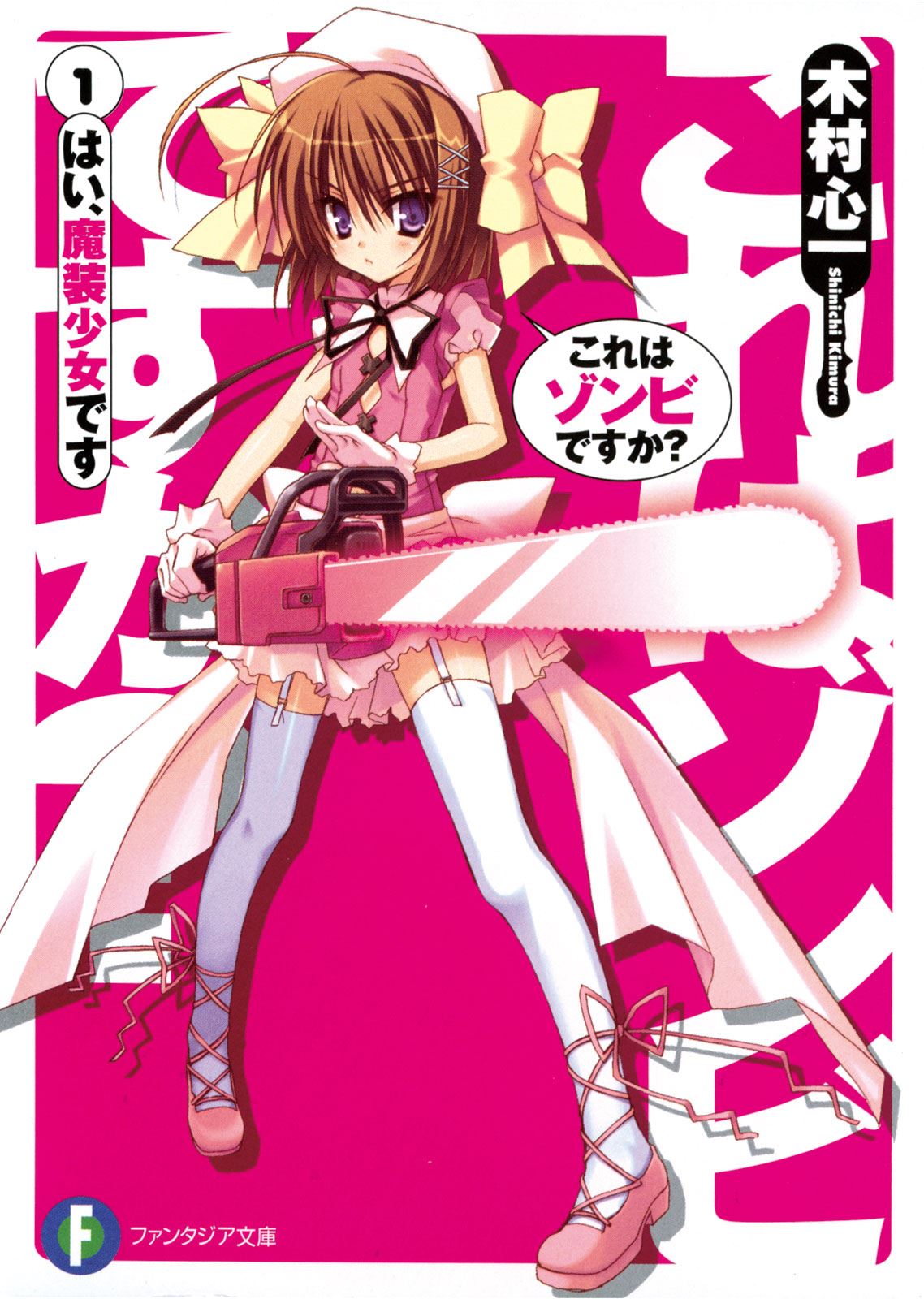
Okay so the Craw fight was absolute chaos from start to finish and I love it. Like, the protagonist literally has to protect Orito while also dealing with this giant crawfish monster wearing a school uniform. The way Craw keeps underestimating him is perfect comedy timing before it turns deadly again. And that final pincer throw?! I genuinely held my breath. He had to chuck the chainsaw like a javelin to save Orito and honestly the image of him screaming 'Take this!' with 306% strength is burned into my brain. But then the memory wipe scene is where things get weirdly mundane, which I appreciate. Like after surviving a monster attack, the immediate concern is 'did I forget to tell him about the cosplay?' The spacetime manipulation for memory alteration was described so vaguely by Haruna that even the protagonist admitted he had no idea what he was doing. That's such a fun way to handle exposition - just hand-wave it with 'local spacetime whatever' and move on. Shows the author trusts the reader enough not to over-explain. Then it cuts to walking home in ridiculous outfits and the Eucliwood introduction hits like a ton of bricks. The narrative pivot from supernatural battle to domestic weirdness is jarring in the best way. And that ending with the blood on the window after the flashback - classic cliffhanger. The story went from 'oh it's just a quiet zombie life' to 'SERIAL' mid-sentence and I was not ready for that tonal whiplash. The plot has been dancing between comedy and genuine dread since chapter one and it never stops surprising me.
... Read More
The rooftop fight operates on two levels of threat and the author plays both brilliantly. On the surface, the anteater is a literal monster trying to kill them. But then there's this second layer—the substitution technique reveal that flips everything. Sera thought it was over. She turned her back. Classic combat fatal error, sure, but the anteater tracking her through the switch? That's not a dumb monster, that's tactical intelligence. When it uppercuts her from her blind spot, the stakes literally go from "might lose a fight" to "about to get killed." And Ayumu's internal panic during that sequence—"I really wished I knew whether it was going to be a beam or a blast"—that's the kind of narration that makes you feel the helplessness. He's watching someone he cares about fight for their life and he's down on the ground unable to do anything. Then the Dragon Tail Reversal comes so fast that even he barely registers it. But here's what keeps bothering me: the anteater dissolved into particles just like Megalo did before it. And that matters because somewhere in this story, particle dissolution is apparently a clue to something bigger. The stakes aren't just surviving today—they're figuring out what these creatures actually are before the next one shows up and catches them unprepared. Every victory so far has felt temporary, and I love that about this story.
... Read More
Let me just say this: the author does not waste a single page. We go from Ayumu complaining about sunlight in math class to fighting a three-meter demon bear in the cemetery within the first few thousand words. And somehow it never feels rushed. How? By anchoring everything in humor. Every beat of escalation is padded with a joke or a character reaction, so the action breathes. The structure here is basically: establish the status quo (bored zombie boy, hates sun), disrupt it immediately (meteor crashes), introduce the threat (bear), escalate the fight (he gets thrown around but doesn't care), resolve with a twist (he snaps the bear's neck and it dissolves into particles), then pivot to the real mystery (the girl, the magic, the phone call). By the time we hit the phone conversation, the adrenaline has settled just enough for exposition to land without feeling like an info dump. What I appreciated most was the scene transitions. No chapter breaks or section dividers needed—the narrative just flows from classroom to cemetery to back-and-forth banter without stopping to catch its breath. Even the fight choreography reads fast but you can picture every move: the backfist, the roundhouse, the elbow drop. The author trusts the reader to keep up. And that ending beat—'Fine. I'll do this Magiclad Girl thing'—is a perfect button. It closes the action sequence while opening the next door. I immediately wanted to turn the page. If the whole book keeps this energy, I'm gonna lose a weekend to it.
... Read More
I need to talk about how the author transitions from a life-or-death rooftop battle to... a bowling alley. That shift is so bizarre and yet it works so well. One minute we're watching Sera slice a monster in half with leaf swords and the next we're at Mask Donald restaurant with a wrestling-themed fast food joint. The worldbuilding here is quietly brilliant because it shows us that these supernatural beings exist alongside regular human life—convenience stores, bowling alleys, themed restaurants. It grounds everything. But the real scene magic happens when we see these three combatants in casual clothes. Sera in a denim mini-skirt and logo shirt, looking like an actual modern girl—"accessorized here and there." The contrast with her battle persona is staggering. And Haruna bowling perfect games in Ayumu's oversized clothes? That visual alone is worth the price of admission. Then there's Eu, the stoic necromancer in full plate armor at a bowling alley, doing this tiny fist pump after her strike. The image of heavy medieval armor clanking on a bowling lane while the ball rolls at a snail's pace between pins and somehow still gets a strike—I couldn't stop laughing. It's visual storytelling at its finest. The overcast sky from the rain, the casual atmosphere, the contrast with everything we just saw—it all layered together perfectly.
... Read More
I need to talk about the lunch scene because it wrecked me in ways I didn't expect. Here's this kid—he's a zombie. He's been through literal hell, fighting creatures, getting his hand cut off later in the chapter—and what breaks him emotionally is a ROLLED OMELET. "I'm tearing up. For all sorts of reasons. This was what they meant by even zombies have tears." I cannot unsee that image. The sheer vulnerability of it. Someone made him food with love, it tasted galaxy-level amazing, and he was sitting there in a classroom surrounded by kids living normal lives while he's just... not one of them anymore. And Haruna! She's this terrifying Demon Baroness who somehow also remembers to pack his lunch and apparently cooked it herself. That's intimacy. That's care wrapped in chaos. The way she yells at him during the fight—"Ayumu! Hurry up and transform already, 'kay?!"—it's frantic, it's desperate, she's embarrassed about her outfit but she risked everything to come save him. That's not just partnership, that's... something deeper. I'm not saying it's romance but I'm also not saying it's NOT romance. The CP energy is there. It's just buried under chainsaws and magic incantations and the sheer absurdity of their situation. Then Orito shows up at the end of the hallway and gets nearly decapitated by a flying pincer. My heart literally stopped. Not because of the action—it was because this annoying friend who keeps eating at Ayumu's desk was suddenly in real danger. The emotional whiplash from laughing at the omelet trading to almost crying over a detached crustacean claw is exactly why I keep coming back to this story.
... Read More
Okay so Cerberus One-Third had to be one of the most unexpectedly layered characters in this entire book. A talking dog in a trench coat? Sounds like a joke, right? But no—the man (dog?) genuinely cared about Eu. Like, genuinely. When he found out she took on his wound's pain, he didn't just lecture Ayumu about it, he *sweated*. A dog sweating because the person he respected was hurting. That hit way harder than any dramatic speech could have. And the way his relationship with Eu is framed—"she's amazing," "the kings of the Underworld would grovel"—it paints this picture of someone who has enormous power and influence but also seems almost lonely in it. He wasn't here to fight. He came to CHECK, and when he confirmed everything was fine, he left. Not a single fight. That's trust. That's a bond. But then he dies protecting Ayumu of all people, saying "I can't take that [her happiness] away from her." He risked his own existence for someone who wasn't even his responsibility. And his body crumbled into dandelion fluff. Not blood. Not gore. Just... gone. Like Megalo before him. It makes you wonder what the hell being a Megalo actually means if death just erases you completely.
... Read More
"It's okay. I did it for you, big brother." I've read that line at least four times since finishing this chapter and I cannot stop replaying it in my head. Eu saying that—so casually, so lightly—after just healed Ayumu's shoulder wound and presumably absorbed the agony of having flesh torn from your body. That is not nothing. That is not casual. And the fact that the dog noticed. The dog noticed her pain and immediately turned on Ayumu like a feral cat, swatting him the way you'd scold a kitten for knocking something off a shelf. It's brutal and it's funny and it's somehow all three emotions hitting at once. But then the real gut punch comes at the end of it all. The dog dies protecting Ayumu, and when Ayumu is lying there bleeding, his whole lower half detached from his upper half, the one thing on his mind isn't survival—it's seeing the face of whoever did this. Not fear. Not panic. Just pure, unfiltered need to know WHO. Because the person who killed him—the first time—is clearly still out there. And Eu is involved now whether he likes it or not. Also can we talk about how Haruna called the mystical artifact "tutu" and it turned out to be "Kyoto-style tofu" and I literally laughed out loud? The fact that she couldn't remember a simple errand but Big Teach still called her a genius who was failing because she was too proud to learn basics? The humor and the sadness sitting in the same paragraph like they own the place.
... Read More
The pacing in these chapters is absolutely masterful and I keep coming back to how smoothly the author transitions between tones. The Craw battle moves at breakneck speed - kick, chainsaw swing, tackle, pincer slash, chainsaw through the neck, limbs piercing through the body, last shot saved by a thrown weapon. It's relentless and you never get a moment to breathe because Haruna is simultaneously dealing with her own crisis (the bathroom excuse being wildly suspicious). Then the memory wipe scene immediately deflates the tension in the funniest way possible. The protagonist is just… done. He's exhausted, his body feels like it went through a meat grinder, and his main concern is whether Orito remembers the cosplay. The casual 'time heals everything' line after nearly dying is peak comedy timing. The walking-home sequence with Haruna in his rolled-up jeans is pure character work disguised as transition. It establishes their dynamic, reveals his living situation, and introduces Eu all while maintaining this weird buddy-comedy energy. The dialogue snaps and crackles - especially the exchange about Villiers and the mana theft. 'How should I know? Figure it out yourself' is such a perfect Haruna line. Then the Eu flashback interrupts the domestic scene like a film going into rewinding mode. It slows everything down dramatically, giving us an entire chapter of quiet character development before slamming back into present-day tension with that blood-stained window. The structural choice to end the flashback mid-word with 'serial di' is the kind of cliffhanger that makes you immediately open the next chapter. The author clearly understands that after building warmth and humor, the sharpest knife comes from behind.
... Read More
Let me just say this out loud: I did NOT expect to be this invested in a story that starts with a rolled omelet disaster. But the way the stakes escalate is masterful. We go from "my friend won't stop eating at my desk" to "a giant anthropomorphic crustacean is trying to kill us in the hallway" in approximately three paragraphs. And the worst part? The worst part is that both scenarios are genuinely tense. The internal conflict—Ayumu doesn't want to be a Magiclad Girl. He's a ZOMBIE. He'd rather live quietly. But the world won't let him. Every time he tries to normal, something tries to kill him. The external conflict is straightforward (kill the Megalo, survive) but the REAL tension comes from watching him lose his hand and still have to keep fighting. "Not the right hand," he groans. That's the kind of dark humor that makes you laugh and then immediately remember he's about to get killed. And then Orito. Orito who's been comedic relief the entire chapter—showing up, making jokes, asking about his crush—just stands at the top of the stairs and gets TARGETED. "The flying pincer slammed into me." The sentence just... ends. No dramatic flourish. No last words. Just impact. That's how you maintain suspense. You make the reader feel like nobody is safe, not even the annoying friend who exists purely for comic relief. The stakes just went from "ayumu might die" to "literally everyone around him is in danger" and I am NOT okay with that.
... Read More
I need to talk about this one rooftop scene because it's genuinely one of the most atmospheric things I've read in a while, and it's doing heavy lifting without anyone noticing. So Aikawa pulls Eu up to the roof, right? And the author describes it as "a bare rest area with nothing but vending machines and a couple of benches." Think about what kind of scene that is. This is not a dramatic mountain peak. Not a castle tower. It's literally the most generic rooftop you could imagine—a dead space between the building and the sky, the kind of place where nobody goes unless they need to be alone. "The sun had gone down. The dark sky stretching overhead felt like a reflection of the current state of my mind." That line. That is the author telling you exactly what's about to happen without saying a word. The sky is dark, the mind is dark, and they're matching each other. Then the worst part—the best part—is how almost NOTHING happens visually. They sit. Two people on a bench. One drinks soda, one doesn't. She writes on a notepad. He reads. Tears fall on paper. He touches her hair. That's it. No explosions, no dramatic music, no flashbacks. Just two humans on a rooftop who happen to be the most dangerous people in the room. But here's what makes it land: the contrast. You've spent chapters with high kicks through bowling alleys, ambulance arrivals, supernatural ninja drama—and then suddenly it's just quiet. So quiet you can hear her gauntlets clanking when she opens her notepad. So quiet the soda can sits unopened on the bench beside her like a small rebellion. And later, when we cut back to the department store and Sera trying on that stupid cat-ear headband in the entryway mirror—that's the same energy. The worldbuilding here isn't about epic fantasy landscapes or detailed magic systems. It's about ordinary spaces where extraordinary people try to act normal, and fail in the most beautiful ways. The rooftop, the department store, the hallway floor where Haruna faceplants Aikawa—it's all the same palette. Mundane spaces stained with magic, and that contrast IS the atmosphere. The author knows exactly what they're doing. They give you nothing visual and somehow you feel everything.
... Read More
There's a moment in this batch where Orito grabs the spiny lobster with his bare fingers from the protagonist's lunch and just goes "Is it good?" and I literally laughed out loud. This man has no shame and I respect him deeply. But seriously, the dialogue in this book is SO sharp. Every character has a completely distinct voice and you can tell who's talking without any attribution. Sera speaks in these formal, almost archaic constructions — "I will accept your offer. Please, excuse me." — which contrasts hilariously with the wildly inappropriate situations she finds herself in. Eu? Three-word sentences maximum. Flat. Deadpan. But those flat lines are where the comedy lives: "Stay home today." "In the Underworld, to counter Magiclad Girls, they began gathering the souls of the dead." These are delivered with the same energy as ordering coffee. The protagonist's internal monologue is where the book really shines though. His voice is this perfect blend of self-deprecating humor and genuine emotional awareness. He'll go from "That one's kinda hard to figure out" (responding to Haruna calling him an ourobogross) to being genuinely tender with Haruna about her loneliness in the span of two paragraphs. The tonal whiplash works because his narration grounds everything. And the Big Teach scene on the phone! "Shut up, Ma'am! With all due respect, leave me the hell alone!" — imagining Haruna's voice while being polite about it is such a specific character detail that tells you EVERYTHING about her. The author doesn't need a whole scene to establish a relationship. One hypothetical quote does it.
... Read More
This section moves at a speed that frankly terrifies me and I respect it. Chapter 27 starts mid-combat — no warm-up, no context, just limbs being severed and counted like yardsticks. The fight with Sera is paced in bursts. Short sentences. Fragmented thoughts. 'Three hundred.' 'Four hundred ten.' It's almost algorithmic in its rhythm, like the protagonist's mind is going into survival mode and processing the world in numbers now. And then right after the fight ends — Sera leaves, he walks home, there's a weird domestic moment with the shoe thing — and the chapter just... pivots. Saturday. Rain. Meeting a murder survivor. The tonal whiplash is intentional and it works because the protagonist's voice carries you through. He's already so unhinged that a casual walk to the hospital feels like the natural next step. Then Chapter 34. The last part. You're still in this soft, human space — talking to a girl in a hospital bed, exchanging phone numbers, feeling all warm and fuzzy — and then the sky opens up. A whale. One thousand eight hundred and thirty meters of it. And the prose immediately snaps into something faster, more desperate. 'I was neither a Power Ranger nor Ultraman. I was a zombie.' The author literally undercuts the epic scale with self-deprecating humor in the same paragraph. It's brilliant misdirection. You think you're reading a coming-of-age supernatural drama, then suddenly it's a disaster movie and the protagonist's superpower is that he won't stay dead. The transition from the Sera fight to the Kyouko visit to the whale appearing — three completely different tones, three completely different genres, and they're all in the same breathing space. No chapter break between the hospital scene ending and the whale showing up? Actually there is, but the reader doesn't even notice because the momentum doesn't drop. That's craft.

Leave a comment

You must be logged in to leave comments. or
