Golden Hairpin Locked in Copper Sparrow - Reviews

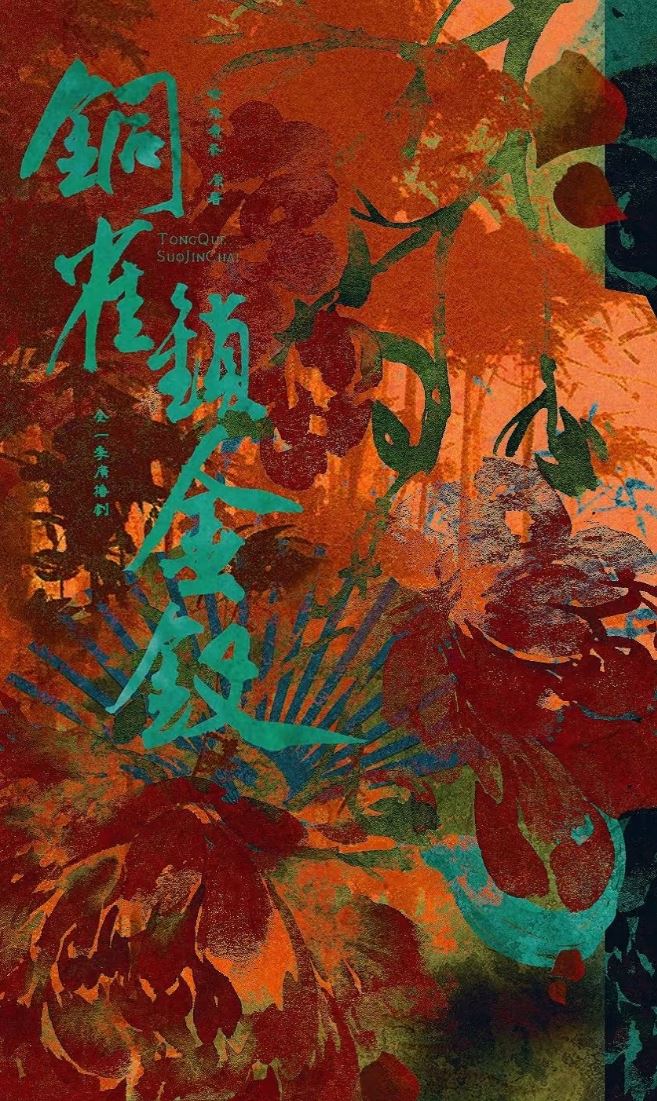
Golden Hairpin Locked in Copper Sparrow
+Add to Custom List
Sort
Add review
... Read More
The atmosphere in these chapters is cinematic and I can't stop thinking about specific images. The night wind so cold Gu Fangfei has to grit her teeth just to stop shivering. The lantern she stares at while curled up on the steps like a small ball. The dog-headed god shrine with its small brazier where old ladies come during festivals to beat away evil spirits — and there, hidden in the ashes, a piece of red opera costume that proves a murder happened. That detail about the shrine is genius worldbuilding because it roots the story in a living, breathing city where superstition and daily life overlap. Then the alley chase: Military boots crunching over scattered ashes, kicking up dust. Yuan Ye running until his lungs burn, heart pounding, thinking if he turns one more corner it'll be a dead end. The moment the soldier searches the garbage dump and comes back empty-handed — that alley suddenly feels haunted, like something supernatural happened, except we know better. And the hospital corridor outside the operating room: Madam Yuan crying, Old Madam Yuan reciting sutras, Duan Yelin leaning against the wall thinking carefully. Three people, three ways of dealing with dread. The cold dawn light, the bloodshot eyes, the brazier smoke mixing with city dust — this author paints scenes like a film director. Every environment tells you something about the mood.
... Read More
I need to talk about Yuan Ye because this chapter did something to my heart. He's literally standing at the side window trying to eavesdrop on his own grandfather and grandmother, and the text says 'the window was too thick, and he could not hear clearly.' Only a few sentences come through. One of the clearest fragments is Old Madam Yuan speaking in a tone of 'regret' saying something about 'white hair'—which I'm guessing is her referring to herself in the future, having outlived her own child. Yuan Ye hears scraps, barely anything, and he can't even fully process what he's missing. Meanwhile, earlier in the same chapter he's the one who truly 'understood what Duan Yelin meant' about the amulet. He's the most perceptive person in the room but also the most powerless. There's this heartbreaking gap between his intelligence and his agency. And don't even get me started on the Yuan Sen subplot—his engagement is apparently coming up ('You're about to be married'), and the Old Madam is already using it as leverage against him. The family dynamics here are so suffocating. I also keep going back to Duan Yelin and Yuan Ye's partnership. The way Duan Yelin doesn't push Yuan Ye to speak in front of his grandmother, but also doesn't abandon the investigation entirely—that silent understanding between them says more than any confession could. And Qiao Song's line 'we've come here for nothing…' with that bitter tone, showing he's more invested than he lets on. These relationships are layered, restrained, and absolutely devastating.
... Read More
There's a recurring idea in this batch that absolutely fascinates me, and it's the paradox of love as both the ultimate weakness and the ultimate strength. Xu Hang explicitly says it: "Love is the most murderous word." Think about what he means. Love killed Chang Ling's safety as a spy. Love made Kuromiya Keiko vulnerable to blackmail. Love is why Cong Lin is on that mountain. Love is what Duan Zhanzhou can't stop thinking about even though he knows Cong Lin is dangerous. But here's the thing the book keeps showing us — love is also the only thing that breaks the cycle. Kuromiya Keiko could have stayed emotionless forever, survived by being a perfect weapon. But love made her choose. Made her fight. Made her slap the man who wanted to kill Chang Ling and say "kill me first." The spy metaphor runs deep throughout this text. Keiko is the knife, not the person wielding the knife. She's been used, manipulated, placed in China like a tool. Her beauty and tactics are weapons. But the moment she develops emotions — the moment she falls in love — she becomes a person again. And people are unpredictable. People are dangerous. Not to their enemies, but to the systems that try to control them. The Japanese Empire trained her to be emotionless because emotions are liabilities. But the narrative keeps proving that wrong. Emotions are what make these characters human, and that humanity is what makes them dangerous to everyone who thinks they can control them. Even the setting reflects this theme. Jiuhuang Mountain — a place of bandits, outcasts, people who chose to live outside the system. They're defeated but still fighting. Like Cong Lin. Like Keiko. Like everyone in this story who's been reduced to a tool but refuses to stay that way. "If you can't do it, let me do it!" — Kenji says this about killing Chang Ling, but really it's about control. Who gets to wield the knife? That's the question at the heart of everything.
... Read More
Can we just appreciate how sharp Xu Hang's dialogue is in this batch? The whole hemp reveal—'The so-called poisonous weed is nothing but hemp. Go home and wash your hands with soap beans a few times, and it will be fine. It won't kill you.'—that delivered so much character in one line. Cold, precise, with that quiet satisfaction of having outsmarted someone smarter than you. Cong Lin thought he was the smartest person in the room, and Xu Hang just used his own arrogance against him. Meanwhile, Duan Yelin's dialogue is almost entirely action-driving commands. 'Turn back! Hurry!' No unnecessary words, just pure instinct. The contrast between these two voices is chef's kiss. And that exchange between Xu Hang and Cong Lin at the beginning—'If you can get down the mountain safely, I will consider your words'—this is not someone bargaining, this is someone who already knows he's winning. But what really stood out to me is the silence. Xu Hang walking alone in the dark, making no sound, putting out his own torch to avoid being seen. No dialogue at all—just his internal mantra: 'Can't fall down, can't fall down, can't fall down.' Three repetitions of the same thought, each one more desperate than the last. The author trusts the silence just as much as the spoken words.
... Read More
The stakes in this chapter are multiplying like rabbits and I love it. On the political level: the Governor is dead, the position is vacant, the Military Control Commissioner is 'concerned,' and Duan Zhanzhou is openly wondering if he should take it. That's a powder keg waiting to explode. On the personal level: Xu Hang is caught between being a kind person who wants to help the youth and the brutal realization that his kindness was misplaced. He has NO IDEA who that youth really is or what he's survived. But he also can't unsee what he saw. How does he move forward from that? And Duan Yelin—he's playing a game where everyone thinks they know him (the powerful cousin, the army commander's boss), but he's clearly several steps ahead. When he asks Xu Hang to let guests stay because there's no cleaned room at his own place? That's not generosity. That's control wrapped in intimacy. The young youth himself—the highest stakes of all. He's trapped under Duan Zhanzhou, who kicked him, slapped at him, treated him like dirt. But that look at Xu Hang suggests he's not broken. Not completely. And that's the most dangerous kind of person in any story. Because the ones who seem defeated but aren't? They're the ones who flip the board.
... Read More
Let me just say — the transition from Duan Yelin kissing Xu Hang good morning to Qiao Song screaming about a corpse is one of the most emotionally whiplash things I've read this year and I am NOT OKAY. You go from 'don't look at me like that, I have meetings to attend' soft couple energy to 'THE GOVERNOR IS DEAD AND EVERYONE IS WAITING FOR YOU' in three seconds flat. But here's what actually got me: Xu Hang keeping that handkerchief. Lao Liu offers it back freely, says 'just toss it aside,' and Xu Hang... puts it in his arms. Why? What's on his hand? Is it blood? Is it something else? He doesn't explain. He just holds onto that fabric like it means something. I keep replaying that moment in my head. And then Duan Yelin's reaction to the news — 'he is always busy causing trouble. Even if you say he is dead, I won't find it surprising either' — said with a slipped button, a moment of vulnerability. He claims not to care, but his hand slips. Something undone. Something unresolved. That's the real emotional beat of this chapter, underneath all the action. Two men whose lives are intertwined with death, one quietly cleaning up messes in the dark, the other trying to stay warm in the light.
... Read More
I keep coming back to the idea of performance throughout this entire passage. Everyone is acting. Gu Fangfei is performing compliance while actually being fiercely independent. Duan Yelin is performing romantic interest in Gu Fangfei while actually performing for Xu Hang. Xu Hang is performing indifference while literally spending all his money to control the scene. Even the opera on stage mirrors everything happening in the rooms above and below. The 'Romance of the West Chamber' isn't random casting. It's a story about lovers who communicate secretly, who find ways around barriers, who are watched by others who pretend not to watch. 'Let us confess our love to each other and exchange our feelings across the wall until dawn'—this line is being spoken ON STAGE while Duan Yelin and Xu Hang are doing the exact same thing from different floors of the same building. And the mirror/reflection motif: Duan Yelin uses the shiny copper kettle to watch Xu Hang without looking directly. He can't face his rival—or whatever this is—head-on, so he watches through reflection. The whole chapter feels like it's asking: when desire has to hide, what forms does it take? Performance. Indirection. Misplaced attention. Money thrown at strangers to send messages.
... Read More
This story is clearly about so much more than a gruff commander and a reserved doctor, and I'm obsessed with all the layers underneath. Heming Medical Hall itself is such a loaded symbol — it's built on the Xu family's misfortune, a place where death and survival constantly collide. Xu Hang carries the aroma of medicine on his body like it's a second skin, and when Duan Yelin — this man whose entire existence is violence and命令 — bursts into that space, it's like two irreconcilable worlds crashing into each other. The mugwort juice staining Xu Hang's hands, the mortar being snatched away, the back room curtain separating the public sanctuary from private desire — every detail feels intentional. And the expired medicine plot? Don't even get me started. It's about who gets to live and who gets discarded, about how the powerful exploit the vulnerable while claiming necessity. Duan Yelin protects his soldiers on the front line but has zero patience for a corrupt hospital director. Yet the irony is he himself is a kind of weapon — terrifying, unpredictable, capable of both saving and destroying lives in the same afternoon. The teahouse framing at the beginning is also brilliant. It tells us this is a STORY being told, a legend being passed down. Duan Yelin and Xu Hang's relationship isn't just personal — it's becoming part of the folklore, something whispered about behind closed curtains with kerosene lamps burning.
... Read More
Okay so this whole chapter is basically two worlds colliding and neither one knows how to land. On one side you've got Xiao Yan cornering Shen Jingmo in that room, all because the guy he idolized since childhood literally treats him like a stranger. The plot twist here isn't some big revelation—it's the quiet horror of it. Xiao Yan has spent years building this entire emotional architecture around one person, and that person looks at him and sees... nothing. No recognition. Just a captor. The author drops this line where Xiao Yan's hand is pinching the chair armrest until wood nearly breaks off, and that detail says everything about how close he is to losing it completely. Then the story CUTS to a completely different tone—Kuromiya Keiko in that teahouse, trading her body for information to protect the very temple she stares at longingly from a distance. Two characters, same pattern: love that's unreciprocated, obsession masked as devotion, people reducing themselves to nothing for someone who barely registers their existence. The parallel is NOT subtle but it works because it's not just emotional doubling, it's structural. Both scenes are about people trapped in rooms—literally in Shen Jingmo's case, metaphorically in Keiko's—and neither one can escape the gravity of what they're feeling.
... Read More
Okay so first off—this chapter is a masterclass in cause and effect. The sewer project collapses not because of the storm (rain's been happening forever), but because the bricks are HOLLOW. And who does Duan Yelin contact? The cabinet. Directly. Bypassing the Military Control Commissioner entirely. That's not just political maneuvering—that's a power move wrapped in a telegram. But what really got me is the domino effect: project fails → inspector arrives → Duan Yelin gets full responsibility → Yuan Sen finds out his workers were bribed → he decides to send bandits after someone. That's not just revenge, that's escalation. The author doesn't tell us who Yuan Sen is sending the bandits after, but we know it's connected to Duan Yelin. And then there's the Kuromiya Keiko reveal—Gu Fangfei stumbles onto Master Changling being hugged by a known Japanese collaborator. That's not a side plot. That's a landmine. Because if Kuromiya Keiko is involved with Chang Ling, then the whole pure-land Buddhist image Xu Hang is protecting is already compromised. The plot here isn't just advancing; it's rotting from the inside, literally and figuratively. Just like those hollow bricks. Good stories make you see the structural decay before the building falls. This one does it in two paragraphs.
... Read More
There's a recurring image in these chapters that I can't shake — Shen Jingmo's body. Not in a creepy way, but as the literal site where all the story's themes are written. Five years of confinement. Frail health. Fainting from fear. The bite mark on Xiao Yan's neck that Xu Hang notices and immediately interprets. These aren't just plot details; they're the physical manifestation of everything that happened to him while he was disappearing. The bath scene is where this becomes almost unbearable. Shen Jingmo in the bathroom for over an hour, slowly undressing, the light making his shoulders look hazy. The author could have made this sexual — and I think the text is aware that we might read it that way — but it's something else entirely. It's about a body that has been neglected, barely touched, perhaps barely seen, and now is being observed with this devastating mix of tenderness and possession. Xiao Yan's whispered line about teachers and students is loaded with symbolism too. Throughout the story, knowledge has been controlled, withheld, weaponized. Who gets to teach whom? Who gets to name whom? When Xiao Yan says 'only you and I can be a teacher and student,' he's claiming not just ownership but a kind of sacred exclusivity — as if their connection transcends ordinary human relationships and belongs to some older, darker order. And then the ending image: Xu Hang at the Japanese Consulate, encountering someone beautiful but untouchable in layered white clothing, smelling incense. The incense burner, the foreign setting, the cold command to 'take my pulse' — it all feels like the story is circling back to something about healing and diagnosis, about whose body gets examined and who holds the scalpel. Shen Jingmo has been examined, treated, possessed. Now someone new is drawing Xu Hang into her web. The theme deepens: bodies are never just theirs.
... Read More
This chapter is a masterclass in controlled escalation, and the stakes keep climbing in ways that aren't immediately visible. On the surface, the immediate conflict is simple: a servant is murdered, and Duan Yelin wants answers. But the real conflict—that's where it gets complicated. Old Madam Yuan effectively tells the commander of the Military Control Commissioner's forces that he cannot investigate within her home. She's drawing a line in the sand, and Duan Yelin, despite knowing something is deeply wrong, chooses to retreat. His reasoning is practical—'Yuan Sen is still alive. We can't just start a rebellion in his house'—but reading it, I felt this knot of anxiety in my stomach. What if Yuan Sen is already compromised? What if the 'golden hairpin' plot thread connects to this murder in ways we haven't yet understood? Duan Yelin tells Qiao Song it 'won't hinder us' and that they should 'just watch the show,' but that smug expression he has suggests he's already three moves ahead and I don't trust him to be completely honest about his plan. The stakes here feel incredibly high because the novel keeps reminding us that the Yuan family is hiding something monumental, and every moment Duan Yelin spends negotiating with Old Madam Yuan is a moment the real culprit could be escaping consequences. The chapter ends on the most tense note possible—Yuan Ye hearing fragments of a conversation about 'disaster striking the Yuan family,' and then the text cuts off mid-sentence. I am not okay with this level of suspense.

Leave a comment

You must be logged in to leave comments. or
